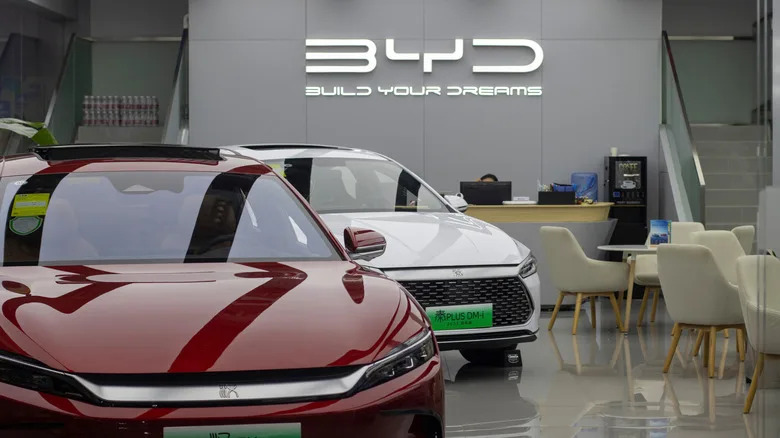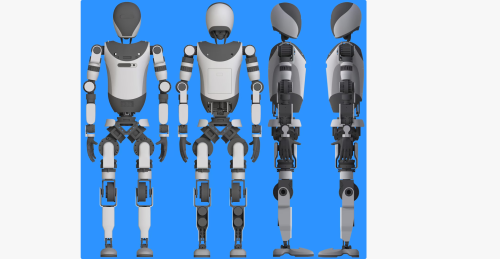
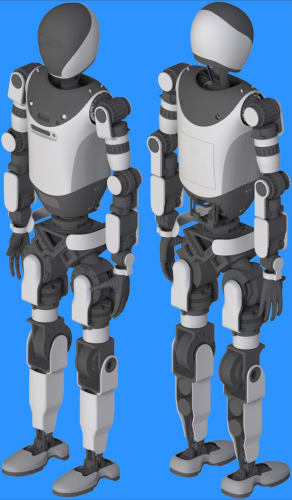
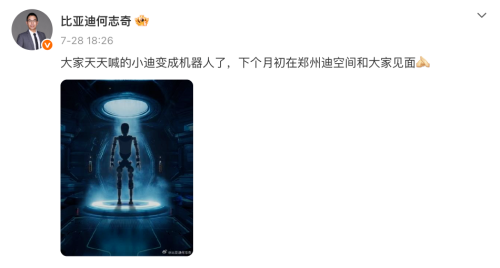
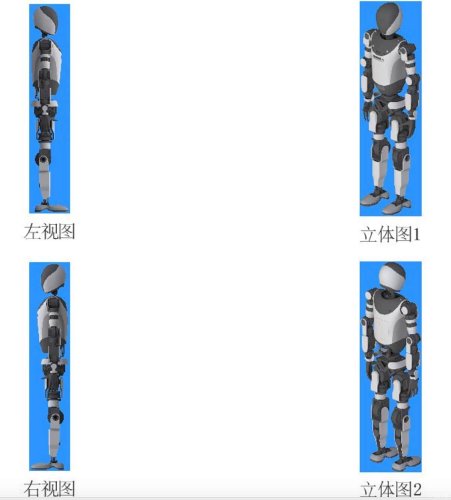
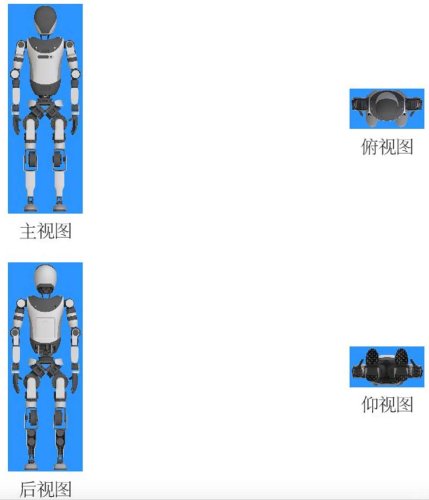


















Published patent drawings. Credit: BYD BYD has officially unveiled the design of its first self-developed humanoid robot, following the publication of an “Embodied AI Robot” design patent by the China National Intellectual Property Administration on October 9, 2026. The patent describes a smart robot capable of walking, maintaining balance, and interacting with its environment, intended for service, educational, and industrial settings. Design and specifications The revealed design features a sleek, anthropomorphic aesthetic with a black-and-white colour scheme. The robot has a rounded, arc-shaped head without a display screen, and its torso, arms, and legs feature multiple joints. The design closely resembles “Xiao Di” (little D), a humanoid robot previously teased by BYD, the company has not officially confirmed whether this patent corresponds to the final production model of Xiao Di. Published patent drawings According to previously disclosed information, the “Xiao Di” model stands 1.61 meters tall and weighs 58.5 kg. It features 31 degrees of freedom and a dexterous hand with a repetitive positioning accuracy of ±1 mm, enabling it to perform tasks such as object grasping, gesture interaction, and pointing-based explanations. “Xiao Di”, previously shared on social media by a BYD executive. Roadmap BYD’s foray into embodied AI is part of a long-term strategy that began in 2022 with the formation of a dedicated research team. The company aims to leverage its industrial scale to customise robot hardware and systems, focusing on enhancing perception, decision-making, and execution capabilities. Beyond internal R&D, BYD has been expanding its footprint in the robotics ecosystem: Investments: BYD invested in Agibot in August 2023 and acquired a stake in Percibot in April 2025. Collaboration: The company has used its own factories as testing grounds, notably hosting Ubtech’s Walker S1 industrial humanoid robot at its Changsha plant for material-handling and identification tasks. BYD executives have previously indicated plans to deploy these robots across dealership networks, where they would handle standardised tasks such as greeting customers, explaining vehicle features, and demonstrating in-car infotainment systems. All the patent drawings.