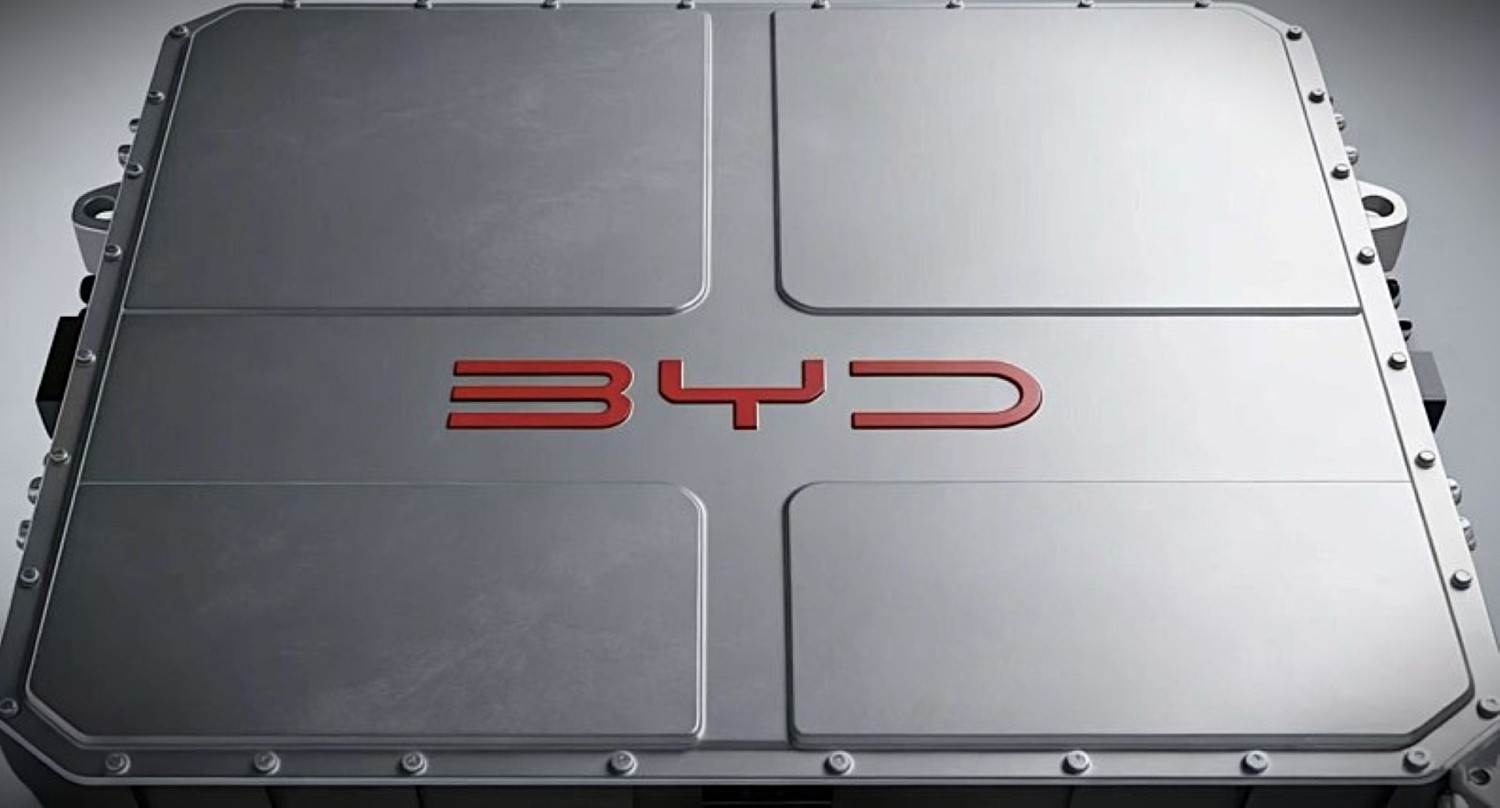
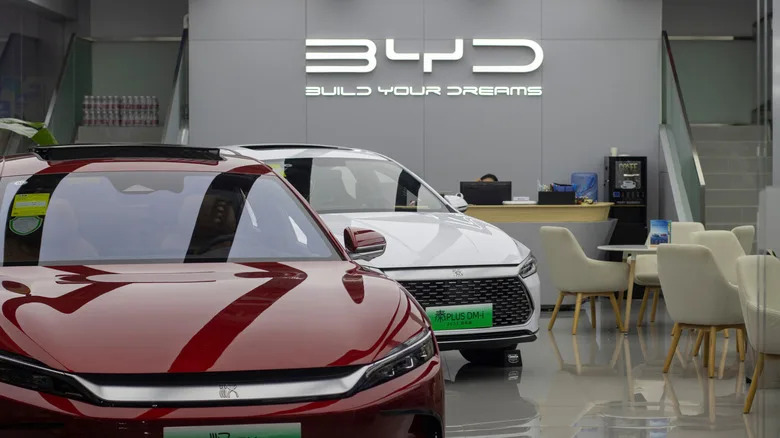
BYD's patent describes battery modules submerged in dielectric cooling fluid inside a separate lower chamber. Image rendered by CN BYD has filed an invention patent application describing a battery cabinet that separates its electrical equipment from a lower compartment where cell modules are submerged in dielectric fluid. The design centres on a relatively simple question with significant consequences for an immersion-cooled battery system: how do electrical connections cross the boundary between a dry compartment and a liquid-filled one? Published by the China National Intellectual Property Administration (CNIPA) on October 5, 2026, as CN 122868832 A, the application covers battery cabinets and energy storage equipment. Filed in March 2025, it describes a two-chamber enclosure in which the cooling medium surrounds the cell modules while electrical equipment remains outside the liquid volume. Why immersion cooling changes the battery enclosure Many contemporary battery systems use indirect liquid cooling. Coolant circulates through aluminium cold plates positioned against the battery modules, with heat passing through the cell casing and intervening materials before reaching the coolant. Immersion cooling changes that arrangement. Instead of bringing coolant to a separate cooling plate, the battery modules sit directly in a non-conductive dielectric fluid. Heat can therefore transfer from the wetted surfaces of the modules directly into the surrounding fluid. The arrangement shortens the thermal path between the battery and the cooling medium, but it also changes the enclosure problem. The liquid must be contained, while electrical components and connection points that are not intended to operate in the fluid must remain isolated from it. That boundary is where BYD’s patent application focuses. Production battery systems still rely on indirect cooling. The distinction is easier to see against BYD and CATL’s existing production architectures. BYD’s MC Cube energy storage system integrates Blade batteries using its cell-to-system architecture, while the MC Cube-T specifies liquid cooling. CATL’s EnerOne and EnerC storage systems likewise use liquid cooling, with cooling plates positioned outside the battery modules. CATL’s Qilin passenger-vehicle battery uses a different packaging arrangement, integrating a liquid-cooling plate into a multifunctional interlayer positioned between adjacent cells. These systems keep the cooling medium in a defined thermal path rather than surrounding the battery modules directly. BYD’s new filing describes another arrangement: the cell modules occupy the liquid-filled chamber itself, while electrical equipment is kept in a separate dry chamber. The resulting engineering problem is not simply how to transfer heat. It is how to maintain an electrical connection across a liquid-tight boundary. BYD routes the connections through the top CN 122868832 A divides the cabinet into two isolated chambers: Chamber 1: An upper dry compartment containing electrical equipment components. Chamber 2: A lower liquid compartment containing cell modules submerged in dielectric fluid. The connection between the two chambers is routed through the upper portion of the liquid compartment. Rather than bringing the electrical and signal leads through the floor or side walls of the wet chamber, the design directs them upward before they enter the dry compartment. Location matters because hydrostatic pressure increases with liquid depth. A sealing interface positioned higher in the chamber therefore experiences less hydrostatic pressure than an equivalent interface positioned deeper in the liquid. The electrical equipment remains outside the liquid volume while maintaining the connection to the submerged battery modules. In other words, the filing does not rely solely on the fluid’s cooling dielectric properties to separate the battery’s thermal and electrical environments. It also uses the cabinet’s physical layout to keep the electrical connection points above the main liquid volume. The filing is about a cabinet, not a new vehicle battery The application covers battery cabinets and energy storage equipment and does not identify a passenger vehicle application. It specifies dielectric fluid, including hydrocarbon- or ester-based formulations, rather than standard liquid coolant. The filing therefore describes an immersion-cooled stationary battery enclosure with a dry electrical compartment and a wet battery compartment. That distinction matters because a patent application is not evidence that the architecture has entered production. The application remains under substantive examination, and BYD has not announced commercial production plans for the design. For now, CN 122868832 A documents an enclosure architecture and a specific way of routing electrical connections through the boundary between its dry and liquid-filled sections.


















 +69 others







![Battery, Watt's up, doc? Huddig hybrid loader gets a big battery boost [video]](https://cdn.topcarnews.net/thumb/id/aHR0cHM6Ly9pMC53cC5jb20vZWxlY3Ry-ZWsuY28vd3AtY29udGVudC91cGxvYWRz-L3NpdGVzLzMvMjAyNi8xMC9odWRkaWct-aHlicmlkX21haW4uanBnP3c9MTUwMCZh-bXA7cXVhbGl0eT04MiZhbXA7c3RyaXA9-YWxsJmFtcDtzc2w9MQ/ea51c544798341190a5eed718aab1ee3.jpg?t=20261006&post_id=67784)
![Battery, Watt's up, doc? Huddig hybrid loader gets a big battery boost [video]](https://cdn.topcarnews.net/thumb/id/aHR0cHM6Ly9lbGVjdHJlay5jby93cC1j-b250ZW50L3VwbG9hZHMvc2l0ZXMvMy8y-MDI2LzEwL0hlcm9iYW5uZXJfVGlnb25f-MS1jbG9zZS1jb3B5LmpwZw/d26fab6fabc13bc13692cf5d41542493.jpg?t=20261006&post_id=67784)
![Battery, Watt's up, doc? Huddig hybrid loader gets a big battery boost [video]](https://cdn.topcarnews.net/thumb/id/aHR0cHM6Ly9lbGVjdHJlay5jby93cC1j-b250ZW50L3VwbG9hZHMvc2l0ZXMvMy8y-MDI1LzAzL0RFUy0xMDM4X0VsZWN0cmVr-LUJhbm5lcnNfRVZzXzA3OTdjMi5wbmc/e850e929e3168f8c7ff73cd888e54add.png?t=20261006&post_id=67784)















![Not sold on Tesla Powerwall? There are great battery alternatives out there [update]](https://cdn.topcarnews.net/thumb/id/aHR0cHM6Ly9pMC53cC5jb20vZWxlY3Ry-ZWsuY28vd3AtY29udGVudC91cGxvYWRz-L3NpdGVzLzMvMjAyNi8wNy9ob21lLXNv-bGFyLWJhdHRlcnkucG5nP3c9MTUwMCZh-bXA7cXVhbGl0eT04MiZhbXA7c3RyaXA9-YWxsJmFtcDtzc2w9MQ/18e81f395a77dbb42269ab5e106fea41.png?t=20261006&post_id=68280)