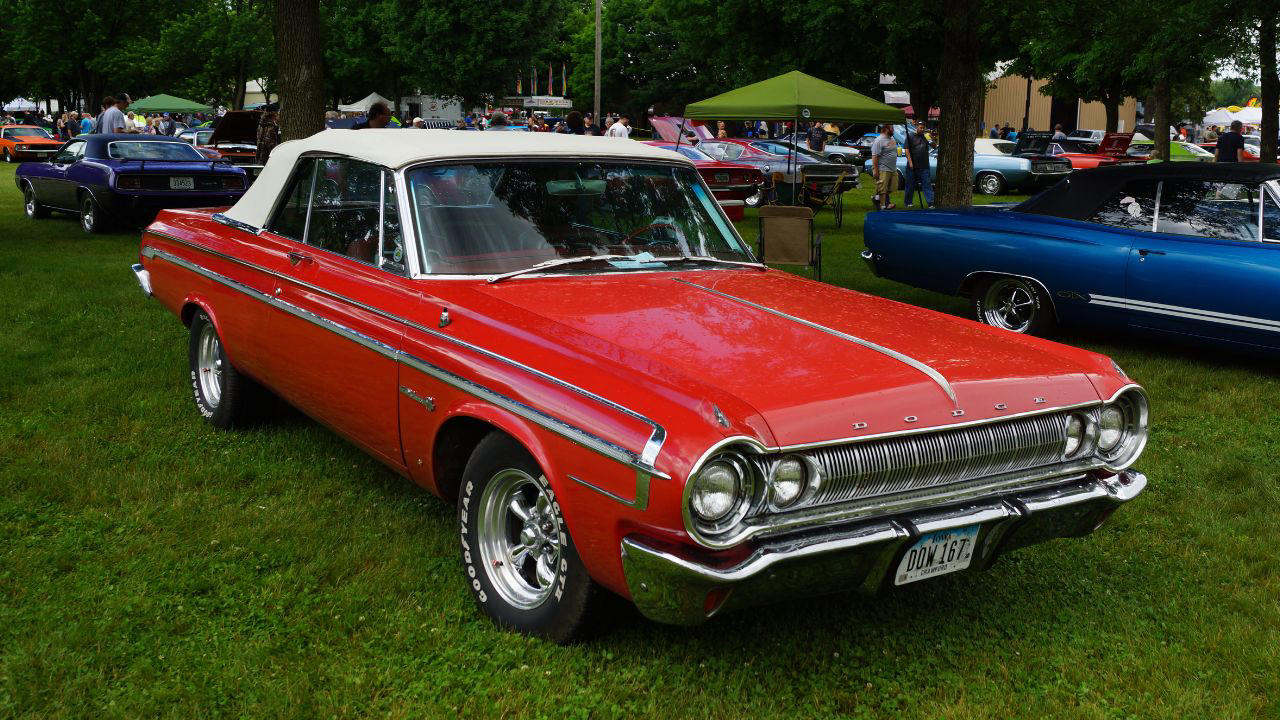
Buying a 1964 Dodge Polara might seem simple until you dig deeperThe 1964 Dodge Polara looks straightforward on paper: a stylish full-size Mopar with V8 power and clean early sixties lines. Buyers soon discover that beneath the chrome and nostalgia sit tricky questions about drivetrains, rust, and a patchwork parts ecosystem that can turn a simple purchase into a long project. Anyone considering one needs to understand where the car shines, where it hides problems, and how the current parts market really works. From showroom star to “forgotten” muscle contender Period material describes the 1964 Dodge Polara as a full-size model that tried to balance comfort with performance, with STANDARD ENGINES that included a 318 cubic-inch V8 across all five models and a 225 cubic-inch Slant Six on most trims except wagons. The same literature lists a STD. TRANSMISSION three-speed manual as the basic setup, which fits the era’s focus on affordable V8 power rather than exotic hardware. In enthusiast circles, the Polara 500 and the factory 426 options have since taken on near-mythic status, especially when tied to drag racing history. Later commentary casts the 1964 Dodge Polara as one of Dodge’s most stylish and performance-oriented full-size cars of the early sixties, built on Chrysler’s big-car underpinnings but with a more aggressive look than some rivals. Video features focused on the 1964 Dodge Polara 500 frame it as a “forgotten” muscle icon, with Retro Rolls Vault host Retrovault highlighting how the car bridged the gap between traditional full-size cruisers and the emerging muscle car formula. A separate feature on a 1964 Dodge Polara 500 Ramcharger 426 Stage III Max Wedge, presented by Lou on My Car Story at Driving Day the muscle car show, underlines how rare high-spec variants have become and how much attention they draw at events. That mix of mainstream origins and niche high-performance variants is exactly what complicates the buying decision. A base sedan with a Slant Six has a very different ownership profile from a Polara 500 with a 426, even though both wear the same year badge. Engines, transmissions and what they mean for buyers Powertrain choices sit at the heart of any 1964 Dodge Polara purchase. Factory documents list the 318 and the 225 Slant Six as the STANDARD ENGINES, with the three-speed manual as the STD. TRANSMISSION and optional automatics available for an extra $191 to $210 according to Dodge Mid Size Facts Powertrain Options. That range hints at how Dodge marketed the Polara: the car could be a modestly priced family sedan or, with the right options, a serious performance machine. Enthusiast coverage of Dodge Mid Size Facts Powertrain Options notes that the Three-speed manual transmission was standard, while the Automatic transmission (priced at $191 to $210) appealed to buyers who wanted ease of use over involvement. For today’s shopper, those details translate into two key questions. First, how original does the buyer want the car to be. Second, how much performance and drivability are they prepared to trade for rarity. High-spec engines like the Ramcharger 426 Stage III Max Wedge, showcased on My Car Story with Lou at Driving Day the, add a layer of complexity. These cars command a premium but also demand more careful verification of authenticity, from casting numbers to period-correct intake and exhaust components. By contrast, a 318 or 225 Slant Six car is easier to find and usually cheaper, but may not satisfy buyers who want the full muscle-era experience. Bodywork, rust and the hidden metalwork bill The 1964 Dodge Polara’s unibody construction and age make rust one of the most expensive variables in any purchase. Owners discussing Repairing Rust on 1964 Polara Cowl Area describe how a single bad spot on the driver’s floor can balloon into serious labor. One comment mentions that One spot on the drivers floor to fix can still translate into 35 hours minimum on the metal work, with the inevitable follow-up question: How much would it cost in a body shop. That kind of time estimate signals how quickly a seemingly solid car can become a budget problem. The supply chain for sheet metal is better than it was a decade ago, but it is still fragmented. Classic 2 Current Fabrication, referenced on the company’s social channels such as the Facebook page for C2CFabrication, positions itself as a trusted manufacturer of hard to find Dodge Polara rust repair panels and replacement auto body parts. Its dedicated Dodge Polara catalog shows how targeted the support has become, with Classic and Current Fabrication offering patch panels designed for 1964 cars. That catalog is mirrored by the main product listing for 1964 Dodge Polara parts at Classic 2 Current, which underlines the focus on rust repair pieces rather than cosmetic dress-up. On the retail side, Classic Industries breaks out a full menu of body components for the 1964 Dodge Polara. The Body Panels section alone lists Categories that include Body Repair Supplies, with 68 entries, along with Body Filler, Body Repair Supply Chemicals, and Paints & Coatings, where 61 items appear. That level of granularity suggests that a buyer can plan a complete exterior refresh through one channel, from trunk pans to braces and quarter sections, all grouped under the 1964 Dodge Polara parts program. For a prospective owner, the implication is clear. A car with visible rust in the cowl, floors or lower quarters is not necessarily a write-off, but it requires a realistic assessment of labor. If a single floor patch can soak up 35 hours, a full cowl and rocker repair can quickly outstrip the purchase price of a driver-quality car. The availability of panels from Classic and Current Fabrication and other suppliers simply removes the excuse that “no parts exist,” it does not remove the time or skill required. The parts ecosystem: from gaskets to trim Beyond sheet metal, the 1964 Dodge Polara benefits from a surprisingly deep aftermarket for mechanical and trim pieces. Classic Industries lists a broad catalog of 1964 Dodge Polara parts, with sections for Head Gaskets, Oil Pan Gaskets, Rebuild Sets, Timing Cover Gaskets, Valve Cover Gaskets and Water Pump Gask items that make routine engine work more manageable. The main catalog at Classic Industries shows how far the support extends, from small-block gaskets to interior hardware. Reproduction specialists like OER focus on restoration-correct components for the 1964 Dodge Polara, including trim, lenses and interior pieces that are hard to salvage from donor cars. The OER catalog for this model year, accessible through its 1964 Dodge Polara parts section at OER parts, fills gaps that junkyards and swap meets can no longer reliably cover. Performance and maintenance suppliers also play a role. Speedway Motors maintains a dedicated 1964 Dodge Polara page that aggregates suspension, brake and drivetrain upgrades tailored to the platform. Buyers who plan to drive their cars regularly will find modern shocks, disc brake conversions and engine components grouped under the 1964 Dodge Polara category, which helps bridge the gap between originality and safety. At the same time, the used parts market remains essential. Online marketplaces host Mopar-specific listings that range from original hubcaps to complete engines. The 1964 Dodge Polara is well represented on platforms that focus on Mopar Parts & Accessories, including a dedicated section for this model year at Mopar parts. That channel can be the only source for certain discontinued items, but it introduces the usual risks of condition, authenticity and shipping damage. Driving realities: charm, quirks and tapered axles On the road, the 1964 Dodge Polara reflects its era. Owners describe the car as a comfortable, capable daily driver in period, and later guides note that the 64 Polara found Its place as both a reliable daily driver and a cherished show car. That same guide points to Its robust construction and relatively simple mechanicals as reasons why the car can still be maintained without exotic tools, as long as the owner has access to the parts channels described above. Video reviews and owner diaries add nuance. One owner, in a clip titled I Hate One Thing About My 1964 Dodge Polara 500, spends several minutes explaining how Chrysler’s tapered rear axle design complicates basic service. The tapered axle requires a puller and some experience to remove the rear drums, which turns jobs like brake work into a more involved process. The video, available as a first-hand look at the issue at tapered axle, captures how a single engineering choice from the early sixties still shapes ownership today. Other owner discussions focus on drivability issues that can puzzle newcomers. In one Facebook group thread titled What is wrong with a 1964 Dodge Polara 383ci auto, members suggest that a hot-start or stalling issue could be vapor lock or a failing coil. One comment advises that Like they said it could be vapor lock or the coil and adds Check to make sure that you are getting fuel, highlighting how basic diagnostics still apply even when the car is six decades old. These exchanges show that while the Polara is not inherently fragile, it does demand a working knowledge of carburetors, ignition systems and fuel delivery. For buyers accustomed to modern cars, that learning curve can be steep. The payoff is a driving experience that feels mechanical and direct, especially in Polara 500 and high-performance trims. Enthusiast videos from Retro Rolls Vault, with host Retrovault walking around a 1964 Dodge Polara 500, emphasize the combination of long-hood styling, V8 sound and relatively light curb weight compared with later full-size models. Styling, trim levels and the Polara 500 factor Styling is one of the 1964 Dodge Polara’s strongest selling points. Social media posts celebrating the model describe the 1964 Dodge Polara as a stylish full-size car that reflected Dodge’s effort to project a more performance-minded image, with the Dodge Polara nameplate tied closely to the brand’s push into NASCAR and drag racing. The car’s crisp lines, subtle tailfins and brightwork set it apart from more conservative contemporaries, while the interior offered bucket seats and console options on higher trims. The Polara 500 package in particular attracts collectors. It combined upscale interior appointments with performance-oriented drivetrains, and in some cases, the Ramcharger 426 Stage III Max Wedge. The My Car Story feature on a 1964 Dodge Polara 500 Ramcharger 426 Stage III Max Wedge, hosted by Lou at Driving Day the event, shows how these cars sit at the intersection of showpiece and race car. Authentic examples often carry documentation and period-correct parts that are costly to replace if missing. For a buyer, trim level and options matter as much as overall condition. A base Polara sedan with a Slant Six can be an affordable entry into classic Mopar ownership. A Polara 500 with a 318 and cosmetic upgrades offers a middle ground, while a documented 426 car belongs in a different price and risk category entirely. Misbadged or cloned cars, where a standard Polara has been dressed up as a Polara 500 or faux Max Wedge, are common enough that a pre-purchase inspection by a Mopar specialist is sensible. More from Fast Lane Only Unboxing the WWII Jeep in a Crate 15 rare Chevys collectors are quietly buying 10 underrated V8s still worth hunting down Police notice this before you even roll window down