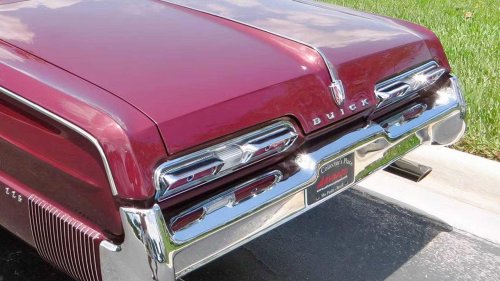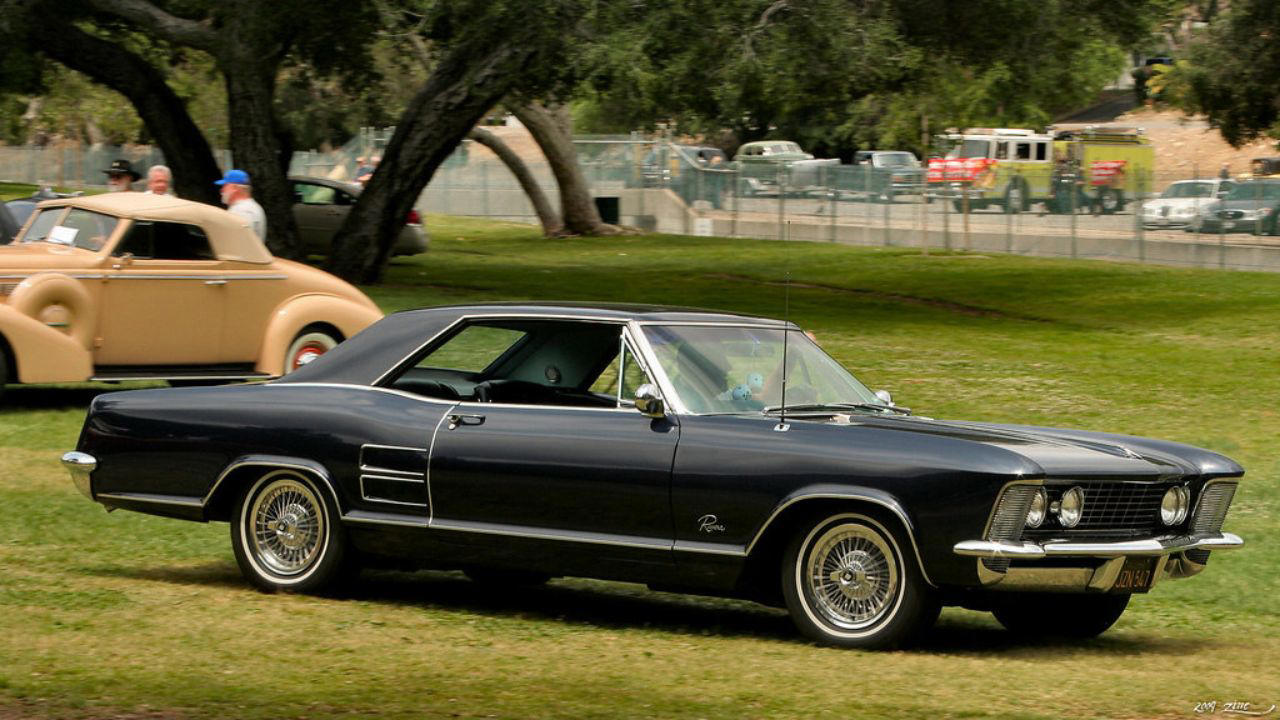



















Buick’s 1963 Riviera walked in looking expensive and stayed that wayThe 1963 Buick Riviera arrived as a personal luxury coupe that looked like money from the first sketch and has rarely seemed cheap since. Its knife-edged body, formal roofline, and understated chrome created a car that felt closer to a coachbuilt European GT than a Detroit production model, and six decades on, the market still treats it that way. Values, enthusiast reverence, and custom culture all suggest the same verdict: the Riviera walked into the showroom looking expensive and has spent the rest of its life proving that first impression right. From Thunderbird rival to design statement Buick spent the early sixties chasing an answer to the Ford Thunderbird, and 1963 became the year it finally built a personal luxury car to rival its cross-town competitor. The Riviera was positioned as a new sports and luxury model, with period material describing how Buick Stuns the with a Personal Luxury Car that did not look like anything else in the showroom. Rather than the rounded curves that dominated early sixties styling, the Riviera wore a crisp beltline, a long hood, and a short deck that made it appear lower and more tailored than its dimensions suggested. Behind that shape was a clear mission. The First Generation Buick Riviera was conceived as a Premium Personal Luxury Coupe, a two-door that aimed to combine American V8 power with the kind of cabin ambiance that might tempt a Cadillac buyer. Contemporary analysis of First Generation Buick notes that Buick was targeting an affluent customer who might otherwise have considered a Thunderbird or even a European import, and priced the car accordingly, in a bracket that sat well above the average family sedan. The sketch that became a sculpture The Riviera’s expensive aura started on paper. Designer Ned Nickles produced a watercolor rendering that captured the idea of a low, razor-edged coupe with a pillarless profile and a strong shoulder line. When Nickles showed his watercolor rendering to design chief Bill Mitchell, Mitchell was so taken with it that he told Nickles to turn the vision into a hardtop production car. Accounts of that moment describe how Nickles and Mitchell refined the sketch into a body that could be stamped in steel without losing its crisp lines. The result looked more like a concept car that had escaped the show stand than a mid-priced Buick. The 1963 to 65 Buick Riviera is often described as one of the most beautiful vehicles General Motors ever produced, with enthusiasts arguing that the three-year run set a standard for American GT design. Commentators on the 1963 to 65 still point to its subtle fender peaks, tucked bumpers, and frameless side glass as proof that Detroit could deliver European-level restraint when it wanted to. Luxury in the details, not the flash Inside, the Riviera leaned into quiet richness rather than chrome overload. Buick introduced it as a new sports and luxury model with bucket seats, a center console, and a driver-focused dash that treated the owner more like a pilot than a passenger. Period fact sheets on The Buick Riviera list dual exhaust, power steering, power brakes, and white sidewall tires among the standard or commonly ordered equipment, reinforcing the idea that no one was buying this car in base form. Under the hood, the Riviera carried Buick’s big V8, pairing that power with a chassis tuned for highway composure rather than dragstrip theatrics. Contemporary video reviews, such as a modern test drive that calls a Riviera one of, highlight how the car’s curves and stance still feel special from behind the wheel, even when compared with later muscle machines that eclipse it on paper. “The Cadillac that never was” Part of the Riviera legend rests on a persistent idea: that this Buick was really a Cadillac in disguise. Enthusiast commentary in videos that introduce the Buick Riviera as “the Cadillac that never was” reflects long-standing internal debates inside General Motors about which division should get this glamorous new coupe. The proportions, the restrained trim, and the formal roofline all feel in step with Cadillac’s image of the time, and many historians argue that the Riviera could have worn a crest-and-wreath badge without anyone blinking. Instead, Buick received the car and used it to pull its brand image upscale. The Riviera gave Buick a halo model that could sit in the same mental garage as European GTs and personal luxury icons, and that halo effect still colors how collectors talk about the nameplate. Later generations, including cars such as the 1992 model, would still be described in reviews as treasured classic choices, a sign that the first-generation car set expectations that lingered for decades. Beauty that aged in slow motion Designs that chase fashion tend to date quickly. The Riviera’s look, by contrast, aged in slow motion. Enthusiasts who analyze the facts and trivia routinely call it one of the best looking designs of the early to mid 1960s, and they point out that the Riviera really did not resemble other Buicks of its era. Its narrow grille, hidden headlights in later years, and near-fastback roofline gave it a presence that still photographs well from almost any angle. That timelessness helps explain why the 1963 Buick Riviera is a classic among classics in the custom and Lowrider world. A widely shared build of a blue coupe from Oxnard, California describes how the design of the 63 actually became available in late 1962 and forever became a sought-after body style that would last the test of time. The owner, Steve Quesada, turned his 63 Rivi into a car called “Blue Sensation,” and the post celebrating this Lowrider Buick Riviera underscores how customizers still treat the original body as something to be enhanced rather than radically altered. What it cost then, what it costs now In period, the Riviera was priced in line with its ambition. Contemporary analysis of The First Generation Buick Riviera notes that the car went after buyers whose budgets could also stretch to an upscale family home at a time when the average home sold for $12,650. That context helps explain why the Riviera’s cabin materials, standard equipment, and marketing leaned so heavily on the idea of personal luxury rather than simple transportation. Today, the market still reflects that premium positioning, even if the numbers look more approachable than some might expect. A European auction example of a 1963 Buick Riviera sold in Paris for €22,400, roughly $23,700 at the time, according to coverage of why the Buick. That car reportedly needed a proper, full restoration, which suggests that cleaner examples can command significantly more. Pricing guides for the United States tell a similar story. A valuation snapshot of Buick Riviera Classic lists 1963 Buick Riviera Pricing with a Low of $19,995, an Average of $38,298, and a High of $49,995. Those figures place the car in a bracket that feels consistent with a desirable but still usable classic, not a museum-only artifact. How the valuation tools see it Modern valuation platforms track the Riviera closely. One such tool invites owners to Protect their 1963 Buick Riviera from the unexpected and lists a 1963 Buick Riviera for sale alongside auction data for related models. The same resource includes a reference to a 1965 Buick Riviera GS coupe with a 401cid and 325 horsepower four barrel engine, underscoring how the first generation evolved mechanically while keeping the same basic body. Enthusiasts often consult this Hagerty valuation to gauge insurance values and market trends. Market aggregators that track actual transactions show that solid driver-quality cars still sell in the mid five figures. A listing of the 1963 Buick Riviera Market records a sale in Mankato, Minnesota, USA for $16,000 at an AutoHunter Auction, with other results from locations such as Fort Worth showing similar ranges. That Mankato, Minnesota, USA figure illustrates how a presentable but imperfect example can still be within reach for enthusiasts who are willing to take on some work. Consumer-focused data also helps frame expectations. A detailed breakdown of Used 1963 Buick catalogs Values, Reviews, and Awards for the model, treating it like any other used car, yet the presence of awards and owner praise speaks to how the Riviera has moved from depreciated luxury to respected classic. Affordable glamour, but not cheap Enthusiast media often emphasize that a 63 Buick Riviera is not as expensive as some might think today. Analysts who walk through the numbers point out that, according to Classic.com, the average sale price keeps the car in a range that offers style and presence without demanding a second mortgage. A feature titled “A 63 Buick Riviera Isn As Expensive As You Think Today” frames the car as a way to access sixties glamour at a price that still compares favorably with some modern performance cars, and references to that analysis appear in summaries that begin with phrases like Let’s talk numbers. Yet the Riviera has never truly been a bargain-bin collectible. The combination of limited production relative to mass-market sedans, the cost of proper body and trim restoration, and the car’s ongoing appeal in custom circles all help keep a floor under values. Even project cars command attention because the underlying body is so desirable for restoration or customization. Why enthusiasts still chase the 1963 car Ask owners why they sought out a 1963 Buick Riviera and the answers typically fall into a few themes. Some were pulled in by period advertising that framed Buick as a brand for successful professionals who wanted something less obvious than a Cadillac. Others grew up seeing Rivieras in custom magazines or cruising scenes, where the car’s long, low profile made it a natural canvas for paint, wheels, and suspension work. Video retrospectives on the 1963 Buick often highlight how the Riviera was designed to rival the Ford Thunderbird while offering a more European flavor. Commentators describe how the Riviera’s steering, seating position, and visibility feel surprisingly modern, and how the car’s road manners encourage long-distance driving rather than short sprints. That dual character, equal parts boulevard cruiser and grand tourer, continues to attract buyers who want a classic that can still cover real miles. A shape that keeps earning respect Designers and historians within General Motors circles often hold up the Riviera as evidence that American styling can be disciplined and elegant. The 1963 to 65 Buick Riviera is repeatedly called one of the most beautiful vehicles ever produced by General Motors, a sentiment echoed in multiple analyses that examine the car’s strange facts, features, and quirks. Those who study the Buick Riviera and history point to the car’s minimal ornamentation and strong stance as qualities that separate it from more baroque contemporaries. More from Fast Lane Only Unboxing the WWII Jeep in a Crate 15 rare Chevys collectors are quietly buying 10 underrated V8s still worth hunting down Police notice this before you even roll window down