




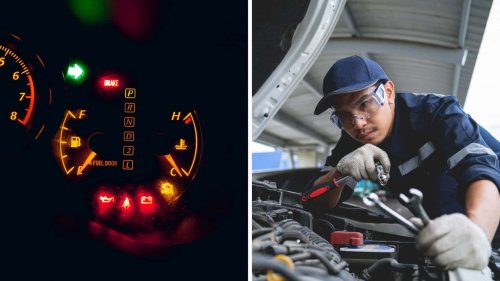



















At first, it’s comedy: a mechanic who is incredulous and amazed at the sight of a household power box in a car’s engine bay. But scroll through the comments on a recent viral Facebook Reel, and the punchline flips. It turns out that thousands of cold-climate drivers have wired setups just like it, and without them, their engines would never start on a subzero morning. The clip from car-minded creators Just Rolled In features a truck with its battery light on, which in many states is an easy and straightforward fix. In this case, though, the modification done to presumably manage severe weather was a head-scratcher for the technician under the hood. “The technician opened the hood and found a home electrical box installed inside the engine bay,” the unnamed narrator said. “Yeah, it's uh, it's lunchtime. Bye-bye.” What Does It Mean When the Battery Light Turns On? When that little red battery icon glows on the dashboard, it rarely means the battery itself is dead. Instead, it signals trouble somewhere in the charging system—that includes the alternator, voltage regulator, belt, or wiring—failing to replenish the battery while you drive. According to AutoZone, “the most common cause of the battery light is alternator failure.” A car can often run for only 30 minutes to an hour once the alternator quits feeding power back into the system. In the video, however, the technician spotted a junction box that looked ripped from a garage wall, complete with 120-volt outlets and extension-cord wiring. For viewers in Florida or Texas, that looks like a disaster waiting to happen. But to the thousands of Alaskans, Canadians, and Midwesterners who commented, the tech’s disbelief revealed a regional blind spot. “This is normal up here north of Canada,” one viewer wrote. “Block heater, oil heater, cab heater, charger—all needed under -35 °C.” Another added: “We have the same setup on our trucks in Antarctica.” The mysterious box is not a power inverter or a dangerous home-wiring hack, but is more likely a cold-weather survival kit. OWNERSHIP STORIES Viral stories from across the web Our team of experts tracks what owners are saying about car-shopping, repairs, the daily driving experience and more on social media. Gallery: Top RVs For Camping In Cold Weather What Is a Block Heater? A block heater is a simple but crucial device: a small heating element that screws into an engine’s coolant passage or freeze plug, warming the coolant and engine block before startup. In temperatures below -20 °F, that warmth can be the difference between a smooth start and an engine that grinds oil-starved bearings. Battery blankets and oil-pan heaters serve similar purposes, keeping the battery’s chemical reaction active and preventing motor oil from thickening like tar. As NAPA Know How explains, block heaters reduce cold-start wear, improve oil circulation, and shorten warm-up times. In Arctic fleets or long-haul diesel trucks, multiple heaters are often wired to a single multi-plug box for convenience, allowing the owner to plug one extension cord in at night so all critical components stay warm. The system works because these devices use household current (120 V AC), not the car’s 12-volt electrical system. They’re entirely separate, unless someone wires them incorrectly, which leads to the real issue: execution. Block Heater Installation: Safe vs. Sketchy The pros know there’s a right way to do cold-weather prep, and plenty of wrong ones. Factory block-heater kits from automakers like Ford, Toyota, and GM come with weatherproof connectors and grommets designed to route power safely. Aftermarket DIY jobs often cut corners with hardware-store boxes or unsealed outlets that invite moisture and corrosion. Even a small amount of road salt or slush can corrode electrical contacts, creating shock or fire risks when plugged in. So, the tech in the video wasn’t wrong to be concerned since the sight was sketchy. But context matters: the presence of a home-style box didn’t necessarily cause the charging-system fault that triggered the battery light. The smart play would have been to measure alternator output (typically 13.5 to 14.5 V DC while running) before assuming the box was to blame. The clip went viral precisely because it captured a cultural and geographic gap between mechanics. In Alaska, multi-plug heater boxes are as common as coffee warmers. In Arizona or Texas, they look absurd. That clash of experience is the same reason a snow-belt tech might laugh at a southern mechanic who forgets to check for road salt corrosion. The irony is that both sides are right: the setup can be smart and unsafe depending on execution. To an audience of mixed backgrounds, that nuance can vanish, leaving only the shock value. As one commenter quipped: “Tell me you’re from the South without telling me you’re from the South.” For drivers in frigid regions, block heaters remain a worthwhile investment, especially for diesels or cars parked outdoors overnight. A warm engine not only starts easier but emits fewer pollutants during warm-up, because the catalytic converter reaches operating temperature faster. And for anyone tempted to rig up their own “multi-outlet” solution, remember: under-hood electrical work demands waterproof components, proper gauge wiring, and secure fusing. After all, a few extra dollars in weather-proofing is cheaper than an engine-bay fire. Motor1 reached out to the creator via direct message and comment on the post. We’ll be sure to update this if they respond. We want your opinion! What would you like to see on Motor1.com? Take our 3 minute survey. - The Motor1.com Team