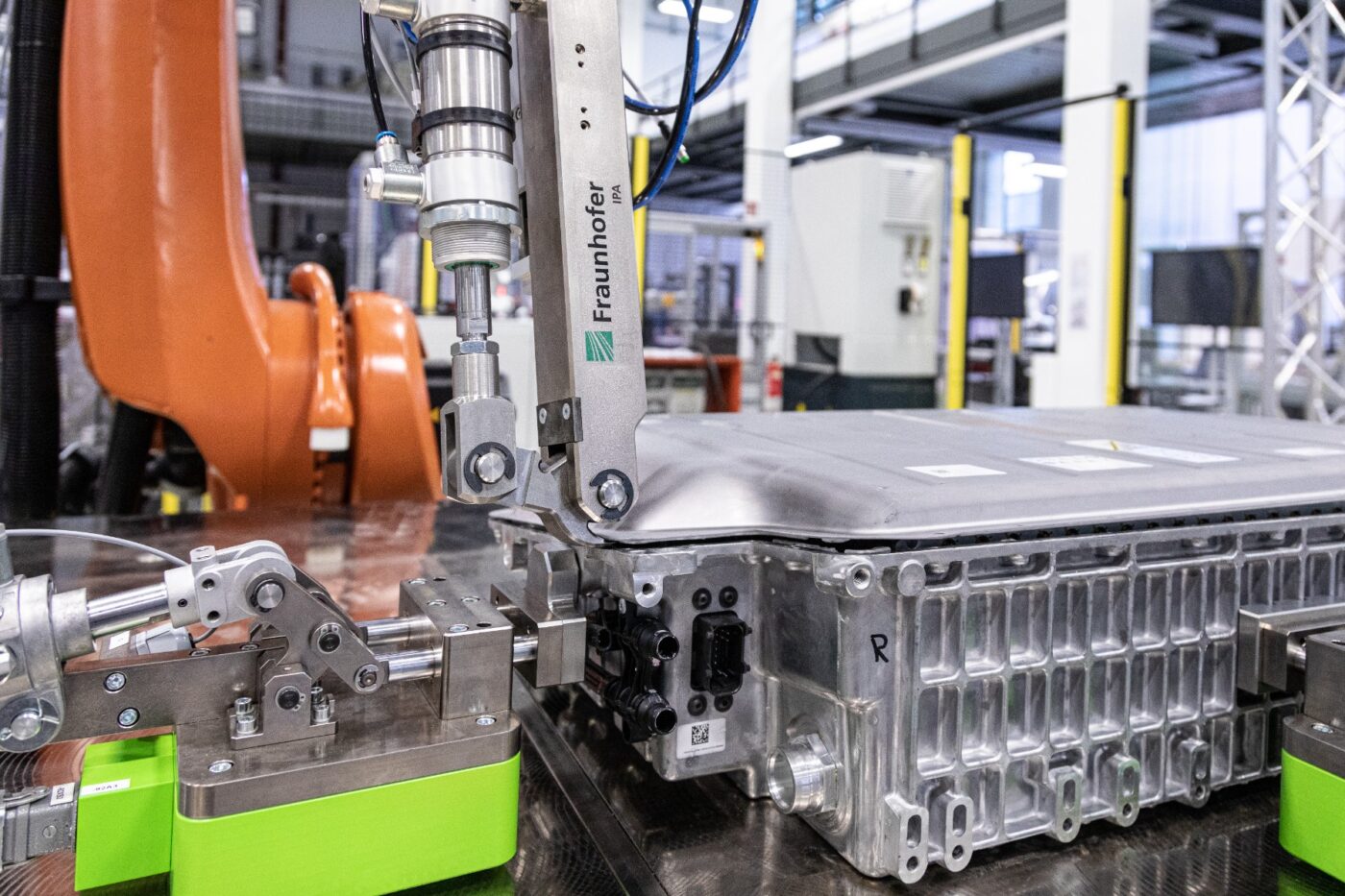
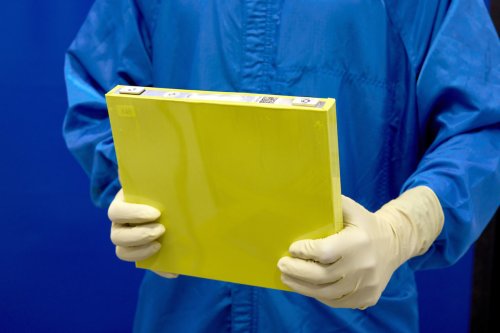
Image: Fraunhofer IPA/Rainer BezA major challenge in the disassembly and recycling of battery systems is dealing with the residual voltage they retain. To minimise safety risks, batteries are often deep-discharged beforehand. The problem is that this kind of radical discharging damages the battery cells, rendering them unusable for other purposes such as stationary energy storage systems.The new RoB@t2Cell research project aims to prevent this waste of still-functional battery cells. Instead, the goal is to make refurbished battery cells suitable for both second-life applications and material recycling.The core research team plans to develop a system that enables demand-based discharging of individual battery cells and modules. Depending on the intended use—such as reuse, remanufacturing, or recycling—the discharging process can be tailored accordingly. For example, battery cells and modules destined for recycling are deep-discharged, while those intended for reuse are gently brought to a specific state of charge. This ensures that valuable cells remain undamaged and can be refurbished for later use.A prerequisite for targeted discharging is early, automated decision-making about the further use of the batteries. The RoB@t2Cell project is developing a system that combines automated contacting, intelligent characterisation, real-time decision-making, and demand-based discharging. The necessary disassembly down to the cell terminals is carried out using an advanced robotic cell that meets the highest standards in safety, high-voltage, and software technology. Following the development phase, the system will be tested in an industrial pilot application by the consortium leader, Umicore.RoB@t2Cell builds on the predecessor project DeMoBa, which developed industrial disassembly processes for battery modules and electric motors. Along with consortium leaders Umicore and the Fraunhofer Institute for Manufacturing Engineering and Automation IPA, project participants include the German advanced clean production, related process automation and system integration technology specialist acp systems, the Fraunhofer Research Institution for Materials Recycling and Resource Strategies IWKS, and the Institute for Industrial Manufacturing and Factory Operation IFF at the University of Stuttgart. Siemens and BorgWarner are also involved as associate partners. The project is funded with 5.09 million euros by the German Federal Ministry for Research, Technology and Space (BMFTR) as part of the B@TS battery research programme.ipa.fraunhofer.de (in German), all-about-industries.com, innovationnewsnetwork.com



















 +14 others







































![Watt's up, doc? Huddig hybrid loader gets a big battery boost [video]](https://cdn.topcarnews.net/thumb/id/aHR0cHM6Ly9pMC53cC5jb20vZWxlY3Ry-ZWsuY28vd3AtY29udGVudC91cGxvYWRz-L3NpdGVzLzMvMjAyNi8xMC9odWRkaWct-aHlicmlkX21haW4uanBnP3c9MTUwMCZh-bXA7cXVhbGl0eT04MiZhbXA7c3RyaXA9-YWxsJmFtcDtzc2w9MQ/ea51c544798341190a5eed718aab1ee3.jpg?t=20261005&post_id=67784)