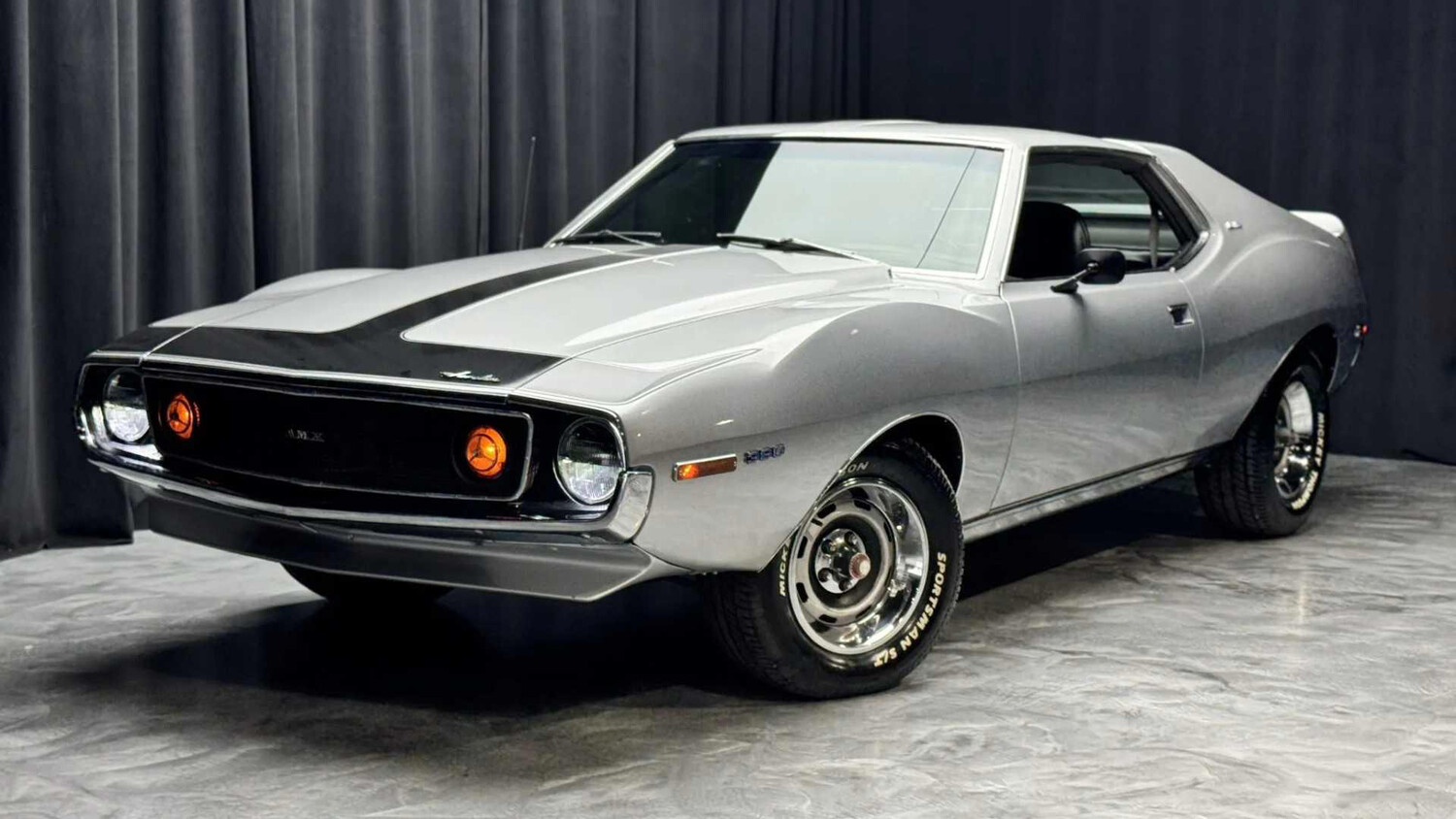
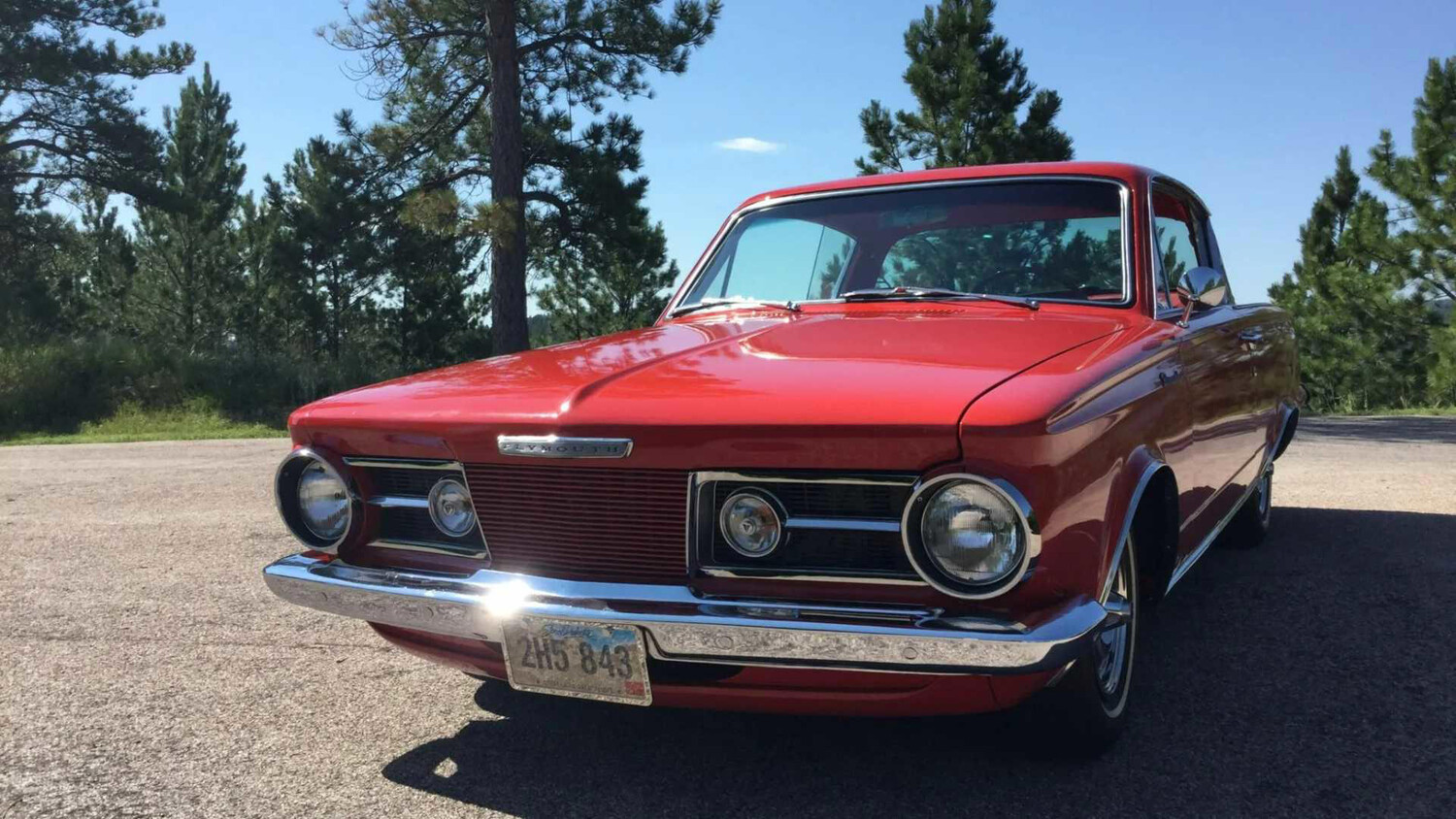
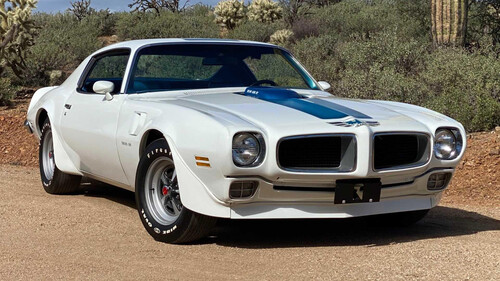
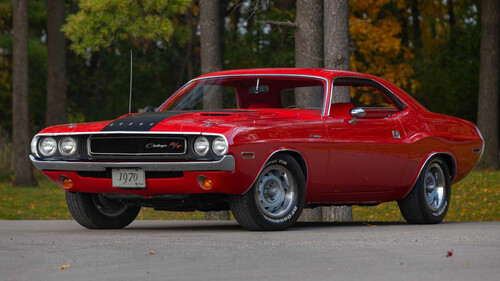
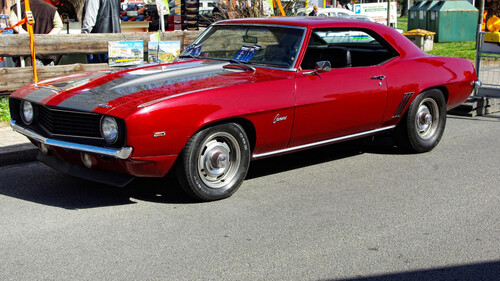
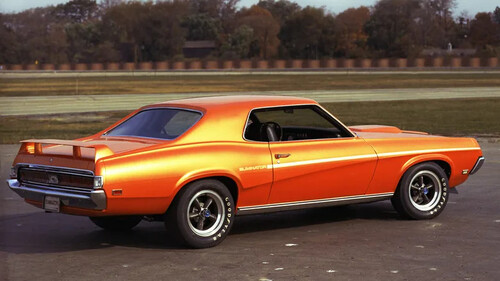
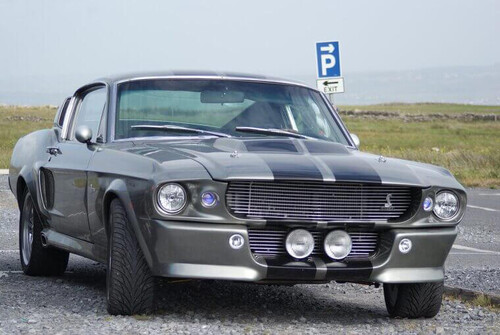
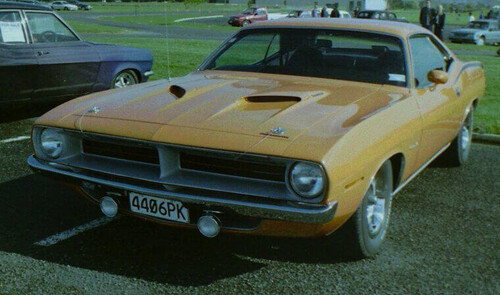
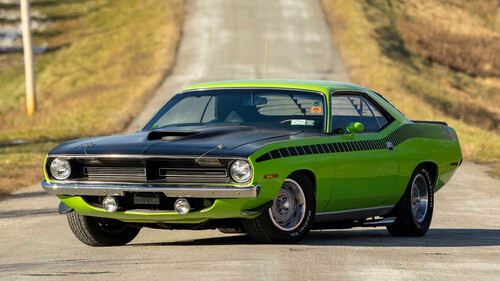
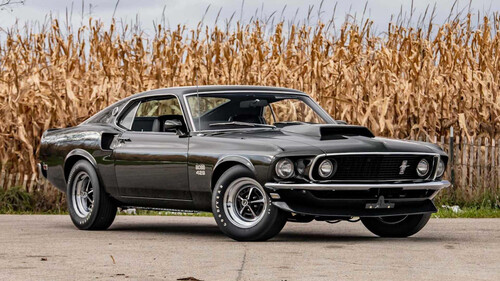
Some of the most popular cars to ever come out of the United States were introduced during the classic muscle car era, a period of time spanning the early-mid 1960s to the beginning of the 1970s. During this iconic and wicked timeframe, virtually all American automakers were heavily invested in building the most powerful mid-size cars money could buy. However, another automotive segment was experiencing a surge in popularity: the pony car.The "pony car" namesake was coined halfway through 1964, when the original Ford Mustang was released. In essence, a pony car is a model that's smaller than a mid-size car, comes strictly as a two-door, and features long-nosed, short-rear-ended styling. While the 'Stang technically wasn't the first pony car – that honor belonging to the Plymouth Barracuda – others like the Chevy Camaro and the Dodge Challenger followed.Another pony car sat on the proverbial sidelines during this time. It's called the AMC Javelin, and despite its wallflower personality, it managed to live many lives during its short time on earth. Unsung, Undersold, And Misunderstood Bring A Trailer Quick Facts About The AMC Javelin Introduced in 1968 Marked AMC's first entry into the pony car segment Spanned a total of two generations Offered a slew of inline-six and V8 engines over the course of its life Axed following the 1974 model year Prior to 1964, the pony car segment simply didn't exist. Of course, there were smaller, two-door models on the market regardless. One such model, the Plymouth Barracuda, was launched in early 1964 as a sort of pre-emptive strike against Ford. Most of the American automotive market were aware that Ford was working on some sort of smaller, two-door car, but none really knew the details. Chrysler, though, seemed to have had a hunch that Ford's small car would be a hit.Bring A Trailer When the Barracuda was launched in April 1964, it ended up beating the Mustang to the punch by just a couple of weeks. Sales were strong at first, but once the Mustang hit showroom floors, the Barracuda was, basically, forgotten by the majority of Americans. In just its first model year, Ford managed to shift 559,451 Mustangs. In the Barracuda's case, Plymouth only managed to sell about 65,000 units in the same timeframe. Suffice to say, the Mustang was an overwhelming success.Bring a trailer. The entire pony car segment was coined following the 'Stang's entrance. Once the pony car was off and running, other automakers were keen to play catch-up. General Motors finally joined the segment in 1967 with the introduction of the Camaro, followed shortly after by the Pontiac Firebird. Mercury also found itself with a pony car – the Cougar – which shared much of its underpinnings with the famed Mustang.Fashionably late, AMC (American Motors Corporation) finally decided to try and wrangle a piece of the pony car pie for themselves in 1968. Two prototypes of AMC's as-yet-unnamed pony car, a two-seater and four-seater, had been on the auto show circuit since 1966. The concept line, coined "Project IV", was designed by Dick Teague and a small team. Its main objective was to challenge the Mustang, as well as earn AMC more respect among younger American gearheads. The brand was finally ready to unleash what it had been working on, largely in secret, during the previous two years. Economy Cars Are So Last Year Bring A Trailer One of the largest advantages of AMC releasing its own pony car was an attempt to reinvent its image. Once the Javelin hit the market near the end of 1967, AMC went to work marketing it towards young folks and gearheads alike. Up until this point, AMC was known as a budget-friendly, economical alternative to brands like Ford, General Motors, and Chrysler. Not exactly an exciting reputation by any stretch.AMC had, in fact, dipped its toe into performance in the past, but those previous attempts weren't impactful enough to change the brand's image into a more exciting one. So, this meant that hopes for a new rep hinged on the Javelin's success. First Generation (1968–1970) Bring A TrailerOn August 22, 1967, the very first AMC Javelins went on sale. It was priced right at $2,714, or roughly $26,335 in today's money. Its MSRP was specifically meant to compete directly with the Ford Mustang's, which was just seven dollars less. The first-gen Javelin actually managed to introduce a few novel features not commonly seen on mass-produced cars at the time, like fiberglass safety padding and a pillared windshield. The Javelin also packed more cargo space than most of its rivals, and was, reportedly, quite comfortable.A few special edition iterations of the first-gen Javelin were sold in limited numbers. The first, called the "SST" or "Super Sport Touring" package, was made available at the Javelin's debut. The main purpose of the SST grade was to offer folks a bit more luxury than you'd normally expect in a small pony car. Things like wood effect dashboard inserts, reclining bucket seats, and exterior decals were included in the package. Those who weren't interested in decals could opt for a "decal delete" and receive a small monetary credit.Bring A Trailer Come 1970, the first-gen Javelin underwent a re-style to make it look more muscle car-ish. That same year, AMC introduced the limited "Mark Donohue Edition" for the Javelin, of which only about 2,501 examples were built. Mark Donohue was a prominent figure in various American racing series, and took home numerous wins, including the Indianapolis 500.Javelins specced with the package received a standard 360 CID V8, with the option to upgrade to a larger 390 CID powerplant. In addition, AMC's "Go Package" was included, which shoehorned in a tuned suspension, functional Ram-Air hood, power front disc brakes, and a rear spoiler.*Specs courtesy of Hemmings Second Generation (1971–1974) Bring A TrailerAn all-new Javelin debuted for the 1971 model year with a decidedly more-muscular appearance. The pony car segment was growing, literally, and AMC penned the second-gen Javelin to follow this trend. One of the hallmarks of the new design was its extremely flared wheel arches, done on purpose in order to accommodate larger racing tires. Interestingly, the second-gen 1971 Javelin would play a key role in law enforcement, serving as a patrol car for the Alabama state police force. The town of Musekgo, Wisconsin, also had a few police-packaged Javelins.Bring A Trailer This second and final generation would also see the introduction of the "AMX" grade: the most muscular mass-production Javelin yet. It was launched to sit at the top of the Javelin's lineup, and boasted performance-oriented bits like a larger rear spoiler and a slew of optional V8s, including a 401 CID iteration. The AMX was, essentially, a Trans-Am car for the road, as AMC's marketing department claimed. The SST trim carried over into the second generation, as well.*Specs courtesy of Hagerty The Javelin's Racing Pedigree Wikimedia Commons: CZmarlinThe Javelin ended up becoming a formidable racer in a few series. One of its most successful racing experiences was within the SCCA Trans-Am series, wherein it managed to secure the 1971 and 1972 championships, along with a posthumous 1976 championship. All three victories were thanks to a racing partnership struck up between driver Mark Donohue and Roger Penske, owner of the Penske racing team. However, even before these wins, the Javelin was beginning to show its dominant racing personality right at the beginning of its lifetime.Overlooked? Maybe, but the AMC Javelin had the moxie to run with the best of the pony cars, even if few really knew about it.