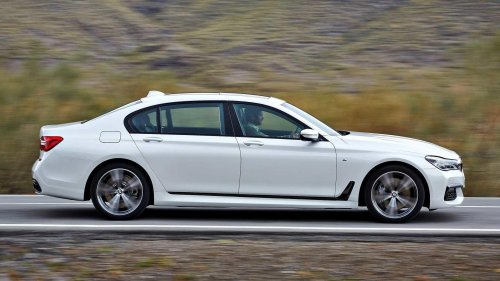
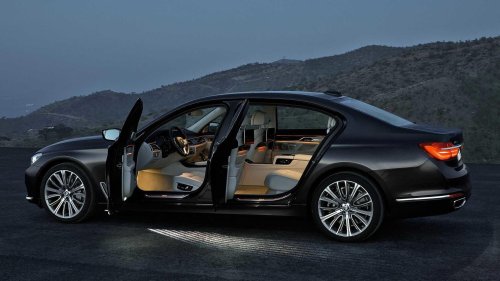
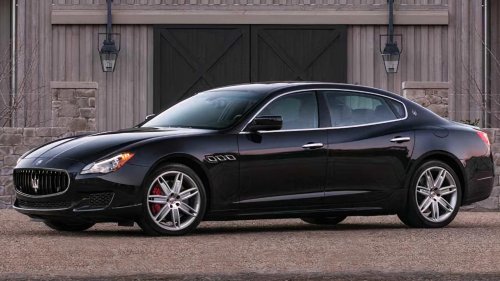
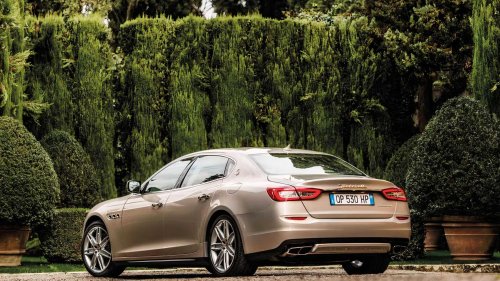
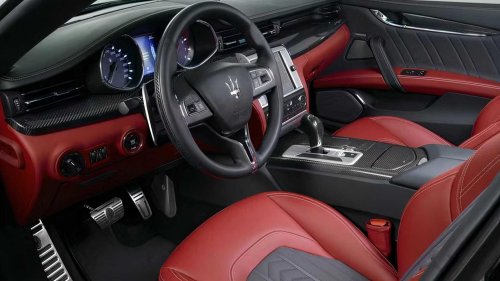
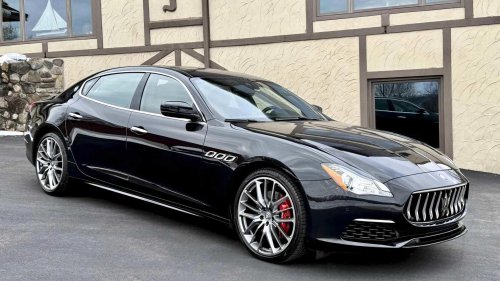
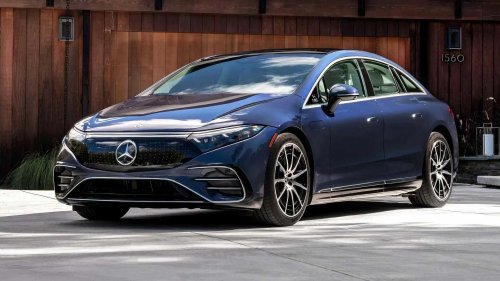
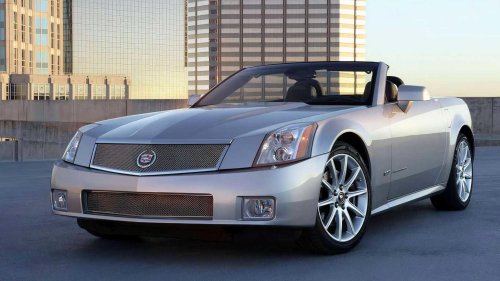



















Luxury cars are supposed to represent the pinnacle of vehicle ownership—engineering, craftsmanship, status—yet within just a few years, many six-figure cars collapse into price brackets typically occupied by well-optioned mass-market vehicles. It’s not unusual to find vehicles that once stickered upwards of $100,000 now trading hands for the price of a Honda Civic. Outside of in-demand models from brands with a reputation for reliability, that's common market dynamics.Some are predictable depreciators—flagship German sedans like the BMW 7 Series and Mercedes-Benz S-Class have long followed a steep curve downward, largely attributed to heavy leasing cycles and high maintenance costs—but beyond them are luxury cars that weren't just expensive and out of reach to most buyers; they were overlooked from the start. These cars may have been objectively good (some were even excellent), but for various reasons, they failed to resonate with buyers. Luxury Cars Depreciate Quickly, And Overlooked Cars Even Faster BMWWith few exceptions, luxury vehicles do not depreciate gracefully. The bulk of the blame starts with their high price tags. If you understand that a car depreciates most rapidly in its first few years on the road (say 50%, for easy math), you see that $100,000 cars lose $50,000 in value, whereas a $40,000 car loses just $20,000. Then, there are the intangibles. Luxury vehicles are priced not just on materials and engineering, as are their mainstream brethren, but on brand equity.A significant portion of a luxury car’s MSRP reflects unquantifiable qualities like heritage, exclusivity, and perception. Porsche, for example, has strong cachet built up in its unmistakable shape (even in SUVs) and gold-trimmed shield badge; quality is expected from its small-team workmanship, but that is also more time-consuming, meaning fewer cars are available each year. And, you could argue that building cars by hand loses the overall quality control and consistency of automated assembly. The Economics Of Supply And Demand In The Luxury Segment Bring a TrailerOver time, buyers begin to attribute certain qualities to vehicles that aren’t necessarily logical, and luxury cars are probably more susceptible because luxury buyers tend to be more discerning about their cash outlays. Although many luxury buyers desire a car that conveys their achievements, they are also driven by inherent quality, either in comfort or performance. And some also look at the potential return of a resale, whether that applies to a well-kept three-year-old resale or the auction potential of a 30-year-old classic.The main factor in depreciation is that high-end luxury cars tend to be leased, which can create a bottleneck downstream. Keeping in mind that most depreciation happens in the first few years of ownership, used luxury vehicles are re-entering the market in three to five years in relatively good condition and still on warranty, at considerable savings. The result is an influx of vehicles looking for buyers. If the car's reputation is good, buyers lap them up; if the reputation isn't good, or if little is known about the car, buyers don't step up, and prices adjust accordingly, usually downward. How Very Good Luxury Sedans Fall Between The Cracks BMWThe hardest-hit luxury cars by depreciation are those that don’t fit neatly into a category. They're not the most opulent, the fastest, or the flashiest, and so they struggle to acquire a dedicated following in the market—buyers looking for performance look at track reputations; buyers seeking comfort and technology choose more established options; and even efficiency-minded shoppers look to hybrids or EVs.The result is a car that does a lot of things well but is vague when it comes to pinpointing a single, dominant trait. And when a vehicle lacks a clear identity, it becomes easy to ignore—and once it’s ignored, depreciation accelerates even more quickly. That’s the predicament in which one of the prettiest, best performing, most exotic luxury sedans finds itself. The 2016 Maserati Quattroporte GTS Is An Overlooked Luxury Sedan For Under $30k Aspirational And Admired But Rarely Bought MaseratiThe 2016 Maserati Quattroporte GTS has all the ingredients of a compelling flagship sedan—a Ferrari-built engine, emotional styling, and timeless interior presentation—but like many superb cars that came before it, it didn’t wrap it all up into a desirable package to appeal to the masses. It had a loyal niche following of buyers who worshiped the brand and could sift through all the pluses, but it didn’t have the curb appeal.Its 3.8-liter twin-turbo V-8 produced 530 hp, sent to the rear wheels through a shiftable automatic transmission, but the Quattroporte GTS wasn’t chasing quarter-mile times like a Porsche Panamera or Tesla Model S—it was delivering an experience. Maserati emphasized emotion, much like an Italian romance film, and that further came through in a goose bump-inducing exhaust note, reverberating in the buttery-leather interior that remains an analog anomaly in a luxury world chasing buttonless controls and large display screens. The Message Just Didn’t Get Out That The Maserati Quattroporte Was Very Good MaseratiDespite its strengths, or maybe because it didn’t play up those strengths effectively, the 2016 Maserati Quattroporte GTS struggled to find buyers. Reviews at the time were generally positive, often praising its character and distinctiveness, sometimes even slapping potential buyers in the face to snap out of it and see all that it had to offer, instead of being lulled by soft-voiced celebrities playing up the serenity of luxury. But admiration didn’t translate into sales.Several factors worked against it: the brand itself—Maserati carried an image of exclusivity, but also one of inconsistency, and concerns about reliability and costly long-term ownership lingered. The interior technology, while functional, lagged behind German competitors, and the technology that helped drivers enjoy the drive never resonated with the all-encompassing infotainment systems and convenience features that were becoming key decision points for buyers. From Bentley Status To Corolla Affordability MaseratiThe Quattroporte was frequently comparison-shopped but rarely chosen. Buyers would consider it, appreciate it, and then default to the BMW or Mercedes-Benz that was more familiar. Sales volumes remained low, and the car quietly faded into the shadows. That lack of demand had predictable consequences. With an original MSRP exceeding $140,000, the 2016 Maserati Quattroporte GTS entered the market at a premium level. But without sustained interest from buyers, its value eroded quickly.Good examples of the 2016 model can typically be found in the $25,000 to $35,000 range, according to Classic.com, but only four transactions have been tracked. According to KBB, the fair purchase price stands at $25,800, representing depreciation of 82% and making it one of the hardest-hit luxury sedans of its era. It's one of those cases of market rejection, where buyers never fully embraced the car, and it amplified the decline. The result is a terrific used-car buy, but the lingering owner doubts still remain. Living With the 2016 Maserati Quattroporte GTS MaseratiA decade on, the 2016 Maserati Quattroporte GTS still delivers a compelling driving experience and luxurious cabin. In a market increasingly saturated by clinically competent luxury sedans, the Quattroporte stands out not because it is objectively better in any metric, but because it offers something different, and the unquantifiables—the sexy lines, the throaty exhaust note, and the exotic opulence—can't be added as data on a depreciation spreadsheet. Performance and Luxury in Context MaseratiThe Ferrari-built V-8 is strong and responsive, with a character that stands in contrast to the more clinical feel of many of its contemporaries, and even against modern powertrains. Acceleration is competitive, and the rear-wheel-drive layout adds a level of driver engagement that's increasingly rare in the all-wheel-drive luxury sedan era that encourages year-round use in a climatically changed world. Premium Luxury Is A Curious Mix Of Heritage And Modernity MaseratiLike many of the car’s other traits, the driver-focused interior of the 2016 Maserati Quattroporte GTS goes mostly unnoticed. It’s impressive in craftsmanship, but it’s conflicted in execution when compared to its contemporaries, and especially by today’s flagship standards. It delivered impressive luxury features, like Poltrona Frau leather and real wood or carbon trim, and it was hand-finished in a way that many flagships struggle to replicate today.However, its strengths were undercut by weak technology at a time when technology was becoming increasingly important. Even after updates, its infotainment and driver-assistance features lagged behind contemporaries from BMW and Mercedes-Benz, both of which offered more advanced interfaces and features. Compared to today, that technology is sorely lacking. Modern flagships prioritize large displays, seamless interfaces, and levels of customization that would make Super Mario cower. High Ownership Costs: A Reality Check For Low-Cost Used Luxury Cars MaseratiThe 2016 Maserati Quattroporte GTS is not a low-cost car to live with, even at its current purchase point. Although the brand has taken huge strides in improving its reliability, routine service, parts availability, and specialized labor, all contribute to higher ownership costs. And although they are subjective, insurance costs reflect the costs of repair and the way in which the sports sedan may be used. The 2016 Maserati Quattroporte GTS Is An Affordable, Overlooked Exotic Bring a TrailerThe 2016 Maserati Quattroporte GTS is a clear example of how luxury car depreciation can be viewed as an opportunity, especially by savvy luxury buyers who can appreciate the differences in an increasingly cookie-cutter world. It combines strong performance, distinctive design, and genuine opulence that make it stand out in an executive suburban neighborhood populated by BMWs and Mercedes-Benzes.If the 2016 Maserati Quattroporte is a bit too exotic for your tastes, though, there are other choices. The 2022 Mercedes-Benz EQS 580 Is Underappreciated For Different Reasons Mercedes-BenzAs a thoroughly modern counterpart, the Mercedes-Benz EQS 580 represents the cutting edge of luxury EV design, with its electric powertrain producing performance-car power, and delivering a near-silent driving experience in one of the most advanced interiors on the market. Its rapid devaluation is a victim of the quick pace of electric powertrains, and what was meant to be the future Mercedes flagship sedan is now just an option. The 2009 Cadillac XLR-V Struggled To Define Itself And Gain An Audience CadillacLooking way back, the 2009 Cadillac XLR-V illustrates how the pattern of vague positioning and ambivalent marketing accelerates depreciation. Developed from a Corvette platform and powered by a supercharged V-8, it offered the strong performance and distinctive styling that usually defines flagship roadsters, but it was neither a pure sports car nor a traditional luxury grand tourer, and failed to gain a clear audience.