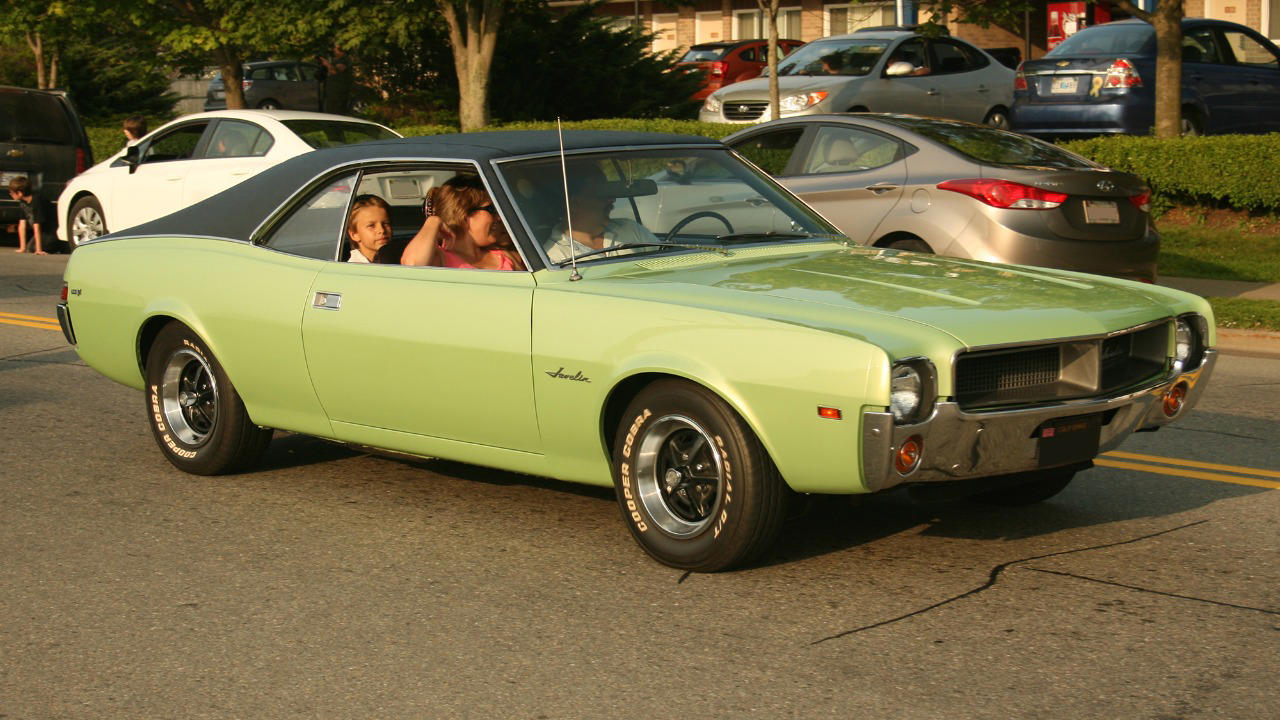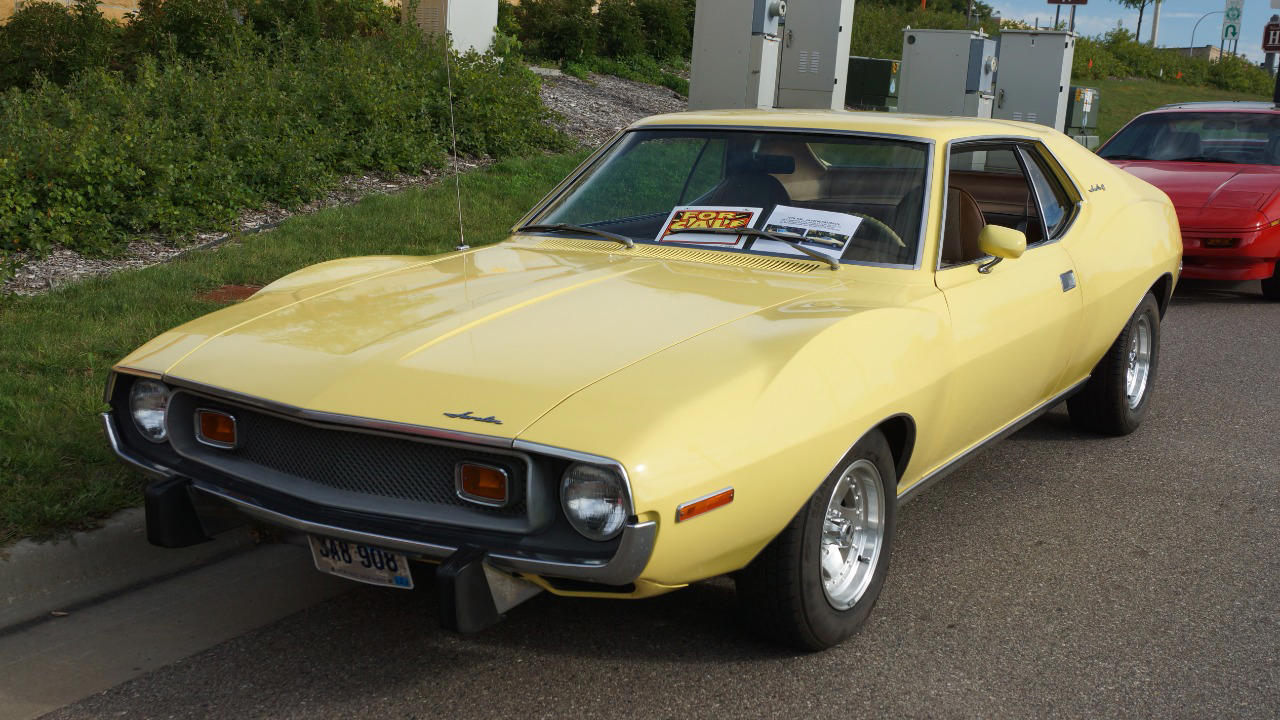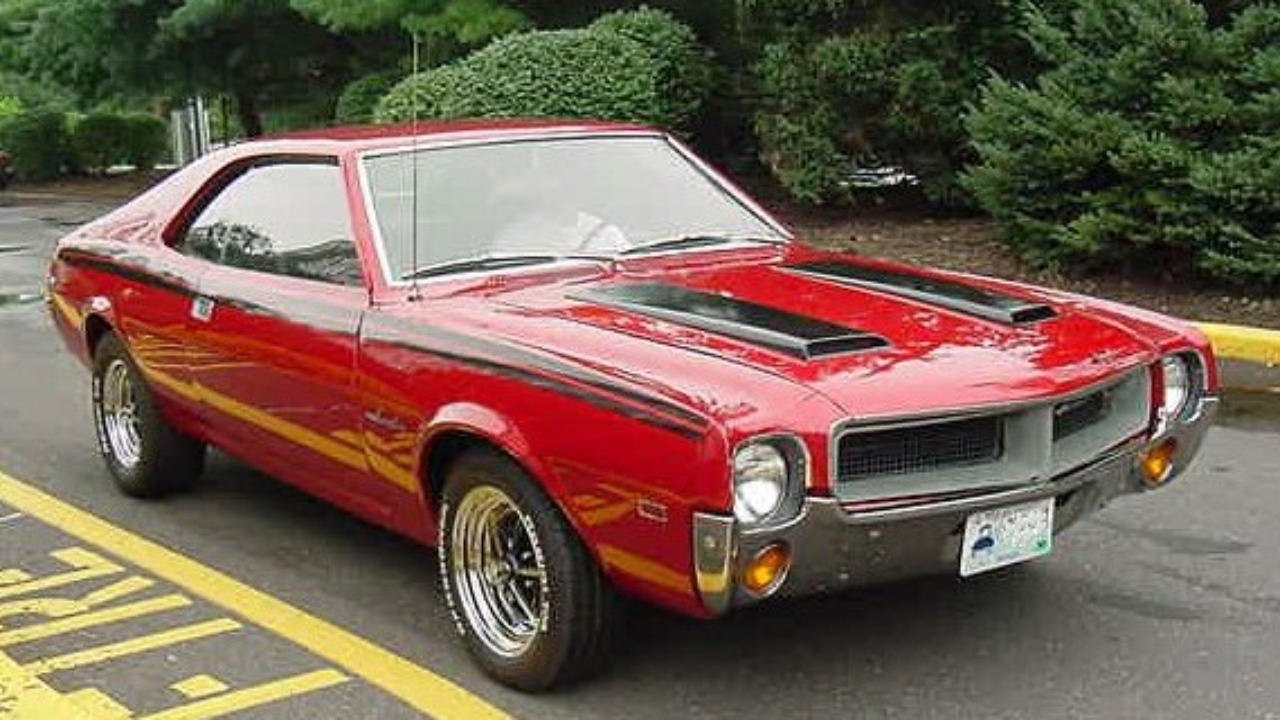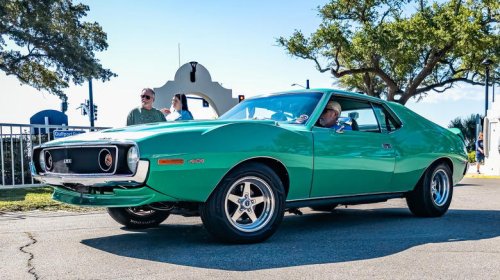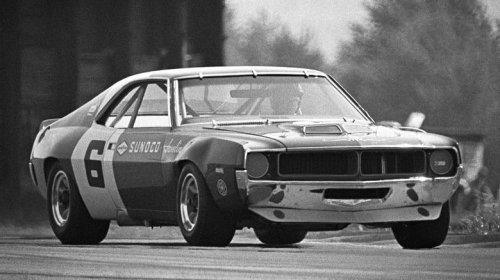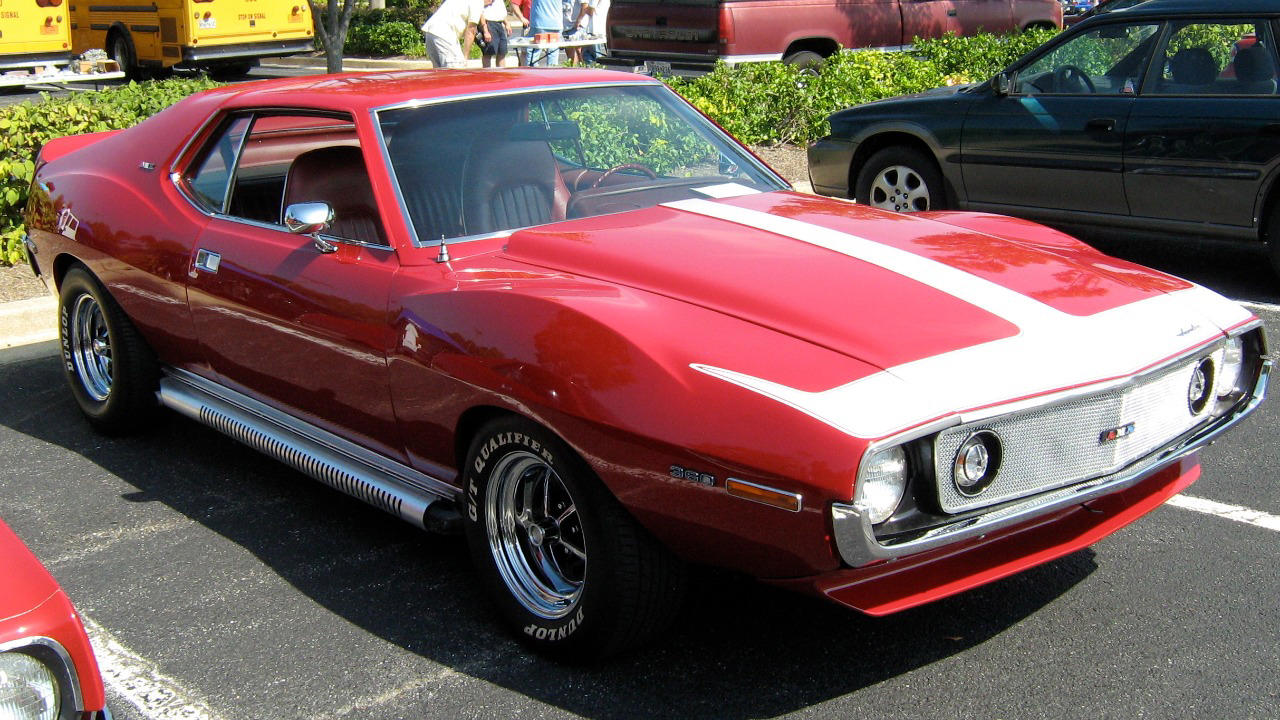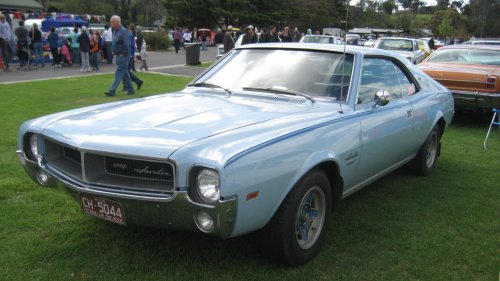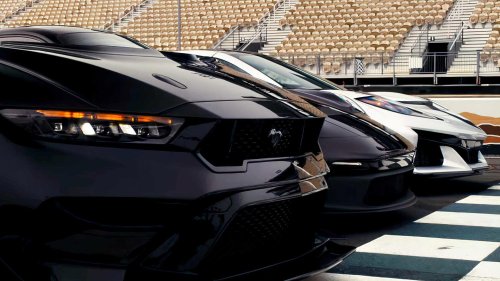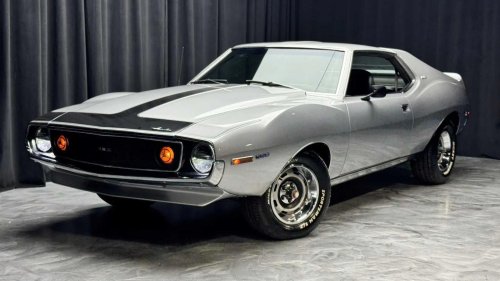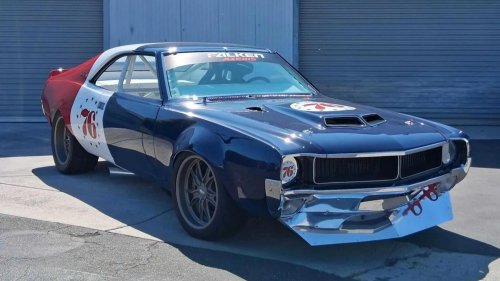
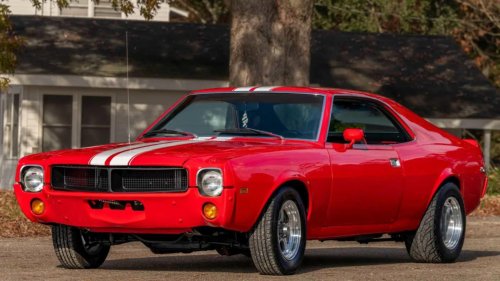
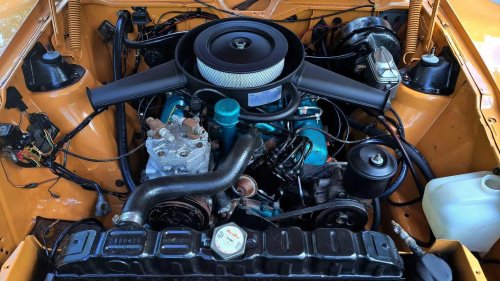
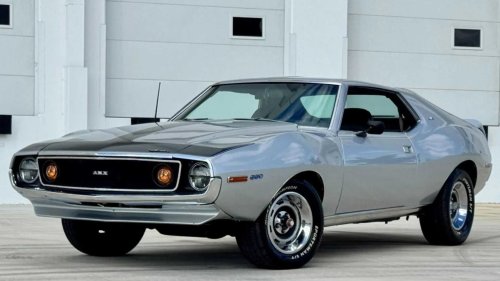
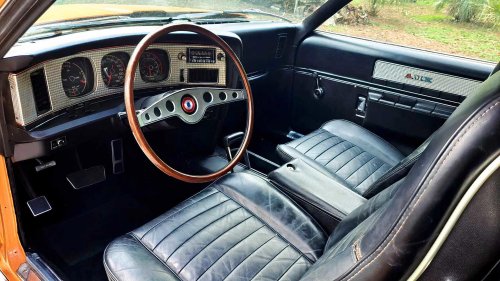
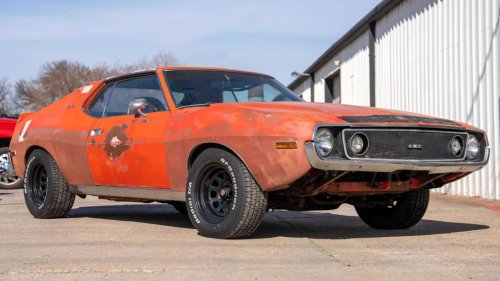
















Overlooking the underdog has always been the norm, until he pulls an upset. Although the AMC Javelin never had the engineering budget of GM or the marketing muscle of Ford, it found itself in the same races, on the same tracks, and occasionally ahead of what both companies were offering. Let’s start by picturing a Javelin car sitting on a Trans-Am grid, flanked by a Mustang, the Pontiac Firebird, the Dodge Challenger, and the Camaro, in a race where it seemingly doesn’t belong, well, at least not on paper. That’s where drivers like Mark Donohue and teams led by Roger Penske come in, backing it until the story quickly changes. For today's collectors, that underdog narrative is exactly what makes the Javelin compelling. Finding one today is a rare sight, historically significant, and still undervalued. With Mustangs and Camaros controlling the market, one of the last great entry points into classic American muscle car performance remains the Javelin. From The Drawing Board To The Drag Strip: The History Of The AMC Javelin AMC The AMC Javelin debuted in 1968 like a baptism of fire, jumping headlong into a battlefield already dominated by giants. During this era, the pony car wars were in full swing, and AMC (American Motors Corporation) was nowhere near the size of its competitors. The company's first generation came between 1968 and 1970, leaning into the era's classic proportions: short deck, long hood, and clean, understated lines. When the Javelin showed up, critics were surprised because it didn’t just compete; it held its own dynamically and stylistically.The AMC Javelin was produced between 1968 and 1974. The end of the first generation 1970 AMC Javelin was a key moment in the car’s evolution. AMC refined the original formula by giving it a wider, more aggressive stance. It was from here that the Javelin car embraced the muscle car aesthetic through and through, including adding flared fenders and an even heavier visual presence. AMC’s problem was also its biggest advantage: since its resources were limited compared to rivals like Ford and GM, it had to outthink them. For them, performance was survival; it wasn’t optional. This was the philosophy that directly led to one of the most fascinating racing stories in American automotive history. Mark Donohue, Roger Penske, And The Race Track That Built A Legend AMC AMC Vice President Bill McNealy met with Penske and Donohue in late 1969 to recruit them away from Chevrolet for a then-unheard-of $2 million contract—roughly $17 million today—so that Penske would take over AMC's failing Trans-Am program. Despite the team having never even seen the cars they were taking over, Penske made a bold promise to the press that he would win seven races in his first year. It was this partnership that finally turned the Javelin from an underdog into a contender. Before this partnership, AMC had entered the Trans-Am Series as an underdog in 1968, with Kaplan Engineering, led by Ronnie Kaplan and Jim Jeffords, and went on to finish every race and earn six second-place finishes.The story wasn’t the same in 1969. 1969 was a disastrous season for AMC. Penske’s Chevrolet team won eight races in the Trans-Am Series, picking up 78 points in the process, while AMC finished with just 14 points. Donohue and Penske changed that for AMC. With Donohue as driver and engineer, he transformed the AMC Javelin AMX into a precision tool, and by 1971, AMC captured the Trans-Am manufacturer’s championship. This was a result few saw coming. After that, the white, red, and blue Javelin AMX livery became an iconic design that directly influenced the look and marketing of street cars. This gave the Javelin car credibility. Bob Tasca Sr.’s “win on Sunday, sell on Monday” slogan began working for AMC.Donohue won three races in 1970, with AMC finishing 2nd in the Manufacturers' Championship, losing to Ford by just one point. In 1971, he won seven out of 10 races, sweeping the final six events in a row. This was when AMC won its first SCCA Trans-Am Manufacturers' Championship. Penske also won his first IndyCar win at the Pocono 500. By 1973, the partnership had snagged 11 victories for AMC in the Trans-Am Series. Under The Hood — Engine Options, The 390 V8, And Real-World Performance Bring A TrailerThe AMC Javelin’s engine lineup started with a modest inline-six. The first generation started with six engine options between 1968 and 1969, five of which were V8s. The inline-six was a 232 CID one-barrel carburetor engine producing 145 horsepower and 215 pound-feet of torque. It was followed by the 290 CID V8 engine, which was offered with either a two-barrel or four-barrel carburetor, producing 200 and 225 hp, respectively. The 343 CID V8 engine was also offered with either a two-barrel or four-barrel carburetor, producing 235 and 280 hp, respectively. The 390 CID V8 engine was the king of the lineup, producing 315 hp and 425 lb-ft of torque.By 1970, AMC added a two-barrel inline-six engine and redesigned its V8 lineup. It still offered the 390 CID V8, but an upgraded version offering 325 hp, while replacing the rest with a two-barrel 304 CID V8, which produced 210 hp, and a 360 CID V8, offered with either a two-barrel or four-barrel carburetor, producing 245 and 290 hp, respectively. By the second generation, AMC removed the two-barrel inline-six engine and replaced it with a 258 CID single-barrel inline-six. AMC also replaced its high-performance 390 CID V8 with the 401 V8, which was an underrated and seriously capable sleeper powerhouse. The AMC Javelin AMX went a step further, becoming the high-performance trim within the Javelin lineup. The high-performance 390-equipped cars hit 0–60 mph times of approximately 6 seconds and a quarter-mile in the mid-14-second range. AMC’s “Go Package” made handling better with an upgraded suspension, brakes, and cooling, giving the Javelin the advantage in corners. Javelin Trim Levels And The AMX Variant — Which One Is Right for You? AMC The base Javelin car is simple, accessible, and is often the most affordable entry point today. The SST (Super Sport Touring) trim level followed. This was the trim that sold in volumes. It had more comfort features in a much better interior, and access to a wide range of engines. This was the sweet spot for many buyers. The AMC Javelin AMX was the performance flagship trim. It had distinct styling, a more aggressive personality to define it, and carried the stronger engines. For 1970 only, AMC released the Mark Donohue Edition, an SST trim that included a standard massive rear "ducktail" spoiler designed by Donohue, and featured either the 360 or the 390 V8.Bring A Trailer In 1973, AMC released the Trans-Am Victory Edition to celebrate the racing titles won between 1971 and 1972. In the used market, the 1970 AMC Javelin is a particularly desirable model year. This model year balanced clean early styling with peak pre-emissions performance. However, production numbers were significantly lower than those of the more prestigious Mustang and Camaro across all variants. That was the problem that led to the discontinuation of the Javelin car in 1974, but it is an important factor today that has turned it into a collector’s car. Buying an AMC Javelin Today — What Collectors Need to Know AMCToday, the AMC Javelin is a highly desired vehicle. If you’re searching for an AMC Javelin for sale today, the 1968–1969 era offers a clean design and is easier to restore, but the 1970 AMC Javelin is the best option for its balance of style and performance. However, the 1971–1972 era is the best access to the incredible performance of the 401 V8 at relatively low prices. But the AMC Javelin comes with its own fair share of issues. Floor pans, rear quarters, and the trunk floor tend to suffer from rust. Also, its limited availability and the company going defunct mean parts are limited compared to the Mustang and the Camaro. This is important when considering maintenance and sourcing the 390/401 engine blocks. The vehicle also suffers from electrical quirks unique to AMC.That said, driver-quality AMC Javelins for sale, especially the SST trim, range from $14,000 to $18,000 on the used market today, with those in excellent condition often exceeding $20,000. High-mileage units sell for under $10,000. For SST Mark Donohue trim levels in good condition, budget between $35,000 and $45,000. Collector grade options could exceed $80,000. If your weapon of choice is the AMC Javelin AMX, expect to fork out anywhere from $30,000 to over $95,000, depending on the condition of the car. However, compared to rivals, this is approximately 30–50% less than what you’d get on equivalent Mustangs or Camaros.Source: Hot Rod Network, Classic.com, Bring A TrailerFAQQ: What is the difference between the Javelin and AMX?The AMX began as a separate two-seat performance model but later became a high-performance trim of the Javelin with upgraded engines and styling.Q: How much is an AMC Javelin worth?Prices range from about $15,000 for driver-quality cars to over $75,000 for high-end AMX models.Q: What engine came in the AMC Javelin?Options ranged from an inline-six to V8s, including the 290, 343, 390, and later the 401.Q: How many AMC Javelins were made?Roughly 235,000 units were produced between 1968 and 1974.Q: Is the AMC Javelin a good investment?Yes. It remains undervalued compared to competitors while offering strong performance, rarity, and historical significance.