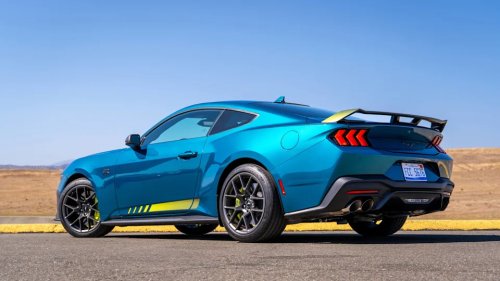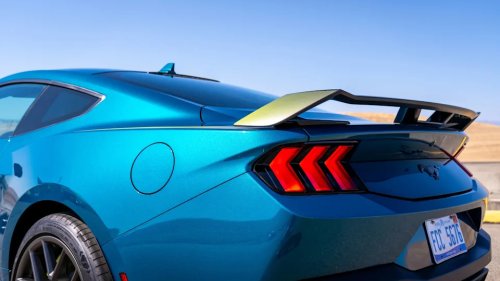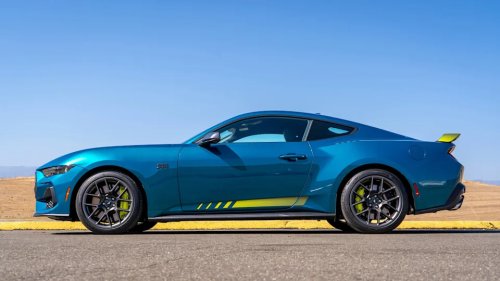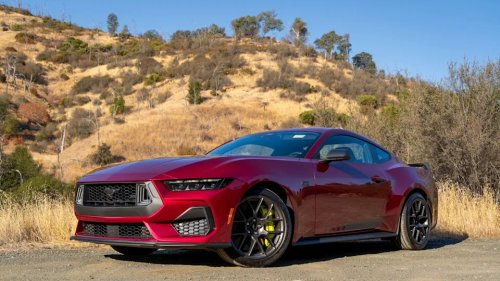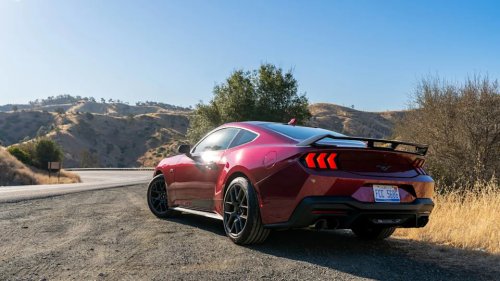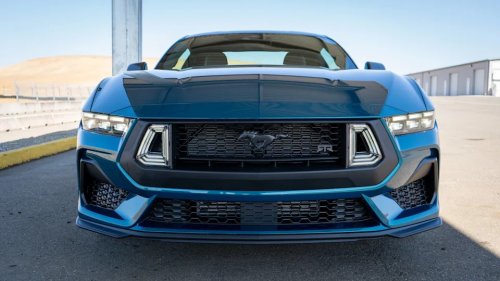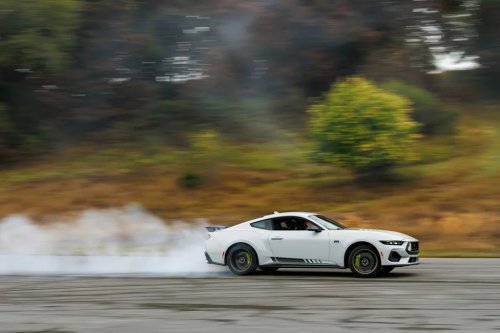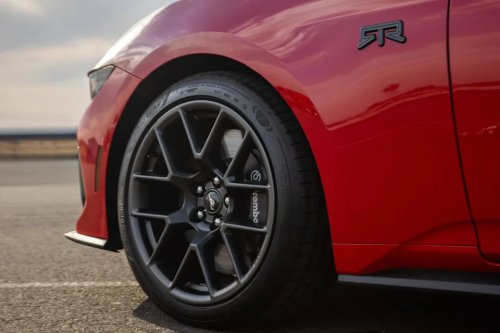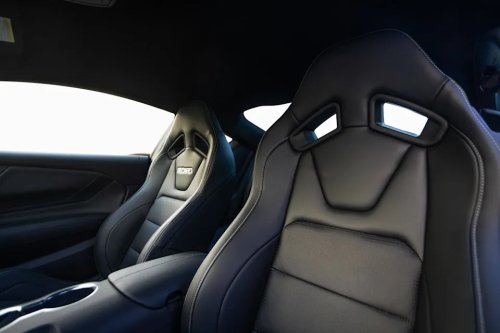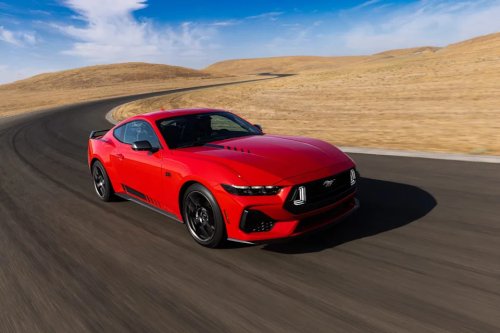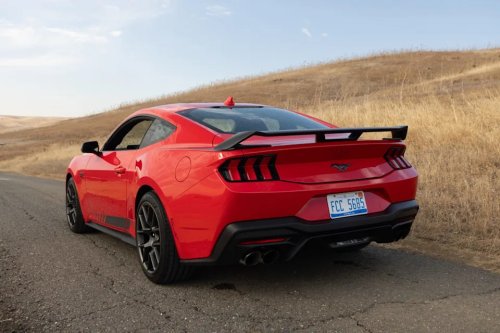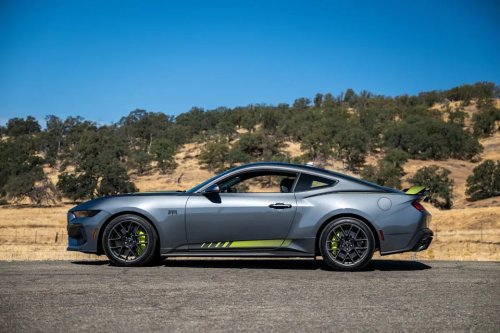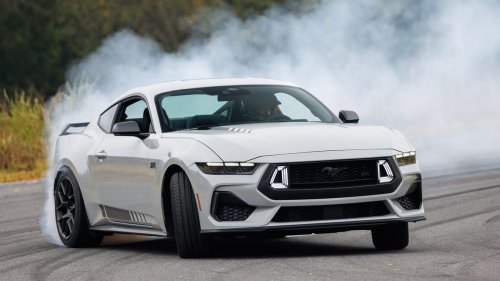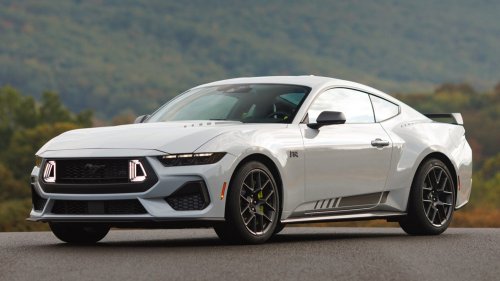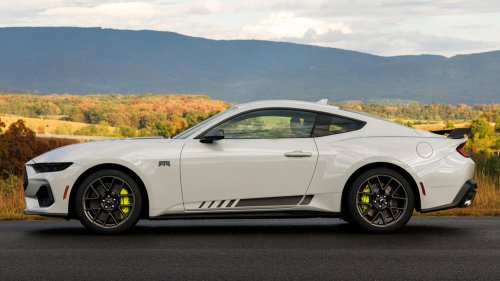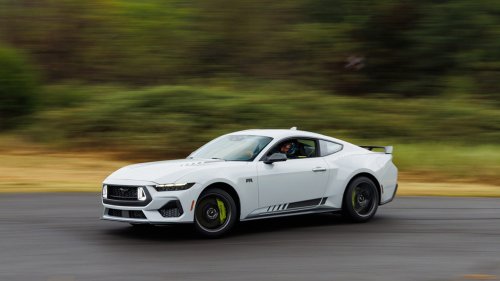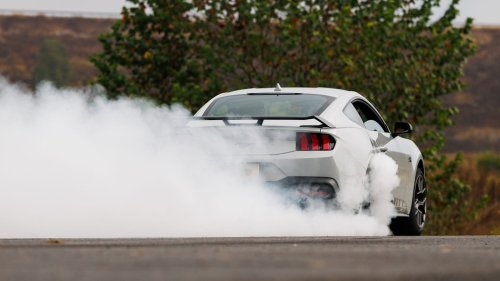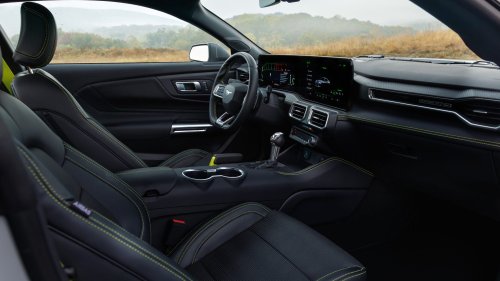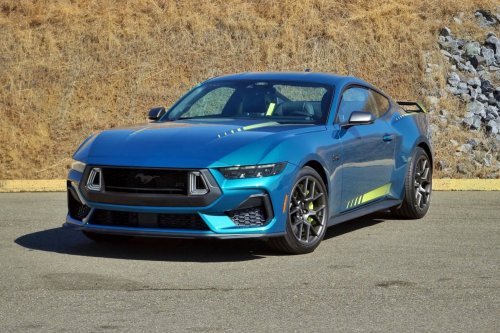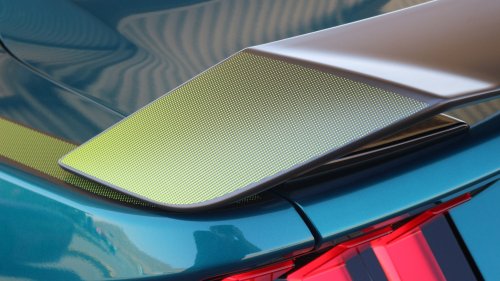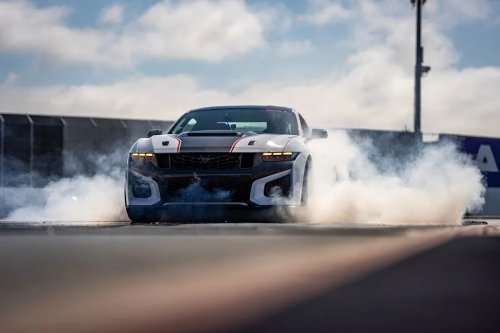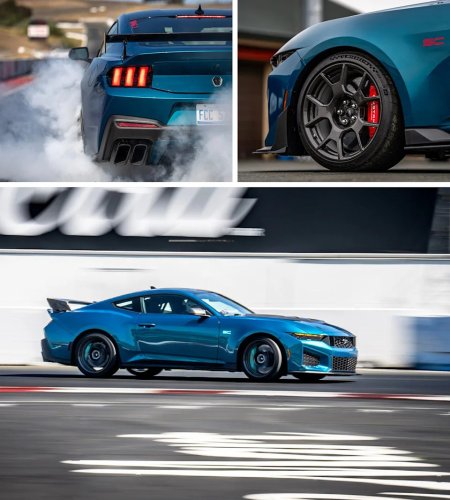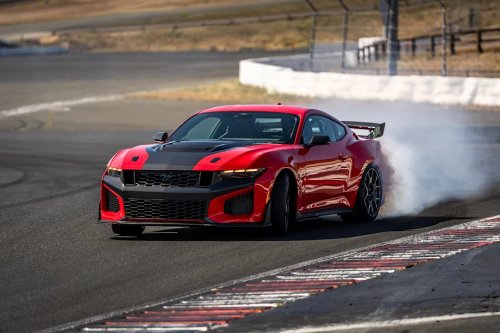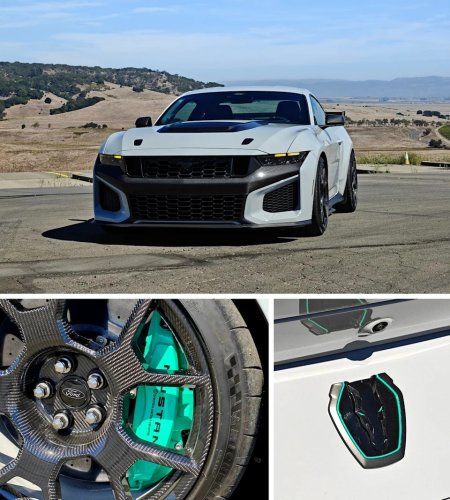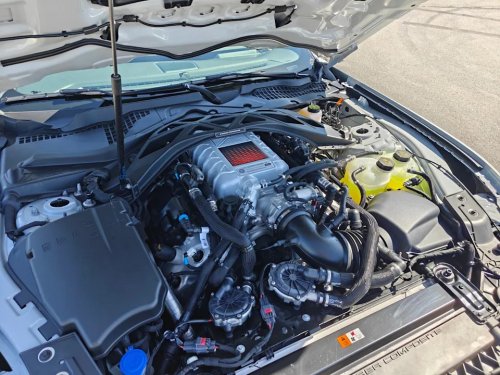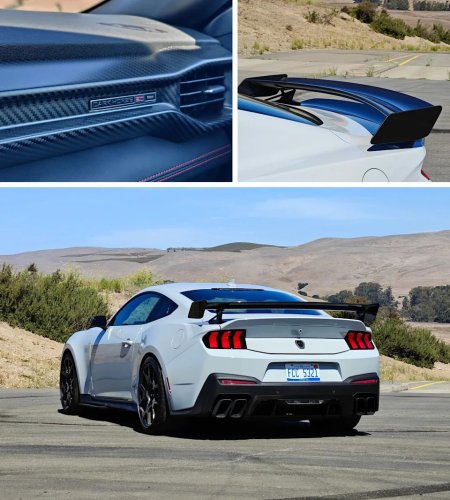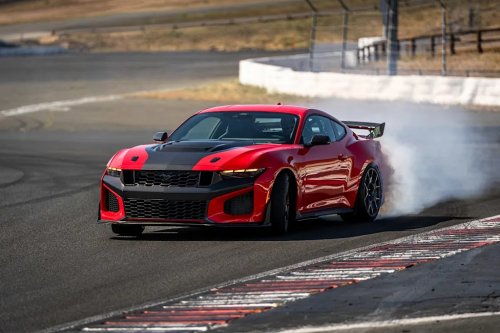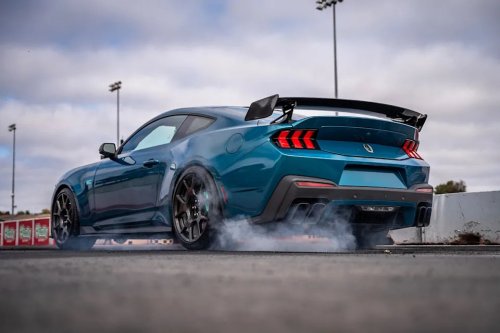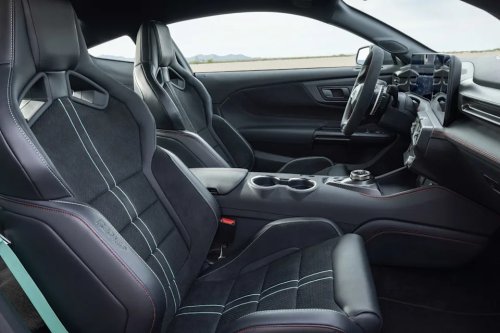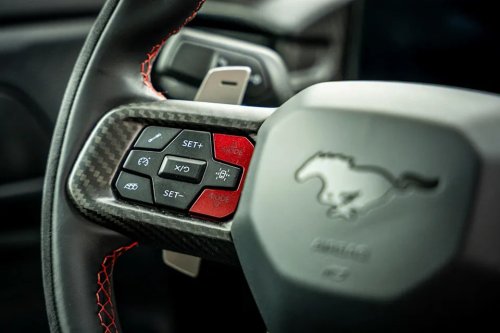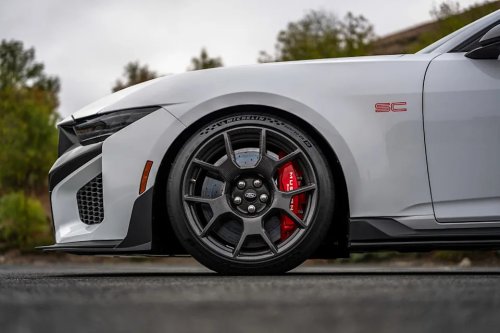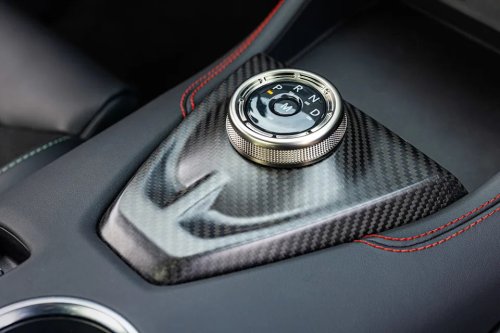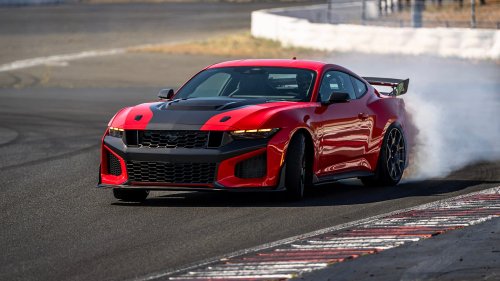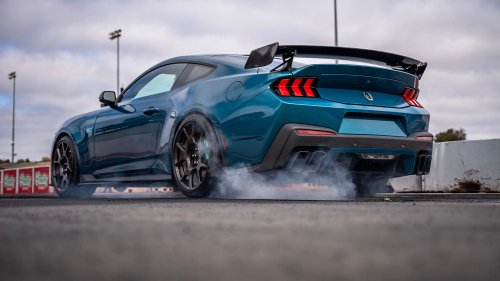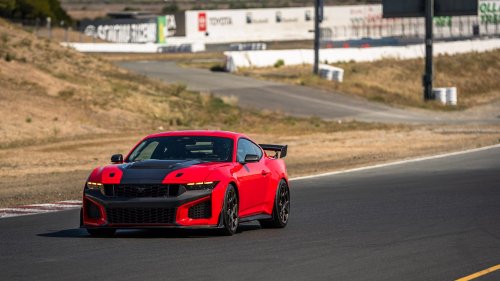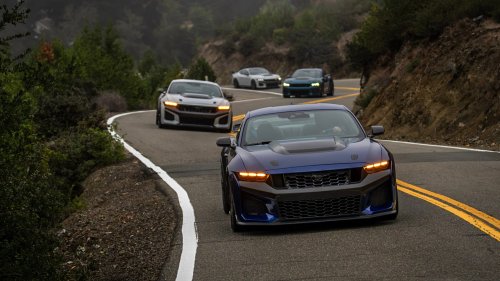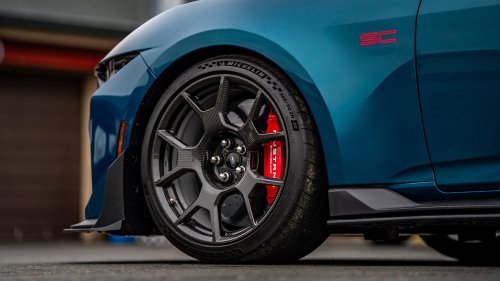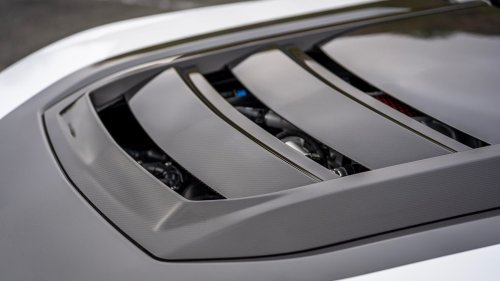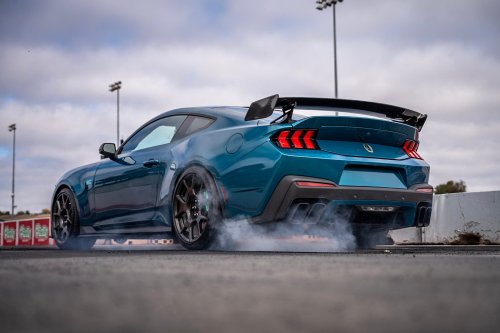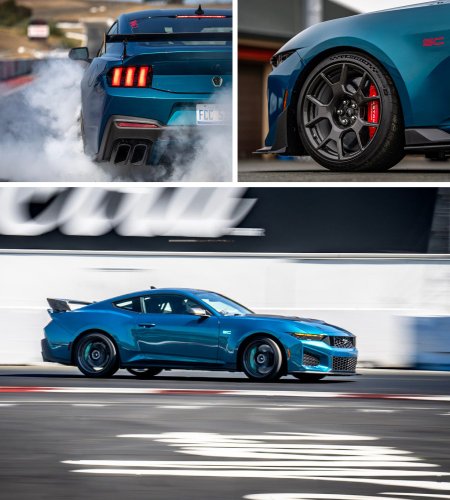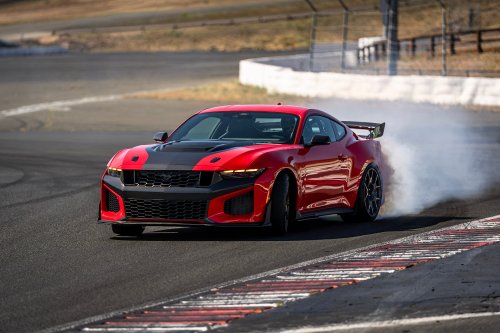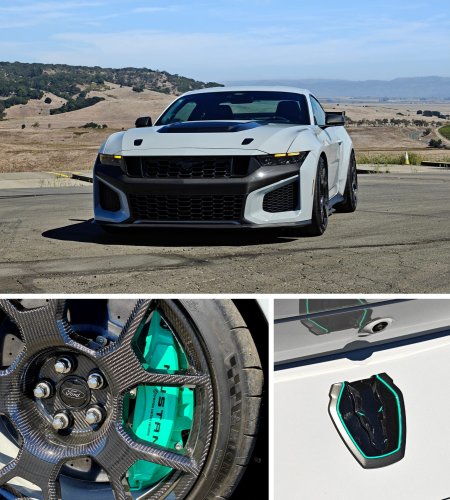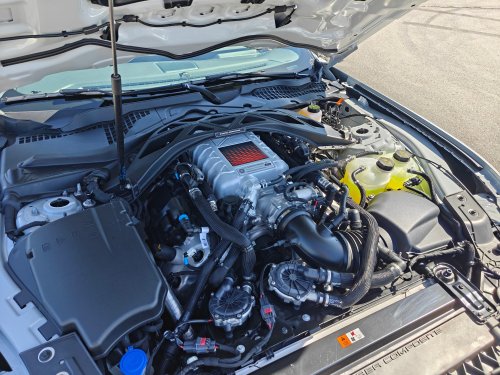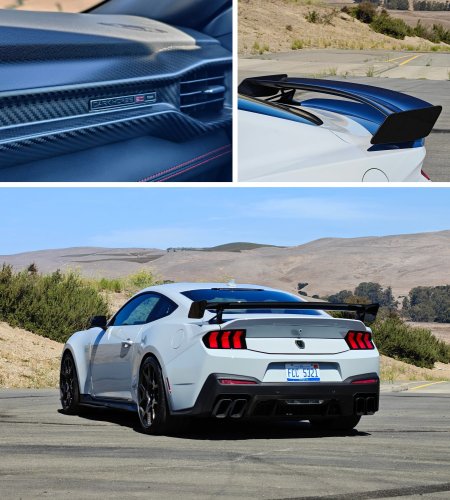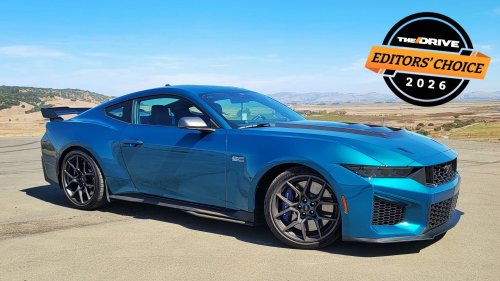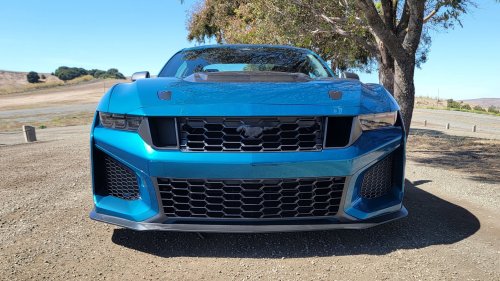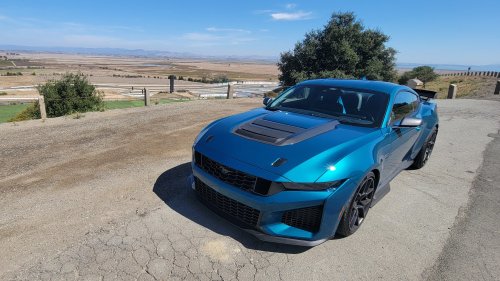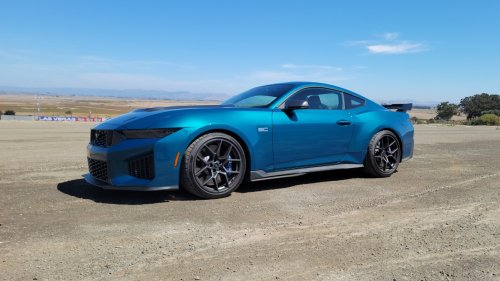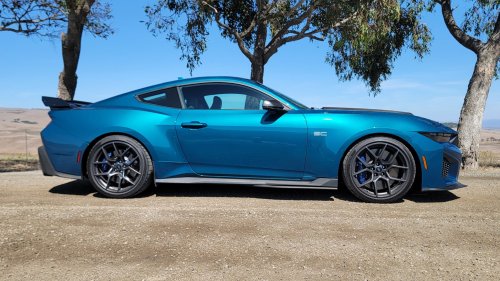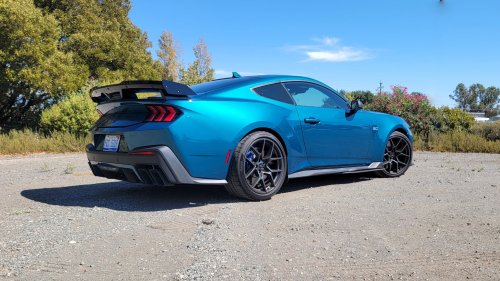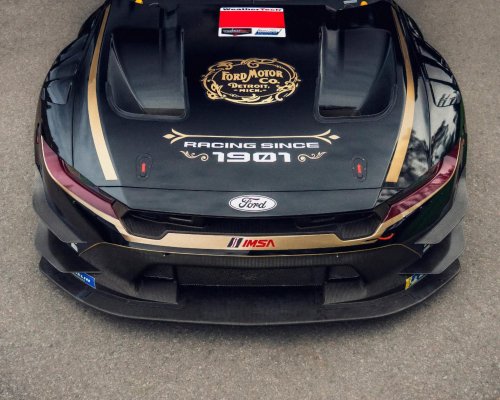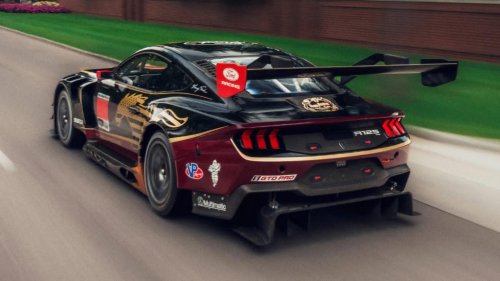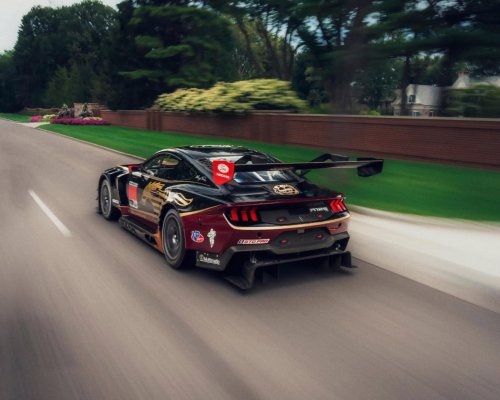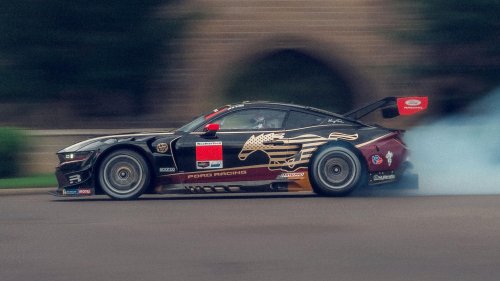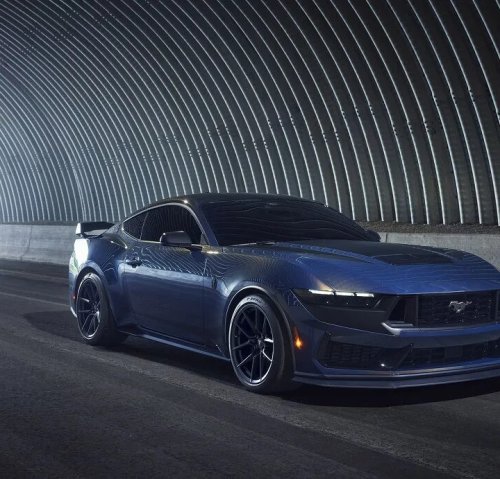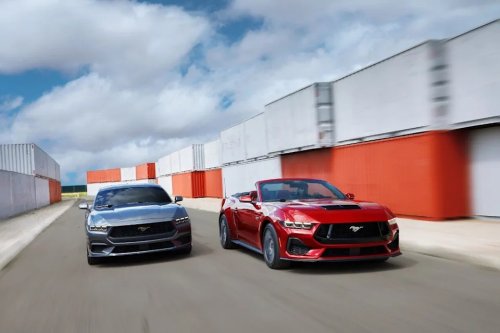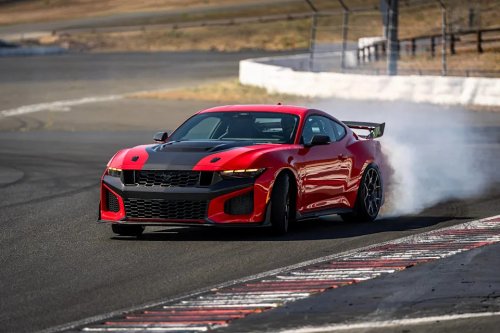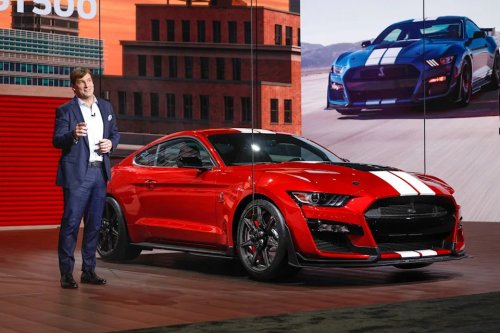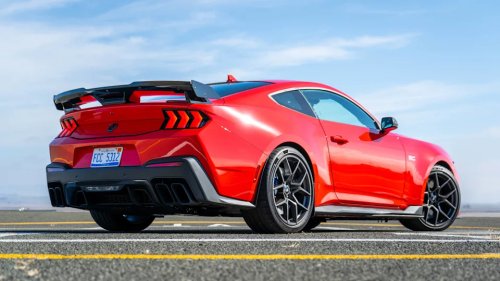
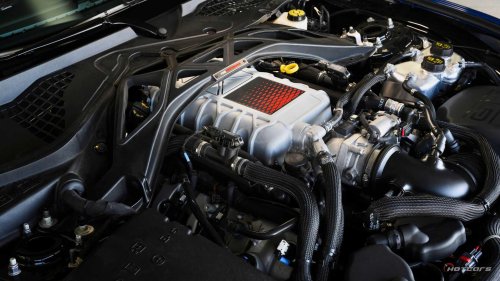

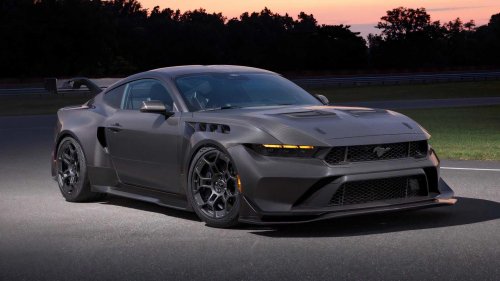
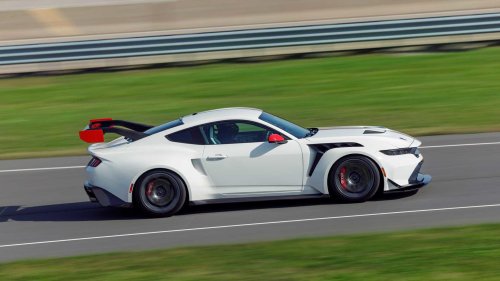



















At top speed on the Nürburgring, the Ford Mustang GTDsupercar doesn’t look like a Mustang. Normally, a 2026 Mustang shouldn’t be able to do what it does, which is braking later than purpose-built European exotics, rotating harder, hunting them down, and deploying power with surgical precision. In the end, the Ford Mustang GTD can do this because with a "Predator" engine, an apt description of the GTD, it's Ford’s most extreme interpretation of its most iconic nameplate.This Mustang Dark Horse on steroids isn’t just a warmed-over pony car. It’s built by Ford Performance from the ground up as an engineering statement, shaped by Le Mans ambition, a machine born from endurance racing, and built to ensure the lines between road car and race car remain blurred. This limited edition race car is built with carbon fiber all over, a race-derived suspension, and a rear transaxle, making the GTD exist to answer the question: "What happens when Ford stops playing by muscle car rules?" Let’s take a deep dive to explore the GTD’s history, how it performs where it matters most, what makes it mechanically outrageous, and whether you need a $325,000 Mustang in a world dominated by European supercars. From Le Mans to Your Driveway: The Engineering Story Behind The GTD Hagerty/youtubeThe Ford Mustang GTD is not one of those supercars derived from racing technology; its DNA comes directly from 2024 Ford’s Mustang GT3 endurance racing efforts, the same ecosystem that produced its Le Mans-winning pedigree and the legendary Ford GT. The Ford Mustang GT3, its sister vehicle, is a global endurance racing behemoth with a naturally aspirated engine, achieving 14 global victories in 2025 alone and returning to Le Mans after five years away. Both the Ford Mustang GT3 and GTD were built side by side with the same technologies, but the GTD continued where racing regulations made the GT3 stop. Multimatic is at the center of the GTD’s engineering philosophy. This road-legal Ford GT is designed with the same type of hardware used in top-tier motorsport: Multimatic’s adaptive spool valve dampers. These dampers are unlike conventional dampers, since they perform almost instant adjustments in damping force, helping the car transform from road-compliant to track-weapon stiffness in milliseconds.The carbon fiber used on the Ford Mustang GTD is not decorative trim; it’s structural and functional. Its aerodynamic elements, body panels, and components critical for its weight are extensively constructed from carbon to reduce mass while increasing rigidity, meaning every surface serves a purpose. This is the same philosophy that aerodynamics follows. The active rear wing is engineered to generate real downforce at speed, combining with front-end airflow management and underbody aero, to make the GTD feel planted, predictable, and brutally efficient like a race car in high-speed corners. The most radical shift is the rear-mounted transaxle. 2026 Mustangs typically use a front-mounted gearbox, but the GTD rebalances everything by moving the lightweight carbon fiber 8-speed Dual-Clutch (DCT) transmission to the rear to achieve near-perfect weight distribution. That’s supercar architecture mated with the muscle car tradition. In the end, Ford produces something that looks like a Mustang for the road, but behaves like a Le Mans prototype scaled for the street. 800 Horsepower, One Supercharged V8: What the GTD’s Engine Actually Does FordUnder the hood of the Ford Mustang GTD sits a supercharged 5.2-liter Predator V8 monster, pushing as much as 815 horsepower. It’s a heavily reworked version of the 760-horsepower engine found in the 2020-2022 Shelby GT500, for sustained high-performance use. To appreciate the monster that the Ford Mustang GTD is, consider the baseline. The standard Ford Mustang GT 5.0 is a strong, naturally aspirated engine churning out up to 486 horsepower. On the Ford Mustang Dark Horse, Ford pushes that GT’s formula further to 500 horsepower with track tuning and improved dynamics, but the GTD obliterates both of them.On the GTD, power delivery is immediate and relentless. Its modified Eaton TVS R2650 supercharger makes torque available across the rev range, while the engine retains a sharper, more exotic character from its flat-plane crank design, making it less traditional muscle and more race-bred aggression. The GTD's 8-speed dual-clutch transaxle mounted at the rear is another crucial part of its performance. While improving balance, it also transforms how the car deploys power. It makes gear changes instantaneous, with traction maximized under load, especially at that point where the car exits corners at speed. On the track, with endurance as the original goal, the GTD is engineered to be a precision instrument, perfecting the complex engineering needed to ensure power, grip, and balance work together seamlessly. There's also the Mustang GTD Evo, which uses a bigger 3.0-liter Whipple supercharger and produces anywhere from 900 to 1,000 horsepower. The Nürburgring Lap That Shocked the Supercar World Top Gear / YouTubeFor race cars, the Nürburgring is more than just a motorsport complex; it’s a proving ground. For any serious performance car to become part of automotive mythology, it has to face and conquer it. The Mustang GTD came to this track to be ranked with the big boys. With unofficial times for the Mustang GTD Evo of 6:41.74 in March 2026 that bested the Porsche 911 GT3 RS's 6:49.328 time in October 2022 and the Chevrolet Corvette ZR1X's 6:49.275 time in June 2025, the GTD proved it wasn't a novelty project, but a legitimate supercar contender. Its official lap time of 6:52.072 in May 2025 keeps it in the same conversation with the German legends and even the Lamborghini Huracán Performante.This performance is only possible because of the integration of its systems. While the aero package generates real downforce at speed that stabilizes the car through high-speed corners, the Multimatic suspension ensures the chassis stays composed over the Nürburgring’s brutal surface changes. With the rear transaxle, balance is achieved under both braking and acceleration. However, this goes beyond hardware to the development made by Ford Performance. This development transcended the GTD’s build alone to its relentless testing. Ford used the Nürburgring lap to prove that an American badge can compete with those at the highest level of global performance engineering. This gives it credibility among buyers. $325,000 for a Mustang — Who Actually Buys the GTD, and Is It Worth It? Ford MediaThe real conversation starts when the Mustang GTD’s price is mentioned. Its $327,960 starting price puts it in a completely different universe from any other Mustang before it. Like a supercar, it isn’t supposed to be a performance bargain; it’s a statement purchase. Buyers at that price point are cross-shopping cars like the $241,300 Porsche 911 GT3 RS and high-end Ferraris and Lamborghinis. So why should they go for a Mustang? With the GTD being a limited-production machine, this street-legal race car has exclusivity baked in. It’s potentially a collector’s car. Ford intends to build just 1,000 units of the GTD. It also offers something those premium European brands don't: a distinctly American interpretation of extreme performance.The GTD's buyer profile would include collectors who understand its significance, track-day enthusiasts looking for something truly unique, Ford loyalists seeking performance heritage, and status buyers who recognize that this is no ordinary Mustang. People also ask the philosophical question, “Is it still a Mustang?” In name it still is, but in spirit, the GTD has transcended the Mustang's traditional identity and is closer to the Ford GT than any pony car before it. The Ford Mustang GTD being "worth it" depends on the perspective of the buyer, but as a pure performance machine, it is complete; as a collectible, it may appreciate; and as a symbol, it has no competitors in Ford's modern lineup. GTD vs. Dark Horse: Two Mustangs, Two Completely Different Missions FordThe GTD is the extreme version of the Dark Horse. The Dark Horse is a 500-horsepower car you can realistically own, drive daily, and take to the track. While the Mustang Dark Horse is the best version of the traditional Mustang formula—with its naturally aspirated V8, track-ready tuning, and relative affordability—the GTD takes it a step further. The GTD reinvents sections of the Dark Horse to reinvent itself. For instance, it replaces steel with carbon fiber, and its rear transaxle replaces the Mustang Dark Horse’s conventional layout. The Ford Mustang GTD uses active aero to replace the static design, also using supercharged power to replace the naturally aspirated balance.In the Ford Mustang lineup, the Dark Horse is a step up from the Mustang 5.0, representing the peak of accessible performance; however, the GTD abandons all forms of compromise entirely. Built side by side with the 2024 racing GT3, the GTD isn't held back by the restrictions that limit the racing version, allowing it to employ technologies that elevate its performance significantly. Eventually, with the trickle-down effect common in modern cars, the technologies, learnings, and engineering philosophies developed for the GTD will inevitably influence future Mustangs. Buyers who would never touch a GTD would eventually get to enjoy the feel of a GTD in the future.Source: Edmunds, Top Gear, Road and Track, Ford AuthorityFAQQ: How much horsepower does the Mustang GTD have?815 horsepower from a supercharged 5.2L Predator V8.Q: What is the price of the Ford Mustang GTD?Starting around $325,000, with options pushing higher.Q: Is the Mustang GTD street legal?Yes. It’s fully street legal, though engineered primarily for track performance.Q: How fast is the Mustang GTD around the Nürburgring?Its official lap time was 6:52.072 in May 2025. However, in March 2026, the amped up Ford Mustang GTD Evo model achieved an unofficial lap time of 6:41.74.Q: What makes the Mustang GTD different from the Dark Horse?The GTD features a supercharged V8, carbon fiber construction, Multimatic suspension, rear transaxle, and active aerodynamics — making it fundamentally closer to a race car than a traditional Mustang.