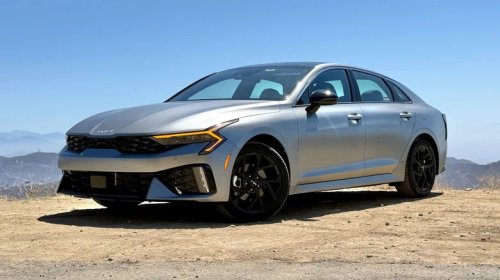
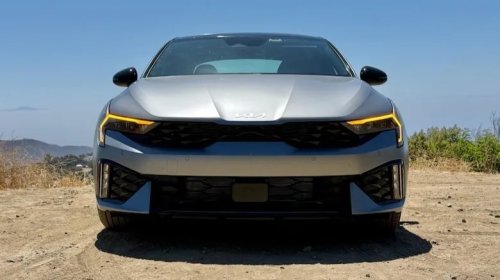
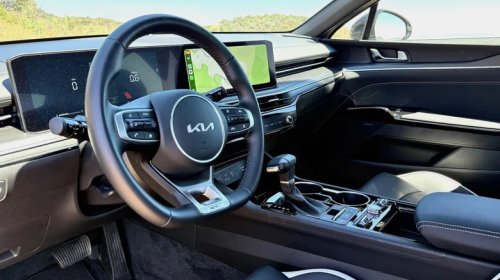
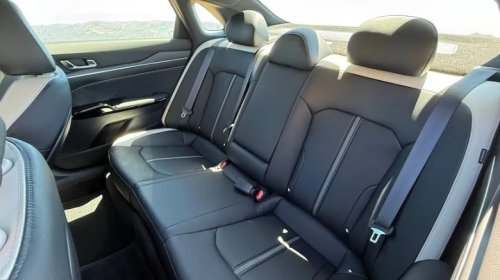
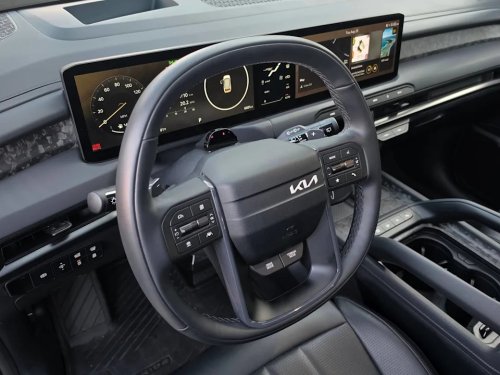
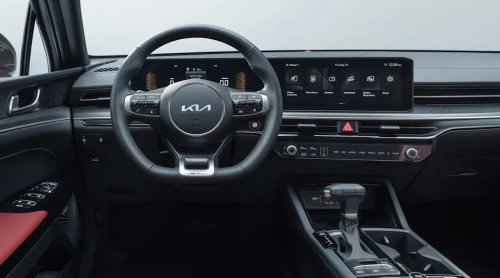
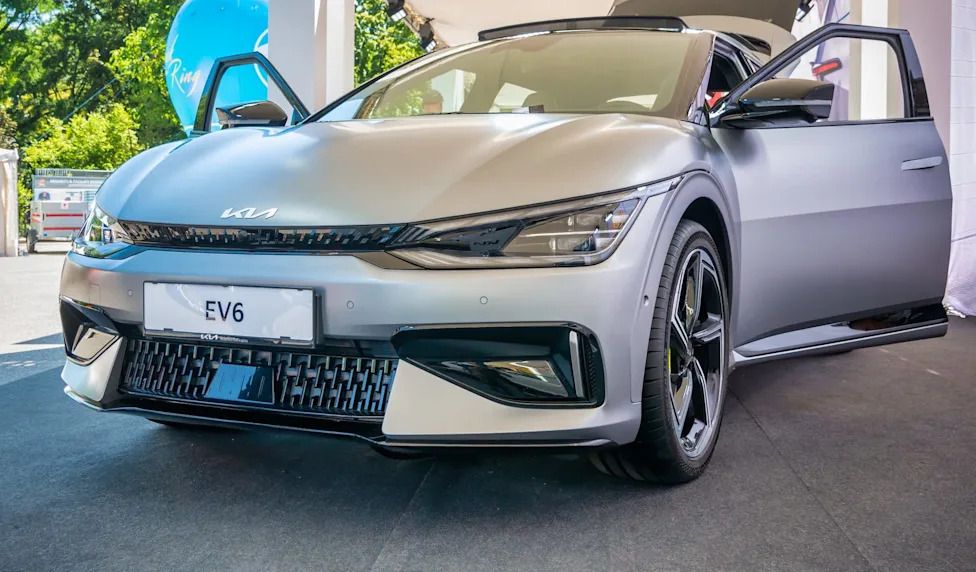
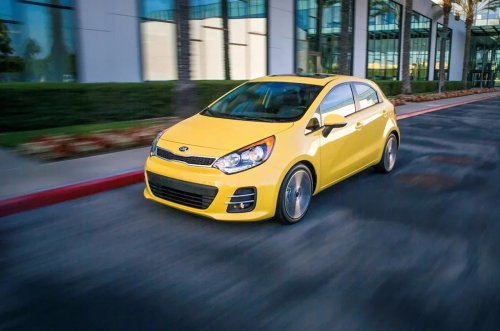
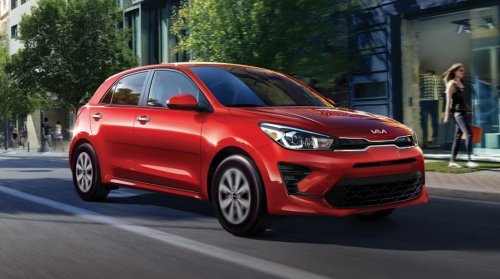
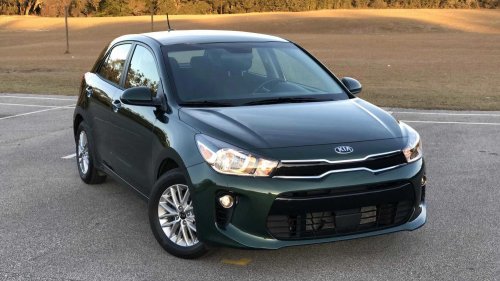
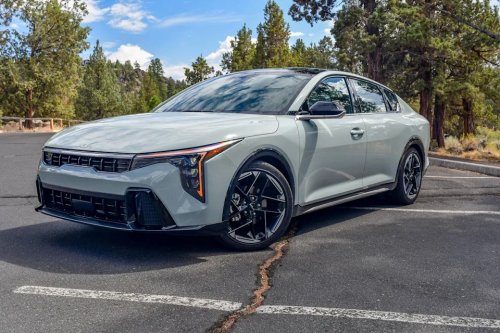
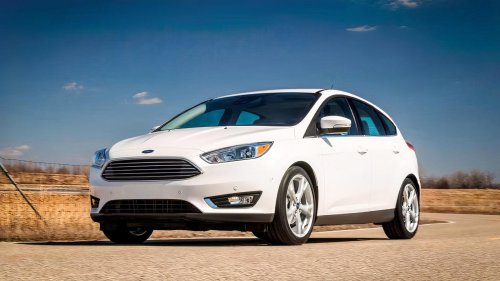
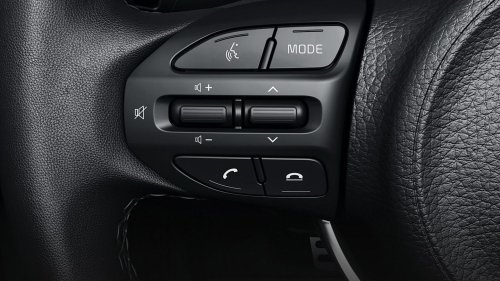
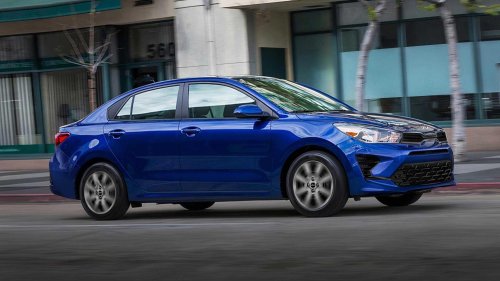
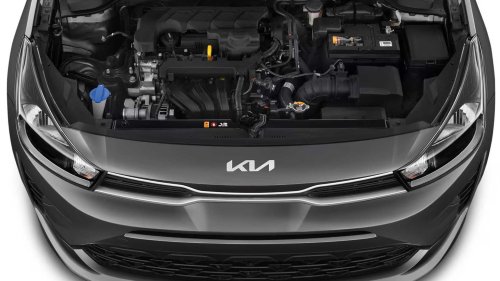
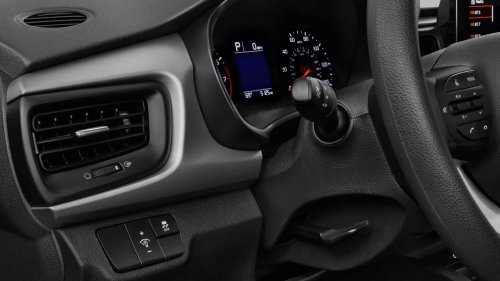
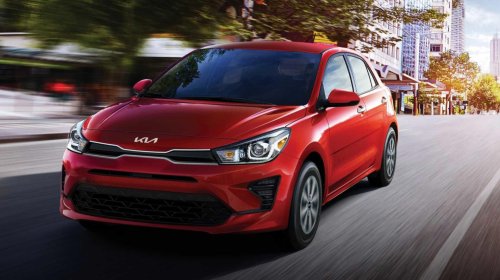
The 2023 Kia Rio holds a significant place in Kia's history – a plucky, simple hatchback or sedan that has served as one of the backbones of Kia's line-up for nearly 20 years. While the brand is viewed as a force to be reckoned with in the EV market with the EV6 and one of the main contributors to the popular crossover segment with the Sportage, it was once a different story. Two decades ago, the manufacturer was seen in a similar light to how an unfamiliar budget brand would be viewed today. Cars like the 2000s Sedona were practical and good value, but the ultra-cheap plastics and underpowered, inefficient powertrains left a lot to be desired. It simply wasn't a brand most people trusted until the brand's 10-year warranty started tempting consumers.In a landscape where most cars now cost over $40,000, the Kia Rio served as the defiant hero in the manufacturer's range, proving cheap and cheerful motoring could still be achieved. Following a long line of small cars being discontinued, like the Chevy Spark, Kia also decided to pull the plug on the Rio to focus resources on a new era of consumer demands. It was a crackdown on small hatchbacks so harsh that even the Ford Fiesta got discontinued in 2023, despite its legendary status. The final Rios that rolled off the production line are now coming up to three years old, and it seems like a perfect time to make the jump into cheap, uncomplicated motoring. The Case For A Small Hatchback In 2023 2017 Ford Focus Hatchback front 3/4While buying a hatchback just ten years ago would have seemed like a completely natural thing for the majority of people to do, in 2026, it feels like a more conscious choice given how strong the wave of SUVs and crossovers has been. Actively going against this trend means buyers are often making a purposeful lifestyle choice to drive a small hatchback, one that likely involves simplifying and prioritizing value. Other Reasons To Consider A Hatchback In 2026 They are usually far more economical than larger, heavier cars They are far cheaper than an SUV or even crossoverThey are holding their value well, as brand-new hatchbacks are becoming rarerThere is still a case for hatchbacks being the best car for most people in the 2020s if you consider the logical practicalities rather than the status of a high-riding SUV. With cities becoming busier than ever and congestion being a genuine issue, driving a compact vehicle feels refreshing. No amount of 360-degree cameras and all-round sensors can replace the feeling of true maneuverability from weaving through town in a small car. In many cases, you also are not losing as much practicality as you think. Though smaller, hatchbacks are usually packaged more efficiently, leaving an often surprising amount of space for luggage and passenger room. The 2023 Kia Rio Trim Levels And Pricing Integrated functions on a steering wheel of a 2023 Kia RioThe base model, the Rio LX, only came as a sedan and probably isn't the one to buy in 2026. Sure, it is still the cheapest on the used market, but it is not as practical or as well-equipped as a higher-spec hatchback. The S trim was the most popular version. With remote keyless entry and cruise control, the S is a more comfortable purchase in 2026. It has all the absolute essentials without feeling too bare-bones. However, there is also the S-trim with a technology package. This adds a host of features, like a suite of advanced safety features from lane departure warning to pedestrian detection, to automatic climate control and rear-disc brakes. More Features Included In The S-Trim Technology Package Driver attention warning and high-beam assistLED headlights for improved visibility4.2-inch cluster for data and alerts with an 8-inch main screen15-inch alloy wheelsPrices have stayed remarkably resilient for the 2023 Kia Rio. At launch, the various trim levels ranged from atotal cost of $16,750 to $17,690, a refreshingly low price. Incredibly, second-hand prices for vehicles with 20,000 to 50,000 miles cost around $15,000, and there are examples of lower-mileage Rios that are more expensive now than they were at launch—a complete anomaly in the world of depreciation. Due to a scarcity of 2023 models and a secondhand value that still seems reasonable in the generalized 2026 market, it is no wonder the 2023 model year of the Kia Rio is holding its value so perfectly. Reliability And Warranty One of the main reasons that value has likely stayed so high for the Kia Rio is the warranty. With 10 years and 100,000 miles of coverage, there is still a guaranteed seal on longevity. Be warned, though, this level of coverage only applies to second-hand Kias that are sold from a dealership. If you buy secondhand from a private seller or local garage, the warranty drops to 5 years and 60,000 miles. Given that prices are quite standardized for the vehicle, we recommend buying one from a dealership to ensure full warranty coverage. This means seven more years, or 50,000+ miles, left of smooth sailing.KiaEven beyond the warranty, though, the 2023 Kia Rio is a very reliable vehicle. With a JD Power quality and reliability rating of 86/100, if thorough maintenance is carried out, there is a high chance of the car going way beyond the 100,000-mile mark. This is another reason to justify the rock-solid price, and it being only a three-year-old car means that there will be plenty of examples still in near-mint condition. Generally, the final production year of any generation of a car will likely be the most reliable, as all previous bugs and issues will have been ironed out. Not only that, but the Rio's simplistic non-turbocharged engine in a car with limited electronic components means it's a perfect bedrock for longevity. Powertrain And Specifications KiaWhile a non-turbocharged 1.6-liter engine might sound like a recipe for a sluggish dawdle, given the Rio's lower weight, it's a fairly punchy system. Most smaller vehicles from the 2020s use a 1.0-liter or 1.2-liter powertrain paired with a turbocharger, but the Rio's larger displacement naturally aspirated design feels like a callback to tradition. Of course, it is not the right car for spirited driving, but it is more than adequate for merging onto highways and uphill climbs. 2023 Kia Rio Specifications The IVT transmission is one of the most significant inclusions on the Kia Rio. While being similar to a CVT, this system is actually better. By using a metal chain instead of a belt, the gearbox is much more robust, which means there is nothing slipping or snapping from continuous heat and stress. It is also much quieter than most CVTs, which are known for having a drone at certain speeds, making the car more relaxing to operate and giving it extra longevity. The Cheap But Essential Maintenance Needed For a Kia Rio A view of the instrument panel and functions of a 2023 Kia RioOn the subject of transmission, it's one of the areas where most people neglect their cars the most. There is a subconscious expectation among most people that the transmission oil is good for the life of the vehicle, but almost all cars benefit from a bit of TLC in this area. At around 40,000 to 50,000 miles, it's worth a gearbox oil change. While this seems overboard initially, it could save you a $4,000 transmission replacement in the coming years. The Kia Rio is also vulnerable when it comes to oil changes, as only a 5,000-mile interval is recommended for an oil and filter change with 5W-20 oil. This is all worth doing, though, as it is a fairly bulletproof vehicle otherwise. More Maintenance To Carry Out: Every 15,000 miles, a GDI intake valve spray can stay on top of carbon buildupEvery 30,000 miles, it's recommended to change cabin and air filters Every 60,000 miles it is time to change the spark plugs Efficiency And Practicality Kia The 2023 Kia Rio comes into its own when being tested under the criteria of efficiency and practicality. While not as fuel-efficient as many 1.0-liter turbocharged competitors, it still offers an acceptable 36 MPG combined and 41 MPG on the highway. With an 11.9-gallon tank, this means that around 480 miles are expected, making it a frugal car for road trips and commuting.It's also surprisingly practical. The Kia Rio looks and feels smaller than a crossover, but offers a genuinely spacious trunk at 13.7 cubic feet. With the rear seats folded, expect 32.8 cubic feet of space, and the vertical advantage over the sedan variants means it can accommodate smaller furniture, large TVs, or mountain bikes.Sources: The EPA, Kia, JD Power



















 +67 others