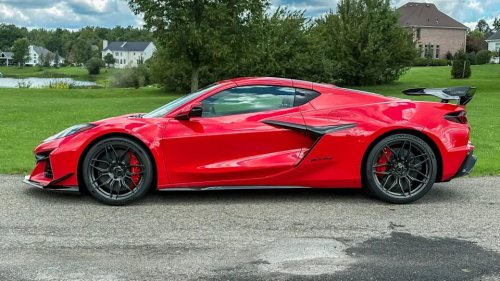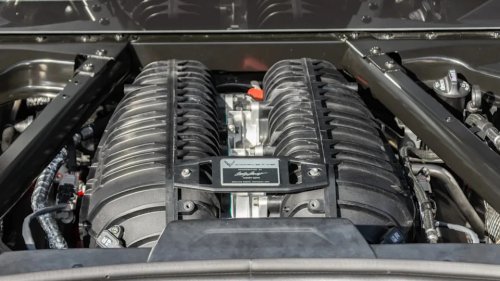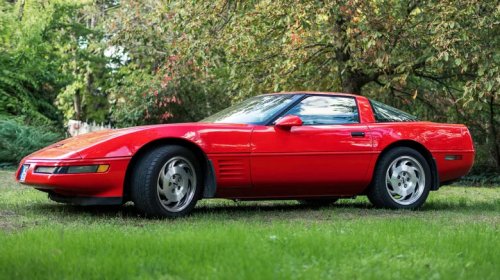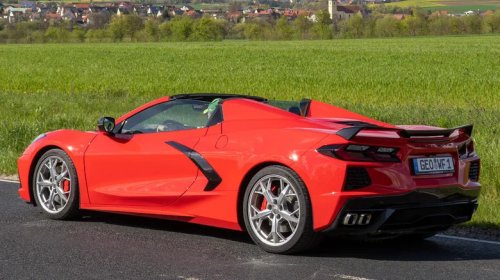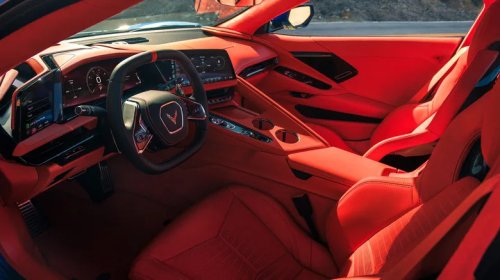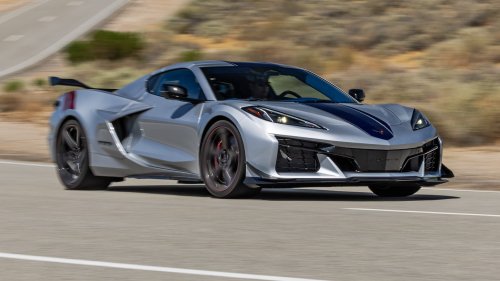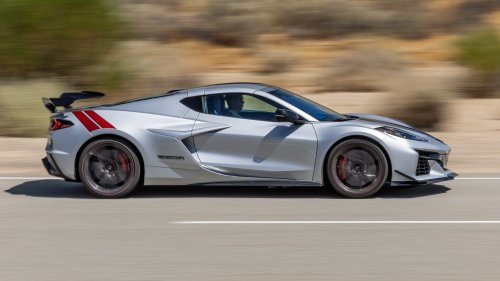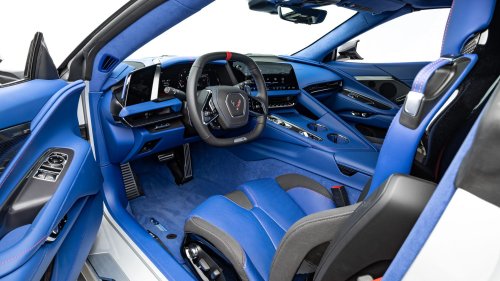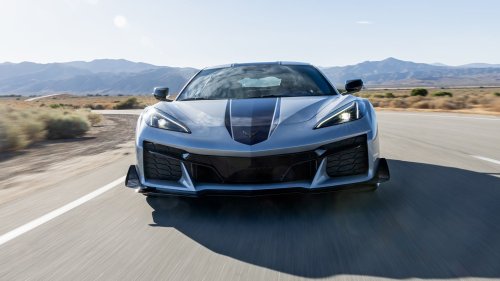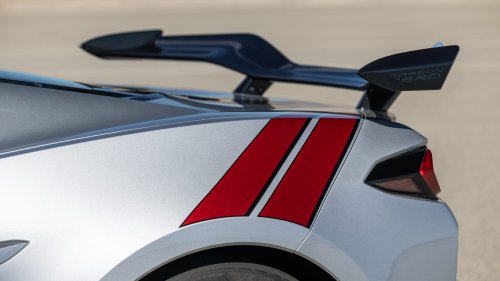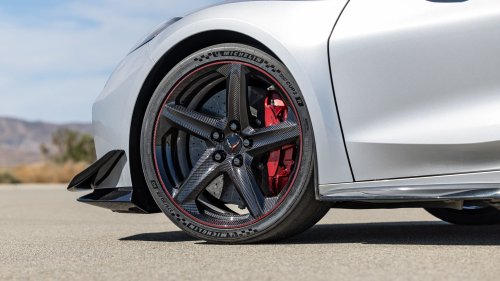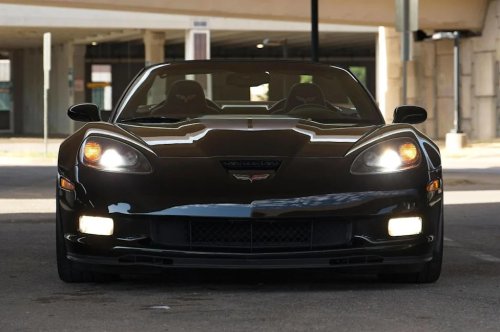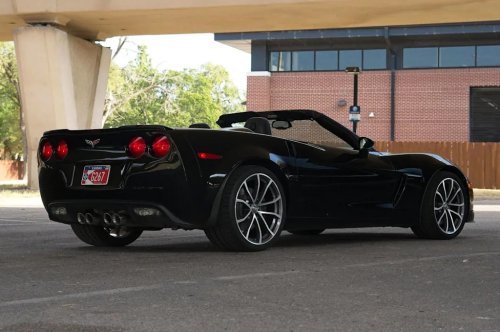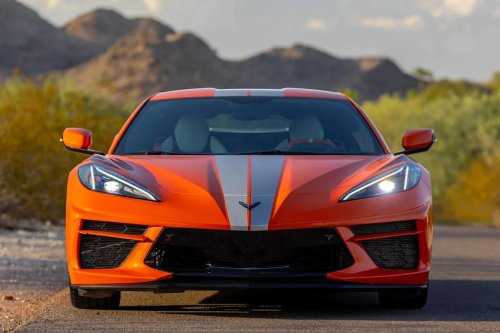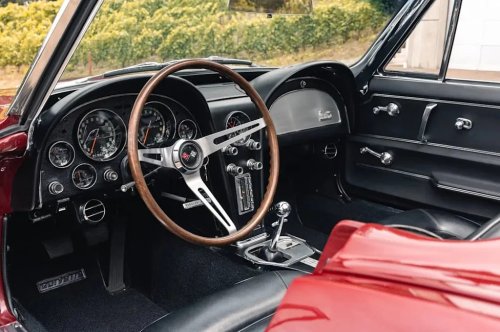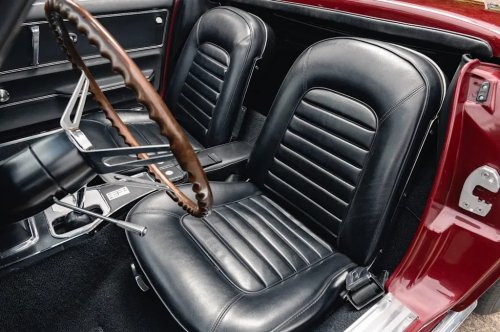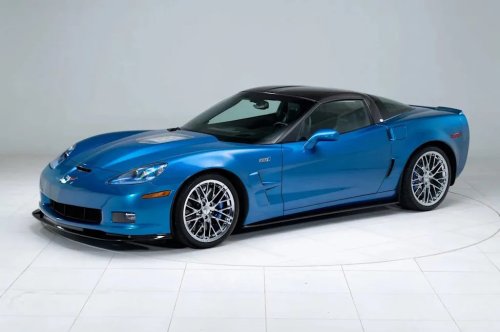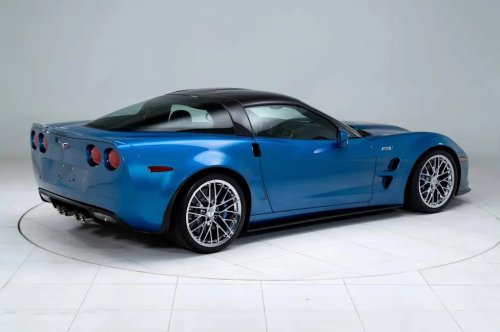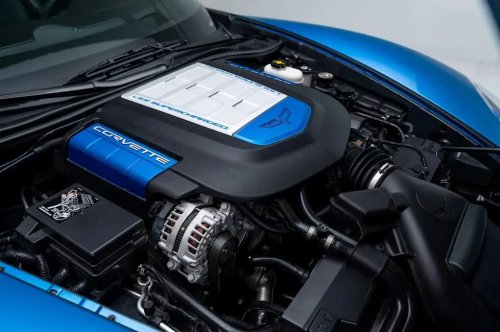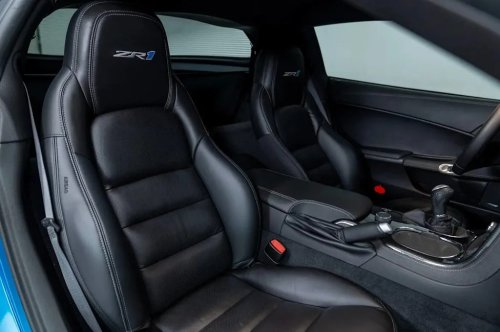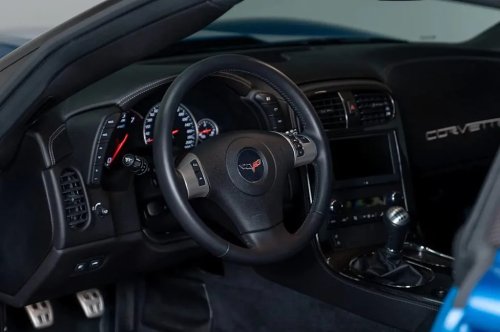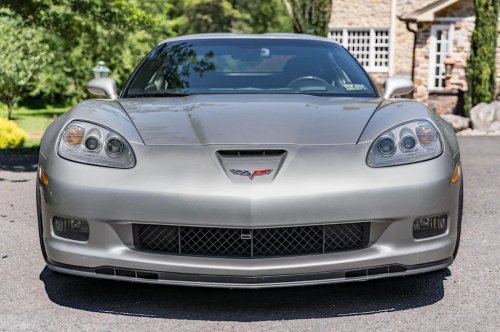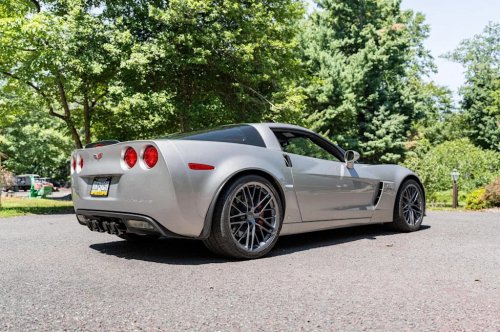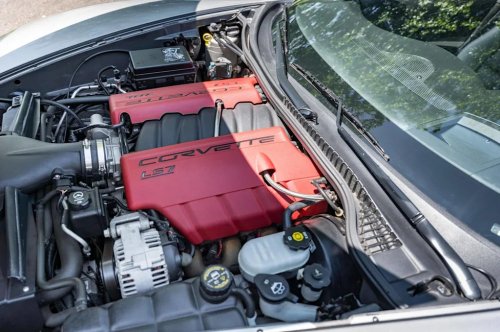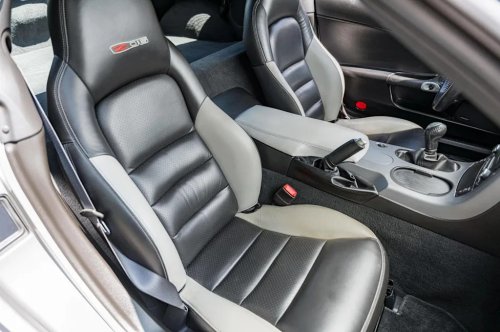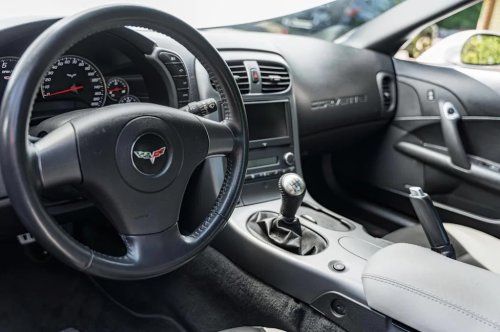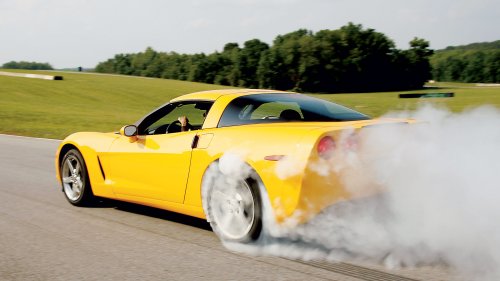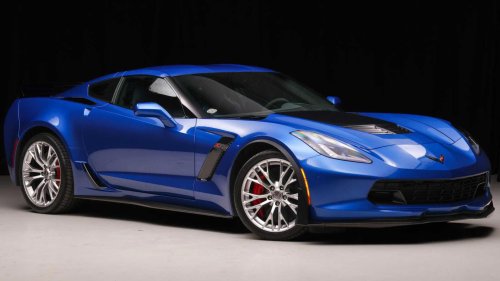
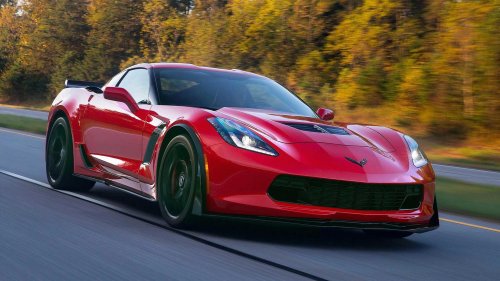
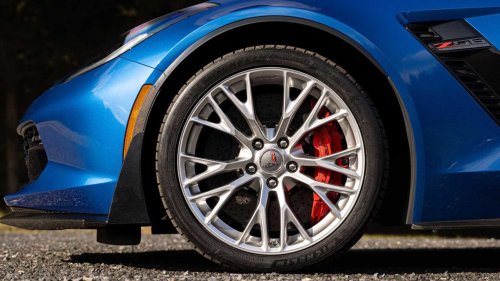
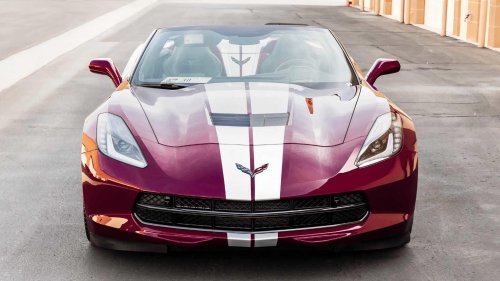
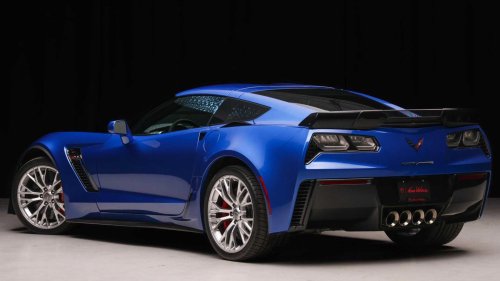

























The seventh-generation Corvette C7 is the last time Chevrolet built the Corvette as a front-engine vehicle, after 67 years of producing breathtaking front-engine sports cars. This was followed by the C8, in which the Corvette moved to a mid-engine layout. Although the C8 trumps the C7 in almost every metric available, the C7’s design was a sports car marvel, offering what other manufacturers were only able to achieve in models that cost exponentially more.This seventh-generation C7 also marked the end of a Corvette coming in manual, with the C8 only available in an automatic transmission regardless of trim level. When the debate comes up about which vehicle offers more "soul and engagement," enthusiasts side with the Corvette C7, conceding that the C8 is the better option in precision and technology. This is largely due to the manual transmission, with collectors more prone to opting for the C7 Corvette. In the used market, it’s not surprising that values of the C8 seem to have depreciated faster than those of their C7 counterparts, yet the C7 remains the attainable option for a sports car experience. History And Evolution Via: Bring a Trailer About a year after the C6 Corvette was introduced in 2005, Corvette began development of the seventh-generation C7. The generation was originally scheduled to debut in 2011, but the global financial crisis of 2008-2009, as well as General Motors’ bankruptcy, led to significant setbacks for the project. This slowed progress; the design team received approval for their design in 2011, just over a year after completing their work. The model was originally conceived with a mid-engine layout, but to reduce production costs, the team retained a front-engine layout. In January 2013, at an invitation-only reveal in Detroit, the C7 was officially introduced, with the Stingray moniker restored as a single word. The 2014 C7 Corvette Stingray shared only the air filter and the removable roof release lever with the previous-generation C6 Corvette. Everything else, including interior and exterior design, chassis, powertrain, and the frame structure, was completely new. Corvette substantially redesigned the aluminum frame across all coupe and convertible models to save nearly 100 pounds compared with the previous generation.For the seventh-generation Corvette, the all-new aluminum frame is 57 percent stiffer and 99 pounds lighter than the steel frame used in the previous-generation C6 Corvette.In 2014, the Stingray was launched with a new LT1 engine and a 7-speed manual or a 6-speed automatic transmission. In the following year, the Z06 debuted with a supercharged LT4 engine, while the Grand Sport arrived with the Z06 body and the naturally aspirated 6.2-liter V8 used in the base Corvette Stingray. By the next year, Corvette replaced the 6-speed automatic transmission with an 8-speed across the lineup. By the last year of the seventh generation, the C7 bowed out with the ZR1, the most powerful model of the generation, powered by the LT5 6.2-liter supercharged V8, producing 755 horsepower and 715 pound-feet of torque. Performance And Specifications General MotorsThe C7 Corvette was introduced with the LT1 engine, a 6.2-liter small-block V8. This engine was fitted to the base Corvette Stingray, producing 455 horsepower and 460 pound-feet of torque. When equipped with the performance exhaust package, it could achieve 460 horsepower and 465 pound-feet of torque. In this configuration, the C7 was capable of accelerating from zero to 60 mph in 3.7 seconds with the 8-speed automatic transmission. Corvette used direct fuel injection, continuously variable valve timing, and Active Fuel Management (cylinder deactivation) on the LT1, with it trickling into the rest of the Corvette lineup from there.When the Z06 was launched in 2015, it was fitted with a 6.2-liter supercharged LT4 V8. At that time, it was the most powerful production engine General Motors had ever produced. The 1.7-liter Eaton R1740 TVS Supercharger and Rotocast A356T6 aluminum cylinder heads pushed its capacity to 650 horsepower at 6,400 rpm and 650 pound-feet of torque at 3,600 rpm, helping rocket the Z06 to a top speed of 185 mph. The Z06 achieved 0–60 mph in just 2.95 seconds, competing with significantly more expensive sports cars, such as the Lamborghini Huracán LP 610-4 and the Nissan GT-R NISMO.The 6.2-liter supercharged V8 LT5 engine featured a larger 2.65-liter supercharger than the LT4, and it used a dual-stage port and direct-injection fuel system that could be activated at various times to compensate for engine load. At peak power, the LT5 could propel the Corvette C7 ZR1 to a top speed of 212 mph while achieving sub-3-second 0–60 mph times and a quarter-mile time of 10.6 seconds at 134 mph. The C7 was fitted with independent unequal-length double wishbone suspensions with optional magnetorheological dampers and transverse fiberglass mono-leaf springs.The Corvette was fitted with the optional Magnetic Ride Control (MRC) system, widely regarded as one of the best adaptive suspension systems on any production car. Trim Levels And Variants Via: Bring a Trailer Across the C7 Corvette's lifecycle, the C7 offered the Stingray, Grand Sport, Z06, and ZR1, each with 1LT/1LZ, 2LT/2LZ, and 3LT/3LZ equipment packages that enhanced luxury and technology. The Stingray, which ran from 2014 to 2019, was the entry point and was offered in coupe and convertible body styles. Corvette offered the Z51 Performance Package on this trim, adding Brembo brakes, dry-sump lubrication, magnetic ride control, electronic limited-slip differential, and performance tires. Interior packages for the 3LT added Napa leather, a color HUD, heated/ventilated seats, and a Performance Data Recorder.The Z06 trim, offered from 2015 to 2019, included the Z07 performance pack as an option, which added revised suspension and brakes, wider Michelin Sport Cup 2 tires, and an optional stage 2 carbon aero package. This was the first time the Z06 was offered with an automatic transmission, and it was also the first to offer a convertible option. The Grand Sport trim ran from 2017 to 2019, with Corvette ingeniously combining the fenders, wheels, and track-ready suspension components that gave the Z06 its wide-body chassis, with the reliable, naturally aspirated 460-horsepower LT1 engine in the base Stingray. The Z06's massive Brembo brake system came standard, along with Magnetic Ride Control, delivering 1.1g of lateral acceleration in cornering with the Z07 package.Many enthusiasts saw this trim as the sweet spot in the C7 lineup.In 2016, Corvette offered the Z06 C7.R Edition, a limited-production trim built for the track to honor the Corvette Racing C7.R program. It was available in Corvette Racing Yellow or Black, featuring Corvette’s LT4 engine. In 2017, the Grand Sport Collector Edition was released to commemorate the legacy of the 1963 Grand Sport. Like the Z06 C7.R Edition, it was a limited-production vehicle, but fitted with the LT1 engine. The 2018 Carbon 65 Edition was another limited-run package, built to celebrate the 65th anniversary of the Corvette. By 2019, Corvette released the ZR1 behemoth to round out the lineup. The entire vehicle was redesigned to meet the power requirements of its LT5 engine. Pratt & Miller's Corvette racing team partnered with Corvette to develop the aerodynamics, including a bigger front splitter, a more pronounced rear wing, and underbody aero. With the optional ZTK package, the ZR1 gets a much larger wing and larger winglets. Together, these generated up to 950 pounds of downforce for the ZR1. Buying Guide: What To Look For Bring A TrailerFor most enthusiasts, 2017 was the C7’s best year, blending reliability, performance options, value, and refinements over earlier iterations, with the Grand Sport trim a particular highlight. A close second is the 2018 model year, which drew the fewest owner complaints in the Z06 segment. The heat-soaking issues and transmission teething problems of the 2015 Z06 make it a model year to avoid. On the Z06 and Grand Sport, the cast-aluminum wheels were known to develop fatigue cracks, especially after repeated impacts. The issue was so severe that it prompted two class-action lawsuits, an issue that hardly surfaced with the standard C7 Stingray. Buyers had to opt for aftermarket forged wheels to remedy the issue.On C7 Z06 models from 2015 to 2018, owners reported that driving aggressively for extended periods resulted in multiple overheating incidents. To remedy this, GM implemented fixes such as radiator upgrades and transmission adjustments, and extended warranty coverage for most affected vehicles. Don't buy a Z06 in this period without checking for cooling system upgrades. On the LT1 engine, ticking, vibration, and lifter failures due to Active Fuel Management (AFM) were recurring issues, with lifter failures the most commonly reported engine complaint. Another piece of equipment to look out for is the touchscreen. The touchscreen has been known to glitch and black out, caused by a loose wiring connector behind the driver's kick panel. This is why Corvette C7 units with fewer than 50,000 miles and documented maintenance command a significant premium. Market Values and Investment Potential Via: Bring a Trailer As of early 2025, to get a base Stingray coupe in excellent condition, you need to have at least $48,000 burning a hole in your pocket. For a Grand Sport in similar condition, the premium is in the mid-$60Ks, with Z06 Corvettes selling for as high as the mid-$70Ks. For an excellent-condition ZR1, be prepared to fork out $187,000, with the convertible version costing as much as $200K. A black Z06 was once sold for $2.7 million! For bargain C7 options, a 90,000- to 100,000-mile option would cost in the low-to-mid $30,000 range. The downside, amongst others, is that it almost always comes with at least one reported accident.Compared to the C8, the C7 holds its value very well. The C8 Corvette depreciates much faster than the C7: an average C8 retains 60–65% of its original value after three years and is projected to lose up to 50% of its value after five years. The thrill of the manual transmission of the C7 keeps collectors paying a premium for rare C7 examples, even above the 1,064-horsepower C8 ZR1 option.Source: TopSpeed, GM Authority, Corvette Magazine, CarGurus, Classic.comFAQQ: What years is the C7 Corvette?The C7 Corvette was launched in 2014 and ran till 2019.Q: How much is a C7 Corvette worth today?The base Stingray generally ranges from $40,000 to $50,000 for clean examples, but you can still find high-mileage units in the high $20,000s.The Grand Sport trim typically sells in the mid-$60,000s to low $70,000s.The Z06 typically averages approximately $79,000, although pristine models could reach the mid-$90,000s.The top-of-the-line ZR1, the ultimate collector's item of the lineup, often exceeds its original MSRP with prices between $180,000 and $200,000+.Q: What is the difference between the C7 Stingray and the Grand Sport?Although both trims use the same base LT1 engine, the standard Grand Sport setting produces 5 horsepower more than the Stingray. The Grand Sport also features the widebody of the Z06, with Magnetic Ride Control offered as standard. The Stingray is the base trim of the lineup.Q: Is the C7 Z06 reliable?The Z06 is generally regarded as a reliable vehicle. If you can successfully avoid the 2015 and 2016 overheating issues, the 2017–2019 models are typically more refined.Q: Should I buy a C7 or C8 Corvette?If you prefer the classic front-engine look, want to enjoy the thrills of driving a breathtaking vehicle in a manual transmission, or just want a more affordable "supercar", the C7 is the better option. If you don't mind where the engine is placed and just want breathtaking speed and power, as well as more modern technology, the C8 is the obvious choice.