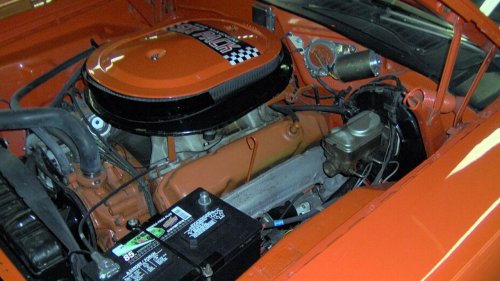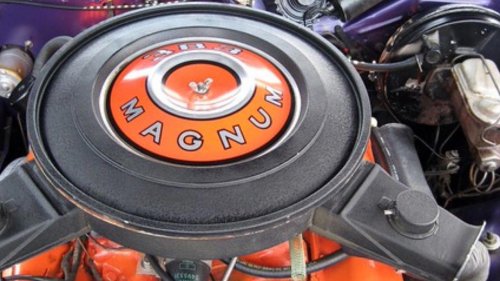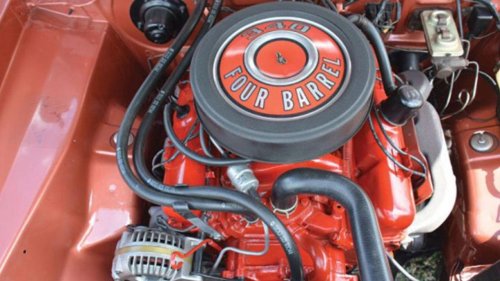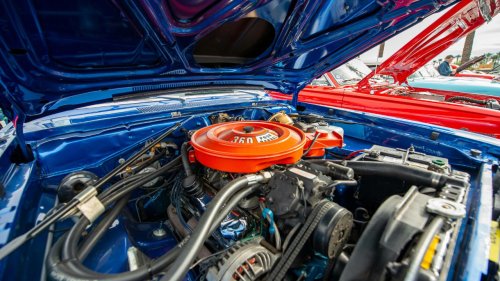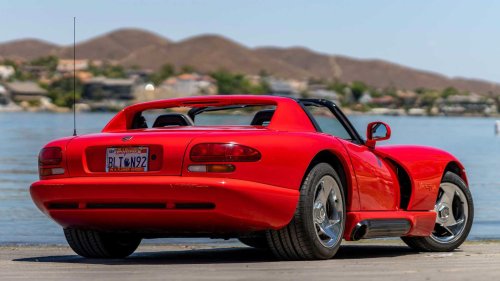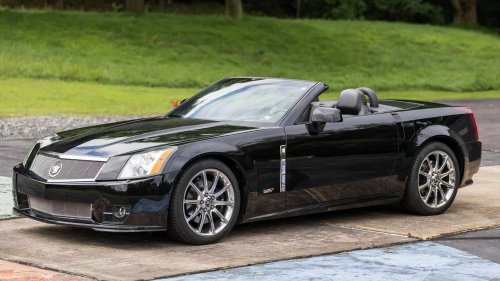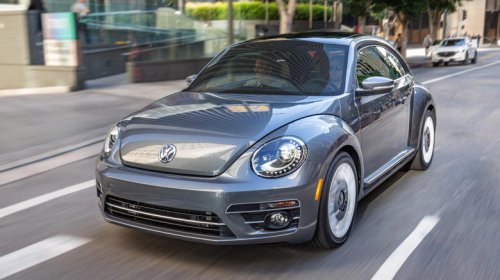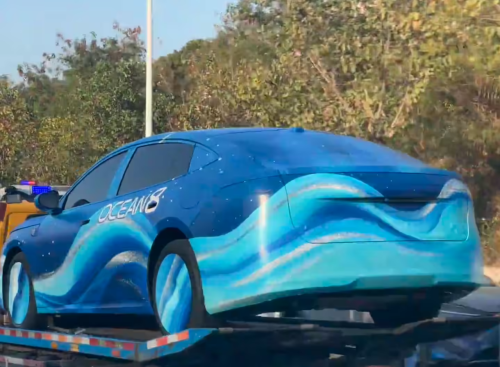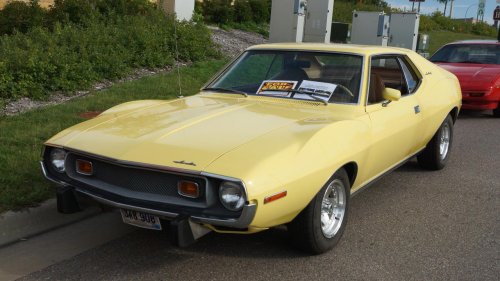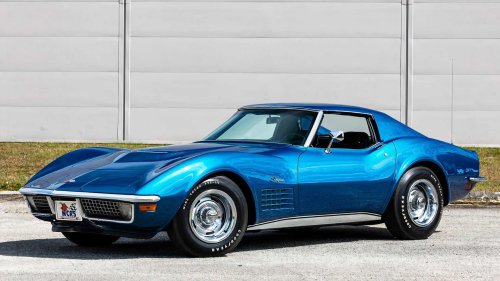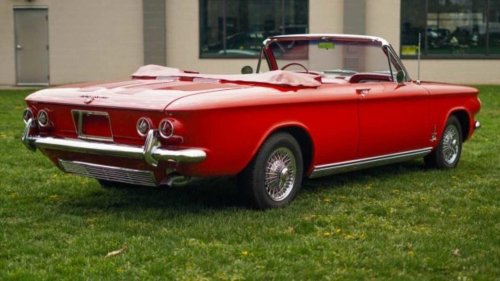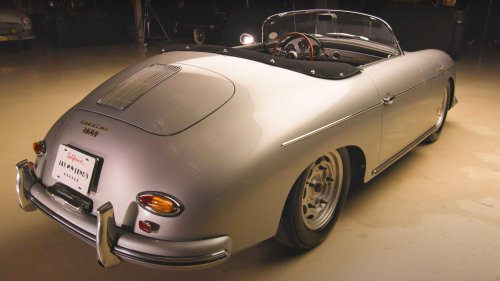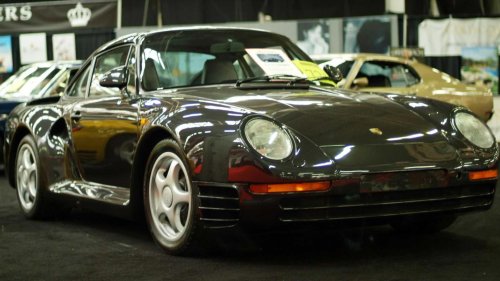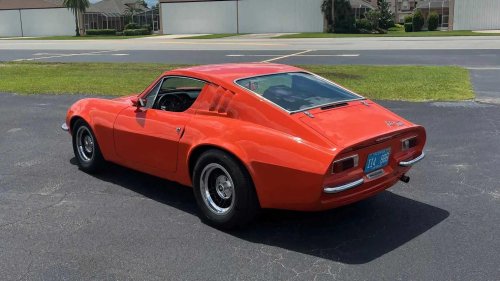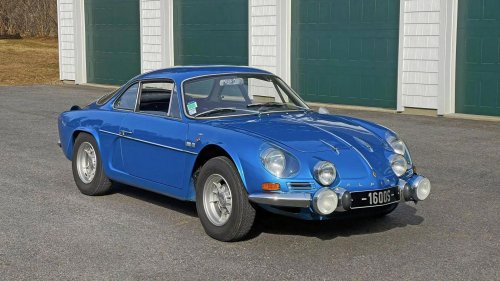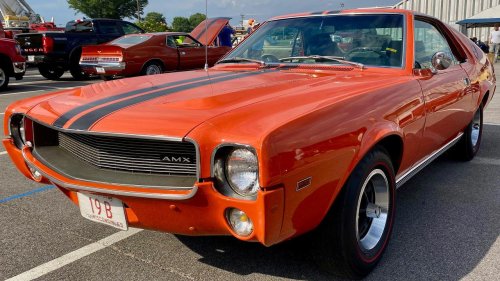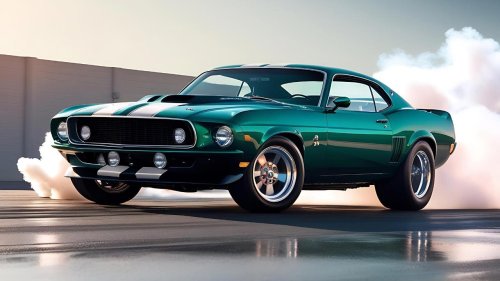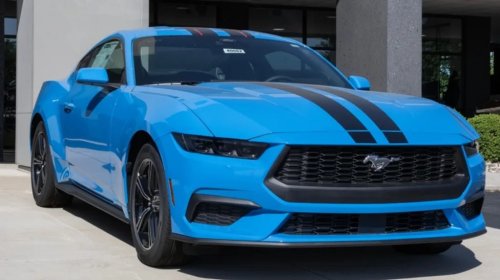
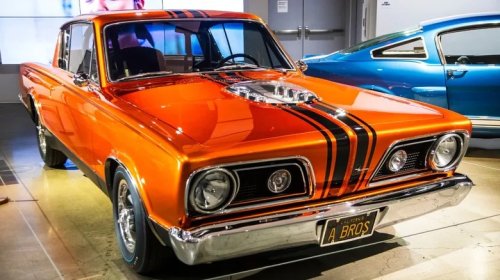
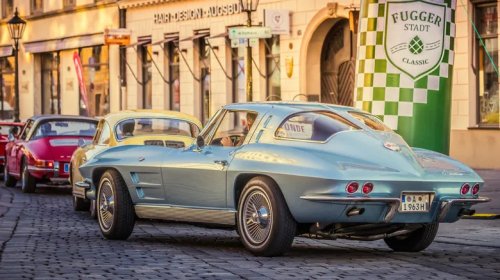
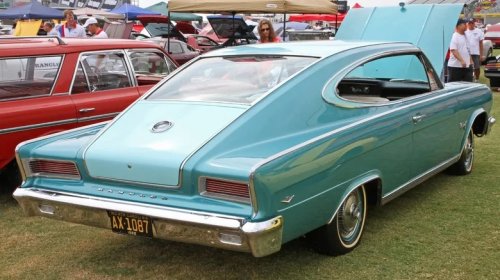
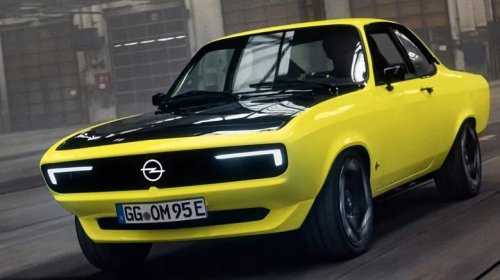
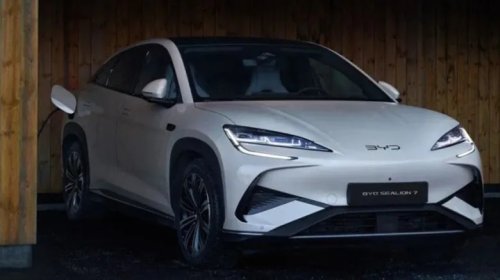



















A blue 2026 Ford Mustang GT - Jonathan Weiss/ShutterstockAutomakers love to name their vehicles after animals: the Ford Mustang, Ford Bronco, Ford Pinto, Volkswagen Beetle, Volkswagen Rabbit, Chevy Impala, Dodge Ram, Dodge Viper, and the list goes on. In fact, our readers' favorite car namesinspired by the animal kingdom aren't even on that list, and we're sure you can think of several other examples, too. We can't really blame car companies for doing this — it's resulted in some of the coolest names in the automotive industry. Naming your vehicle after a horse, for example, is a great way to invoke the ideas of speed and power. And what better way to associate your car with an aggressive, intimidating road presence than naming it the "Viper"? Besides, animals can't sue for trademark infringement.Interestingly, there happens to be a whole host of cars named specifically after ocean creatures. The Plymouth Barracuda is one well-known example, and talk about a name that invokes an intimidating road presence. Several cars have been named after rays, for some reason, like the Corvette Stingray and Opel Manta. For a few years, we also had the AMC Marlin – an odd-looking automobile, in our opinion. And, in the last few years, Chinese automaker BYD has come out with its Ocean Series, featuring several EVs named after ocean creatures, including the BYD Dolphin, BYD Dolphin Surf, BYD Seal, BYD Seal U, and the BYD Sealion 7. And the whole animal theme often goes beyond just the name.Read more: Here Are The Worst Car MythsPlymouth BarracudaA vintage Plymouth Barracuda - Karolis Kavolelis/ShutterstockThe Plymouth Barracuda splashed onto the scene in 1964 as a preemptive answer to another pony car you may have heard of: the Ford Mustang. In fact, it was actually America's first pony car, beating the Mustang to launch by 16 days. It started as a variant of the Valiant and was offered with a 225 cubic inch Slant Six, but many buyers opted for the 273ci V8 engine instead. Customers could also choose from a manual transmission or push-button automatic. By 1970, it would be upgraded from the A body to a bigger E body, like the Challenger had. Its last production year would be 1974, when the oil crisis pushed Americans into more fuel-efficient cars. Some are still around, though; we found one guy who was asking $2.2 million for his 1974 Barracuda in 2023.AdvertisementAdvertisementOriginally, the Barracuda was going to be called the Plymouth Panda. Panda? Really, Plymouth? For a pony car? Naming a car after a cute, cuddly-looking animal seems more appropriate for a model that comes from MINI or Volkswagen. Mercifully, that idea was nixed in favor of Barracuda. Actual Barracudas in nature are some bad mamma jammas — sort of like the Hell's Angels of the fish world. They can grow to be over 6 feet long and over 100 pounds. National Geographic says that they eat bigger fish by slicing them in half with their razor-sharp teeth. If the ocean were a prison yard, the barracuda would be the guy everyone avoids eye contact with.Chevrolet Corvette Sting RayThe rear left 3/4 of a silver 1969 Chevrolet Corvette Sting Ray Split Window on a busy street - Gaschwald/ShutterstockNo doubt the Corvette Stingray was one of the first cars to come to mind when you saw the headline of this article. "Sting Ray" was the name chosen for the second generation of the Corvette when it debuted in 1963 — it would be changed to "Stingray" for the third-generation models. It offered a fuel-injected 327ci V8 engine that could crank out 360 horses — not too shabby for 1963. That year's model also features the one-of-a-kind split rear window design and knock-off racing tires.The Sting Ray was partly derived from one of designer Bill Mitchell's concept racing cars, also called the "Stingray." An additional inspiration was the Mako Shark concept car, which itself was inspired by an actual mako shark that was caught and mounted by Mitchell. This is appropriate because sharks and rays are considered cousins, both having skeletons made of cartilage instead of bone. Sure, they look nothing alike, but do you look like every one of your cousins? We think the name "Stingray" is fitting for the second-generation Corvette with its flat profile and the roofline that comes to a point at the rear, just like the animal's body. A stingray looks like it effortlessly flies through the water as it flaps its wing-like fins. They can reach 6 feet in width and have venomous tail spikes, one of which took the life of Steve Irwin, the Crocodile Hunter himself.AMC/Rambler MarlinThe 1963 AMC Marlin from the rear right 3/4 - Kevin M. McCarthy/ShutterstockThe word "marlin" doesn't exactly invoke thoughts of speed or on-the-road charisma. It sounds more like something your co-worker might brag about catching during their vacation on the Gulf Coast. And appropriately, the Rambler Marlin does remind us of a fish. It was labeled a fastback – one of the first – but it looks to us more like a hatchback without the extra cargo space. The odd design was derived from a smaller concept car, also named after a fish — the American Motors Tarpon – which never made it to production.AdvertisementAdvertisementOne of the unique features of the debut 1963 Marlin was its "Twin-Stick Transmission," consisting of two shifters sticking out of the floor. One shifter was for the three-speed transmission, while the other was just for switching in and out of overdrive. Engine options included the 232 CID straight-six, the 287ci V8, and the range-topping 327ci V8 that could crank out 270 hp. Sales were strong the first year, especially for a late debut, but they gradually tapered out, making 1967 the Marlin's last model year. The fish the car was named after is a favorite among sport anglers. Blue marlins can get up to 14 feet long and weigh a literal ton. But just because you catch one doesn't mean you can keep it, as there are yearly limits in U.S. waters.Opel MantaThe Opel Manta GSe ElektroMOD concept vehicle - OpelOpel brought us our second entry on this list named after a ray. The Manta launched in 1970, introduced at Timmendorfer Strand on the German Baltic Sea coast. The scrappy little sports coupe was not built for power. The most powerful engine option was the four-cylinder 1.9 S, which could produce 90 hp – modest even by the standards of the day. The 1.2 version was available in the 1972 model year, and it only cranked out 60 hp. Engines in subsequent model years would gradually deliver more power. Still, sales that first year were pretty strong and remained strong for several years. The last Manta would be produced in 1988.The Manta name may now get a second life as an EV. In 2021, Opel unveiled the Manta GSe ElektroMOD concept car to a positive reception. The company followed up by promising the Manta-e — an electrified SUV. The debut was originally planned for mid-decade, but now Opel says it won't roll out before 2030. Opel chose the name Manta because cars named after animals, such as the Ford Mustang and Corvette Stingray, had done very well. But to come up with the logo, chief designer George Gallion flew to Paris to meet with none other than Jacques Cousteau, basing it on one of his photos. Manta rays, by the way, are enormous, with up to 26-foot wingspans and weighing over 5,300 pounds.BYD's Ocean Series lineupThe BYD Sealion 7 electric SUV charging in a wooden garage - BYDChinese automakers have been kicking butt and taking names in the EV market. BYD is no exception, and it's quietly taking over the EV world with its affordable prices and attractive designs. In 2023, the company launched five vehicles named after sea critters as part of its "Ocean Series." Currently, there are the BYD Dolphin hatchback and the subcompact Dolphin Surf, the Seal sedan, the Seal U SUV, and the Sealion 7 — a "performance SUV" with all the bells and whistles.AdvertisementAdvertisementAll of the cars in the Ocean Series employ what BYD calls "ocean aesthetics," with shapes and lines that flow smoothly from the front to the back. They also all sport BYD's Blade Battery, which it claims can go for 5,000 charging cycles, has a surface temperature range of only 86-140 degrees Fahrenheit (avoiding thermal runaway), and uses 50% less space than other batteries. The Dolphin and Dolphin Surf boast a range of 265 and 315 miles, respectively, while the Seal can reach 62 mph in just 3.8 seconds. BYD chose some fascinating namesakes. Did you know the gray seal can dive to 1,560 feet for up to an hour, and dolphins use not just their ears, but also their foreheads, jawbones, and teeth to hear? Pretty cool.Want more like this? Join the Jalopnik newsletter to get the latest auto news sent straight to your inbox, and follow us or add us as a preferred search source on Google.Read the original article on Jalopnik.