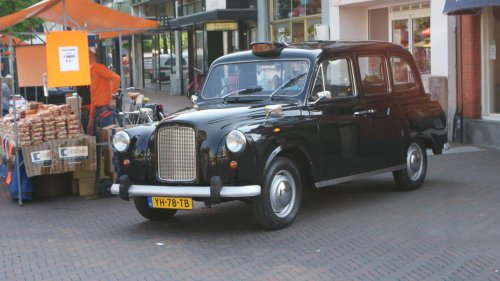
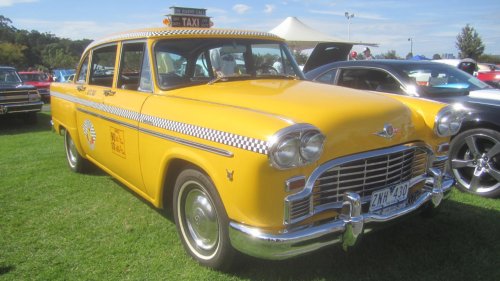
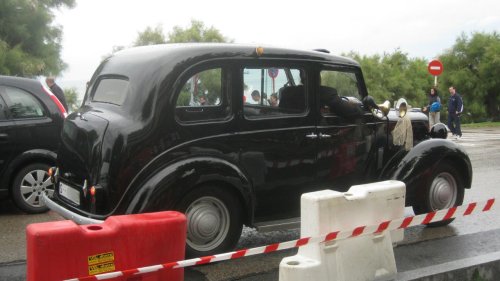
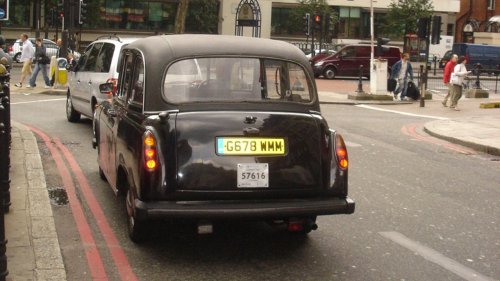
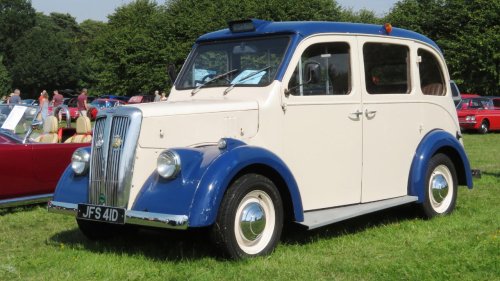
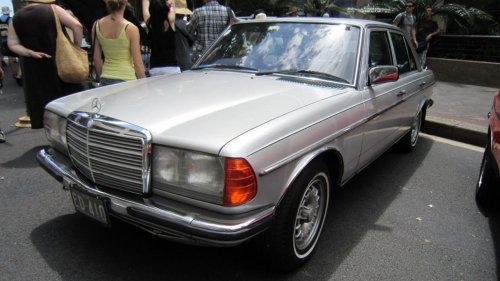
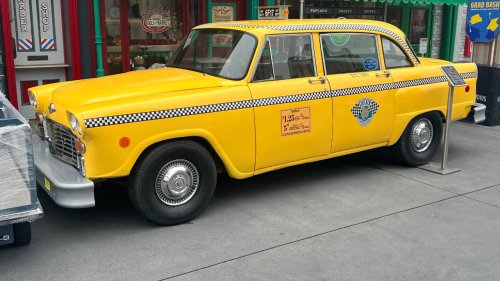



















Taxi fleets have always demanded something ordinary passenger cars rarely had to provide: the ability to survive years of nonstop driving. Some taxi models became famous for their durability, while others quietly disappeared after spending decades carrying passengers through busy cities. These seven forgotten taxis earned reputations for longevity, rugged construction, or unusually long working lives, proving that the best fleet cars were often built to survive far beyond expectations.Checker Model A8The Checker Model A8 became one of America’s most durable purpose-built taxi designs after its introduction in 1956. Its rugged chassis, spacious cabin, and service-friendly construction were designed around the realities of commercial driving, where cars could spend most of their lives on the road. The A8 established the basic shape that Checker would continue developing for decades, making it one of the most important foundations of America’s legendary long-running taxi tradition.Austin FX3The Austin FX3 was one of the most important postwar London taxis, becoming widely used after its introduction in 1948. Its separate chassis and diesel availability made it particularly well suited to the demanding work of city taxi service. The diesel version became increasingly popular because of its fuel economy, helping Austin regain dominance in London’s taxi market. Although eventually replaced by the FX4, the FX3 established many of the characteristics that made later London taxis so durable.Austin FX4The Austin FX4 became one of the longest-lived taxi designs in automotive history. Introduced in 1958, it remained in production until 1997 through successive manufacturers and updates, with more than 75,000 examples built. Its simple construction, tight turning circle, and reputation for dependable diesel service made it a natural choice for London cab drivers. Some surviving late-model examples accumulated extraordinarily high mileage, with several older cabs eventually exceeding one million miles in service.Beardmore Mk VIIThe Beardmore Mk VII was a comparatively rare London taxi that represented the traditional, heavy-duty approach to cab construction. Introduced in 1954, it was built by Beardmore, a Scottish engineering company with a long history of producing taxis. Although it sold in much smaller numbers than the Austin FX4, the Mk VII was designed around the demanding London taxi regulations of its era. Its rarity today reflects how few examples survived after years of hard commercial use.Mercedes-Benz W123The Mercedes-Benz W123 became one of Europe’s most respected taxi cars because it could combine passenger comfort with remarkable durability. Mercedes offered the W123 in a dedicated taxi specification with features designed specifically for commercial service, including reinforced seats and equipment for taxi operation. Diesel versions became particularly popular, and many W123 taxis accumulated enormous mileages before retirement. Surviving examples remain reminders of why Mercedes became such a dominant force in the European taxi market.Checker Model A11The Checker Model A11 represented the final evolution of the company’s classic American taxi formula. Introduced in 1961, it remained in production until 1982, allowing essentially the same basic architecture to serve taxi operators for more than two decades. Heavy-duty components and later Chevrolet engines helped these cars withstand constant commercial use, while their enormous interiors made them practical for urban fleets. Some A11s accumulated hundreds of thousands of miles, with exceptional examples approaching the million-mile mark.