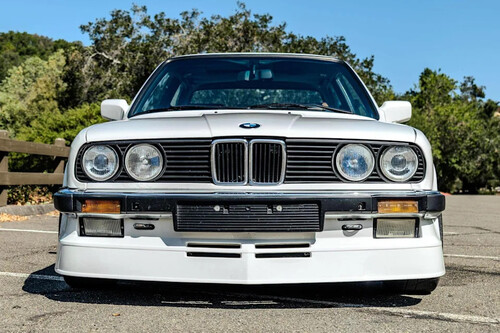
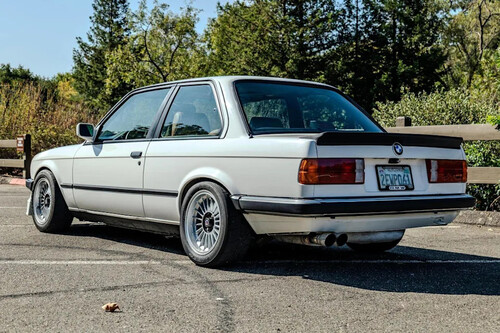
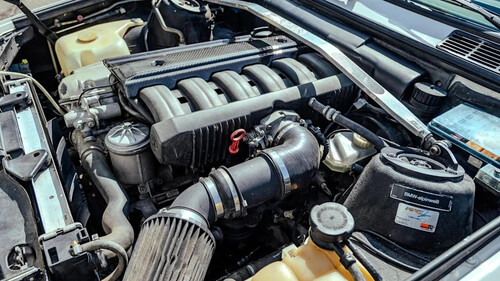
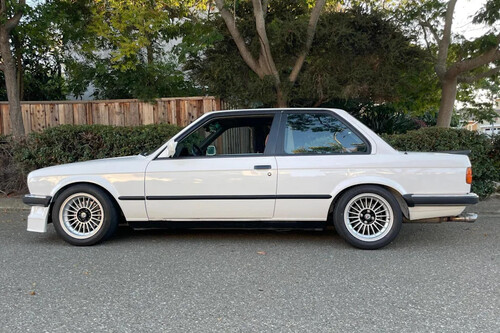
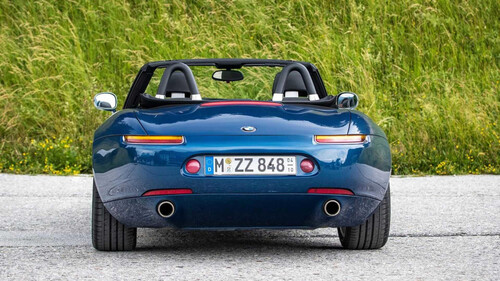
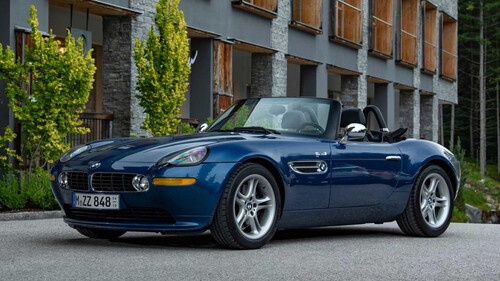
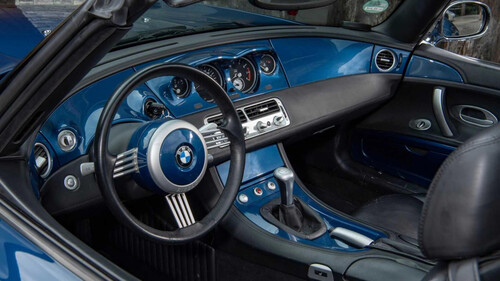
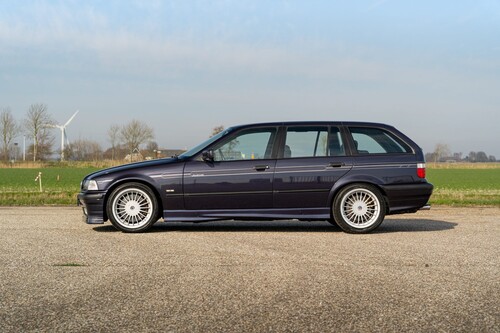
Coined in the 1970s, BMW has prided itself on creating "The Ultimate Driving Machine". Whether you personally agree with it or not, it goes without saying that BMW has created great cars. Still, what if great wasn't enough? That's where Alpina's services may be handy. Alpina was founded in the 1960s and, in its earliest years, was deeply entrenched in racing, with its first product being a carburetor for the BMW 1500 that would win favor with the German automaker.In the years since, Alpina has cemented itself as the go-to company for extracting greater performance and imbuing greater personality into many of BMW's cars, past and present. In its extensive catalog, there were a handful of models that are remembered as ushering the brand further into the global spotlight.This article focuses on five models built by Alpina that are credited with contributing to the brand's notoriety, success, and esteem. We've arranged these models in chronological order. Alpina B6 3.5S Based On: BMW E30 3-Series, eg 325i 1990 Alpina B6 3.5 SThe BMW E30 M3 is an icon. However, despite being one of the greatest homologation specials ever, it wasn't enough for some. As such, Alpina had several iterations of its BMW E30 3-Series rendition, and the B6 3.5 S was the final evolution of its E30. The B6 3.5 S was an evolution of the B6 3.5, which debuted in 1984 and inherited its heavily modified naturally aspirated inline-six engine, which, in this configuration, produced more power than any factory BMW E30 M3.Beyond its greater power and performance than the BMW E30 M3, the Alpina B6 3.5 S also featured a revised suspension system that was almost akin to the factory E30 M3, but was distinguished by the use of beefier front suspension pulled from an E30 M3 with air conditioning to accommodate for the added weight caused by the M30 inline-six.Aside from the new hardware and performance gains, the other distinguishing aspects of the Alpina B6 3.5 S were its Alpina-striped seats, a handful of new digital instruments, a body finished in Alpina Blue, and 16-inch multi-spoke Alpina alloy wheels.Only 62 examples, all finished in Alpina Blue, were produced between 1987 and 1990. When new, the Alpina B6 3.5 S was one of the most compelling and attractive grand touring cars, helping cement Alpina as a brand capable of extracting greater performance from BMW. Alpina B10 BiTurbo Based On: BMW E34 5 Series 1994 Alpina B10 Bi-TurboNot long after unveiling their version of the BMW E30 M3, Alpina would unveil the fastest model they had produced up to that point. Actually, at the time, it was the fastest sedan you could buy. Dubbed the Alpina B10 BiTurbo, this was a radically reimagined version of BMW's E34 5 Series sedan that debuted at the now-defunct Geneva Motor Show in 1989 and was the product of approximately $3.2 million (not adjusted for inflation) in research and development.It goes without saying that Alpina saw a healthy return on its investment in the Alpina B10 BiTurbo, which not only became the fastest Alpina ever at the time, but also its bestselling model in the company's history. The source of its astounding performance was a heavily modified version of BMW's 3.5-liter straight-six that powered the regular E34 5 Series, although with the addition of two Garrett turbochargers.The result of Alpina's efforts to improve its power plant was more than 100 horsepower over the standard BMW 535i with the same engine and significantly improved acceleration. Alongside greater power came a beefier suspension system that included hydraulically adjusted shock absorbers and anti-roll bars at both ends to further improve its handling. Only 507 examples of the Alpina B10 BiTurbo were produced, each cementing Alpina as a brand capable of impressive engineering. Alpina B12 5.7 Coupe Based On: BMW E31 850CSi 1993 BMW Alpina B12-5-7-Coupe By the 1990s, Alpina had established itself as one of the foremost aftermarket options for BMW models, and in 1992, the company introduced one of the most attractive models to ever wear the Alpina moniker. The B12 was Alpina's take on the E31 8 Series, and the version powered by one of the largest engines ever used in an Alpina model stands out as one of its best. Only 57 examples were built, and today the B12 5.7 is remembered for further enhancing the company's reputation as a manufacturer capable of offering staggering performance in a luxurious package during the 1990s.At the core of the B12 5.7 was a 5.7-liter V12 engine that featured a medley of new, improved hardware that produced more than 400 hp and helped propel the sleek grand tourer to over 180 mph.It's worth noting that Alpina used the BMW 850CSi (E31 8-Series) as the basis for this model, which Alpina considered a job well done by BMW's M division, and as such, changes to the 850CSi, other than the engine, were conservative.The most notable changes were a revision to the front springs to slightly lower the front end, larger brakes than the standard 850CSi, and new leather in the cabin. Interestingly, the B12 featured a carbon-fiber hood with a NACA duct in the center. It was one of the fastest grand tourers at the time and remains one of the most desirable models Alpina produced before the 21st century rolled around. Alpina B12 6.0 Based On: BMW E38 7 Series 2000 BMW Alpina B12 In the run-up to the 21st century, Alpina continuously produced cars that were faster, quicker, and more luxurious than those that came before. Just before the turn of the millennium, Alpina introduced a new version of its models based on the technologically advanced E38-generation 7 Series, one of the fastest Alpina models it created at the time, impressive considering it weighed roughly 4,600 lbs.Despite its weight, the Alpina B12 6.0 had impressive acceleration, capable of reaching 60 mph from a standstill in more than a second quicker than the standard 7 Series it was based on. The source of its strength was a significantly revised version of BMW's M73 V12 engine, coaxed to output more than 100 hp over the 750i's output. One of the more impressive aspects of Alpina's V12 engine was that most of its torque output was available from 1,700 rpm.Alongside its beguiling performance came a plush interior featuring Alpina full-leather upholstery, a hand-sewn leather steering wheel, velour floor mats with an Alpina design, and luxury wood trim. The appeal of the Alpina B12 6.0 was the pairing of a powertrain offering performance akin to the Ferrari F355 at the time and a luxury interior expected of some of the most luxurious sedans. It was that interplay of seemingly contradictory characteristics that made the Alpina B12 6.0 stand out and draw more attention to the Alpina brand. Alpina Roadster V8 Based On: BMW Z8 Roadster Alpina Z8 Roadster Fewer than 6,000 BMW Z8's were built between 2000 and 2003. Today, these retro-modern V8-powered monsters are worth at least $200,000 in a rough state, which is nowhere near the value of Alpina's version of the V8-powered roadster. The models we've previously discussed all followed a similar formula. That is, more power, a more luxurious interior, and subtle Alpina styling.However, the Alpina Z8 bucked that formula as it was less powerful than the standard BMW Z8 Roadster. Instead of extracting more power from the Z8's V8 engine, Alpina relied on a detuned version of the Z8's own S62 V8 engine, which made the Roadster V8 more adept at cruising than canyon carving. Another distinguishing aspect of Alpina's rendition of the Z8 Roadster was its suspension system, which was swapped out for a softer setup intended to accommodate the design of the Alpina Dynamic wheels.This was one of the first Alpina models introduced in the 21st century and marked a significant milestone for the company. Not only did it bring attention to the brand for its rendition of one of BMW's most sought-after models, it was also the first Alpina model to be sold in the United States.