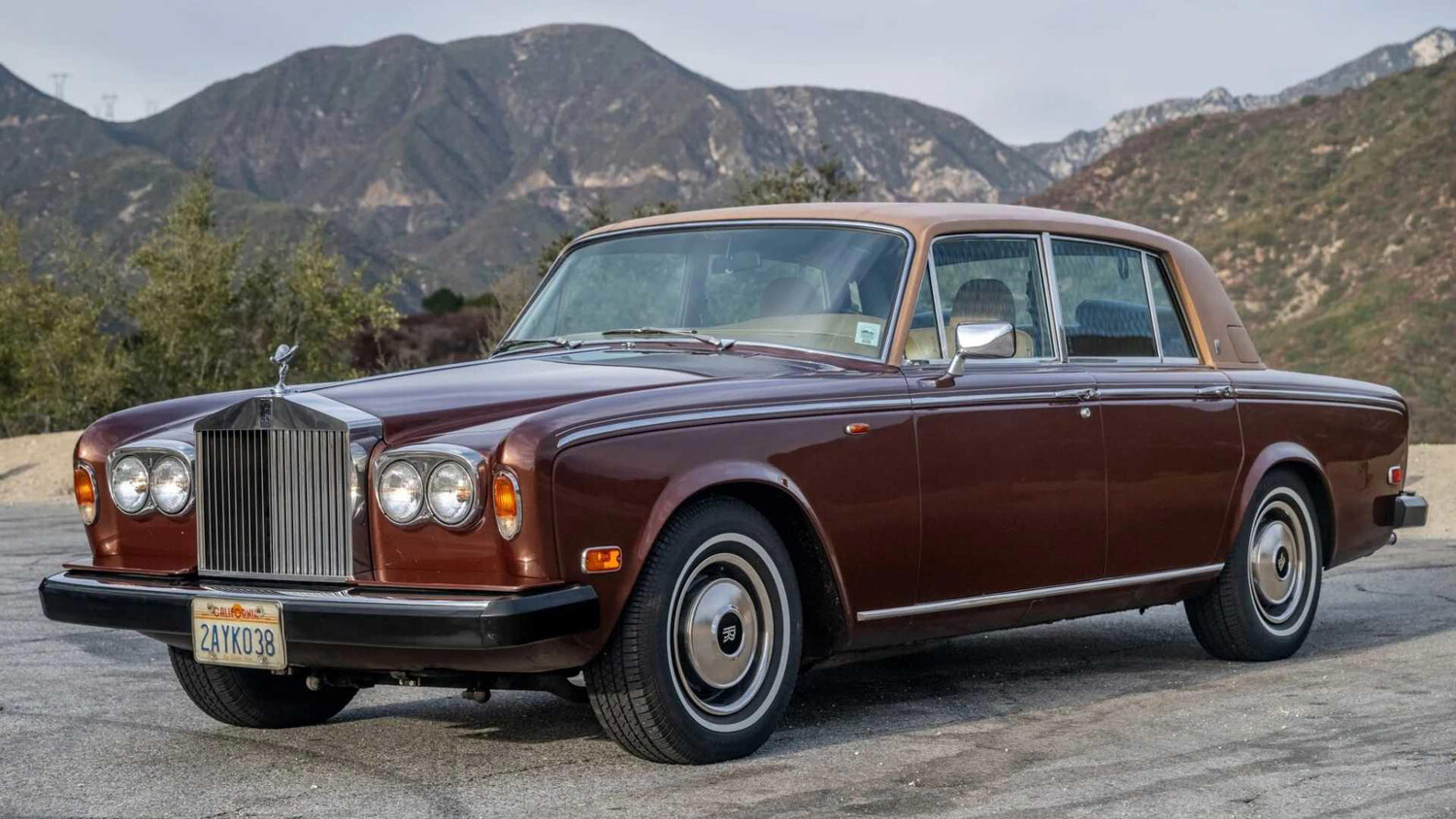
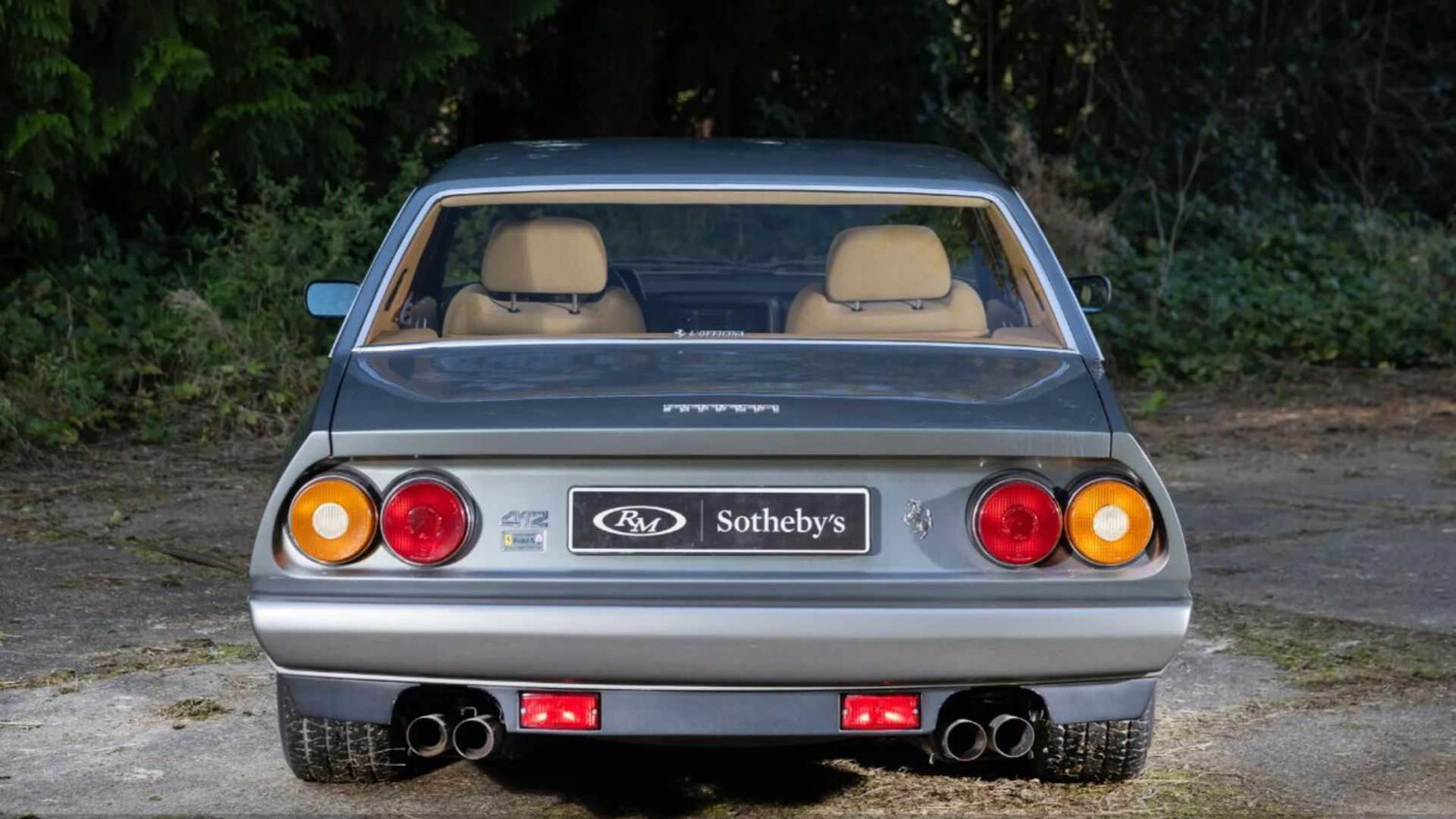
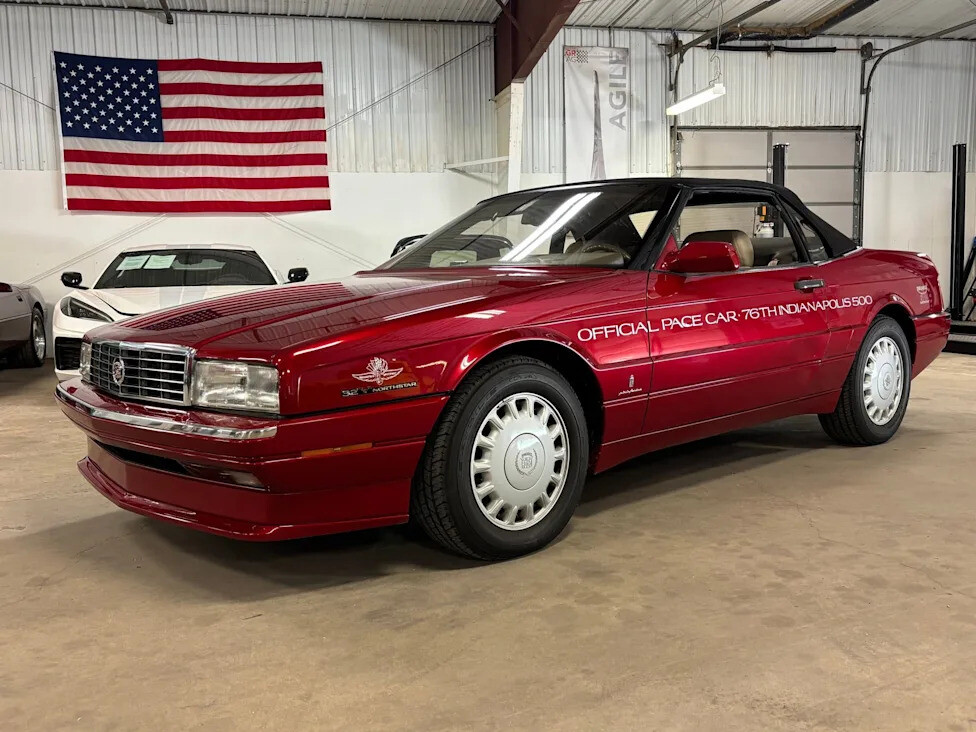
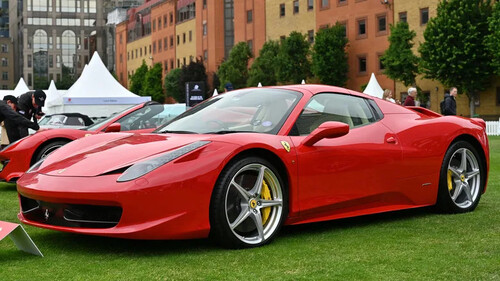
While vehicles and engines usually get most of the recognition in the automotive world, the transmission is just as deserving of fame. That is, if it's a good one. While it's harder to nail down a good, long-lasting transmission than a well-sorted engine simply because all it does is handle gears, the gearbox is just as important as the mill whose power it handles. After all, a beautiful building can't stand without a sturdy foundation, and you can think of a transmission as such.Arguably, one of the most coveted gearboxes ever made, especially on the classic muscle car scene, is the General Motors Turbo-Hydramatic THM400 automatic transmission. On the surface, it's a simple, three-speed automatic unit originally intended for heavy-duty applications such as in big-block V8 cars and pickup trucks. However, it managed to stick around for decades, and was even used by luxury car and supercar-makers throughout the world. Simply put, a more well-traveled transmission probably doesn't exist. Here's What Makes It So Reliable Wikimedia Commons: Vic Brincat Virtually every single aspect of the Turbo-Hydramatic THM400 was built with longevity and durability in mind. Its penchant for reliability begins in its shell, or case. It was cast from aluminum, and was purposely made thicker than usual when it was introduced to withstand more flex, or torque, that can occur during hard acceleration wherein a vehicle's chassis can flex and strain the transmission's casing. Its bell housing was similarly robust, again to withstand high levels of torque.Next, the THM400 was built with a cast-iron center section. The center section of a transmission is where the actual gears are housed and mounted. Using cast iron means the internals are cradled in an exceptionally-strong area, translating into a much more reliable gearbox as a whole. The gears themselves, cast from high-strength steel, housed within the center section were simple, yet robust. The gear set is called a "Simpson Gear Set", which consists of two distinct planetary gear sets sharing a single "sun" gear. Speaking in astronomical terms, planets orbit a sun, hence where planetary and sun gears get their names.Bring A Trailer One of the more rare features of the Turbo-Hydramatic THM400, especially when it first hit the market, is its use of overrunning clutches. Overrunning clutches are components that allow for smoother shifting. This is achieved by allowing the clutches to rotate at a different speed than the driven, or input, shaft that transfers engine power into the transmission as a whole. This means shifting is smoother, easing stresses on the transmission, and allowing for a longer-lasting gearbox.Finally, the THM400's fluid management system is over-engineered. The gearbox's valve body was specifically designed to be overwhelmingly sturdy, yet simple, at the same time. The THM400 was also engineered to contain much more transmission fluid than normal, with a stock capacity of up to 12 quarts. For comparison, a typical transmission built during the THM400's production era commonly held anywhere from four to six quarts of fluid. Those with a mechanical inclination know that, in general, more fluid of any type usually amounts to better cooling, better lubrication, and a longer lifespan. Its Use Was Worldwide The vast majority of the Turbo-Hydramatic THM400's fame came from America's classic muscle car era. However, the gearbox found its way into models produced by England, Italy, and even Japan for a brief period of time. England Bring A TrailerIn 1971, Jaguar introduced a V12 version of its XJ-S grand tourer. However, right away it was found that the existing transmission used for the model – a BorgWarner Model 12 three-speed automatic – did not prove robust enough to handle the 12-pot's sheer amount of horsepower and torque. So, Jag reached out to General Motors about using its THM400 transmission. A deal was struck, and the XJ-S V12 began sporting the GM-bred gearbox beginning in 1977. The Daimler Double-Six, a V12-powered Jaguar XJ, also employed the transmission.Bring A Trailer Both Rolls-Royce and Bentley also used the THM400 transmission. Rolls employed its use in models like the Silver Shadow, and Bentley installed it within nameplates such as the Mulsanne and the Turbo R. Italy Simon Clay Copyright 2024 Courtesy of RM Sotheby'sOn the heels of Jag's procurement of the THM400 transmission, Ferrari also reached out to the Detroit Giant for some gearbox-related help. The Ferrari 400 had been released in 1976, and the Italian supercar maker needed a strong, new transmission to handle the power coming from its 4.8-liter V12 engine. GM obliged, and Fezza was allowed to use the unit from the 400's 1976 debut all the way until its axing, then known as the Ferrari 412, in 1989. Japan YT: boardnews / officialJapan's use of the big and brash THM400 transmission is much smaller than Italy's or England's, and it also occurred much earlier. In 1966, Nissan released a model called the Prince Royal Limousine. However, this wasn't meant to be a mass-market limo. Instead, it was specifically designed for use by the Emperor of Japan. Only five were produced, and all featured a THM400 transmission that was hooked up to a 6.4-liter V8 engine produced by Prince Motor Company. The King Of The Classic Muscle Car Era Bring A TrailerThe THM400's bread and butter was the classic American muscle car era. The gearbox as a whole was first introduced in 1964 for Cadillac and Buick models, with Oldsmobile and Pontiac following suit a year later. The unit was specifically tasked with replacing the aging four-speed Hydra-Matic and Buick Dynaflow gearboxes, both of which had been around since the 1930s and 40s. It was to be the heaviest-duty automatic on GM's civilian offering list.Bring A Trailer The gearbox was designed with toughness in mind from the outset, meaning it was destined for use in high-performance models, which began hitting the market the very same year it was introduced. By the late 1960s, virtually every single big-block V8-powered GM car used a THM400 transmission, along with a good majority of pickup trucks. Drag ravers love the THM400 because of its overrunning clutches, along with its strength as a whole.In 1969, a smaller transmission based on the THM400 was introduced, the THM350. It was meant to be installed in models with smaller engines, namely various GM subsidiary-bred small-block V8s. Through The Years & Cancellation GMCFollowing the close of the classic American muscle car era, the THM400 continued to be used in large sedans, pickup trucks, and SUVs like the Chevrolet/GMC Suburban. However, once GM went through its company-wide downsizing in 1977, as part of company project "77", the transmission started to see less and less. This was because previously large sedans and coupes started to utilize smaller engines following the downsizing, meaning they could get away with using smaller transmissions. By 1982, all regular passenger cars ceased using the THM400, having been replaced by the 700R4 four-speed automatic.By the mid 1980s, the THM400 was largely relegated to SUVs and pickup trucks. The Checker company, which produced the famous yellow taxi, used the transmission until 1982, when production ceased. The final passenger car of any type to use the THM400 gearbox was the 1985 Cadillac Fleetwood Brougham Presidential Limousine. In 1987, it was renamed the "3L80", with an 3L80HD version being released at the same time for heavy-duty pickup truck applications. Finally, in 1990, the THM400/3L80 transmission was axed. Replacing it was the long-standing 4L80-E four-speed automatic transmission, which served as GM's standard heavy-duty gearbox from 1991 all the way to 2013.Bonhams When the THM400 finally left the fold, it had stuck around for a whopping 26 years. While specific production numbers were not recorded by GM, we can safely assume that millions of them were produced over the course of its life. Along the way, it managed to win the hearts of gearheads from all walks of life, and from all corners of the globe, thanks to its versatile and reliable build.