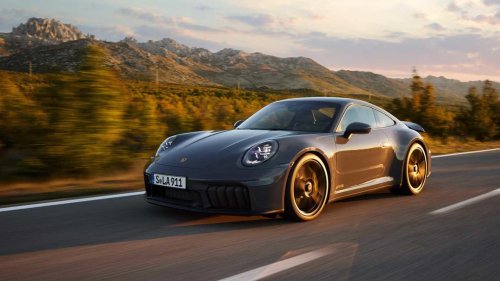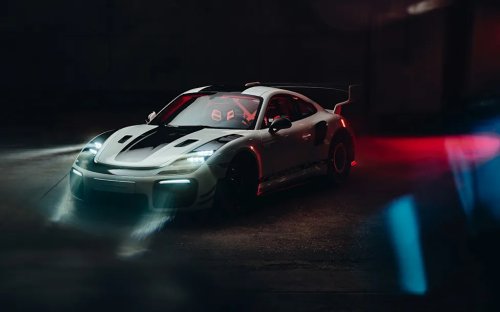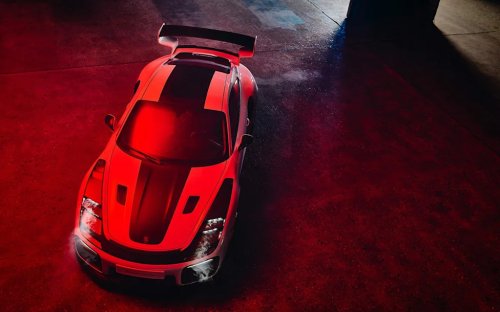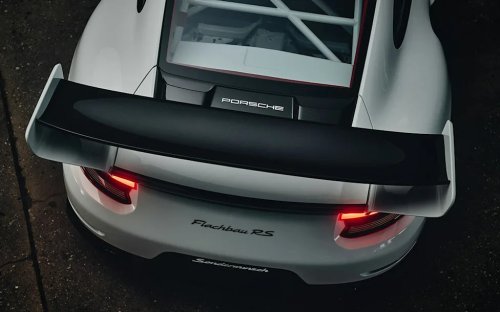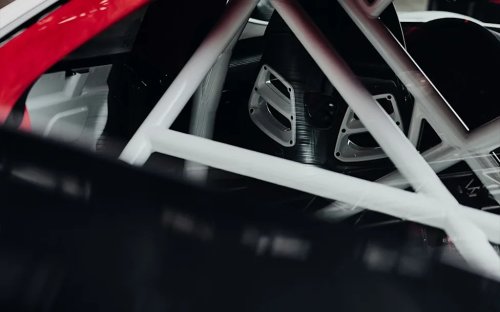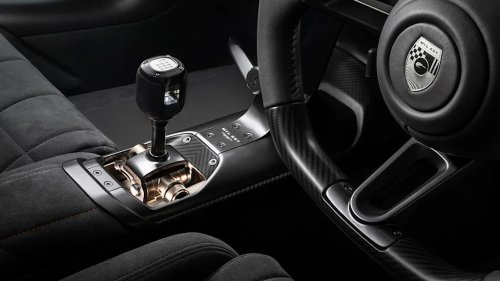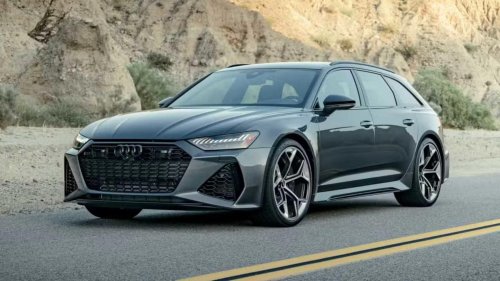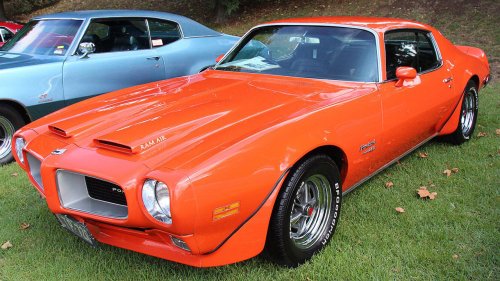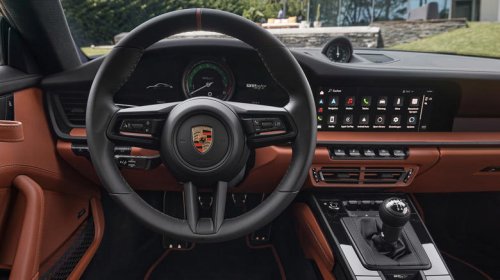
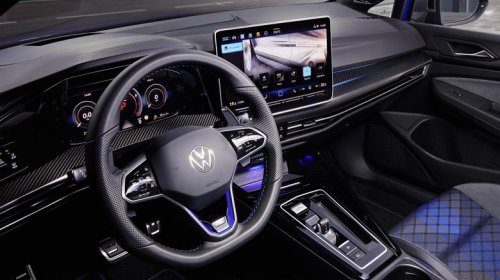
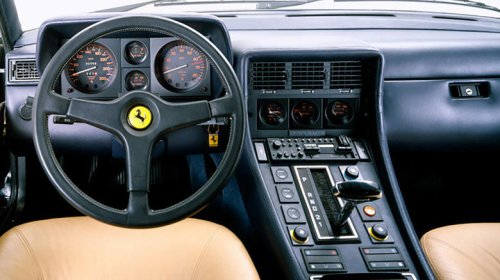
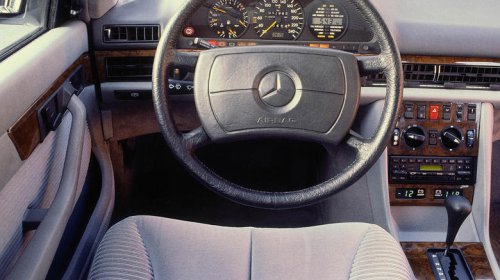


















Porsche 911 S/T Six-Speed ManualFewer and fewer vehicles are being offered with a stick shift, but don't let that make you think the glory days of the manual are over. As far as exhilarating driving experiences go in a manual transmission car, nothing beats the brand-new Porsche 911 S/T.According to many, this is the ultimate 911 — perhaps the best ever made. See, Porsche borrowed most mechanical parts from its 911 GT3 RS track machine, but without the unnecessary bloat. You won't see huge wings on the S/T, or a quick-shifting PDK transmission. What you will see is an additional weight reduction, resulting in a curb weight of 3,056 pounds.The naturally aspirated 4.0-liter flat-six, of course, is already considered as one of the greatest engines ever produced. Here, it produces an impressive 518 hp, revving to a stratospheric 9,000 rpm and providing an acoustic feast. Porsche also equipped the 911 S/T with a lighter double-disc clutch and single-mass flywheel for lightning-fast throttle response, which means you'll need to be on top of your game when shifting the short-ratio six-speed manual. According to every journalist, there is a learning curve, but once you master it, the manual will provide you with one of the most visceral experiences. Mechanical, super-precise and with short throws, the 911 S/T's stick shift is a joy to use. It just makes us sad that Porsche will only make 1,963 units and sell them for an astronomical $290,000 before options.Audi/Volkswagen DSG/S-Tronic Dual Borg Warner Clutch AutomaticPorsche might be at the forefront of dual-clutch innovation, but the VW Group's impact shouldn't be underestimated. The conglomerate was the first to put the Borg Warner gearbox in a production car — the 2003 Audi TT 3.2 V6. Audi called it S-Tronic then, but Volkswagen chose DSG (Direct Shift Gearbox) when it launched the gearbox in the Golf MK4 R32. At that time, VW's dual-clutch transmissions had six speeds, though later a seven-speed unit was developed.Remember, this is during the 2000s, when other automakers offered ancient torque-converter automatics. The dual-clutch transmission was truly a revelation, closing the performance gap between to the manual transmission. Immediately, DSG-equipped cars were quicker than the manual alternatives, as opposed to the aging torque-converter automatics. The DSG/S-Tronic was also relatively smooth, particularly when compared to single-clutch automated manuals like the one found in the BMW E60 M5.Still, the biggest victory for VW's transmission was its ubiquity. VW Group quickly started putting it in all sorts of cars, even in low-cost city cars like the 2010 Skoda Fabia with a 1.2-liter, 105 hp engine. I remember trying it in this exact car back then and came out astonished by the F1-like shifting speed. It felt like the future. Heck, it was even better than some automatic luxury cars from the era. The fact that it also improved fuel efficiency was only the icing on the cake.GM TH400 Three-Speed AutomaticWith General Motors' TH400 longitudinal three-speed automatic, we are having a change of pace. Instead of shift quality, it's reliability and toughness that take center stage here. Introduced in 1964, the TH400 was a big deal at the time, replacing GM's aging ST300 two-speed automatic. It was more advanced, with a pitch stator (Turbo HydraMatic model) that allowed for changing the shifting characteristics, though reliability is what made it famous.Predictably, GM started putting it in most of its larger luxury vehicles, like Chevrolets, Buicks, Oldsmobiles, and Cadillacs. By 1970, though, the TH400 started being used in the corporation's heavy-duty trucks. It was all thanks to its legendary toughness; the TH400 was rated at 450 lb-ft of input torque, which was quite high for the era. Still, that was quite a conservative rating that was easily surpassed with a few aftermarket mods. The TH400 also worked with RWD and AWDThanks to that, other automakers quickly rushed to GM to get a TH400 for their models. Jaguar and Rolls-Royce used this transmission, and surprisingly, so did Ferrari in its 412 grand tourer with a V12 engine. You can even adapt it for use in high-horsepower modern engines, provided you are okay with having only three gears.Mercedes-Benz 722.3/722.4 Four-Speed AutomaticWay before Toyota was associated with reliability, Mercedes-Benz was who people felt made the most durable vehicles. The OM617 inline-five diesel is often considered as one of the most reliable engines ever made, with a Greek taxi driver taking it to an astonishing 2.85 million miles.Still, Merc's engineering prowess is also evident in the 722.3 and 722.4 four-speed automatic transmissions, which are also among the most durable in automotive history. Hitting 450,000 miles before a rebuild is almost given with these units, with many examples surpassing the million kilometer mark (620,000 miles).Mercedes-Benz used both these transmissions in its rear-wheel drive sedans, like the W124 E-Class and 190-Series. It was available with the automaker's four, five, and six-cylinder gas and diesel engines. The 722.3 was designed for more powerful models, able to sustain up to 420 lb-ft of torque. Meanwhile, the 722.4 was good for up to 184 lb-ft of torque.Although tough, the 722.3 and 722.4 transmissions of course aren't the last call in technology, and they shifted through the gears quite slowly, something I recall from my cousin's W124 diesel. Still, they are generally smooth, and perfectly in line with the luxury credentials of Merc's sedans.