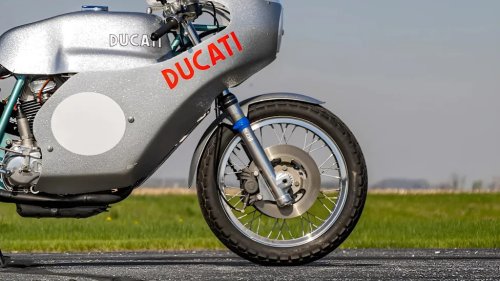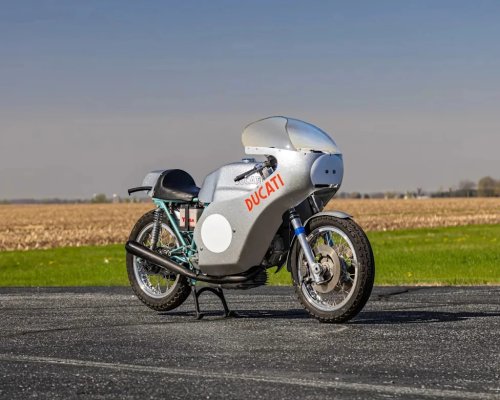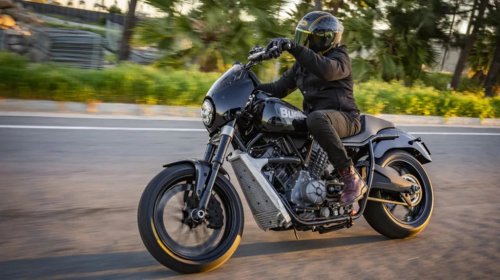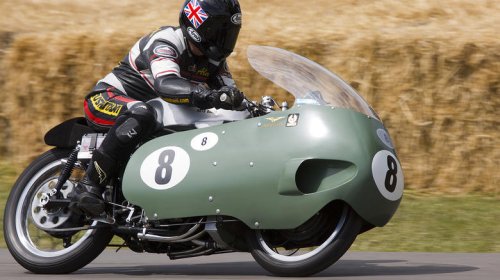
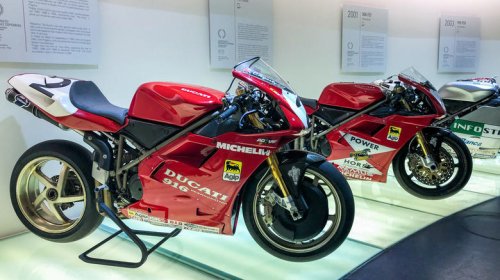
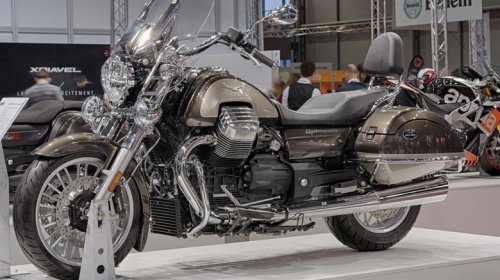
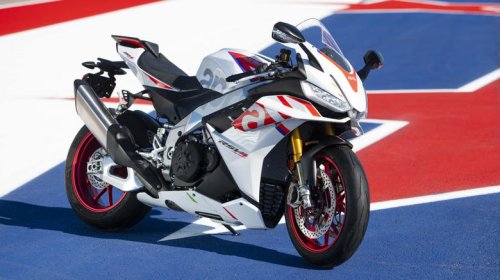

















Moto Guzzi V8The 1950s saw a sea change in motorsports as the technology improved to facilitate more competitive racing at greater speeds. One bike in particular, the Moto Guzzi V8, was front and center as one of Grand Prix motorcycle racing's earliest stars. Designed especially for Grand Prix racing, the 499cc Otto, as it became known, was a trailblazer within its class, paving the way for new and innovative technologies as the first racing bike to have a DOHC V8 engine. It was the model that put the fledgling manufacturer on the map as a producer of high-performance bikes, and it fared well in Grand Prix and TT competitions between 1955 and 1957.You only have to look at the V8 Otto to see how much it influenced the motorcycles of today. Features such as its racing saddle, sculpted fuel tank, clip-on handlebars, and full fiberglass faring are all commonly seen on modern machines. Performance-wise, it was impressive, even by today's standards, with a top speed of 178 miles per hour and an engine that produced 80 brake horsepower at 12,000 rpm. Even the Otto's handling was considered far better than average, and its unsophisticated drum brakes were said to be capable enough to bring its nearly 300 lb frame to a standstill at speed, although few modern riders would be happy to put this to the test. Due to the primitive nature of this historically significant motorcycle, it makes the lowest level in this ranking. However, it's also worth asking — if it weren't for the Moto Guzzi V8, would the likes of the Bimota DB7 or the Ducati 916 even exist?Ducati 916Ducati's marketing insists that the company adheres to the values of "style, sophistication, and performance" when designing motorcycles. All these came to a perfect head in 1994 with the introduction of the Ducati 916.The 1990s were a fruitful time for Italian sports bikes as they started to really come into their own as competitors to their great Japanese rivals: Honda, Kawasaki, and Suzuki. The Ducati 916 led the charge, winning four World Superbike championships and establishing Ducati as an unparalleled designer of high-performance motorcycles. It's hard to think of a bike that has made more of an impact on the sports bike category, despite a production run of only four years. Standout features of the 916cc racer include a single-sided swingarm, under-seat exhausts, three-spoked wheels, and inverted forks, which are now commonplace on bikes of this segment. Its 109 brake horsepower engine propelled it to 160 miles per hour, but most importantly it cornered like a dream and was a joy to ride in a time before rider assists and onboard computers were standard.Of course, no bike is perfect, and the Ducati 916 didn't fare so well in the reliability stakes, leaving it nearer the bottom of this ranking. Of course, this isn't a mile-munching touring bike — it is a thoroughbred racer, and if you are lucky, you might still see a looked-after model flying past you on the freeway almost 30 years on.Moto Guzzi CaliforniaWhile Italian motorcycles are better known for their fully-fared racing machines, they make an excellent cruiser, as evidenced by the Moto Guzzi California. Here, the brand has proven, once again, that it is adept at combining traditional styling with modern construction techniques and materials, and the result is a contemporary classic that offers riders the best of both worlds.Initially developed for the Los Angeles police in the late 1960s, the California became a popular bike in the United States due to its exotic European appeal matched with American cruiser characteristics. These include its wide handlebars, low seat, tall windshield, and robust V-twin engine, with the latest models boasting a 1,380cc block that produces 95 brake horsepower. Unlike many U.S. counterparts, the Moto Guzzi has a comfortable, upright seating position, with sensibly-placed floorboards and a handlebar height that accommodates many hours of effortless riding.The Moto Guzzi California handles well, has plenty of luggage space, and fares well in reliability tests, making this a practical and fun highway hog that costs less than a Harley but still retains plenty of heritage and bags of style. While it certainly deserves a spot on this ranking, the California lacks the intrigue and broader appeal of those bikes higher up on the list — even though it is most likely the best Italian cruiser ever made.Aprilia RSV4To the casual observer, the Aprilia RSV4 looks much like any other superbike, with its full faring, upswept exhaust, clip-on handlebars, and aggressive rider position. Yet, as the architect Ludwig Mies van der Rohe once said, "God is in the details," and in the RSV4, Aprilia has created something worthy of worship. The RSV4 is the flagship superbike from the highly-respected Aprilia brand. Available as a limited, racing-optimized factory model and a standard version, it is the best bike the brand has ever made, starting with its exceptional engine. This is a 1,099cc narrow-V, four-cylinder power plant that is both lightweight and compact but extremely powerful. It provides 125 Nm of torque at 10,500 rpm and 217 horsepower, boosting the bike to a top speed of almost 190 miles per hour.Design-wise, the Aprilia team has integrated winglets into the RSV4's double-layered faring, improving stability and aerodynamics while maintaining the bike's sleek appearance. A lightweight, reinforced swingarm and upgraded electronics help improve upon the previous-generation RSV4's already-impressive performance, making the latest version a cut above the rest.The Aprilia RSV4 is not without considerable competition in the liter-class superbike segment, from the likes of the Kawasaki ZX-10R, Honda Fireblade, Yamaha R1, BMW S 1000 RR, and even its own compatriot Ducati Panigale V4 S. However, the Aprilia holds its own and even outclasses some of its rivals. This is one among many reasons that the RSV4 deserves a place in the top three greatest Italian motorcycles ever made.