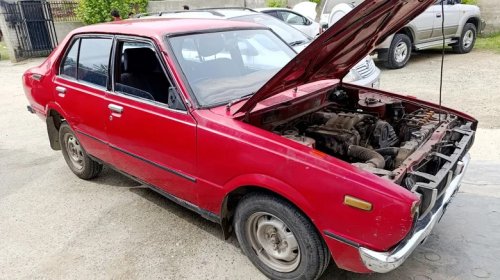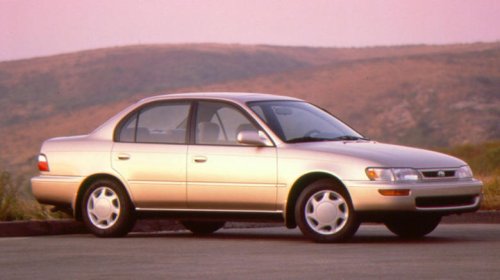
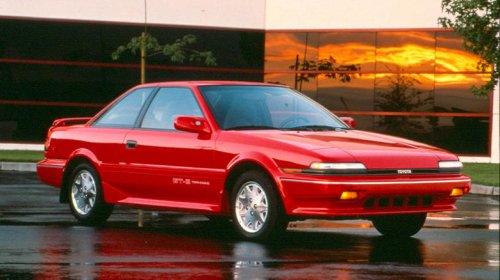
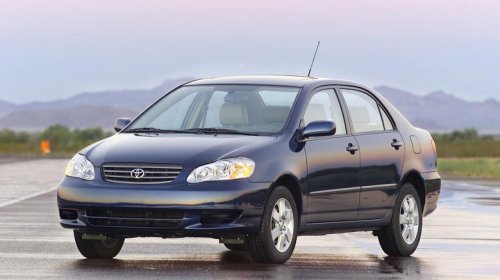
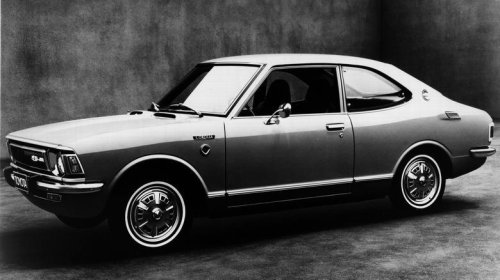
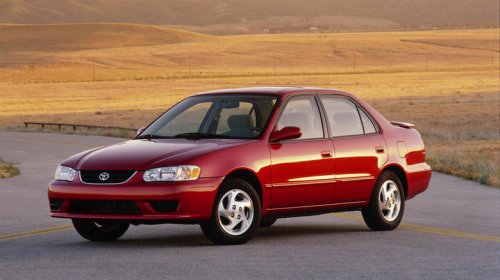
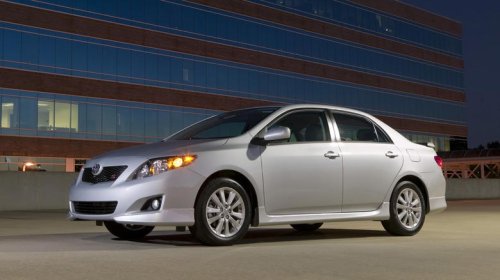



















3. Seventh generation Corolla (1991 to 1997)The seventh generation Corolla makes a surprise appearance this high on the list, mainly because it was never perceived as an enthusiast vehicle in North America. There was no performance version of the E100 and no AWD trim, either. However, the E100 Corolla is significant for one very important thing -– it brought Lexus delicacies into the fray. Only two years before the E100 was showcased to the world audience, Toyota introduced the Lexus LS400 (Toyota Celsior in Japan), which shattered the premium category and quickly became the best-selling luxury sedan in North America.Learning from the Lexus engineering team, Corolla E100 lead engineer Akihiko Saito injected refinement that set a new trajectory for the model. Moreover, the Corolla became much bigger in this generation, with a longer wheelbase that opened up more legroom for the back passengers. As a result, the model made the jump from the subcompact to the compact category. Meanwhile, new 1.6-liter and 1.8-liter engines with electronic fuel injection (EFI) were also introduced in North America, providing more oomph, particularly at highway speeds.All of those improvements made the Corolla a much nicer car on longer journeys. The E100 felt more stable at speed than all previous generations while being much quieter and more refined. Notably, it was more refined than most competitors, combining luxury and reliability like no other compact car of the era.5. Sixth generation Corolla (1987 to 1991)With the sixth generation model, Toyota dropped the rear-wheel drive versions and put emphasis on refining the subcompact car formula. The Corolla was available in more body styles, had a more aerodynamic body, and was larger than the predecessor. It was also one of the first cars in its category with 16-valve four-cylinder engines, providing better performance and lower fuel economy.Still, the biggest gains in this generation were attributed to the driving experience. The E90 Corolla was more stable, comfortable, and refined, leading to a higher-quality travel experience for all passengers. In addition, the engineering team pursued luxury and comfort by adopting velour and thick-knitted fabric materials inside the cabin. Despite losing RWD, the E90 Corolla could also be fun to drive, courtesy of the Corolla Sport coupé with retractable headlights and an improved version of the 4A-GE engine. Toyota even offered a supercharged 4A-GZE variant producing mighty (for the era) 165 hp in some markets!Meanwhile, Europeans could taste the 4A-GE medicine with the GT-i 16 three-door hot hatch, which packed about 125 hp in a relatively light chassis. The final flourish for the sixth generation model was the North American Corolla Wagon All-Trac, a raised crossover-like version with full-time all-wheel drive that appealed to the adventurous audience.6. Ninth generation Corolla (2000 to 2006)The ninth generation Corolla introduced one of the biggest jumps in overall dimensions, with a 102.4-inch wheelbase compared to the 97.0-inch of the previous generation. The move was just a small part of the big improvements under the skin, as chief engineer Takeshi Yoshida wanted to break all bonds with previous Corolla generations, producing a car that would rival the then hugely popular Ford Focus.The E120 Corolla was a vastly superior car to be in compared to the previous generations, with more room for both front and rear occupants. The cabin also featured higher-quality soft-touch plastics and a cleaner dashboard design that had better ergonomics in mind. Noise, vibration, and harshness were significantly lower, and the Corolla was better to drive in the corners. Safety was improved, too –- the E120 Corolla had standard dual-stage front airbags, with side airbags also offered as an option. Best of all, Toyota set panel gap standards to be the same as those for Lexus vehicles in an effort to cut ties with the economy car catchphrase that adorned previous generations. Beyond that, Toyota didn't forget about enthusiasts, offering the Corolla XRS with a high-revving 1.8-liter 2ZZ engine producing 170 hp. The sporty version wasn't particularly exciting to drive in the corners, but the motor more than made up for that with its top-end power.7. Second generation Corolla (1970 to 1974)While the first generation Corolla flirted with the kei car formula, the second generation model grew in every direction to steer clear of its city car roots. The cabin got more spacious for front and rear passengers, and the cargo area was larger, too.Toyota also offered larger 1.4-liter and 1.6-liter engines with this generation, with the latter being optional in North America and producing a solid 102 hp. Contemporary reviews praised the engine for being lively, even at higher revolutions, and having enough power for a more refined highway cruise. The E20 Corolla was available in four body styles -– four-door sedan, two-door sedan, two-door station wagon, and two-door coupe, all of which found buyers. In fact, Toyota produced 2,406,860 E20 Corollas in just four years, making it one of the most successful models of that era.Unfortunately, the E20 Corolla wasn't very popular among enthusiasts, as it was not particularly exciting to drive. Besides, no sporty models were available in North America and most global markets. Still, JDM buyers could opt for a high-performance Corolla Levin model with a Solex-carbureted, Twin-Cam 1.6-liter producing 115 hp. The Corolla Levin was also rear-wheel drive and came with a 5-speed stick-shift!8. Eighth generation Corolla (1995 to 2000)Toyota introduced the E110 Corolla as an all-new model in 1995 globally and in 1997 in North America. It was not an entirely new car, though, as it shared the platform with its predecessor and had similar dimensions. The E110 even looked similar on the outside and had a largely unchanged dashboard layout inside.There was one significant upgrade, though –- the engine. Instead of the iron block of all previous generation Corollas, the E110 came with an all-aluminum unit in North America. As a result, the refreshed model was lighter than before, bringing better fuel economy and acceleration into the mix. Toyota also ensured that the 1.8-liter 120-hp VVT-i engine was smoother and quieter.However, other than its improved beating heart, the E110 Corolla started to show its age. It wasn't particularly exciting to drive and couldn't compete with its rivals in performance. As always, the E110 Corolla was comfortable and quiet, which its buyers were into, but the younger audience started looking at other options.Toyota didn't care to launch a performance version of this generation in North America. Interestingly, TTE (Toyota Team Europe) entered the E110 in the World Rally Championship in 1997 and won the manufacturer's title in 1999. Unfortunately, there was no road-going version of the rally car in Europe, with only a warm-hatch G6R trim packing 110 hp. As usual, Japan got the nicest models; the JDM E110 Corolla was available with an upgraded 4A-GE 1.6-liter unit with five valves per cylinder, producing 165 hp.9. Tenth generation Corolla (2006 to 2012)The E150 Corolla introduced Toyota's New MC Platform, though it still had the same wheelbase as the previous model. Still, the cabin was roomy enough for four adults while also offering good perceived quality. That was fitting, as comfort and quietness were the name of the game with this generation. Toyota opted for larger engines in North America, with a 1.8-liter and a 2.4-liter, both providing smooth delivery and quiet highway cruising. The larger motor, producing 158 hp, was available only in the sporty XRS model and propelled the Corolla to 60 mph in 7.9 seconds.However, the E150 Corolla XRS was no performance car. The Camry-derived engine wasn't as characterful as the high-revving 4A-GE of yore and never wanted to be pushed to its limit. Not to mention, the Corolla was far from a precision-driving tool in the corners. Still, the biggest surprise of all was that Toyota also canceled the efforts of a performance version of the Corolla in its domestic market. There was a 1.5-liter turbocharged engine in the Corolla Axio GT producing 150 hp, but that model wasn't quite what enthusiasts were looking for.It is not surprising that the E150 Corolla is one of the least memorable. Of course, reliability was never an issue with this model, and many families were very happy with their purchase. However, it came right after Toyota canceled the MR2 and Celica and signaled a decade of boring Toyota automobiles.10. Fourth generation Corolla (1979 to 1983)The fourth generation Corolla grew significantly over the predecessor, sitting on a relatively long 94.5-inch wheelbase. This brought more space inside, but the more advanced rear suspension with coil springs was the most significant improvement, providing both higher comfort and better handling.It was all part of chief engineer Fumio Agetsuma's plan to develop a more luxurious vehicle. To do that, Toyota did thorough market research that left no stone unturned, as the development team studied not just the buyers of the previous three generations but also the owners of its rivals. The result was a Corolla that was better than ever before -– but it still wasn't quite enough to keep up.The E70 Corolla was the last generation designed around a rear-wheel drive layout in an era when front-wheel-drive subcompact cars started ruling the roads. Toyota's most popular model was still a bestseller, but it couldn't compete in efficiency, interior space, and performance. Enthusiasts were also left in the dark, as Toyota didn't offer any memorable performance versions. As such, this generation is all but forgotten today.12. Third generation Corolla (1974 to 1979)In certain ways, the third generation Corolla was a notable improvement over the smaller and less luxurious first two generations. It had a more streamlined body design, better interior materials, a dashboard with a more ergonomic layout, and larger engines. Since it launched in the middle of the oil crisis, the E30 Corolla was also designed with reduced emissions and increased fuel economy in mind. Not to mention, it was available in five distinct body styles: sedan, wagon, hardtop, coupe, and liftback.However, despite flying off the shelves — it was the world's best-selling car in 1974 — the E30 Corolla was not the best subcompact car in its era. That title belonged to the VW Golf, which brought front-wheel drive to the masses. While the VW wasn't available in as many body styles, it was the more advanced car. The Golf was roomier inside, faster, more economical, and better to drive.The final nail in the coffin was Corolla's engines. Yes, they were larger than before but short on power compared to their rivals. With this generation, in particular, the Corolla gained the appliance image that plagued it across many other generations. On lists that value excitement and flair, appliances are only good enough for last place.