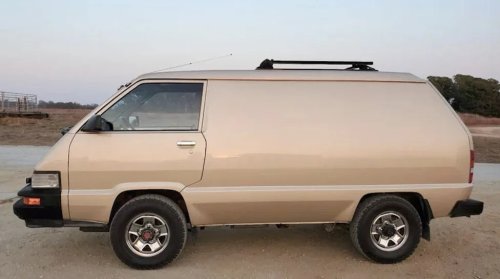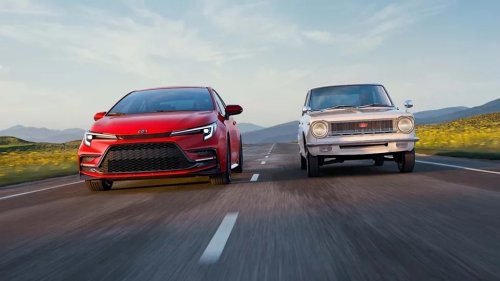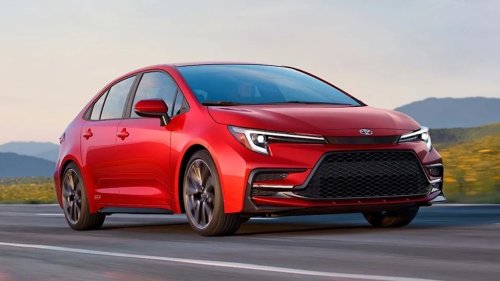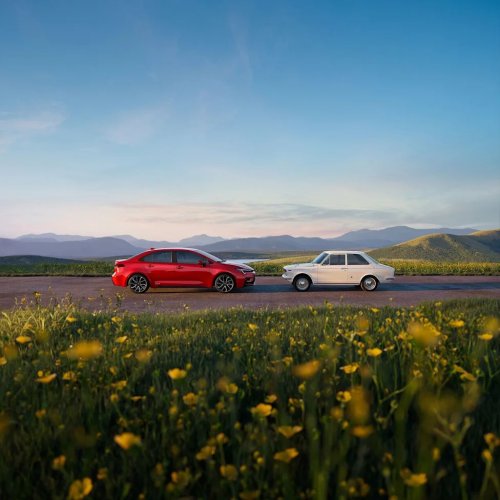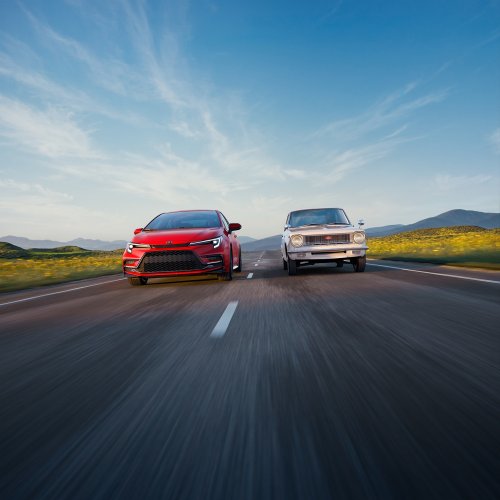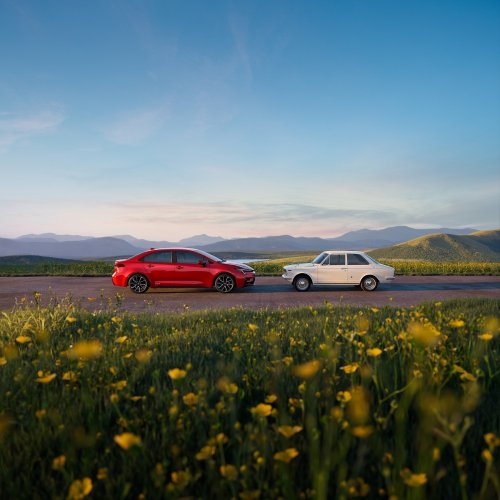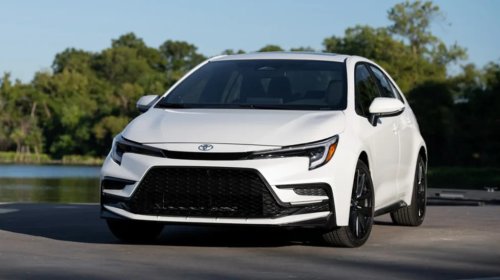






















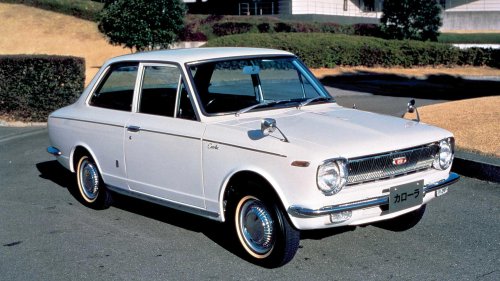

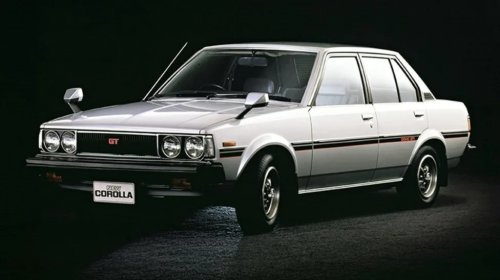
Quick LinksQuick Facts About The 1972 Toyota CorollaThe Toyota Corolla's Hand In The American Automotive MarketThose of you who've been around long enough probably remember the surge of imported Japanese cars that occurred in the American auto industry in the early 1970s. Back then, the first Gas Crisis was looming and, by 1973, was in full swing. Suddenly, folks had to worry about the supply of gasoline, and many American cars were large, V8-powered land yachts that struggled to achieve more than 15 miles per gallon – a number that's ridiculously low by modern standards.Toyota was among the first Japanese automakers to start selling cars in the United States. Its initial popular model, the Corolla, also packed quite a groundbreaking ace up its sleeve: a five-speed manual transmission. In 1972, virtually all manual gearboxes had just four speeds, but the Corolla changed that. Not to mention, the model helped reshape the American automotive industry into what it is today.We've dedicated this write-up to the 1972 Toyota Corolla due to its innovative five-speed manual transmission, along with the fact that it helped to rewrite the American automotive landscape permanently. A Small Car With Big Implications 1972 toyota corolla front green Quick Facts About The 1972 Toyota Corolla Marked Toyota's first five-speed-equipped, affordable production car to hit US shores (the limited-run 2000GT also had one) Offered a choice between two engines Part of the Corolla's second generation (E20) The Gas Crisis, rising fuel costs, and a lack of competitors from domestic brands set the stage for cars such as the small, fuel-efficient Toyota Corolla to enter the US, and they began taking a chunk out of the vehicle market. The nameplate debuted in 1968, and the second-gen model – with the internal designation E20 – debuted in 1970. Just a couple of years later, Toyota launched a very impressive first: a foreign-built five-speed manual transmission.1972 toyota corolla interior blackJust over 50 years ago, the Corolla was a trailblazer for its five-speed manual offering. These days, a five-cog transmission isn't special. Nearly every model that offers a stick shift utilizes either a six- or even a seven-speed manual. In fact, the final car available with a five-speed, the 2025 Nissan Versa, is reportedly going away soon.On the outside, the 1972 Toyota Corolla blends a bit of classic American styling with a lot of then-modern Japanese looks. As for its US-bred appearance, one only needs to look at the chromed front and rear bumpers. The rest of the car has a less American aesthetic. Aspects such as its body lines, size, and front and rear fascias make it easy to guess that this model is not an early 70s offering from a domestic brand. The Toyota Corolla's Hand In The American Automotive Market When Toyota introduced the Corolla in 1968, the company was able to ride a wave of small, efficient, and imported vehicles coming into the US. For the 1973 model year, the Honda Civic launched as another product following the same general strategy as the Corolla. It's important to understand just how much of an impact these compact offerings had on the American automotive mass market when they first arrived. Let's look at a couple of examples from the time period.First, if we examine all cars imported into the US in 1964, only 1.85 percent of them were from Japan. Now, turn the clock forward to 1974. By that point, 36.28 percent of all imported cars originated from Japan out of approximately 1.4 million total units imported into the US from any country, according to the United States International Trade Commission (USITC). A jump of roughly 35 percent in just nine years was extremely large, the likes of which we hadn't seen before, and will likely never see again. Mechanical Specs & Features 1972 toyota corolla engine frontOf course, a car is more than just how many gears you can shift through. The '72 Corolla came with a choice between two inline-four engines, a 1.2-liter or 1.6-liter. In addition to its five-speed manual transmission, Toyota also offered a two-speed automatic coined the "Toyoglide", no doubt a thinly-veiled copy of the PowerGlide, a two-speed automatic transmission available from General Motors at the time. According to historical calculations, the 1972 Corolla could manage up to 27 miles per gallon when equipped with a five-speed.Its underpinnings were rather simple, much like many other mass-market cars of the period. At the front-end, there was a MacPherson strut suspension configuration, and the rear featured a simple, semi-elliptical leaf spring setup. The Corolla also took advantage of cheap and easy-to-replace components, making DIY easy. Braking was taken care of by a pair of disc brakes on the front axle, and a couple of drums in the rear.The US-spec Corolla offered body styles including a coupe, sedan, wagon, and hatchback. Japanese-market Corollas also offered these configurations, along with a rare van version.However, the Corolla available in the US missed out on a few options otherwise offered on Japanese-market versions. Several additional engines were available for the model over there, including a pair of twin-cam engines commonly found in E20 Corollas that went racing.Below, we'll take a look at the US-market 1972 Toyota Corolla's detailed specs. To provide a well-rounded look at it, we'll include both the 1.2-liter and 1.6-liter engine offerings:*Specs courtesy of ZeroTo60Times.com and Road & Track Toyota Wouldn't Be The Same Today 2025 Toyota GR CorollaGiven its decades of history and the continued strong sales in its segment, the Corolla holds a vital position in Toyota's success in the US. Back in the late 1960s, it seemed that the Japanese automaker entered the American market just in time, as the first Gas Crisis was just a few years away. The major event forced many average Americans to give up their gas-guzzling, V8-powered sedans and station wagons for a more fuel-efficient and smaller foreign car, namely a Corolla.As the 1970s went on, a second Gas Crisis hit in 1978. The first Gas Crisis drove many customers into Toyota's American showrooms, and the second one had the exact same effect. The tough situation meant even more Americans were faced with a decision between keeping their large, beloved land yacht or trading it in for a small, economical Corolla.Nowadays, Toyota is among the most popular auto brands in the United States. The automaker produces the best-selling SUV and sedan in the US: the RAV4 and the Camry, respectively. However, this gigantic level of popularity didn't happen overnight. It was a combination of good timing, luck, and an unwavering desire and dedication by Toyota to build quality, reliable, and attractive products that were within the price ranges of average people.While other automakers began to make cheaply-built cars and cut corners in the 1970s, Toyota held fast to those aforementioned tenets. In doing so, the Japanese automaker was able to be the first foreign-born manufacturer to feature a five-speed manual transmission in a US-bound model. Over 50 years later, we can see that their decision to continue down the straight and narrow road was a good one.Sources: Toyota, General Motors, United States Internation Trade Commission, Auto Catalog Archive, Honda Global