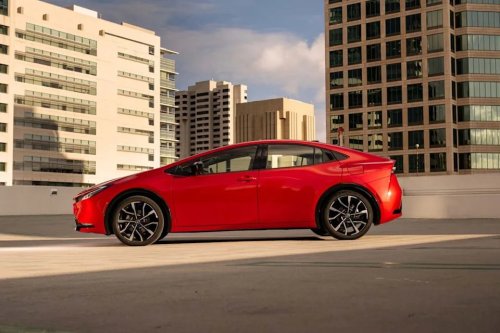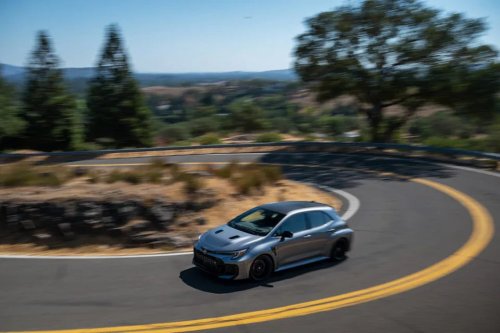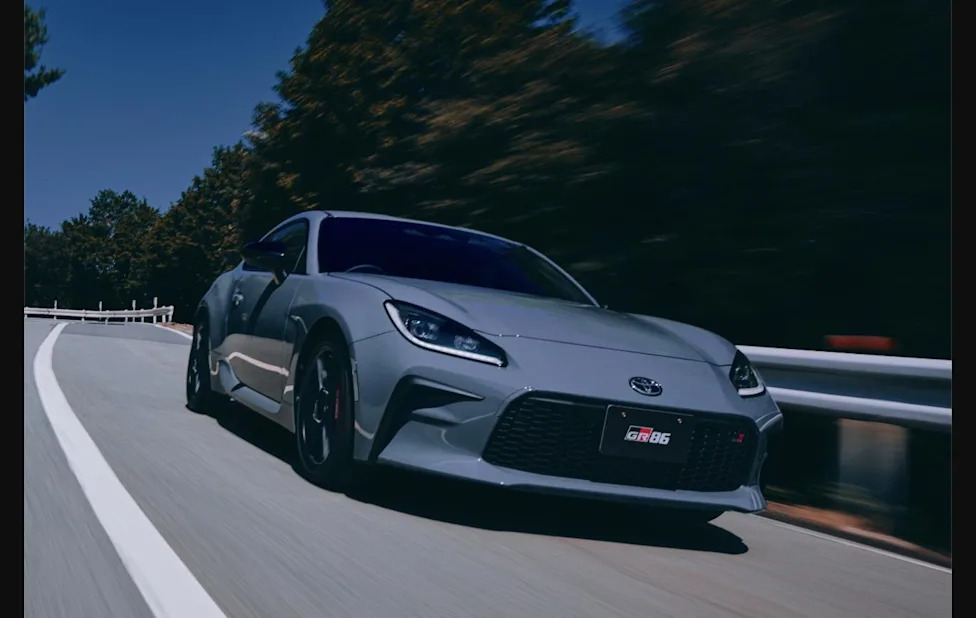


















Toyota's GR86 Refresh Skips the Power Bump and Fixes What Actually Bugged OwnersToyota just refreshed the GR86, and if you were hoping GAZOO Racing finally cracked open the ECU for more power, stop reading now. The 2.4-liter flat-four still makes the same output it always has. What changed instead, according to Toyota's own August 6 announcement, is a list of details so small they'd never show up on a spec sheet: throttle mapping, steering tune, a shifter tolerance measured in half-millimeters, and a camera upgrade buried behind the windshield. This is Toyota tightening bolts, not chasing bragging rights, and that distinction says a lot about where the GR86 sits in Toyota's lineup.Since the GR86 launched in 2021 as the spiritual successor to the 86, which dates back to 2012, Toyota says roughly 110,000 units have found homes worldwide, making it the best-selling model in the GR-exclusive stable. We've written before about why updates like this matter as sports cars keep getting heavier and less accessible, and the GR86 remains one of the few counterexamples left on sale today.A Paint Color and an Interior Trim, Both With HistoryThe most visible change is cosmetic. Solid Gray returns as an exterior color, a shade Toyota previously offered for about six months starting in 2017 on the outgoing 86. Toyota is leaning on nostalgia rather than inventing something new, which tracks for a car whose entire pitch has always been "we didn't ruin the formula."AdvertisementAdvertisementInside, the changes are limited to the range-topping RZ trim, sold in some markets as the GTS. The switchgear has been redesigned for a better grip and refinished in a low-reflectivity cast iron black instead of the previous silver, and the optional black-and-red interior now wraps more red trim around the driver, a deliberate callback to the final years of the outgoing 86's cabin. None of this moves the performance needle, but it's the kind of tactile detail enthusiasts notice on a Tuesday commute more than they'll ever notice a horsepower figure they can't fully use on public roads.The Throttle and Steering Get a Track-Tested RewriteThe more interesting changes live in software and calibration. Toyota re-mapped the throttle for a more linear relationship between pedal input and acceleration, specifically calling out low-friction situations like wet or snow-covered roads, where a twitchy throttle map can turn a small correction into a bigger one. Because the GR86's accelerator is electronically, not mechanically, linked to the throttle body, this is effectively a free change: no new hardware, just a smarter table of values telling the ECU how to respond to your right foot.The electric power steering was also retuned, and Toyota is explicit that the changes come from lessons learned racing the GR86 in the Super Taikyu endurance series. The stated goal is eliminating what Toyota calls "wobble" at high speed and on rough pavement, engineer-speak for the small steering oscillations that show up when a rack's assist tuning fights the road surface instead of following the driver's inputs. Feeding endurance-racing data back into a production car's steering calibration is a genuinely useful feedback loop, and it's the kind of engineering story that never makes it onto a window sticker because there's no number to print next to it.A 0.5mm Fix for the ShifterFor manual-transmission cars, Toyota widened the chamfer on the shift interlock between fourth and fifth gear by half a millimeter. The interlock is the mechanical gate that stops you from snagging the wrong gear during a fast shift, and a slightly wider chamfer smooths the path the shift fork travels during a downshift from fifth to fourth. It sounds absurdly minor because it is, but this is exactly the kind of tolerance stack-up that separates a shifter that feels crisp under load from one that feels vague, and it's the sort of change only a company still willing to sweat a manual gearbox would bother making in 2026.Triple-Camera Safety Bump, and the Repair Bill That Comes With ItThe GR86's EyeSight driver-assist system moves from two cameras to three, adding an ultra-wide-angle monocular camera alongside the existing wide-angle stereo pair. Toyota says the wider field of view is tailored to the GR86's low ride height, which makes sense given how different a sports car's sightlines are from a crossover's. In practice, this should improve the odds of the automatic emergency braking system catching a hazard entering the frame from an angle the old two-camera setup would have missed.AdvertisementAdvertisementIt also means owners should adjust their expectations around windshield replacement costs. ADAS camera arrays live behind the glass, and every camera added to that cluster is another sensor that needs precise recalibration after a windshield swap. Insurers have already been adjusting comprehensive claim estimates upward on cars with multi-camera ADAS suites for exactly this reason, since a cracked windshield now triggers a calibration appointment on top of the glass replacement itself. It's a worthwhile safety trade-off, but it isn't free, and it's worth knowing about before a highway rock chip turns into a bigger bill than you'd expect on a sports car this size.An Automatic Cup Car Is a Bigger Deal Than It SoundsBuried near the bottom of Toyota's announcement is a change aimed at racers rather than commuters: the GR86 Cup Car Basic, the spec racer built for the one-make GR86/BRZ Cup series, is gaining an automatic transmission option, with shipments starting in December 2026. One-make racing series live and die on grid size, and manual-only requirements quietly filter out a chunk of otherwise-willing drivers who never learned to heel-toe on a racetrack. Opening the door to an automatic-equipped spec racer is a pragmatic way to grow a grid without diluting the racing itself, since every competitor is still piloting the same car with the same power output.What This Means If You're Actually ShoppingEverything above is a Japan-market announcement for now. Toyota dealers there start taking orders on August 28, 2026, with Japanese pricing running from ¥2,936,000 for the manual-only RC trim up to ¥3,616,000 for a range-topping RZ automatic, taxes included. Toyota hasn't said whether, or when, any of these changes carry over to US-spec cars, so don't assume your local dealer's stock is about to change overnight.What this refresh really confirms is a strategy call. Toyota is content to let its flagship GR GT and the GR Corolla fight the horsepower wars while the GR86 gets left alone mechanically and refined everywhere else instead. We've made the case before that the sports car world would benefit from more cars like this, small, light, and unbothered by the spec-sheet arms race, and this update is Toyota proving it already agrees.