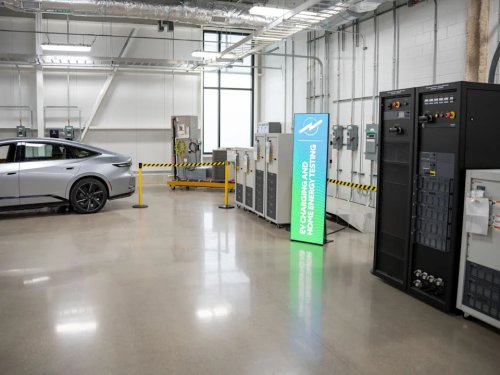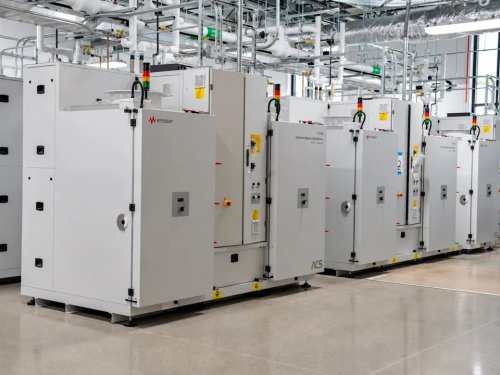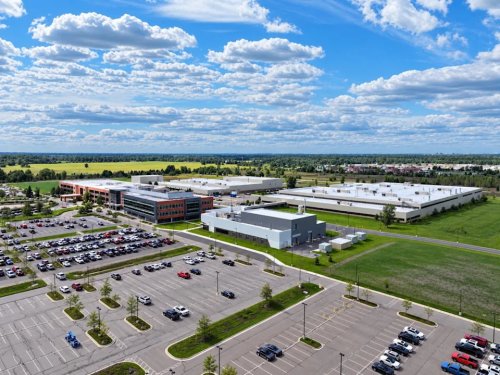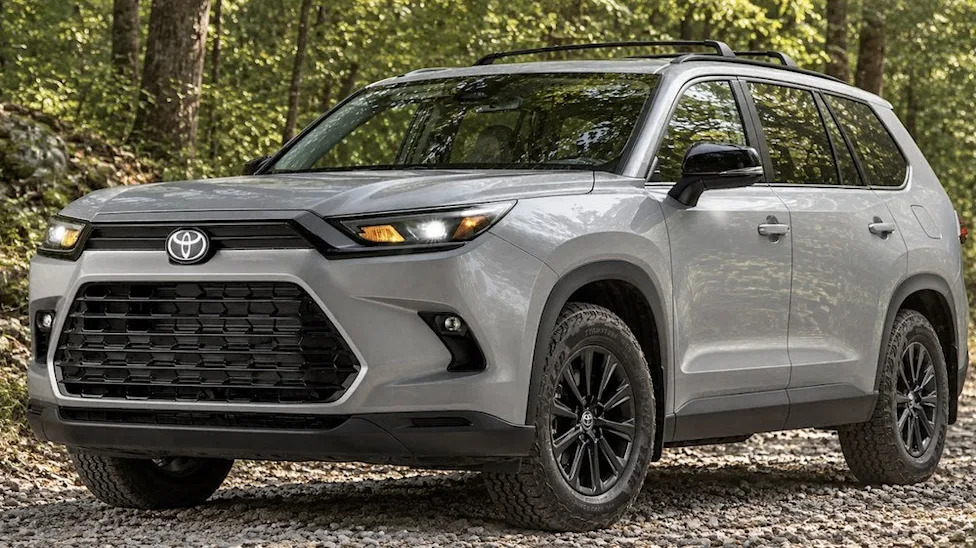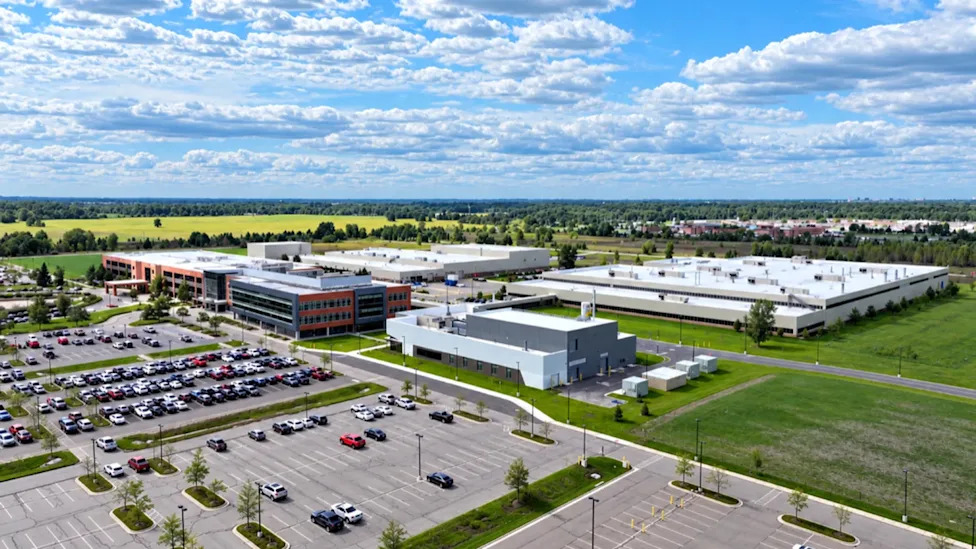



















The Toyota Battery Center of North America, in the foreground at Toyota's R&D facility in Saline, Michigan. The automaker says it will support research and development for the full range of battery types, set for electrified vehicles made in North America.This story was originally published on WardsAuto. To receive daily news and insights, subscribe to our free daily WardsAuto newsletter.Dive Brief:The Toyota Battery Center of North America opened on Oct. 1. It provides Michigan-based battery teams the capability to evaluate battery technology through the entire development cycle, from raw materials, production, applications and recycling, according to a release. The facility is supporting Toyota's multi-pathway strategy for electrification, and teams of engineers and technicians there will "assess battery performance and develop new technologies for use in hybrid, plug-in hybrid, hydrogen, and fully electric vehicles.""For Toyota customers, this facility means Toyota engineers can detect and resolve field concerns faster and closer to the source," said Jordan Choby, Group Vice President of Powertrain at Toyota North America, in the release. "It also means we can develop longer-lasting batteries designed to perform in the conditions American drivers face every day."Dive Insight:In an accompanying fact sheet on the battery center, Toyota underscores that the facility will tests cells, modules, and packs, and it takes an "agnostic cell technology approach" to evaluate various chemistries, including solid-state cells. The facility was announced in 2023 as part of a $50 million investment and is located at Toyota's North American R&D Headquarters in Saline, Michigan. The automaker says that the facility supports supplier partners making batteries for Toyota vehicles in North America and helps build expertise in Michigan.Toyota says southeast Michigan, where it's had R&D facilities for more than 50 years, is "the natural home for the Battery Center, putting it at the center of the engineering and design teams it serves."Toyota outlines that the facility contains a central hub uniting design, evaluation, and simulation teams, allowing supplier and manufacturer partners to collaborate. Also included are "global-level" mechanical and thermal modeling capabilities, a torsion and shaker table for the study of the effects of road vibration, and a containment room for safety testing. According to Toyota, the facility also connects advanced research on batteries to commercial production facilities in North Carolina as well as to Toyota's North American manufacturing plants. To further research, it says it's exploring opportunities to connect with the University of Michigan Electric Vehicle Center. Nearby, in Lansing, Michigan, LG Energy Solution has started making energy-dense nickel-manganese-cobalt cells that are bound for the upcoming Toyota Highlander EV. Toyota has also confirmed a $14B North Carolina battery plant set to make batteries for hybrids, plug-in hybrids, and fully electric vehicles built in North America, as it follows up on an investment of nearly $1B toward making more hybrids in the U.S.Toyota to expand its US EV battery recycling network',