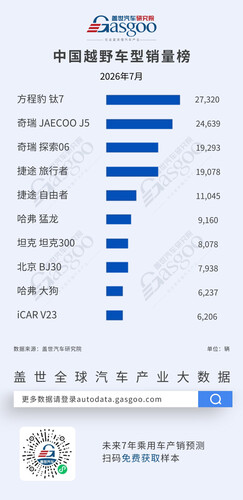
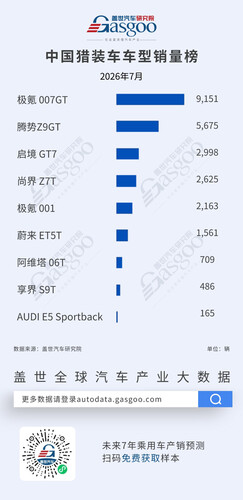
Madeleine Hall · 4 months ago@madeleinehall15Xiaomi facing 550,000 target pressure as YU7 inventory controversy sparks “Xuntian” EREV push Liked byXiaomi YU7Post commentRelated PostsIFA Berlin Recap Part 1: Diverse Approaches To Sustainability 51 · Alexander Pelletier · 1 months agoRankings of ADAS component suppliers in China (Jan. - Jul. 2026): Dual-chamber air suspension gains traction in mainstream vehicle models | Gasgoo Automotive Research Institute 34 · Parker Hall · 1 months agoXiaomi Auto signs 8 German dealer groups ahead of 2027 Europe entry 20 · Zoë Walker · 1 months agoChina Passenger Car Retail Falls 23% in Aug, SUVs Lead Growth 91 · Caleb Clark · 1 months agoJuly 2026 Off-Road/Premium/Shooting Brake Sales Rankings: Model Y Leads Premium Segment, Titanium 7 Tops Off-Road Segment | Gasgoo Automotive Institute 81 · Chloé Rogers · 1 months agoHyundai warns US may be next for a wave of cheaper Chinese EVs 98 · Lauren Girard · 1 months agoWho is Buying the SkyNomad Without 800V? 52 · Ryan Mitchell · 1 months agoBMW M3 EV Lays Down 11s Trying To Shake Xiaomi At The Ring 36 · Emma Girard · 1 months agoCan Xiaomi Take On Porsche On Its Home Turf? It’s About To Try 94 · Morgan White · 1 months agoHas NIO Really Found Its Footing? 12 · Olivia Lee · 1 months agoXiaomi confirms 2027 Europe EV launch with 8 German dealer groups 70 · Zoë Girard · 1 months agoDetroit’s Big Three Push Back Against Trump’s Chinese Car Invitation 66 · Mia Hall · 1 months agoXiaomi to launch electric cars in Europe from 2027 65 · Logan Scott · 1 months agoBYD targets Xiaomi SU7 and Tesla Model 3 with new Fang Cheng Bao Formula S and S GT launch 53 · Caleb Scott · 1 months agoLuxeed RX pre-orders: over 90% of buyers choose L3 self-driving trim 40 · Charlotte Carter · 1 months agoXiaomi Skynomad EREV SUV begins deliveries in China, CEO Lei Jun hands over keys to owners 67 · Audrey Anderson · 1 months agoXiaomi unveils China’s first 3nm self-developed intelligent driving chip 84 · Zoë Nelson · 2 months agoMaker of a 1,527-HP EV Introduces an SUV With a Pop-Up Roof Cabin 18 · Grace Pelletier · 1 months agoMercedes-AMG Appears To Be Chasing The Autonomous Nurburgring Record 19 · Sophie Turner · 2 months agoIM LS6 undercuts Tesla Model Y, adds steer-by-wire from $31,000 91 · Kaitlyn Anderson · 1 months ago