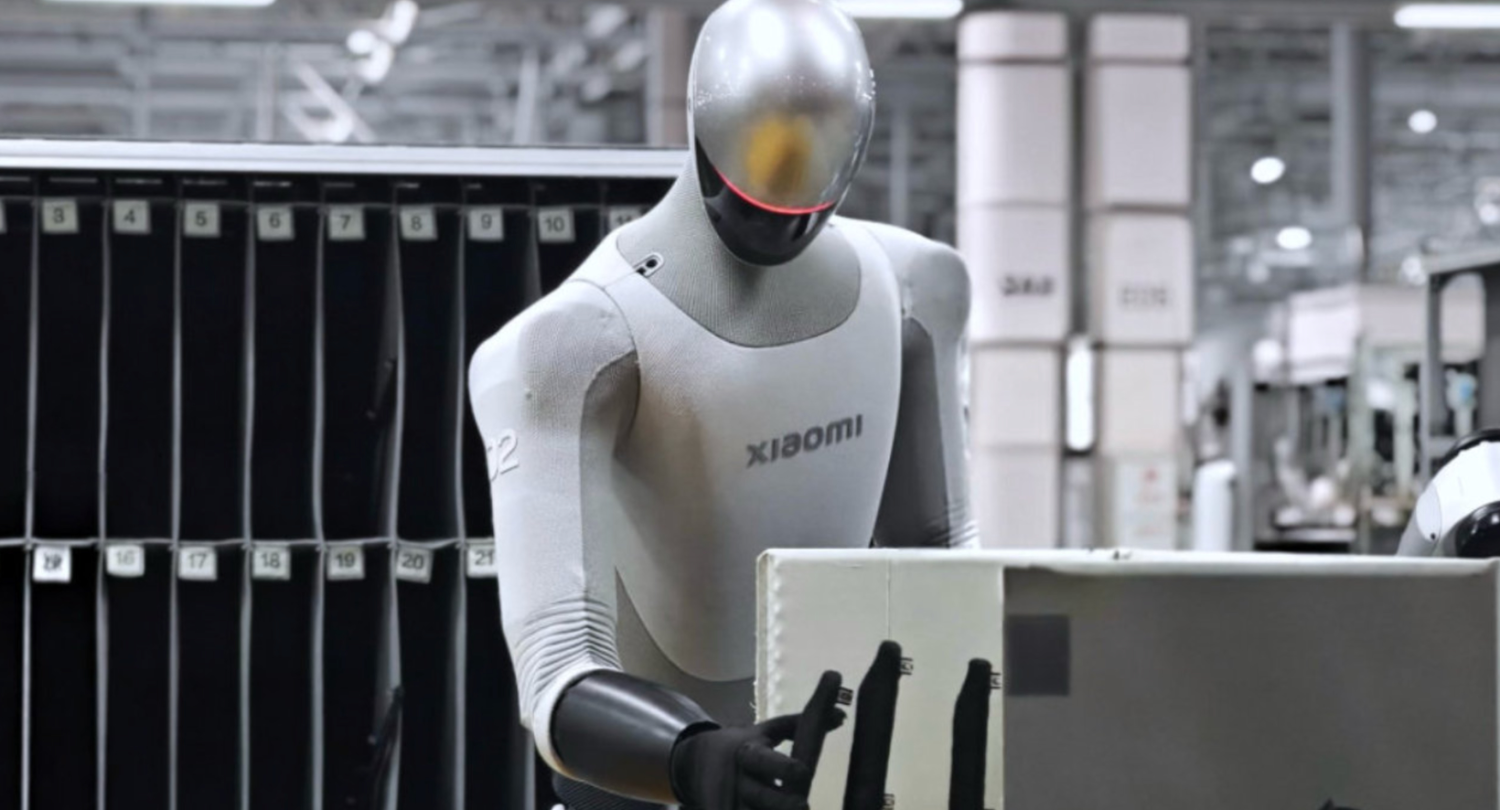



















Gasgoo Munich-Xiaomi's robotics division has released an update on its robots' four-month training stint at the automaker's plant. Since arriving at the Xiaomi EV factory early this year for hands-on line work, the company's humanoid robots have expanded from single-station trials to multi-scenario industrial operations. Their precision, stability, and coordination have steadily improved, resulting in several breakthroughs in complex, flexible tasks within the general assembly workshop.Image source: Xiaomi RoboticsAfter a quarter of real-world line conditioning, the success rate for bilateral self-tapping nut insertion climbed from 90.2% to 98% — just 1 percentage point shy of human qualification standards. Station stability has effectively reached mass-production requirements. While solidifying capabilities at established stations, Xiaomi's robots have successfully taken on two new roles in general assembly: sorting center console side covers and folding recycling totes. Both new tasks achieved a stable success rate of 90%.Sorting center console side covers represents the core technical breakthrough of this training phase. These components are large, irregularly shaped, and highly flexible, requiring a process that involves multiple pick-and-place operations across various positions. The task demands extreme precision in whole-body control, dual-hand coordination, fine manipulation, and environmental adaptability. It marks the first time Xiaomi's robots have achieved stable, continuous operation over extended periods on flexible automotive parts. By leveraging whole-body degree-of-freedom control, active compliance strategies based on end-force perception, coordinated handovers, and in-hand pose adjustments, the robots can autonomously handle unexpected issues like jams or snags to execute precise placement.At the tote folding and recycling station, the robots overcame challenges such as fine fingertip control, dual-arm coordination, box stacking, and multi-robot pacing to achieve continuous, stable operation. Furthermore, the robots interface directly with the factory's digital system to read production tasks and material data, eliminating the need for paper documentation. Multiple units can synchronize their status in real time, while a remote human intervention mechanism remains in place to balance operational efficiency with safety.Technical headroom remains. For instance, during tote folding, the robots still need to adjust box orientation and haven't yet matched the "blind manipulation" capabilities of skilled human workers. Moving forward, Xiaomi plans to iterate on its bionic dexterous hand technology, refine complex operational logic, and expand into more factory training stations. Overall, Xiaomi's humanoid robots have completed the transition from basic trials to complex, flexible industrial work, steadily accumulating the engineering experience needed for real-world deployment in intelligent manufacturing.