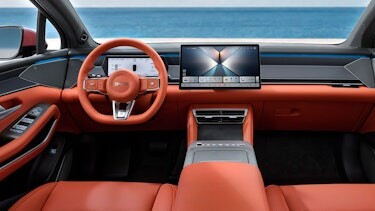
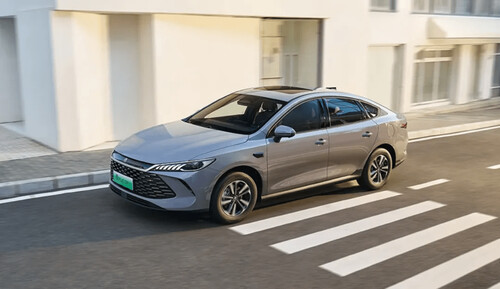
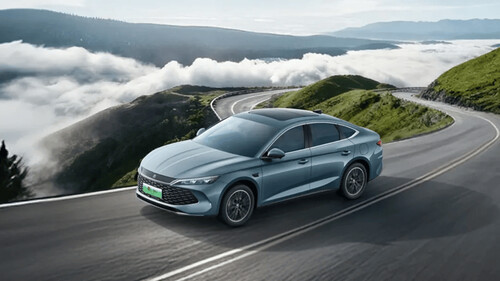
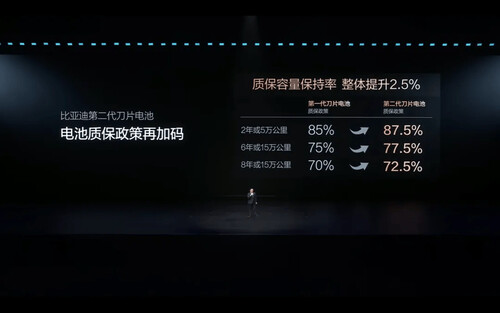
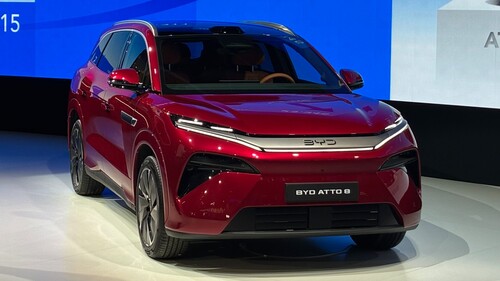
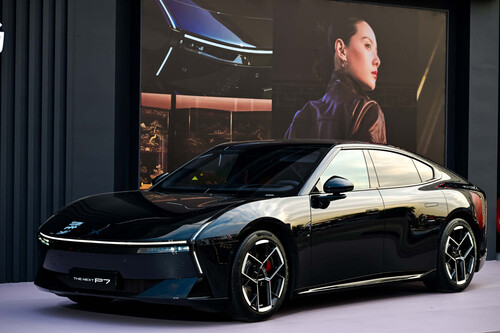
BYD’s Ocean Series finally has its own flagship sedan. BYD unveils Seal 08 pricing at launch event BYD officially launched the Seal 08 this evening. The model comes in both battery-electric and plug-in hybrid variants. The BEV lineup is priced between 196.9K RMB ($29K) and 239.9K RMB ($35.4K). For the PHEV lineup, the mid-range and top-end trims are priced 10K RMB ($1,470) lower than their battery-electric counterparts. Only the entry-level version sits below that structure. During the launch event, BYD devoted unusual attention to design and styling. According to the company, the Seal 08 is “the least BYD-like car” it has ever built. The reasoning is simple. Beyond technology and value, BYD believes it has finally solved the design equation. In BYD’s words, the Seal 08 is “stunning at first sight, timeless after a long look.” BYD says Seal 08 has a timeless design. Design, however, is only part of the story. BYD also explained why it decided to build a flagship sedan. Company data show sedans accounted for more than 45% of China’s retail passenger car sales in 2025, underscoring that the body style remains the mainstream choice for most Chinese families. At the same time, the Ocean Series has long focused on products priced below 200K RMB ($29.5K). The brand lacked a true flagship capable of lifting its premium positioning. The success of premium battery-electric sedans such as the Xiaomi SU7 and Zeekr 001 has also demonstrated the market potential for high-end mid-to-large sedans. The Seal 08 is positioned as a comfortable family sedan. While those attributes create differentiation in the 200K RMB segment, they are unlikely to remain a lasting competitive moat. That raises a key question. Beyond looking “un-BYD,” what gives the Seal 08 the ability to compete in the 200K RMB segment? Where does its core competitiveness come from? More importantly, can the Ocean Series extend its strong reputation in the mainstream family-car market into the premium segment, then translate that into meaningful sales success? Let’s take a closer look. Flagship Fundamentals The Seal 08 measures 5,150 mm long, 1,999 mm wide, 1,505 mm tall, with a 3,030 mm wheelbase. Although positioned as an upper mid-size sedan, its dimensions put it on par with D-segment models such as the Stelato S9. BYD says Seal 08 has an elegant side profile. Most rivals in the same price bracket, including the Xiaomi SU7, Zeekr 001, and XPeng P7+, measure around five meters in length. To offset the reduced agility that often comes with a larger body, BYD equipped the Seal 08 with a rear-wheel steering system offering a maximum steering angle of ±7 degrees. The minimum turning radius is just 4.95 meters, close to that of the Seagull. BYD says Seal 08 features rear-wheel steering. Rear-wheel steering remains rare in the 200K RMB ($29.5K) new-energy sedan segment. The IM Motors L6 is among the few competitors offering a comparable feature. As mentioned earlier, the Seal 08 comes in both battery-electric and plug-in hybrid variants. The battery-electric version delivers up to 905 km of CLTC range. Regulatory filings show a maximum battery capacity of 92.093 kWh. The dual-motor all-wheel-drive version offers a CLTC range of 785 km. Seal 08 EV offers 905 km CLTC range. BYD calls the 905 km figure the longest battery-electric range in its class. The Xiaomi SU7 offers up to 902 km, while the SAIC Z7 reaches 905 km. The Seal 08 remains fully competitive against both rivals. The plug-in hybrid version pairs a 1.5T engine with the company’s latest hybrid system. It delivers up to 400 km of CLTC pure-electric range, plus a combined driving range of 1,660 km. BYD also describes it as class-leading in electric range. Seal 08 PHEV: 400 km CLTC electric range, 1,660 km combined CLTC range. Those figures rank among the best in the plug-in hybrid segment. Compared with range-extended rivals such as the XPeng P7+ EREV and Avatr 12 EREV, however, the Seal 08 does not hold an overwhelming numerical advantage. On the performance side, the battery-electric flagship uses a dual-motor all-wheel-drive setup producing up to 510 kW. It accelerates from 0 to 100 km/h in 3.3 seconds. The Seal 08 also features BYD’s DiSus-A intelligent body control system, combining dual-chamber air suspension with road preview capability. Seal 08 features dual-chamber air suspension with road preview. Both the plug-in hybrid and battery-electric versions come standard with BYD’s second-generation Blade Battery and Flash Charging 2.0 technology. Combined with BYD’s proprietary charging network, the system is expected to deliver faster charging performance. Without an engine under the hood, the battery-electric version also gains a 160-liter front trunk equipped with a powered hood. Inside, the cabin continues the flagship positioning. Shoulder room measures 1,530.2 mm, elbow room reaches 1,599 mm, hip room stands at 1,465.9 mm. Space is only part of the package. BYD equips the Seal 08 with dual front zero-gravity seats, seat ventilation, heating, massage functions for all seats, soft-close doors on all four doors, and dual-layer acoustic glass throughout the cabin. Together, these features form the foundation of its premium in-cabin experience. BYD says Seal 08 features double-layer acoustic glass for all windows. From a product standpoint, BYD’s strategy is straightforward. It builds the Seal 08 around flagship dimensions and core premium hardware, then strengthens its competitiveness through rear-wheel steering, a spacious cabin, and comfort-oriented equipment. The combination is designed to help the model compete directly with rivals such as the Xiaomi SU7 and Zeekr 001. Can the Seal 08 Move Ocean Series Upmarket? On paper, the Seal 08 stands out in the 200K RMB ($29.5K) upper mid-size sedan segment. Its intelligent features, however, bring fewer surprises. Seal 08 features BYD’s AI assistant, “DiDi Xia”. Starting with the cockpit, BYD’s latest “DiDi Xia” in-car AI assistant is one of the model’s highlights. The system is no longer new within BYD’s lineup. Its strength lies in integrating navigation, entertainment, vehicle controls, and lifestyle services into a unified interface. The goal is to reduce manual interaction during daily driving. On the driver-assistance side, every Seal 08 comes standard with BYD’s DiPilot 300 “God’s Eye B” lidar-assisted driving system. Features include autonomous emergency braking (AEB), urban Navigation on Autopilot (NOA), and other mainstream assisted-driving functions. Seal 08 is equipped with BYD’s God’s Eye B driver-assistance system. Because every version carries the DiPilot 300 system, all buyers receive one year of urban assisted-driving coverage protection plus lifetime parking-assistance coverage under BYD’s guarantee program. By today’s standards, the Seal 08 does not redefine intelligent driving. It also does not fall behind. In the 200K RMB ($29.5K) upper mid-size new-energy sedan segment, advanced driver-assistance systems have largely become standard equipment. At the very least, the Seal 08 gives up little in this area. BYD’s strategy is clear. The company is bringing flagship technologies into a lower price bracket. Advanced driver assistance, rear-wheel steering, Flash Charging 2.0, and large-capacity batteries all arrive in the 200K-240K RMB ($29.5K-$35.4K) range, giving the Seal 08 a strong value proposition in the mainstream family sedan market. Looking across the segment, the Xiaomi SU7 remains the benchmark rival. Its latest update significantly improved assisted driving, high-voltage architecture, and comfort features. Retail sales exceeded 24,000 units in both April and May. Strictly speaking, the Seal 08 focuses more on comfort and family use, creating some differentiation from the sportier Xiaomi SU7. The two models, however, compete within an overlapping price range. For the Seal 08, the challenge is proving one thing: once flagship dimensions, long driving range, a premium cabin, advanced driver assistance, and refined styling all come together, will the model and the BYD Ocean Series brand win over buyers with stronger purchasing power? Seal 08 exterior color shown on a slide. Like many new sedans, a strong specification sheet, aggressive pricing, and a high-profile launch event can quickly generate market attention. The Seal 08 is no exception. Its specifications look impressive. The more important question is whether it can establish itself in the premium sedan market over the long term, helping lift the Ocean Series further upmarket. Ultimately, launch events do not provide the answer. Firm orders, sustained sales, and delivery performance over the coming months will. So, what do you think of the Seal 08’s product positioning and pricing? As the Ocean Series’ first serious attempt to move upmarket, does the Seal 08 have the potential to become BYD’s next blockbuster?