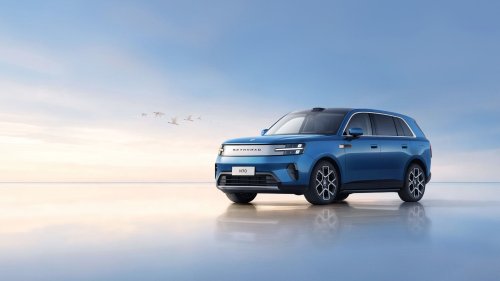
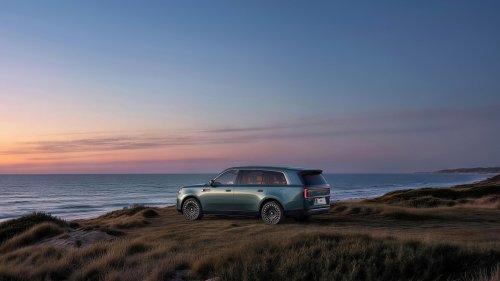
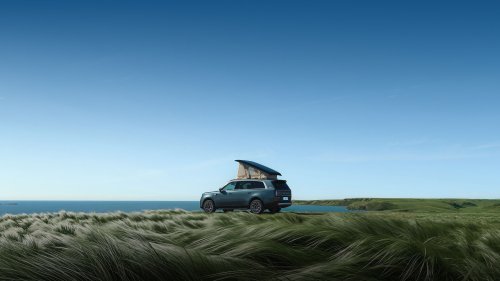
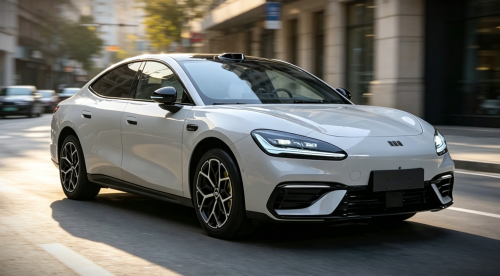
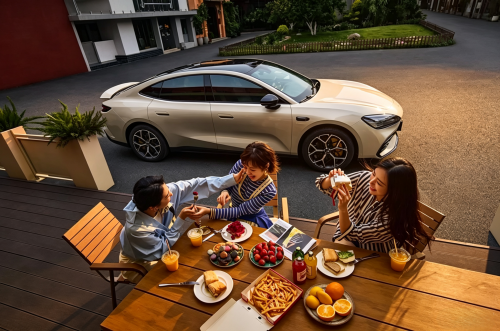
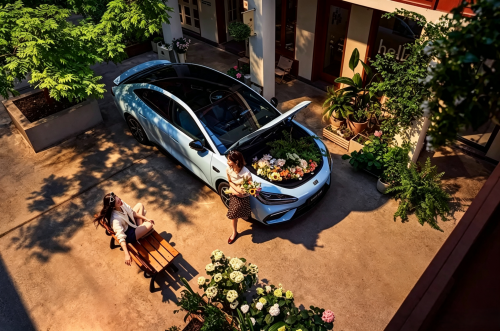
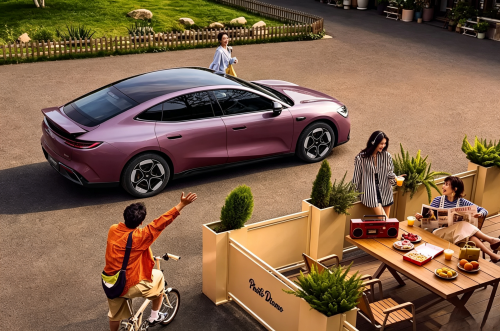
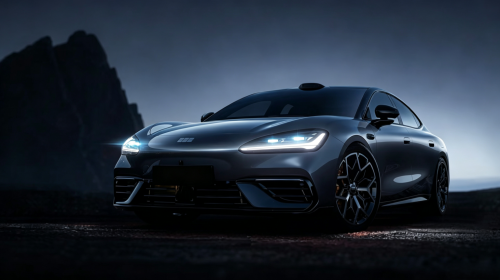
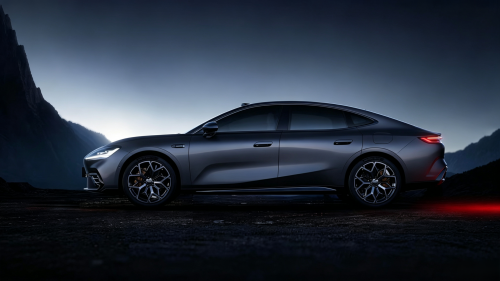
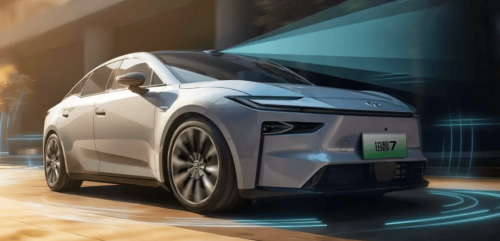
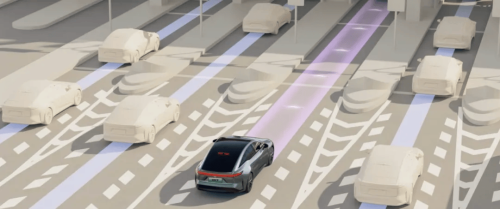
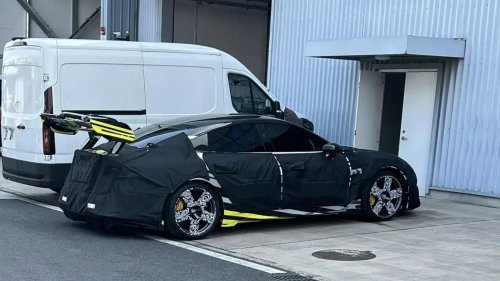
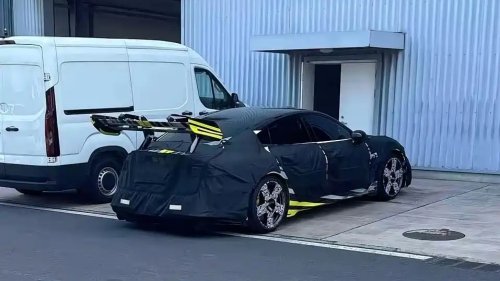
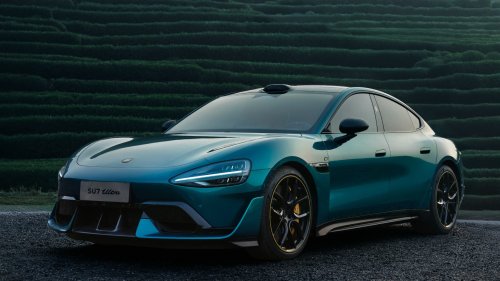
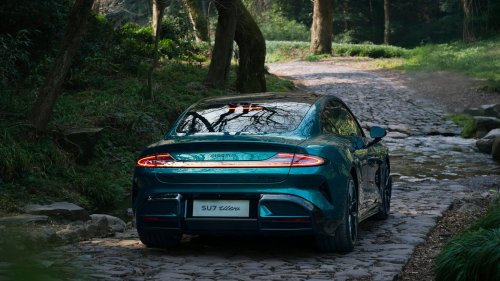
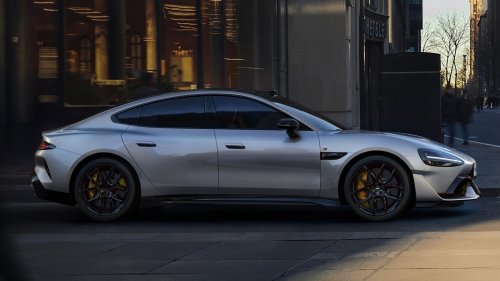
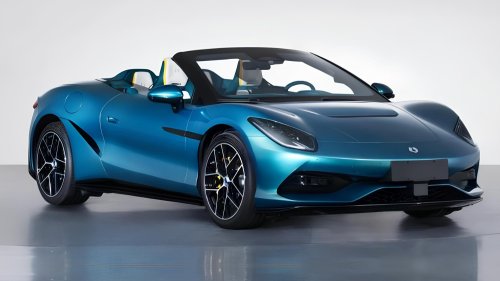
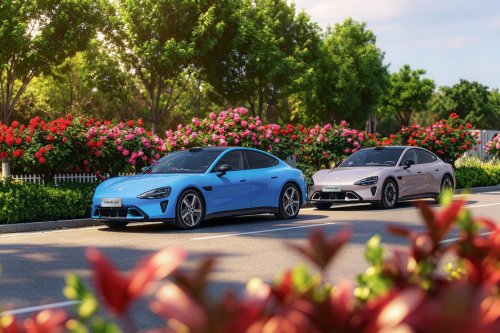
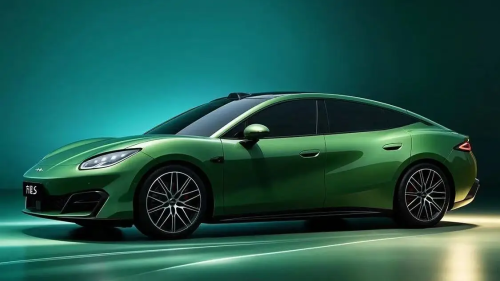
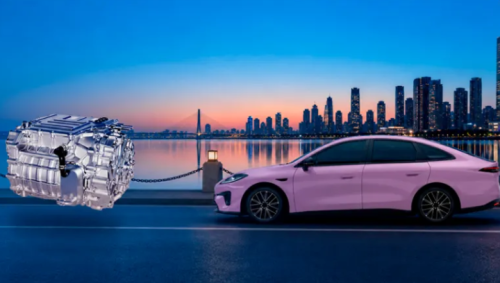
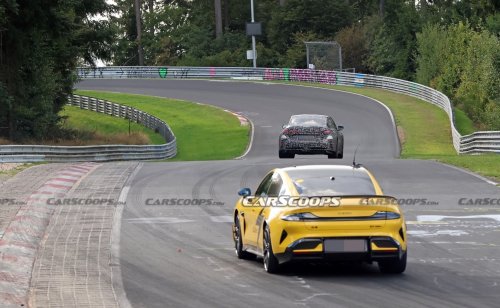
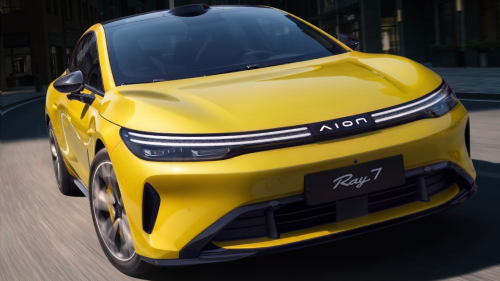
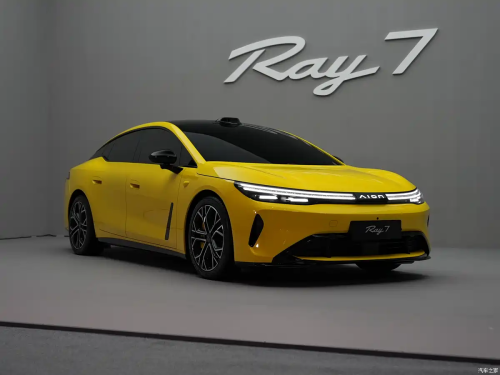
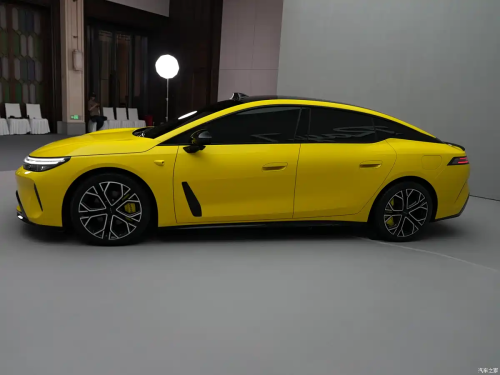
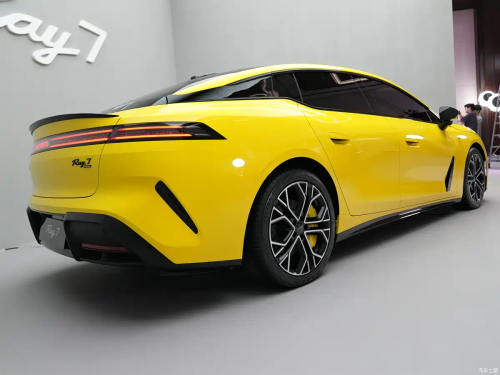
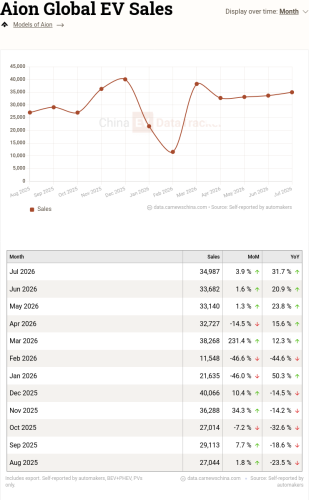
GAC Aion Ray 7. Credit: GAC Aion Understand China EV’s Market Real-time notifications when critical EV data is released All important data in one place 2,000,000+ data points Become a member GAC Aion has officially introduced the all-new Ray series, making its debut with the unveiling of the Ray 7, a model that serves as the first to feature the brand’s refreshed logo and a suite of new design elements. DesignThe Ray 7 is highlighted by a star-ring through-type light cluster with the refreshed Aion English logo centred at the front. The enclosed front grille is complemented by a trapezoidal intake featuring glossy black trim, a shovel-style front lip, and side diversion slots. The vehicle will be available in “Lightning Yellow” and “Midsummer Purple” colour options. From the side, the Ray 7 features a sleek fastback silhouette, paired with semi-hidden door handles, double five-spoke wheels, and yellow brake callipers. The rear maintains symmetry with the front, utilising a through-type taillight assembly centred around the Aion brand identity. According to Ministry of Industry and Information Technology (MIIT) filings, the mid-to-large-size vehicle measures 4,960mm in length, 1,900mm in width, and 1,455mm in height, with a wheelbase of 2,920mm. The front, side and rear of GAC Aion Ray 7. Chassis and brakingThe Ray 7 is built on a pure electric rear-wheel-drive platform. It incorporates chassis tuning expertise from Alfa Romeo, featuring a hybrid aluminium front double-wishbone and rear five-link suspension, as well as FSD adaptive damping shock absorbers and front/rear stabiliser bars. There is a chip-level drive-control fusion architecture and the Huawei DriveOne EMB (Electro-Mechanical Brake) system, enabling a stopping distance of 33m from 100km/h. Additionally, the Huawei iTRACK intelligent torque control system helps mitigate slipping on rainy or snowy road surfaces. PowertrainThe Ray 7 is powered by a single motor provided by Huawei with an output of 180 kW (241 hp). It adopts an LFP battery from CATL, delivering a CLTC pure electric range of 700km. On the intelligence front, the vehicle is equipped with 27 automotive-grade panoramic sensors, including a 192-line LiDAR and three 4D millimetre-wave radars. The Ray 7 utilises a large-scale model derived from WeRide’s L4-level Robotaxi technology. This allows the vehicle to navigate complex urban environments – such as “urban villages,” single-lane U-turns, and lane-borrowing manoeuvres – and supports advanced “parking spot to parking spot” navigation, gate passage, and high-difficulty parking scenarios. GAC Aion sells around 30,000 cars every month, however, a large portion of its sales comes from the ride-hailing market. Not long ago, the brand’s reputation took a bit of a hit due to quality issues with the CALB batteries used in its ride-hailing vehicles. Most important news in your inbox. Recaps · scheduled All you need, in one email. Instant alerts · real-time Ping me when an article goes live. 0 of 27 topics selected Bundle into one email per day — instead of one email per article No spam · Unsubscribe with one click · Change settings anytime



















 +3 others