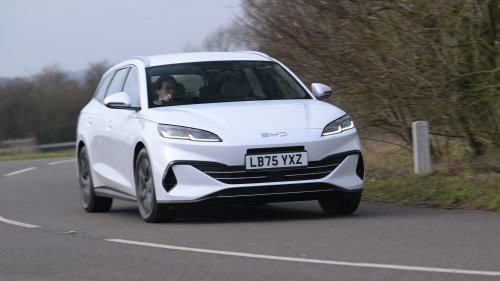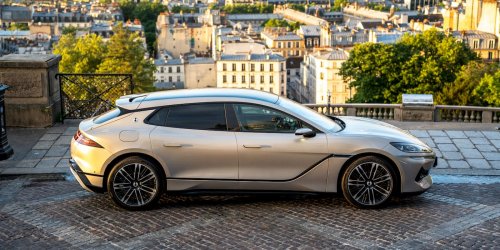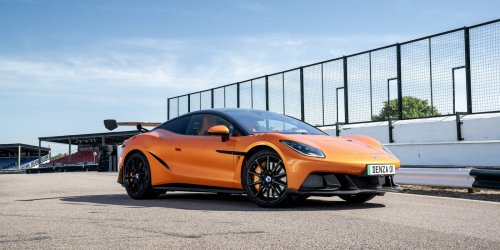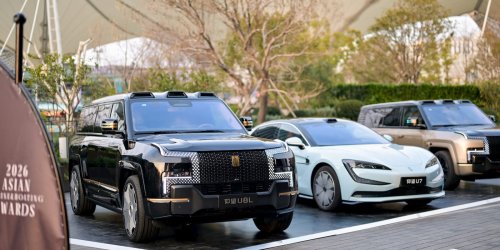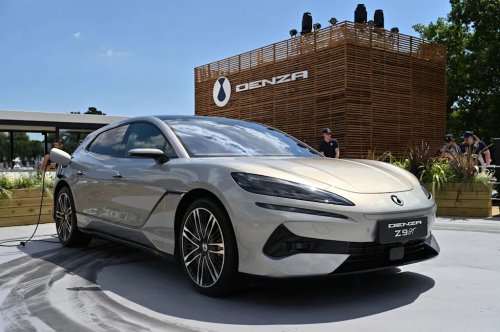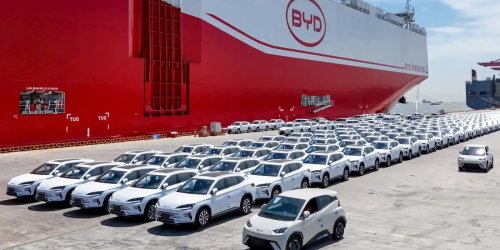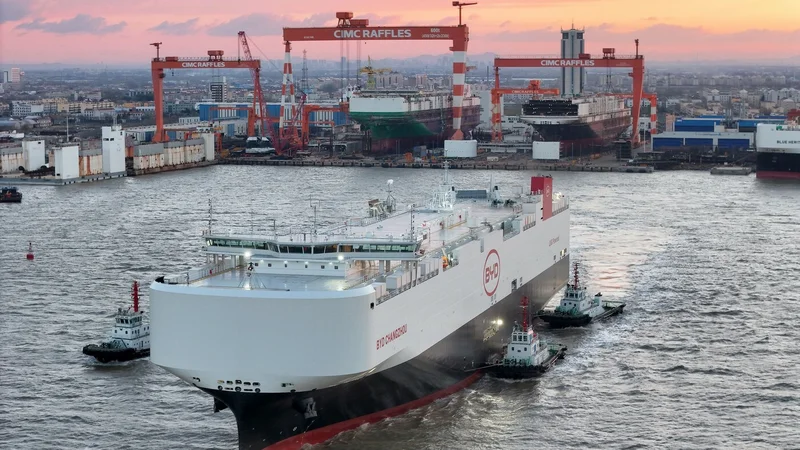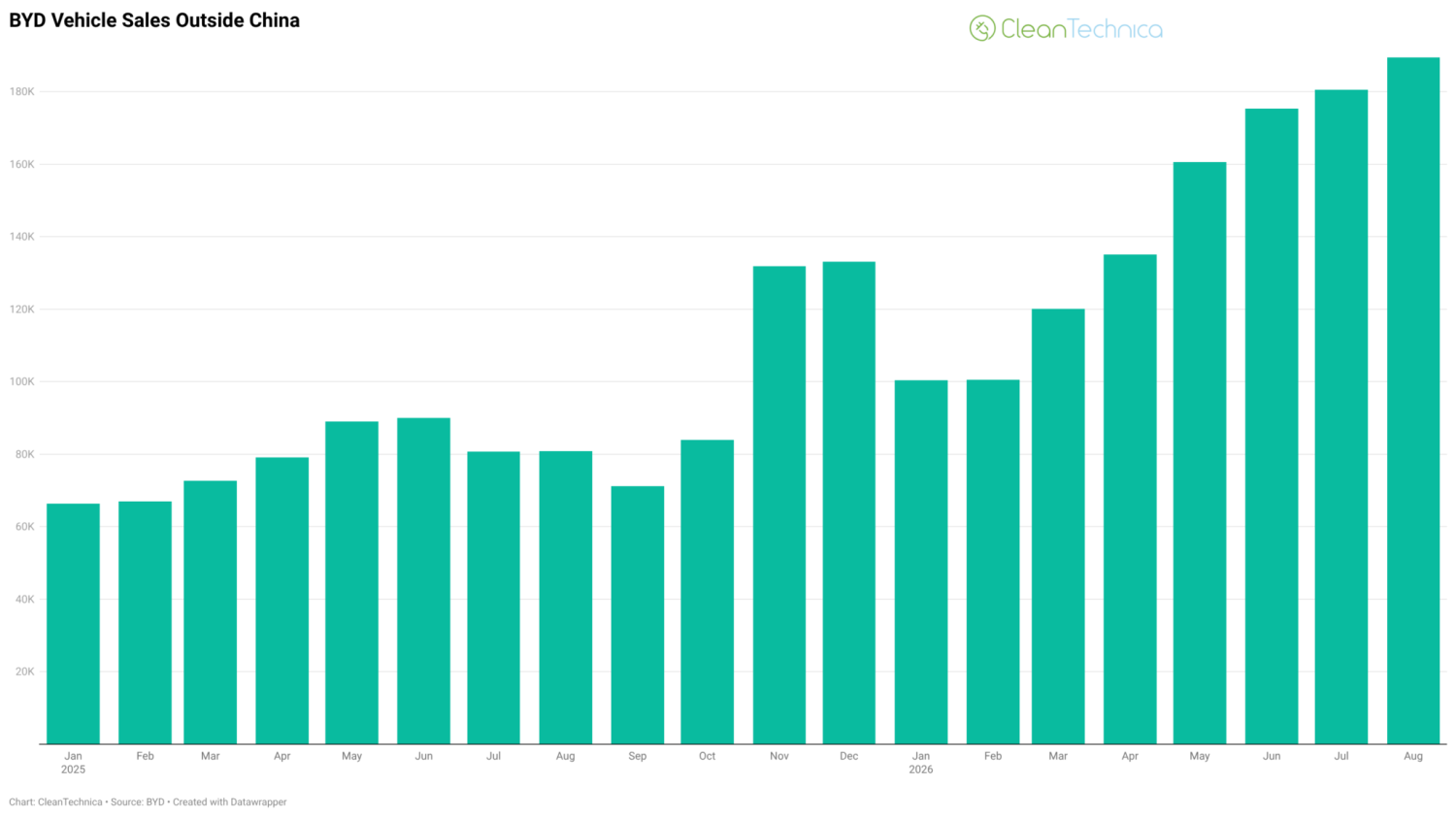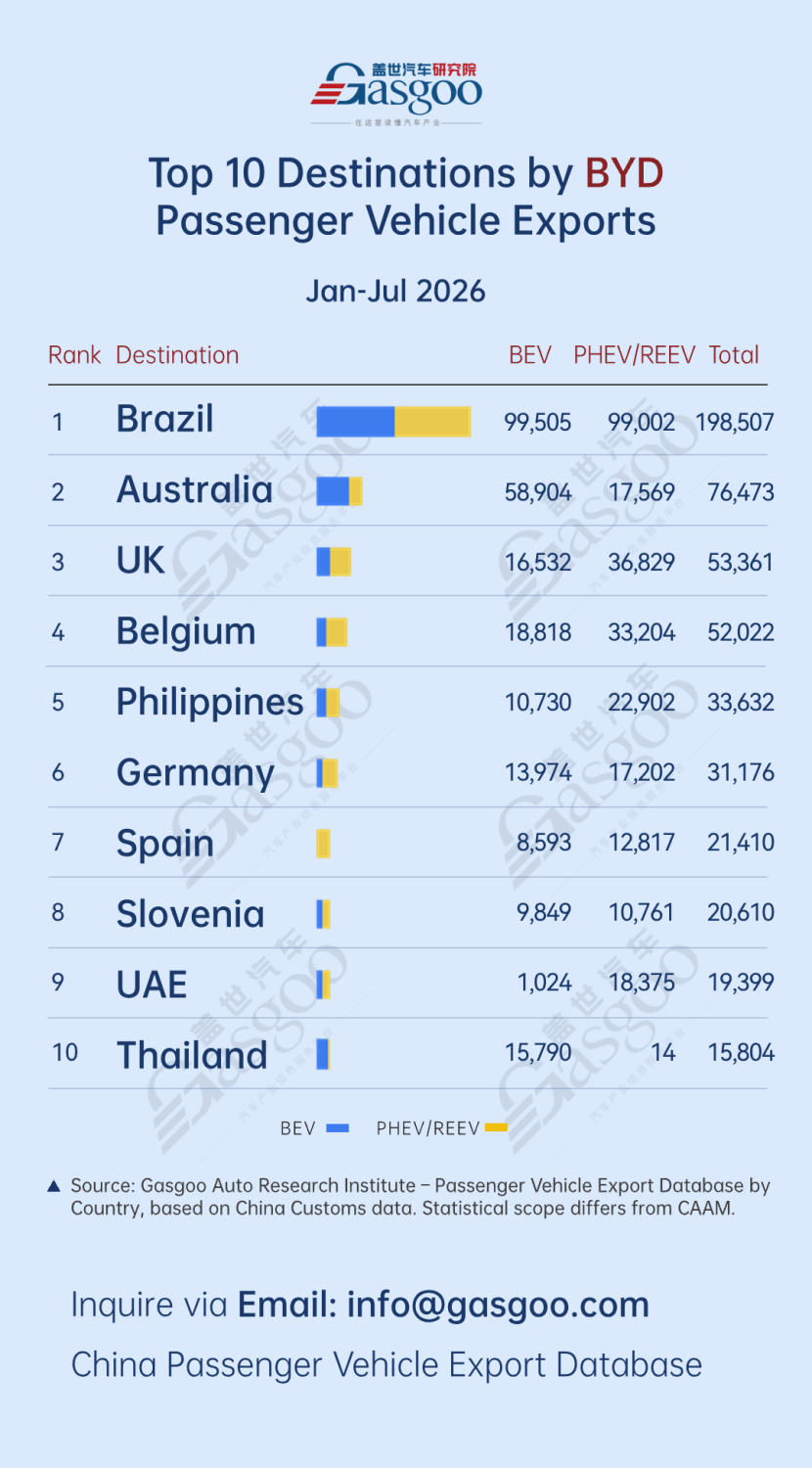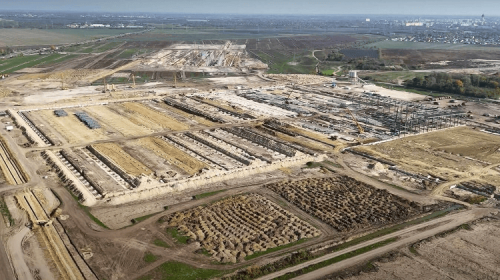
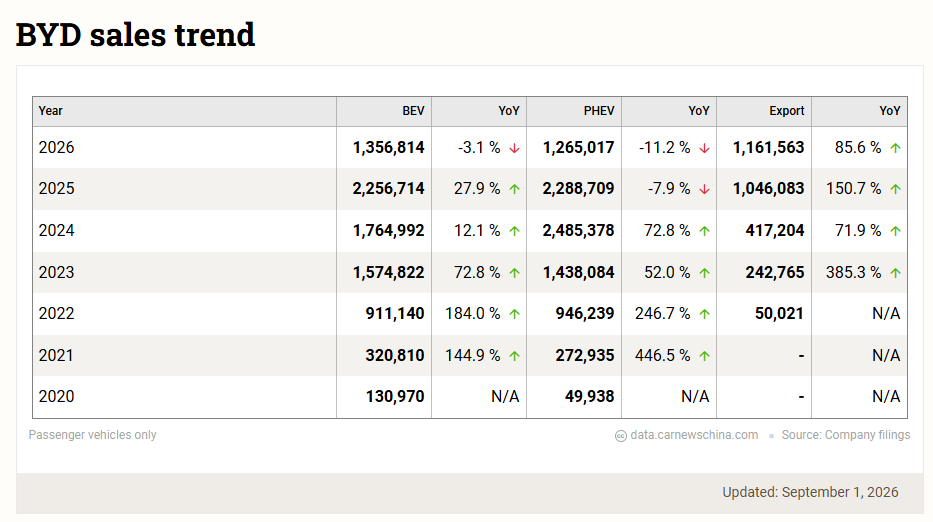
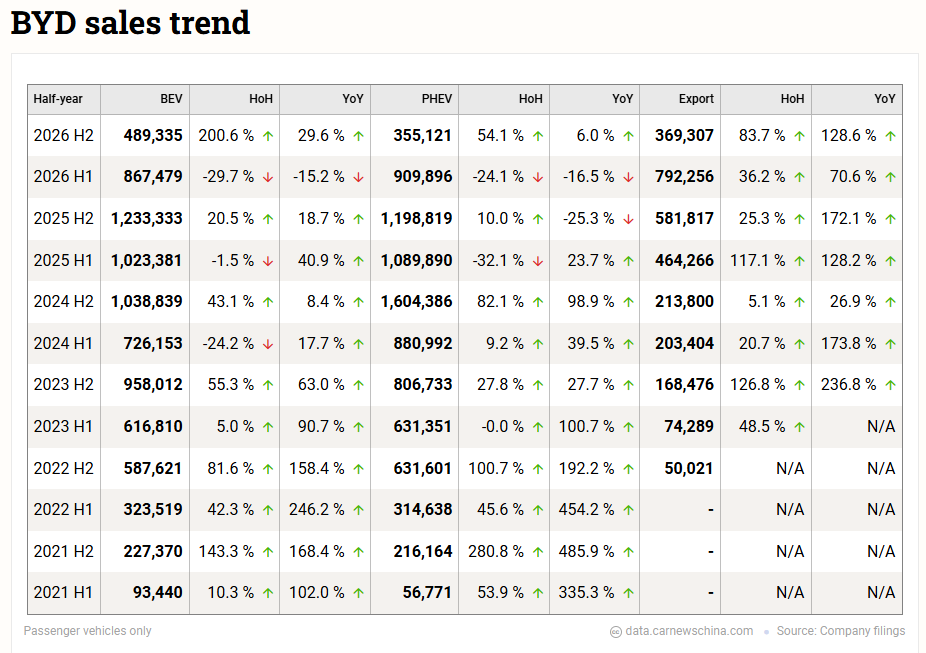



















BYD's car carrier heading to Europe. Credit: BYD Understand China EV’s Market Real-time notifications when critical EV data is released All important data in one place 2,000,000+ data points Become a member BYD generated more revenue outside China than in its home market in the first half of 2026, according to company filings. 53% of the company’s revenue came from markets outside China. Domestic registrations were down nearly 46.% YoY. The Shenzhen-based automaker generated 181.3 billion yuan (27 billion USD) in overseas revenue during the first six months of the year, up 34% year-on-year and accounting for 53% of its total revenue. Revenue from China fell 31% year-on-year, according to BYD’s interim results released on August 28. BYD registered 795,169 vehicles in China in the first half of 2026, down 45.9% YoY, according to insurance registrations monitored by China EV DataTracker. According to company filings, BYD sold 792,256 cars outside China in the first half of the year, up 70.6% from the same period last year. Those figures represent the whole BYD group, including all its series and brands such as Denza, Fang Cheng Bao, and Yangwang. As the domestic market is still under pressure from the price war, overseas business has played an important role in the improvement. BYD said its first-half gross margin increased from 18.01% a year earlier to 18.85%, mainly due to growth in its overseas vehicle business. The gross margin of its overseas operations reached 22%, up 1.9 percentage points year-on-year. BYD’s overall revenue fell 7.1% year-on-year to 344.8 billion yuan (50.9 billion USD) in the first half of 2026. Net profit attributable to shareholders dropped 20.5% to 12.3 billion yuan (1.8 billion USD). Where is the domestic weakness coming from? Zooming out and looking at the data, BYD is struggling in the PHEV market, and this trend is not new – it started in 2025: BYD Group sold 2,288,709 PHEVs in 2025, down 7.9% from 2024. In 2026, this trend continues, and in the first eight months of the year, between January and August, the company sold 1,265,017 PHEVs, down 11.2% from the same period last year. BYD’s 2026 global sales as of September 1 (January – August 2026). Credit: BYD, compiled by China EV DataTracker However, looking at the first two months of H2 (July and August), we can see that BYD broke the disastrous trend from the first half. In total, they sold 844,456 cars globally, up 18.5% YoY. And that trend is driven by a rise in BEV sales – which were up 29.6% YoY, while PHEVs were up 6% YoY. It seems BYD got some new steam for H2, and we will keep an eye on it. Also, it is important ot note that the pressure is not limited to BYD. China’s passenger vehicle retail sales fell 21.1% year-on-year in July, marking the tenth consecutive monthly decline, according to the China Passenger Car Association (CPCA). Passenger vehicle exports from China, meanwhile, increased by 88.2%. The company is expanding sales and production in Europe, Southeast Asia, and Latin America. Brazil has become BYD’s largest market outside China, while the automaker is also building local manufacturing capacity in markets including Brazil, Hungary and Turkey. The numbers increasingly show why. For the first time, BYD now generates the majority of its revenue outside its home market, while in China it has become a survival game, desperately waiting for competitors to start losing wheels. As of today, there are still over 100 auto brands in China. Most important news in your inbox. Recaps · scheduled All you need, in one email. Instant alerts · real-time Ping me when an article goes live. 0 of 27 topics selected Bundle into one email per day — instead of one email per article No spam · Unsubscribe with one click · Change settings anytime