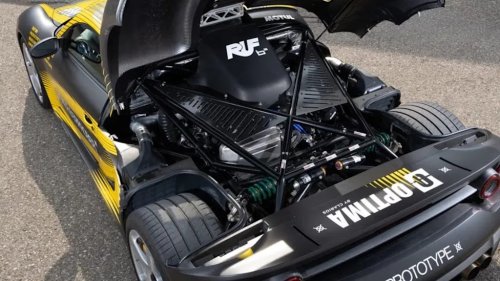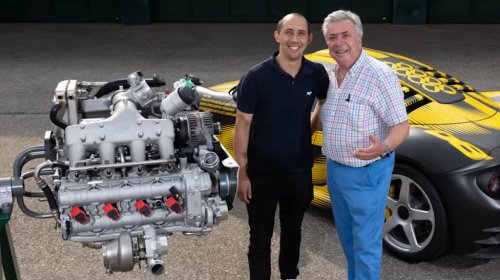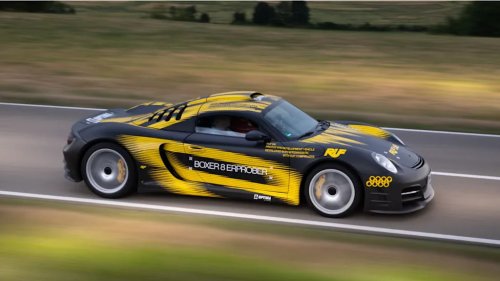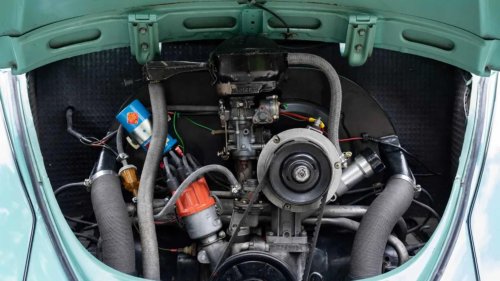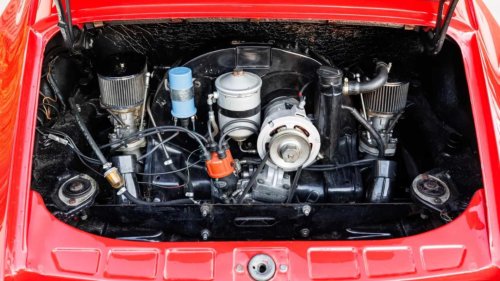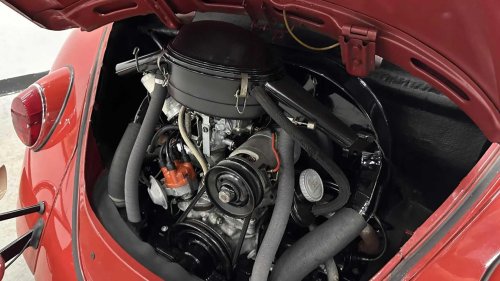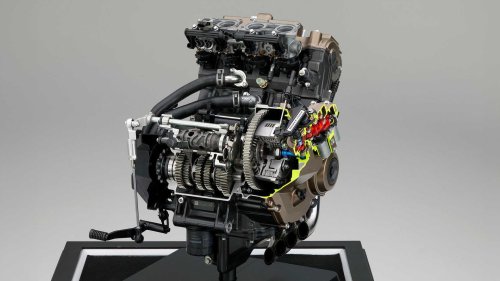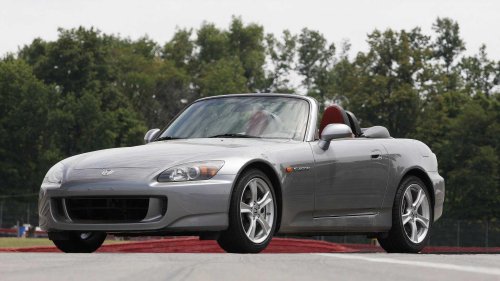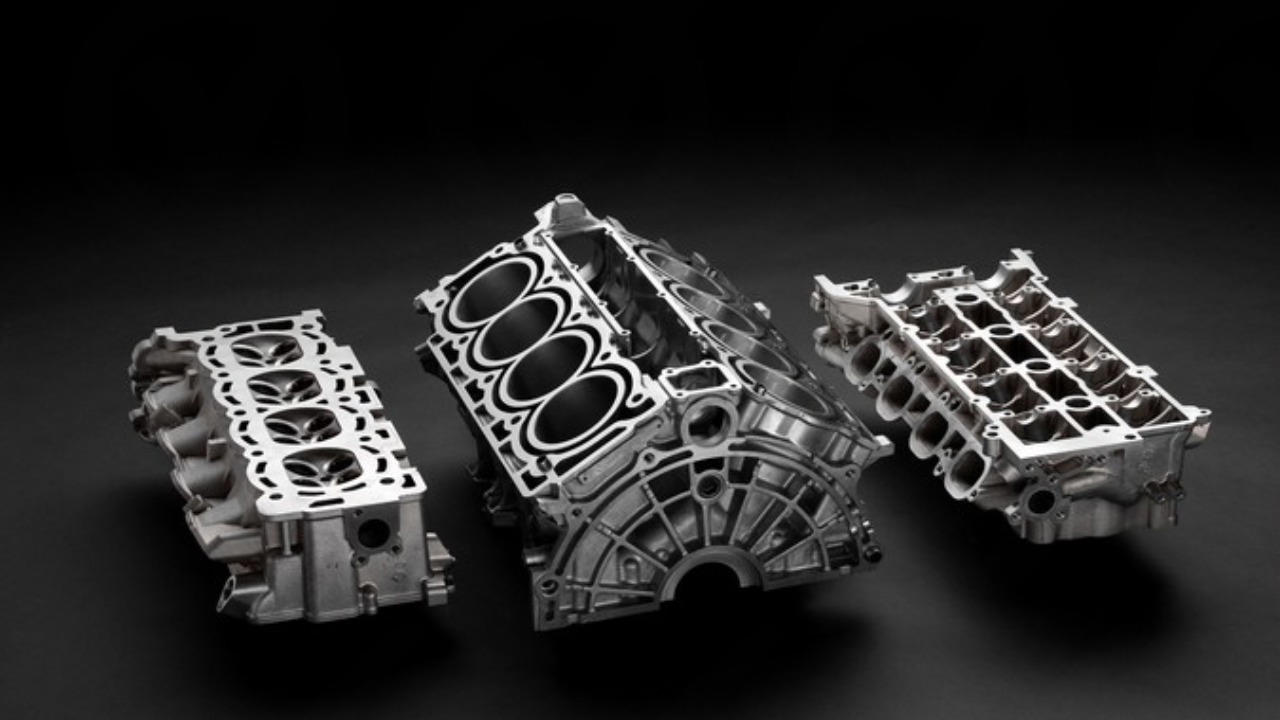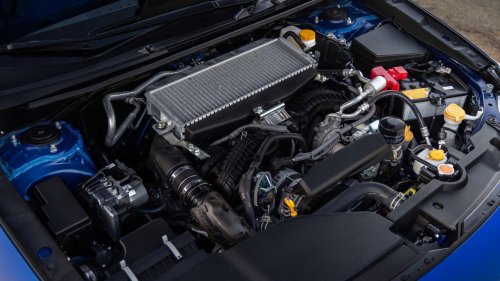
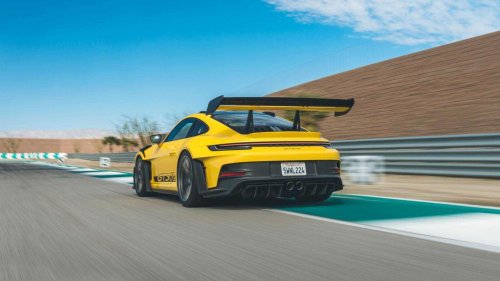
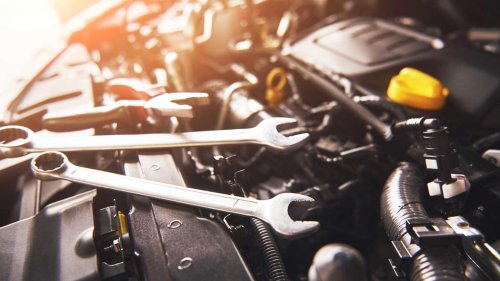
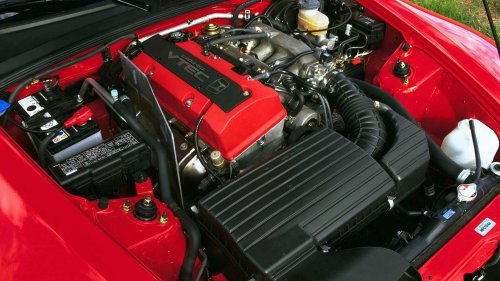



















Mass production and economies of scale are the arch-enemy of specialization. Leaving aside affordability and exclusivity, there’s a reason why annual Ferrari sales barely break into the double-digits, and conversely, Toyota sells millions of cars each year.Production efficiency values simplicity and uniformity, which is why the humble and trusty inline four-cylinder engine, with its balance of economy, performance, reliability and packaging-friendliness, has become so ubiquitous the world over. However, in rare cases, like Subaru and the Porsche 911, ethos and tradition dictates a path less traveled.While over the decades, others, like Volkswagen, Lancia, Alfa Romeo, Citroën and, yes, even Ferrari have tried their hand at engines with horizontally-opposed cylinder layouts, today only Subaru and Porsche remain as guardians of this rare engine configuration. What Is a Boxer engine? And Why Aren't All Flat Engines Boxers? Subaru Engines are designed around their cylinder configurations – inline, in a vee or flat. All of these have one or another effect on a car’s smoothness, performance or handling.Inline engines tend to suffer the most vibrations owing to their high center of gravity. As a mid-step, because the cylinders are oppositely arranged in a vee engine, these supersede the inline setup in the smoothness stakes. And in a flat engine?Whereas the cylinders are positioned vertically in an inline engine and at an angle in a vee engine, they lie completely flat at 180 degrees on either side of the crankshaft. Owing to the horizontal movement of the pistons, this is commonly (though sometimes erroneously) generalized as a boxer engine.No mechanical explanation is complete without some technicalities, so here’s the thing: while all boxer engines are flat because of their horizontal cylinder placement, not all flat-engines are boxers.The difference isn’t as mind-mangling as you might imagine, but the fundamental point of divergence is the number of crank pins and how they affect piston strokes.In a true boxer engine, each piston has its own crank pin, whereas in a flat engine (effectively a wide-angle vee), each pair of opposing pistons share a crank pin. So, that means in a boxer engine, the movements of every pair of opposing pistons are mirrored, contrasted to the same pistons performing different strokes in a flat engine.With flat engines no longer in production, only boxers persist as upholders of the horizontal faith. It’s also easy to appreciate the primary benefits of a boxer engine – a reduction in vibrations thanks to the self-canceling effect of pistons mirroring each other on opposite sides of the crankshaft; and the lowest center of gravity when compared to inline and vee engines. Configuration Complications And The Importance Of Balance Porsche Be it for the delivery of performance, smoothness or reliability, it’s essential that engines are well-balanced, which means to say how the inertial forces of the moving parts are counteracted.Inline engines are utilized for their compactness, which makes them ideal for transverse installation in front-wheel-drive cars, but in that position, generally aren’t able to do much for a car’s weight distribution. They’re also comparatively inexpensive as they only have a single cylinder head, valve train and induction system.For their part, vee engines are split into a pair of cylinder banks, thereby doubling the inline engine’s above-mentioned components. Flat engines are similarly characterized by the added pain of being difficult to service by virtue of their tight packaging in engine bays.When it comes to managing vibrations, though, the flat-engine comes out tops. Some inline-four engines require balance shafts and vee engine counterweights, but the inherently balanced design of boxers means that almost no additional interventions are required.And naturally, you can’t talk about engines without mentioning their impact on vehicle dynamics. Flat engines can (and in the case of the Porsche 911) be mounted low to aid weight distribution, traction, cornering, braking and aerodynamics: fitting any other type of engine is simply unthinkable.Not that it has stopped Porsche from occasionally breaking with its own traditions, especially in its race cars. The three-time Le Mans-winning 919 Hybrid was fitted with a V4 and, from 2018 onward, the 911 RSR had its engine moved ahead of the rear axle. Other Factors To Consider: Complexity, Maintenance, Cost Wesbank Swearing enthusiasts, as Jeremy Clarkson once referred to Gordon Ramsay, just love changing spark plugs on a Porsche 911. That’s because the cylinder heads point outwards towards the wheel arches, leaving little space for hands and tools – instead of upwards like in a non-boxer-engine car where most key components are more accessible.Changing the oil on an inline engine is also as straightforward as it gets: undo the sump plug and let gravity do the rest. As a boxer engine is already flat, there’s no incentive for the oil to go anywhere in a hurry, with the result that it tends to stick to cylinder walls and valves, and eventually leak through the piston rings and valve stem seals.It also stands to reason that, apart from the more complex servicing procedures demanded by boxer engines, they are more expensive to manufacture on account of more components used. Whereas a pair of head gaskets won’t break the bank, doubling the required number of catalytic converters can. Which Is Better? Honda Boxer engines are supremely balanced, have a lower center of gravity and are more compact longitudinally than their inline counterparts. At the same time, they are wider, heavier, more bespoke and more expensive to build and maintain: many reasons for being less prevalent.Moreover, like-for-like and for this side of competitive driving, we’d argue that if you were to test both engines back-to-back in the same car, most people would not even be able to tell the difference, other than the noise, which, admittedly, for gearheads is a deal-breaker.On that note, excepting the adrenal gland-rupturing aural assault of the Honda S2000, an inline four-cylinder engine’s fundamental configuration (worse still if they’re turbocharged) dooms its acoustic ability to the doldrums. On the other hand, the Subaru’s burbling boxer-four is an institution; and let’s not even get started on the 911’s flat-six.Ultimately, if you prefer a boxer engine over an inline one – you’re going to pay for the privilege. Nicer means nicher, and after all, there’s no such thing as a free lunch.