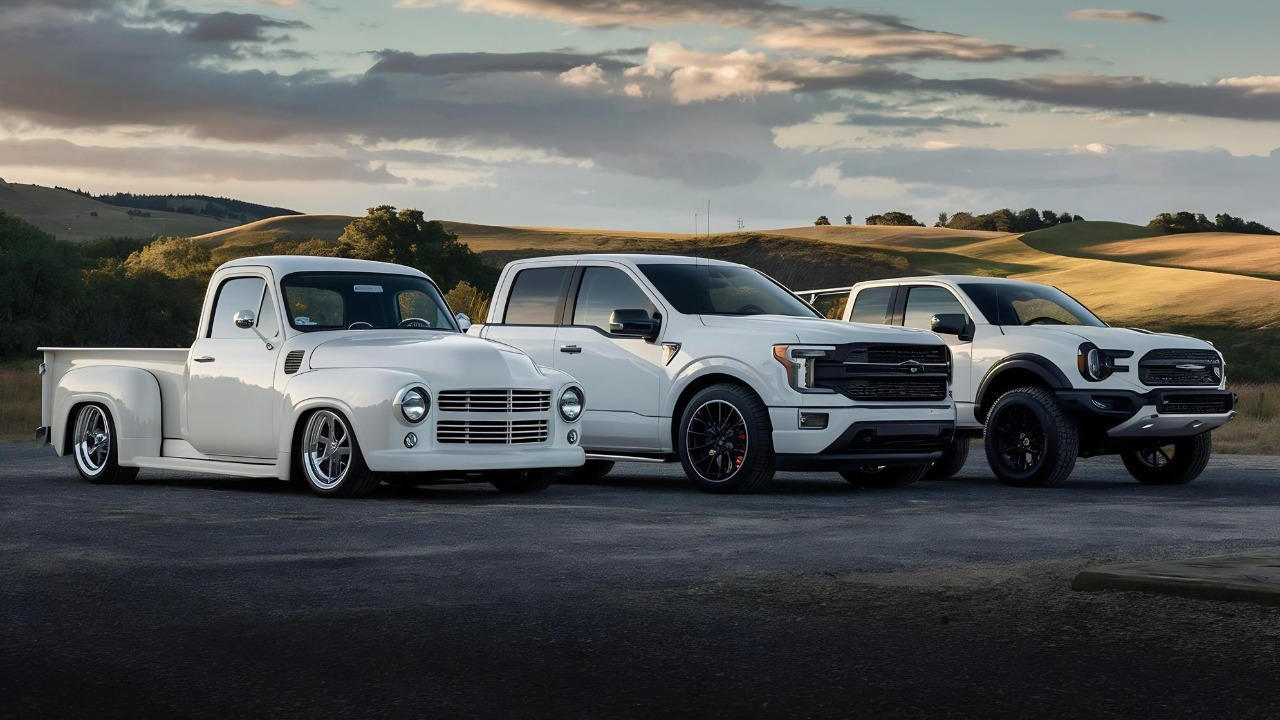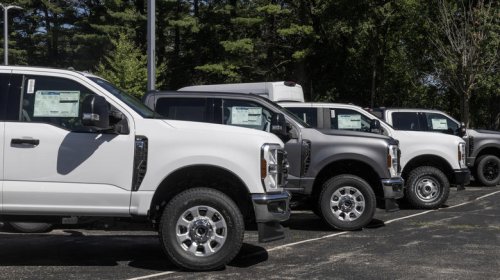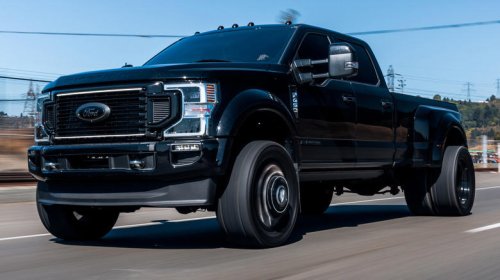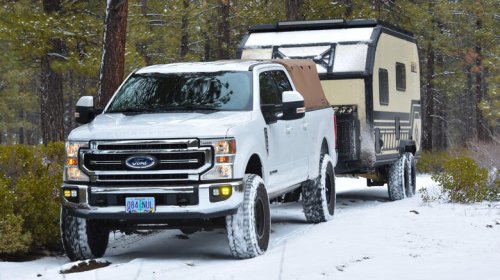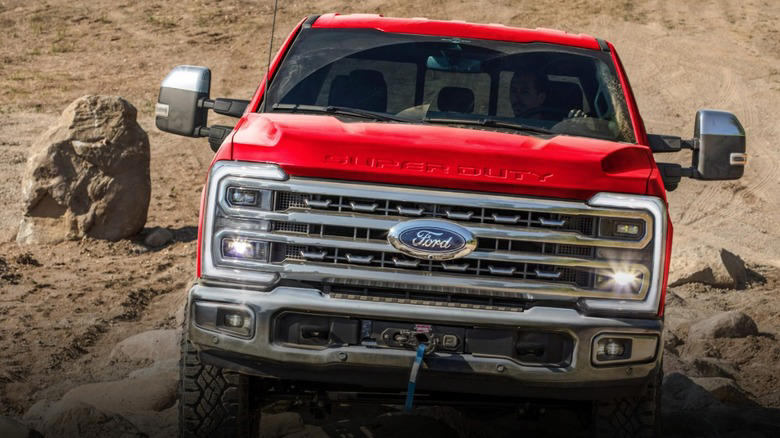
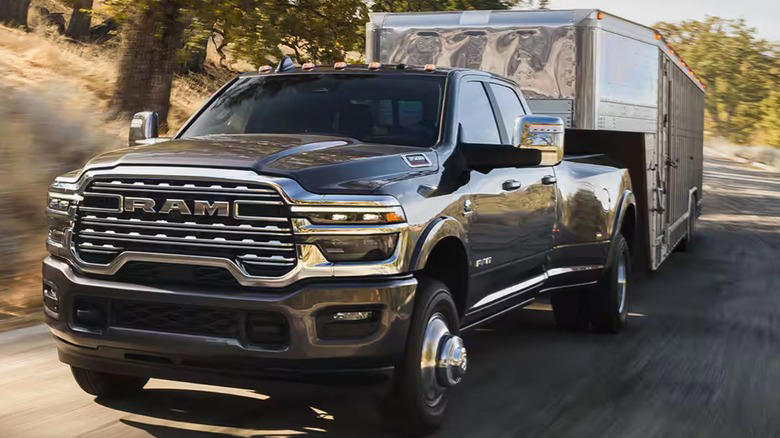
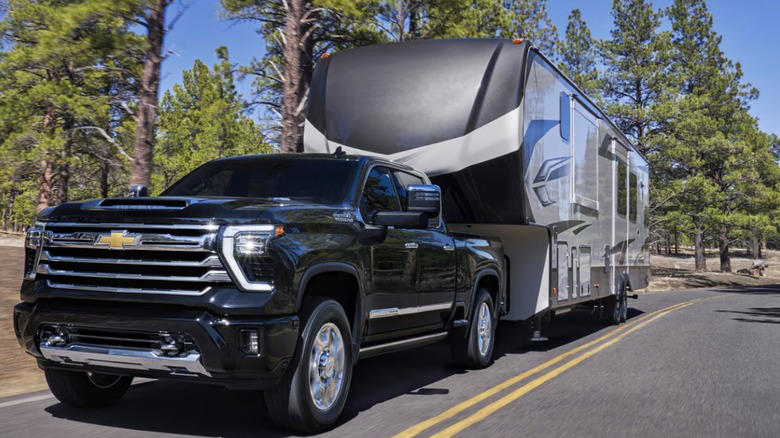



















Ford What's the difference between a ½-ton, ¾-ton, and a one-ton pickup? No, it's not just a ¼-ton (har har, very funny). The real difference has to do with gross vehicle weight rating (GVWR) and payload capacity. GCWR and towing capacity are generally different between these classes, as well. The designations, ½-ton, ¾-ton, and one-ton, used to indicate payload, but they don't have any literal meanings anymore. More accurately, trucks are divided into light-duty and heavy-duty, although Ford calls the latter "Super Duty". The light duty, or ½-ton pickups among the Big Three are the Ford F-150, Chevy Silverado 1500, and the Ram 1500. The rest are considered heavy-duty pickups. So, the Ford F-250, Chevy Silverado 2500, and the Ram 2500 would be considered ¾-ton trucks, while the Ford F-350, Chevy Silverado 3500, and the Ram 3500 would be one-ton trucks. Ford also offers the F-450. Dually versions of the trucks have enhanced towing ability, and they are offered for the Ram 3500, Silverado 3500, Ford F-350 and Ford F-450 models. The light duty, or ½-ton, models are enough for most drivers. But if you do a lot of serious hauling or towing, you're probably going to want to look at the heavy duty trucks. Compare the weight ratings (GVWR and GCWR, or gross combined weight rating), payload capacity, and towing capacity of each truck against your needs to find the right truck for you. Differences in specs Ram Trucks It's more important to look at actual specs than the ½-ton, ¾-ton, and one-ton designations. For example, payload capacity for the 2026 F-150 ranges from around 1,400-2,400 pounds (much more than half a ton). Payload goes up to a maximum 4,000 pounds for the F-250, and 8,000 pounds max for the F-350. Maximum GVWR for the Ford trucks follow suit — 7,400 pounds for the F-150, 11,400 pounds for the F-250, and 14,000 pounds for the F-350. When it comes to the Chevy trucks, maximum payload is around 2,200 pounds for the 2026 Silverado 1500, 4,200 pounds for the Silverado 2500, and 4,700 pounds for the Silverado 3500. Ram trucks show similar results. Payload maxes out around 2,300 pounds for the 1500, 3,900 pounds for the 2500, and 4,600 pounds for the 3500. You should always check the GCWR and towing capacity before pulling a trailer. In the Ford full-size pickup models, the F-150 has a maximum towing capacity of around 13,500 pounds, while the F-350 and F-450 can tow around 40,000 pounds when optimized for trailering. Max GCWR goes from around 19,400 pounds for the F-150 to 48,000 pounds for the F-350 and F-450. For the Chevy Silverados, maximum towing capacity comes in around 13,300 pounds for the light duty model, and gradually slides up to 36,000 pounds for the heavy duty models. Max towing for the Ram 1500 is 11,140 and around 15,500 for the heavy duty versions. How to figure out how much truck you need Chevrolet So, how do you know if you need a ½-ton, ¾-ton, or one-ton? Is it just a simple matter of looking at the payload or towing capacity? No, it goes deeper than that. Let's start with payload. Maybe you don't do any towing, but you regularly haul some pretty heavy cargo in the bed of your truck. Then you're going to want to look at GVWR, or gross vehicle weight rating. The GVWR includes the entire weight of your truck, the weight of all the passengers, plus the weight of all the cargo. If you are towing something, the GVWR would also include the tongue weight on your tow hitch. You'll need to add all of those things together to make sure they don't exceed the GVWR. It is possible for your cargo not to exceed payload capacity, but for all of the combined weight to be over the GVWR. In that case, you would be overloaded. Now, let's say you do tow a loaded trailer. That's where GCWR, or gross combined weight rating. This is everything included in the GCWR, plus the weight of your trailer and the cargo that's on it. Traveling while weighing in excess of those weight ratings can not only result in a ticket, but result in some serious legal consequences should you get into an accident. And your insurance may not cover the damage.