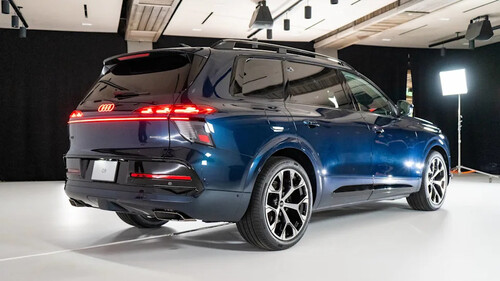
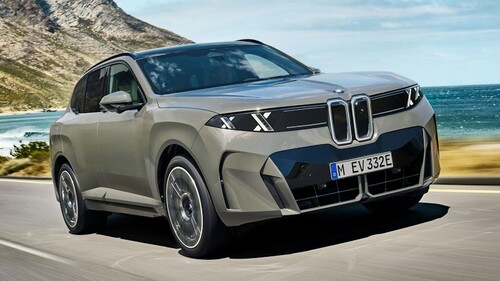
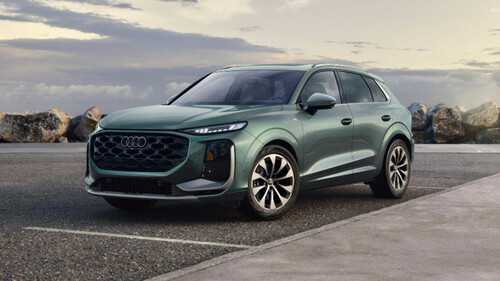
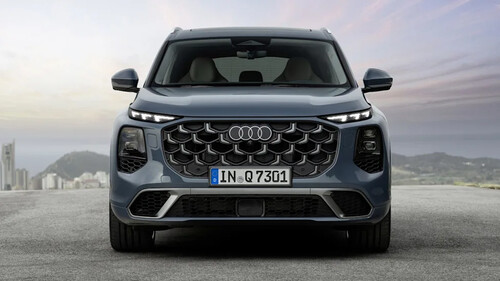
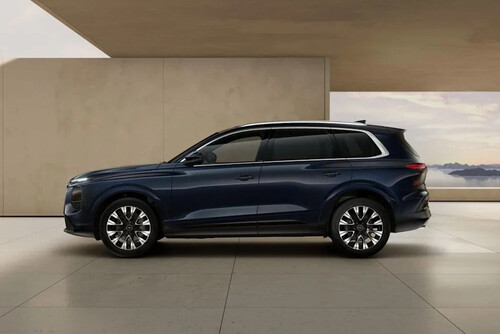
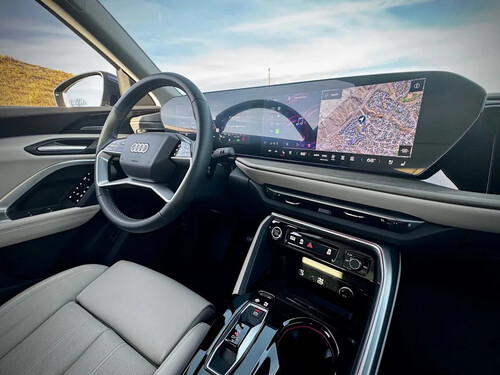
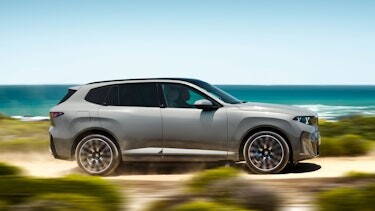
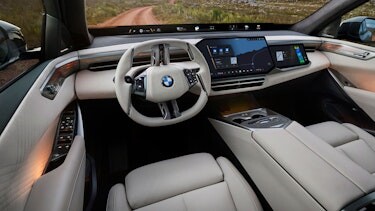
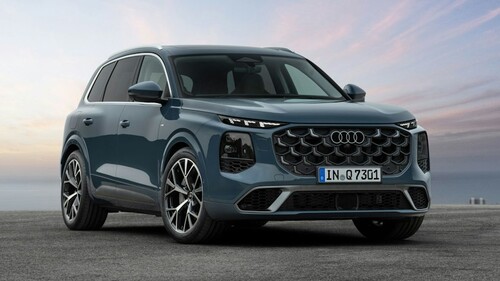
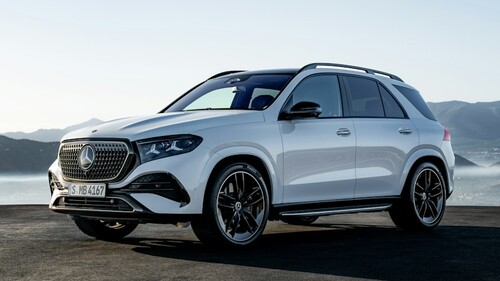
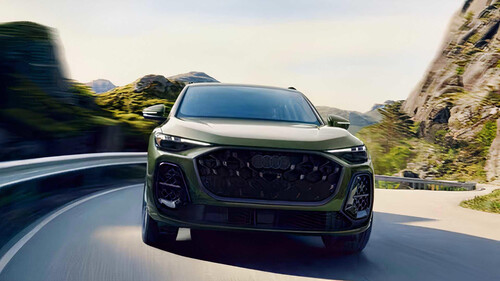
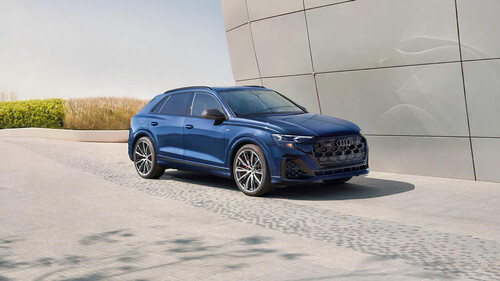
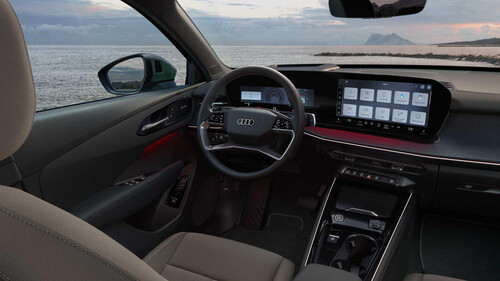
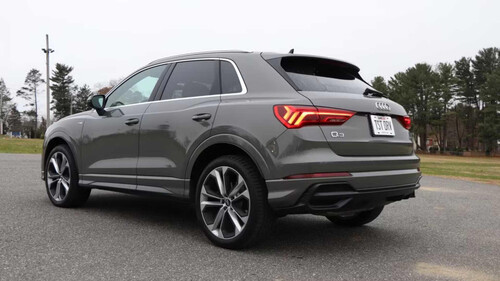
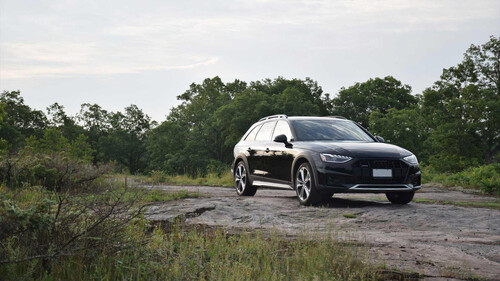
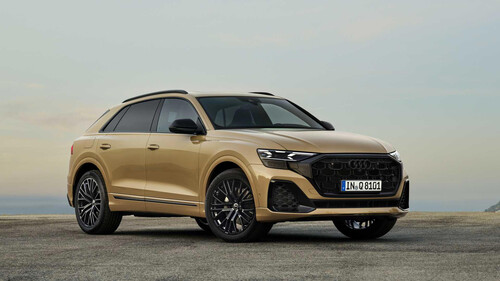
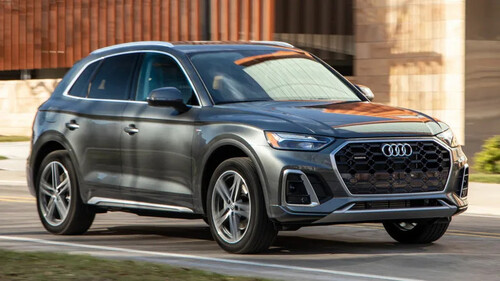
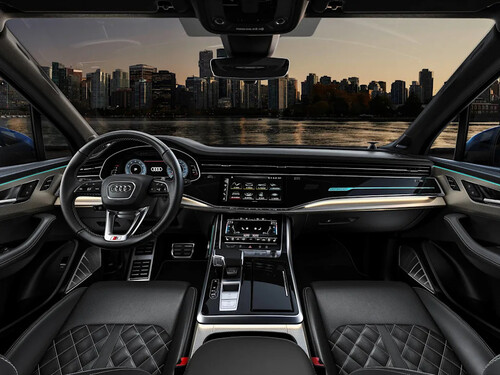
Sure, it would be nice to have a multi-car garage where one vehicle handles family duty and hauling, while another delivers a sleek, sporty driving experience. But for most people, that’s not reality. More often than not, you're stuck with a single vehicle that has to do it all: commuting, road trips, grocery runs, and the occasional spirited drive. In that context, “practical” isn’t just a vague idea, it specifically means having usable cargo space behind the rear seats for everyday needs.Looking at Audi’s lineup, there are several models that balance performance and usability, but many of them quickly climb into serious-money territory. That’s where the Audi Q5 stands out as the sweet spot. It offers engaging driving dynamics, solid cargo capacity, and a price that lands only slightly above today’s average new vehicle transaction price of just over $50,000, thus making it one of the most well-rounded options for smart shoppers. Why It's So Practical Audi Key Facts To Know Debuted at Audi's Ingolstadt headquarters in fall 2024 Currently priced from $52,800 Includes the less practical Q5 Sportback sibling Offers up to 56.9 cubic-feet of storage space Packs space for five The current Audi Q5 represents the third generation of the popular compact SUV nameplate and was introduced to the US market for the 2025 model year. Like its predecessor, production is handled in Mexico for North America and select export markets. For the latest 2026 version, buyers will need to pay an MSRP of $52,800. As mentioned in the opening, that’s only slightly higher than the average new vehicle transaction price, which only recently reached a record high of $50,326.Audi Based on our metric for practicality being cargo space behind the rear seats, the Q5 offers 27.6 cubic feet, or enough for a couple of large suitcases and a folded stroller or several carry-on bags stacked neatly. With the rear seats folded flat, the cargo space expands to 56.9 cu ft.Audi does have other models with more cavernous cargo holds, but accessing them requires spending over the $60,000 mark. The Audi Q6 e-tron electric compact SUV, for example, offers 30.2 cu ft and starts at around $64,500, while the larger Audi Q7 midsize SUV provides 35.7 cu ft behind the second row (or 14.2 cu ft behind the third row) and starts from about $62,000. Audi also sells the style-focused Q5 Sportback, though this sacrifices practicality, reducing rear cargo space to 24.5 cu ft in exchange for its coupe-like profile.Audi Beyond cargo, the Q5 remains practical in several everyday ways. It comfortably seats five passengers, although the middle rear seat is best suited for shorter trips or smaller occupants due to its narrower width. Ground clearance sits at a useful 7.9 inches, giving it confidence over rough roads, potholes, and winter conditions, but forget about serious off-roading. Wide-opening rear doors make installing child seats easier, while a powered tailgate and flat loading floor further enhance day-to-day usability. All The Key Specs Audi The latest Q5 rides on a modular platform known as the Premium Platform Combustion (PPC), which it shares with the newest Audi A5 and Audi A6 models. This architecture brings a more rigid structure, with stiffer steering and suspension mounting points at the front axle compared to the outgoing MLB platform. Depending on configuration, it also supports advanced features like air suspension with adaptive dampers. While the platform is designed to accommodate hybrid and plug-in hybrid systems, the US-spec Q5 does not currently offer electrified powertrains.Audi Even in base Premium trim, the Q5 comes well-equipped. Standard features include quattro all-wheel drive, 18-inch alloy wheels, a panoramic sunroof, a powered tailgate, power-adjustable front seats with driver memory, and wireless Apple CarPlay and Android Auto. Buyers would be wise to add the $1,000 Convenience Package, which enhances practicality with a surround-view camera, a front dashcam, and comfort upgrades like a heated steering wheel. The Q5 proves that it's no one-trick pony, and that being practical certainly doesn't mean it can't also be comfortable, and luxurious. For towing needs, a trailer hitch can be added for $650, with the Q5 rated at 4,400 pounds of towing capacity.Where some buyers may find the Q5 slightly lacking is in its powertrain lineup. In the US, it is offered solely with a turbocharged four-cylinder engine, which is perfectly adequate for daily commuting and highway cruising but not especially engaging. Audi does offer a plug-in hybrid in other markets, but given weak PHEV demand in the US (less than EV demand, in fact) and the brand’s focus on EVs like the Q6 e-tron, it is unlikely to arrive stateside. Those wanting more performance can step up to the Audi SQ5, which uses a turbocharged 3.0-liter V6 producing 349 horsepower and 369 pound-feet of torque, though pricing rises to $65,400.Inside, the Q5 features a modern, tech-heavy cabin dominated by a curved digital display panel angled toward the driver. It integrates an 11.9-inch digital instrument cluster and a 14.5-inch central touchscreen, with an optional third display for the front passenger that provides access to navigation and media functions. While the setup may appeal to tech enthusiasts, it can feel overwhelming to some buyers, particularly the reliance on haptic controls. Audi made some key changes for 2026, including reintroducing a scroll wheel on the steering wheel and tweaking the interface to make it more intuitive.Audi On the road, the Q5 feels well-sorted, with the standard suspension delivering a smooth, stable ride over everything from freeway swells to pitted city streets. Handling is competent and composed, though it isn't as sharp as you might expect from an Audi, leaving spirited driving with a faintly sterile edge. Available adaptive air suspension fixes this by sharpening things up nicely, though to get this feature you'll need to upgrade to the Prestige trim which starts at $60,700. How Rivals Fare Audi The Q5’s 27.6 cubic feet of cargo space behind the rear seats is solid for the segment, but some direct rivals do better while costing less. The BMW X3, for example, starts at $51,300 and offers 31.5 cubic feet, while the Acura RDX starts at a bargain $44,700 and provides 29.5 cubic feet. It’s worth noting the current-generation RDX bows out after 2026, and while a successor is planned, there will be a gap before it arrives.If badge prestige isn’t a priority, mainstream compact SUVs are even more practical. Affordable offerings like the Honda CR-V, Hyundai Tucson, and Kia Sportage all pack close to 40 cubic feet of cargo space behind the rear seats. That’s a significant jump over the Q5 and even its luxury rivals, making these options especially appealing for buyers who prioritize maximum usability over premium branding.Space-conscious buyers on a budget may also want to consider going slightly used. Examples of the larger Audi Q7 that are just a year old and have under 20,000 miles can often be found starting at around $40,000, making them a strong value. The Smart Middle Ground Audi At under $60,000, the Audi Q5 stands out as the brand’s most practical all-rounder, blending usability, comfort, and driving appeal in a well-balanced package. But if maximum cargo space is your top priority, several rivals or even a lightly used larger Audi offer more room for the money.Sources: Audi