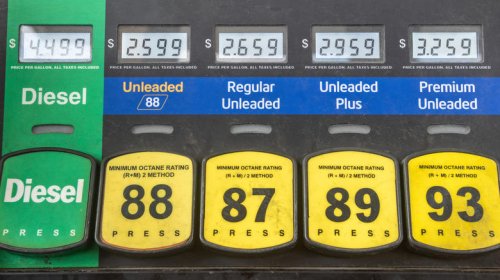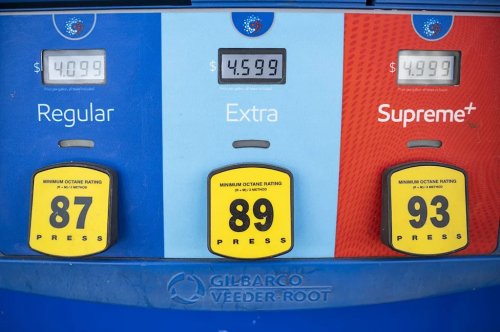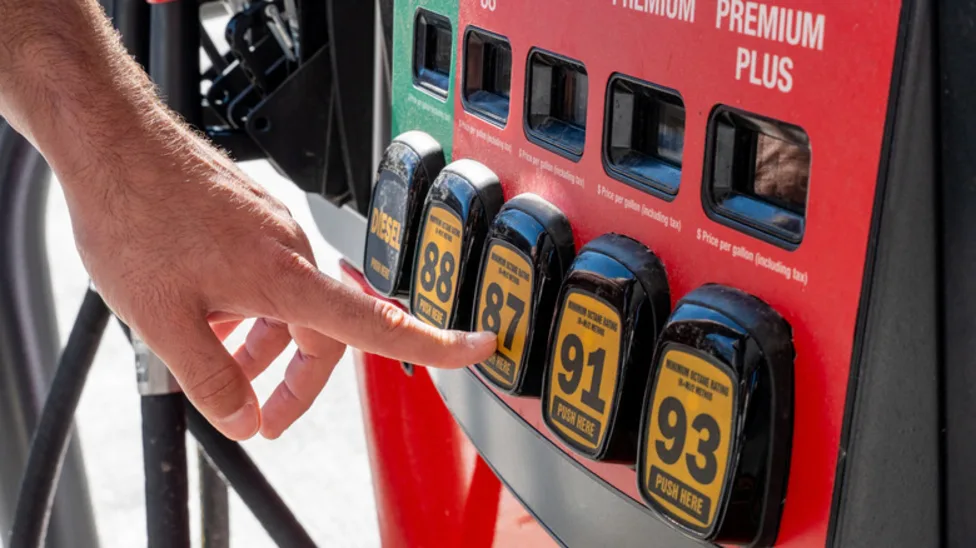
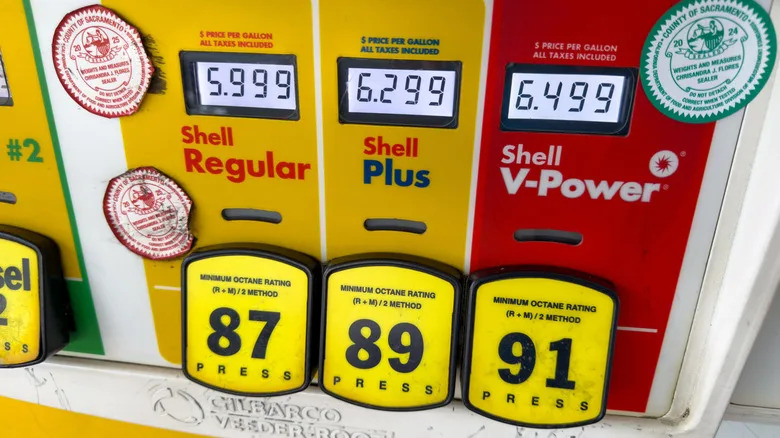






















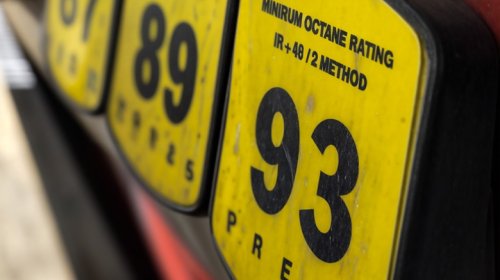
Making a selection at an American gasoline pump, featuring 91 and 93 octane premium fuel. - Konia4ka/ShutterstockIf you're a member of Jalopnik's American readership, you may have popped into a gas station in Europe and thought: "Wow, these cats run way higher octane than what I'm used to seeing." Or maybe you've seen or heard Europeans complain that American gasoline is lower-octane swill compared to what they pump.For car owners who have to run premium octane in their car either due to the automaker's requirement, or a potential aftermarket ECU tune, the prospect of running higher octane is appealing. A higher octane number means more resistance to engine knocking, and turbocharged cars run more happily on it. Especially if there's clear evidence that they'll run fine on 91, but actually make peak power on 93.However, the only difference between Europe's and America's octane is how they're measured. Let's dig into what they are, and why this form of Eurocentricity is easy to poke holes in. It all comes down to the differences between RON (not Howard), MON (not Jamaican Patois for "man"), and PON (not the Steam game).AdvertisementAdvertisementRead more: When (And Why) Did Cars Switch From Leaded To Unleaded Fuel?No matter the method, it's all irieA selection of gasoline at a common American Shell fuel pump. - ZikG/ShutterstockFor those who saw the title of this article and were about to comment "nothing," not so fast there, flash, we've got some explaining to do.RON (research octane number) and MON (motor octane number) are measured differently. The former is when an engine is at idle speed and sucking in a low air temperature. The latter is determined under more stressful conditions: higher engine speed and with a higher intake air temperature.In the USA, we use what's called PON, or, pump octane number, which is more commonly known as AKI, or anti-knock index. Simply put, this is the average between RON and MON. If RON is 95, and MON is 87, that means the PON/AKI is 91. But in Europe, RON is used. Thus, European 95 and American 91 are the same. It may sound strange that America uses both an initialism and an acronym for the same thing, but hey, that's just how it goes. The history of gasoline is wild.AdvertisementAdvertisementSo the next time you overhear someone talk smack about American octane ratings, remind them that the difference between European 95 octane and American 91 octane gas is nothing. Then hit them with some good old-fashioned science.Want more like this? Join the Jalopnik newsletter to get the latest auto news sent straight to your inbox, and add us as a preferred search source on Google.Read the original article on Jalopnik.