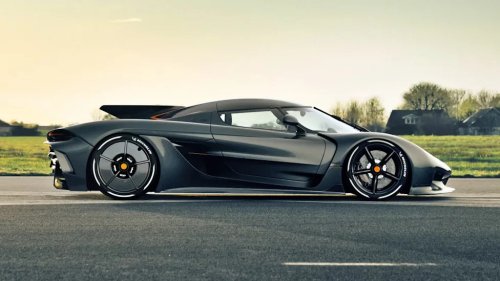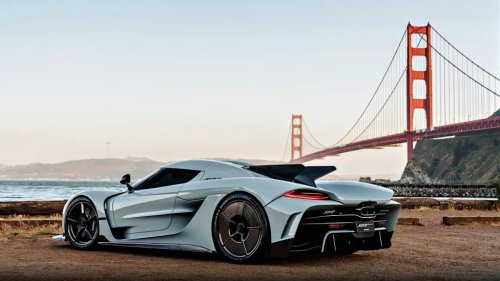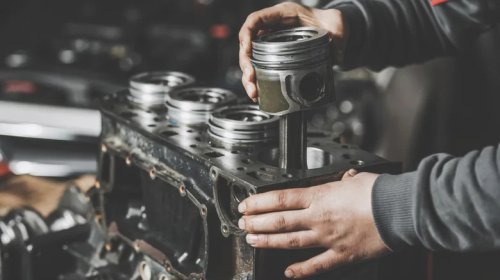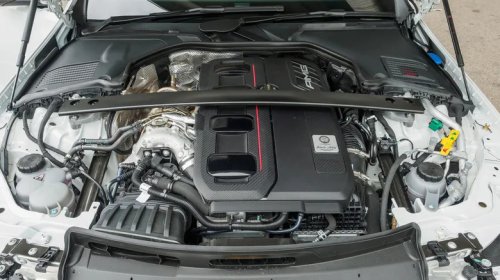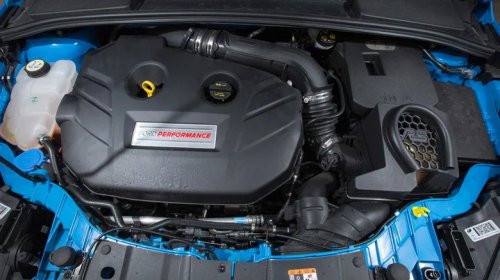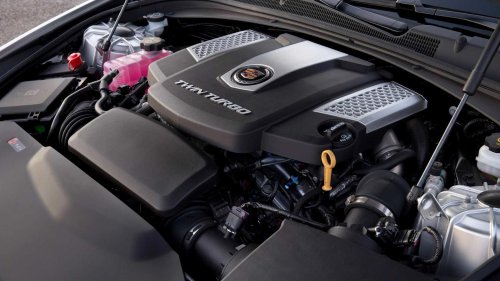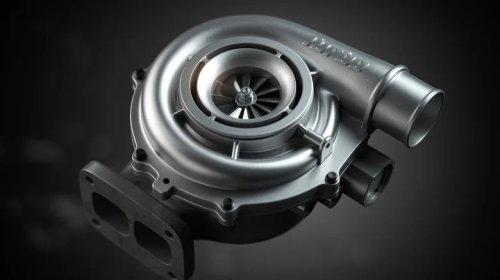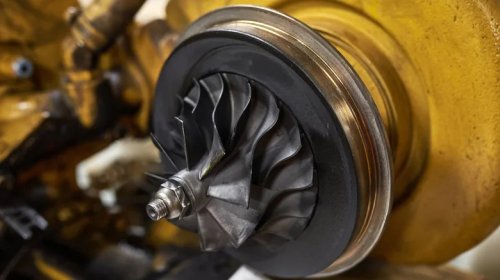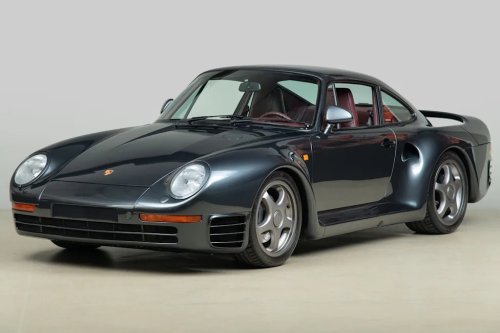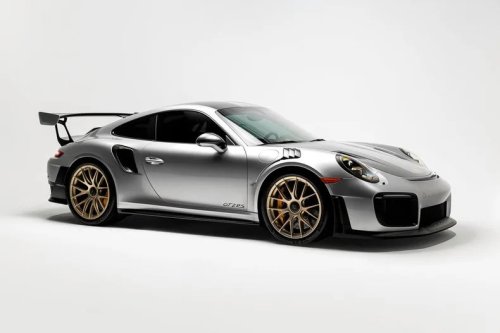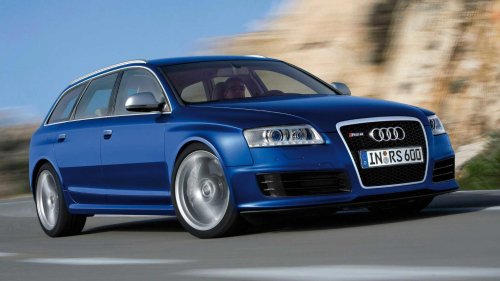
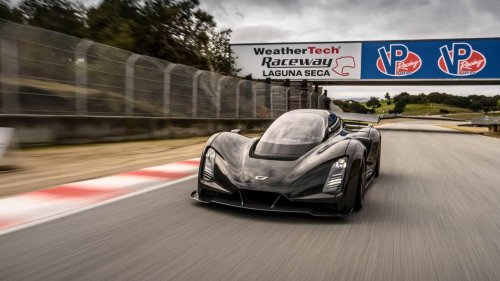
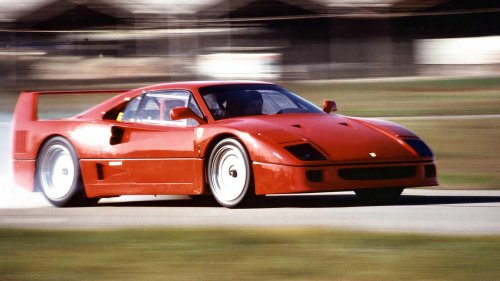
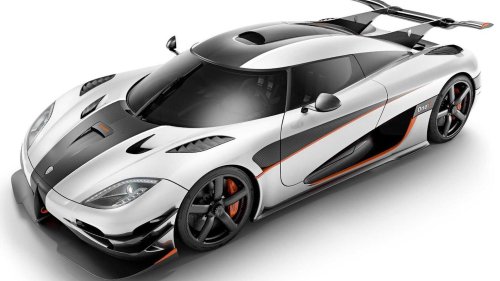
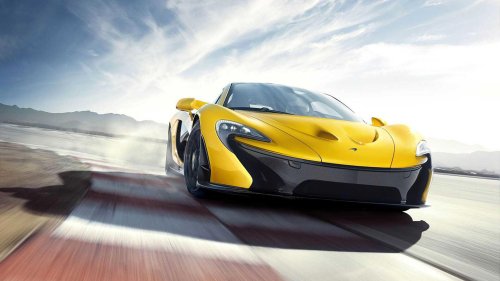



















The Maserati Biturbo was the first production car to employ a pair of turbochargers. Since its debut in 1981, we've seen countless cars adopt the twin-turbo configuration, and that pairing has become almost standard in the world of hypercars.More often than not, twin-turbochargers are used in hot-blooded, often athletic performance cars. From two-door coupes to performance SUVs, the twin-turbocharger system can be found in nearly every segment. Still, not all cars are created equal; some are cooler. As far as those with twin-turbos are concerned, these are 10 of the coolest.This article focuses on 10 cars with twin-turbocharged engines that stand out for their performance, engine design, and appeal. We've arranged these cars alphabetically by the manufacturer. Audi RS6 Avant 2008 audi rs6 avante_frontThere are a handful of models in Audi's catalog that have relied on a V10 engine, but there has only ever been one model that employed a twin-turbocharged V10 engine, the Audi RS6 Avant. Specifically, the C6 generation lasted for only two years, but today it's remembered as one of the greatest and coolest cars powered by a V10 engine. It marked the return of the RS6 nameplate after four years since the end of the C5 generation, which – like its successor – wasn't available in the US.That 5.0-liter twin-turbocharged powerplant produced roughly 100 horsepower more than the previous-generation RS6, pumping out 572 hp and sending it to all four corners of the German super wagon, making it quicker on the quarter-mile drag strip than some supercars. At the time, this was the most powerful Audi ever built and is remembered as one of the coolest factory twin-turbocharged cars. Czinger 21C Czinger 21C front on trackWhen we spoke about the handful of homegrown cars that have a chance of dominating the Nürburgring, the Czinger 21C was among them. There's merit to it. Its carbon fiber physique was molded and shaped through human-AI design to be as aerodynamic and efficient as possible, and its aerodynamic package can generate more than 4,400 lbs of downforce at 190 mph.Reaching 190 mph doesn't take long, given that the Czinger 21C's powertrain can propel it from a standstill to 186 mph in 8.5 seconds. The Czinger 21C's staggering performance comes from its 2.88-liter twin-turbocharged V8 engine. That petite V8 engine is the most power-dense production car engine, working in collaboration with an electric drive system to produce over 1,000 hp. Ferrari F40 ferrari f40 exterior In a list of the coolest cars that came with twin-turbochargers, the Ferrari F40 is a given. The twin-turbochargers in the Ferrari F40's engine bay are one of the defining features of one of Maranello's halo cars, notorious for turbocharger lag that has caught many by surprise and often left the Ferrari F40 in a ditch.The Ferrari F40 was the successor to Ferrari's first halo car, the Ferrari 288 GTO, which was the first offering from Maranello with a pair of turbochargers, but it would be the F40's twin-turbocharged V8 engine that propelled it to speeds exceeding any prior Ferrari, with a claimed top speed over 200 mph (though real-world tests showed around 186 mph). Koenigsegg One:1 2014 Koenigsegg-One-1 The Koenigsegg One:1 is one of the most recognizable and important models in the Swedish hypercar manufacturer's history. Its claim to fame was being the first production car to have a one-to-one power-to-weight ratio, hence the "One:1" name, which was deemed impossible when the car was announced.While Koenigsegg employed the lightest materials possible to whittle away at the One:1's weight, it also needed to significantly improve its power output compared to the Koenigsegg Agera that it was based on. Although featuring a similar 5.0-liter V8 engine flanked by a pair of turbochargers, the One:1 would be coaxed to produce far greater power, becoming the first of Koenigsegg's "Megacars". Lotus Omega 1990 Lotus Carlton front 3/4 staticDid you know that in the 1990s, Lotus collaborated with General Motors to create one of the coolest sedans of that era? It was called the Lotus Omega, and it gave the BMW M5 a run for its money. At the core of this muscular sedan was the naturally aspirated inline-six-cylinder engine used in the standard Opel Omega, which served as the basis for the Lotus Omega, but with several significant modifications, the most notable being two Garret T25 turbochargers.Commanding more power than any Opel Omega ever produced up until that point and more than 100 hp compared to the standard Omega sedan, the Lotus Omega would also briefly be the world's fastest production car. Remembered as one of the coolest models to wear the Lotus badge, fewer than 1,000 examples were ever created. McLaren P1 2014 McLaren P1 frontThe McLaren P1 needs very little introduction, considering it was a member of the Holy Trinity, credited with changing the way the world viewed hybrid cars. At the core of the P1 was the most powerful and advanced version of the M838T V8 engine that had been present in every McLaren road car up until that point, and alongside the power provided by a competent electric drive system, delivered more than 900 hp.However, even on its own, the hybridized version of the M838T V8 engine produces 727 hp and 531 lb-ft, and when paired with the single electric motor, the McLaren P1 is capable of reaching 60 mph from a standstill in just under 2.8 seconds and needing only 16.5 seconds to sprint to 186 mph from a standstill. Mercedes-Benz SL65 AMG Black Series 2008 Mercedes-Benz SL65 AMG Black Series front view driving on trackThe Black Series nameplate has been reserved for the most extreme and exclusive models that Mercedes-Benz offers, with the last model to wear the badge being one of the fastest production cars around the Nürburgring. The lineup began with the SLK 55 AMG Black Series and was followed a year later by the CLK 63 AMG Black Series. However, in 2008, Mercedes-Benz unveiled the Mercedes-Benz SL65 AMG Black Series that somehow made its predecessors seem meek by comparison.Perfectly accentuating the striking physique of the SL65 AMG Black Series was a twin-turbocharged 6.0-liter V12 engine that produced more power than any Black Series model before it and more than most in the range, except for the Mercedes-AMG GT Black Series. Porsche 959 1986 Porsche 959 S front, three-quarterHad it debuted a few months earlier, the Porsche 959 would've been the first production car with a twin-turbocharged engine. Still, while it was late for that accolade, the Porsche 959 would go on to become one of the most impactful models in Porsche's history. When new, the Porsche 959 was one of, if not themost, technically advanced cars at the time, defined by its all-wheel-drive system, active suspension, and the configuration of its forced-induction system.While Maserati was the first to employ a pair of turbochargers in a car, the company chose a conventional arrangement of the turbos, whereas the Porsche 959 employed sequential turbocharging, which is, in essence, having one turbocharger for lower speeds and one turbocharger for higher speeds. This icon would lay the foundation for unbelievably potent models of the modern era, most notably, the Porsche 911 Turbo S. Porsche 911 GT2 RS 2017 Porsche 911 GT2 RS There is no road-going 911 version like the 991.2 Porsche 911 GT2 RS. Despite Porsche's efforts to evolve the Porsche 911 GT3 RS, the modern GT3 RS is still not quicker around the Nürburgring than the GT2 RS, which lapped the Green Hell in 6:43.30 minutes. Part of being able to set such a blistering lap, aside from the aerodynamic efficiency afforded by the Manthey Racing kit, was its powerplant.The GT2 RS relied on the 3.8 liter, twin-turbocharged flat six-cylinder engine borrowed from the Porsche 911 Turbo S, although for its use in the GT2 RS, its turbochargers were replaced with larger units that had higher boost pressures than the turbos used in the Turbo S. Along with a few other modifications, the Porsche 911 GT2 RS became and remains one of the most powerful Porsche models ever that doesn't employ a hybrid drive system. Saleen S7 Twin Turbo 2005 Saleen S7 Twin Turbo During the resurgence of America-made supercars, Saleen unveiled one of the greatest supercars ever to emerge from an American manufacturer: the Saleen S7. In its base form, the S7 was a force to be reckoned with, commanding its 7.0-liter V8 engine to produce over 500 hp, which was enough to contend with the most potent supercars America had at the time. However, this was far from the most potent version of the Saleen S7.In later years, the S7's V8 engine was paired with a pair of Garret turbochargers, which coaxed it to produce 200 hp and nearly 200 lb-ft of torque. If not enough in this form, not long after the twin-turbocharged version debuted, Saleen introduced the Competition Package for the Saleen S7 Twin Turbo, which increased its output to 1,000 hp.