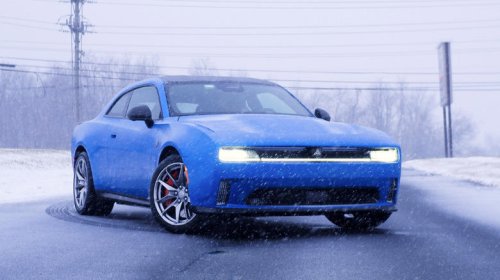
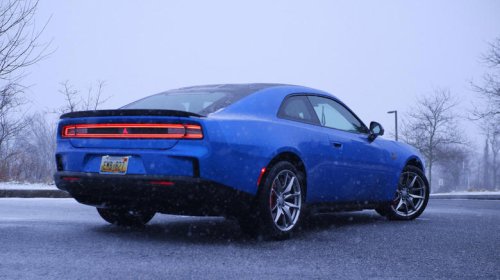
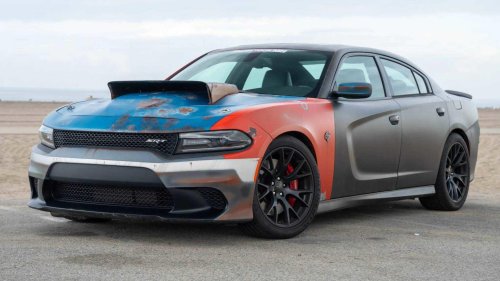
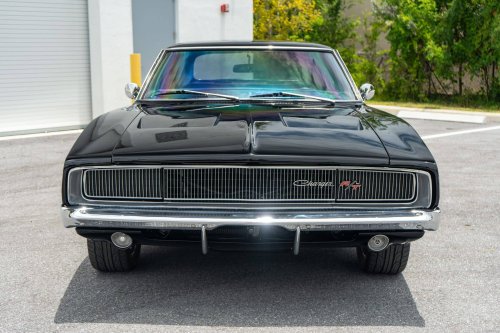
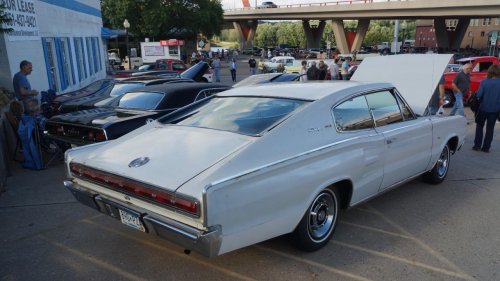
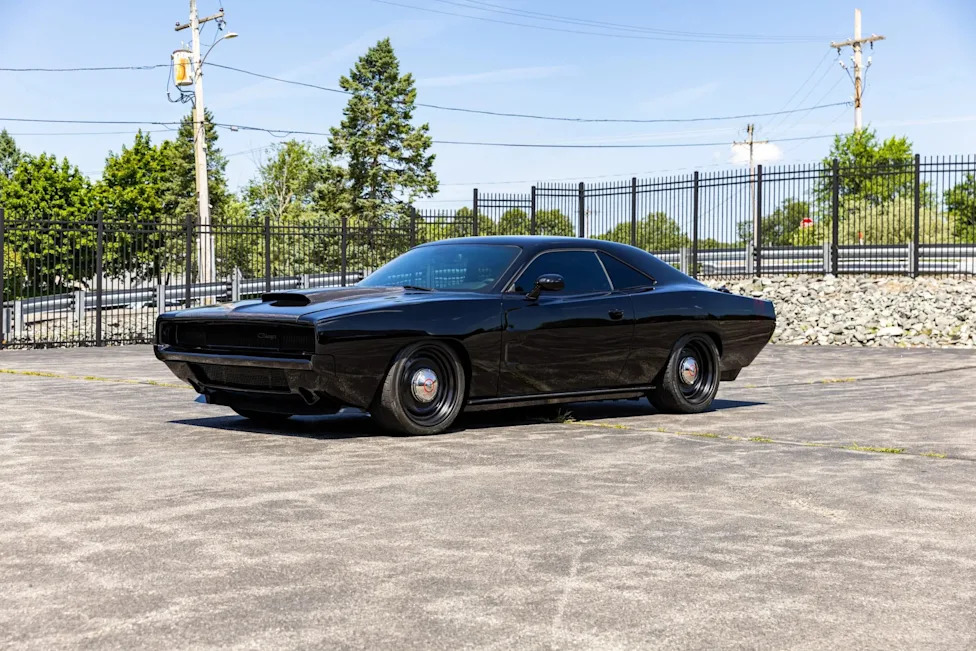
This Carbon-Bodied '1968 Charger' Is Actually a 2023 Hellcat—And It Just Proved How Fast Custom Mopar Money EvaporatesEighteen months ago, somebody paid $271,555 for a 2023 Dodge Challenger Hellcat wearing a hand-built carbon-fiber body designed to look like a 1968 Dodge Charger. This week, that exact same car is back on Bring a Trailer, and as of this writing the bidding sits at $70,000 with the clock running out this Sunday. That's not a typo, and it's not necessarily a bad outcome for whoever wins it. It's a pretty blunt lesson in what happens when a coachbuilt one-off meets the resale market for real.What's Actually Under the CarbonStart with what this car really is underneath the disguise, because it matters. The donor vehicle is a Widebody Jailbreak-trim Challenger SRT Hellcat, part of Dodge's send-off run for the supercharged Hemi V8 before Challenger production ended. Jailbreak was Dodge's way of letting Last Call buyers mix paint, wheel and stripe combinations that were normally locked to specific trims, and factory-correct examples of these cars have carried strong money at auction ever since. eXoMod Concepts didn't touch any of that factory hardware. The supercharged 6.2-liter Hemi still carries its stock 717-horsepower, 656-lb-ft rating, backed by a Tremec six-speed manual, a limited-slip differential, launch control and a line lock, all untouched. That's worth noting because a lot of what gets labeled restomod work involves re-engineered suspension geometry or a crate-engine swap. This is a body conversion riding on an unmodified Hellcat chassis, so it drives, brakes and behaves exactly like any other Widebody Jailbreak. It just looks like nothing else on the road.The eXoMod TransformationBetween February and November of 2024, the Greenville, Pennsylvania shop grafted molded carbon-fiber body panels onto the Challenger's structure, shaping them to echo the semi-fastback profile of a 1968 Charger, hence the C68 Carbon name. The car wears House of Kolor Jet Black paint with Kandy Apple-tinted stripes over exposed carbon on the trunk and quarter panels, plus bare carbon on the hood, chin spoiler, rocker panels, door jambs and rear diffusers. The period-correct details go deeper than paint: HID headlamps hide behind Charger-style Air Catcher covers, the fuel door flips up like a '68's, and dual exhaust tips wear carbon-fiber surrounds. Custom Forgeline OE1 20-inch wheels carry fratzog-logo hubcaps, a callback to Dodge's old triple-arrow emblem, wrapped in staggered 285/35 and 315/35 Nitto NT555 G2 tires, with the factory competition suspension and red-finished Brembo six-piston front calipers doing the work underneath. Inside, it's mostly stock Hellcat: black leather with white stitching, heated seats, a Jailbreak badge on the dash, and a 200-mph speedometer that's aspirational at best on a car showing 68 miles.The Number That Actually MattersBring a Trailer's own history for this chassis shows it previously sold on the platform on January 30, 2025, for $271,555, from a seller identified as fcort7 to the Massachusetts dealership now reselling it. Given the build was finished in November 2024 and the car has barely added mileage since, that sale price almost certainly reflects the cost of a brand-new, freshly completed conversion. Now, with the auction still open and bidding at $70,000, the gap between those two numbers, regardless of exactly where the final bid lands Sunday, says a lot about how the market treats a shop-built carbon body kit differently than a numbers-matching factory special.Why Coachbuilt Customs Depreciate DifferentlyA factory-original Last Call Hellcat is a finite, numbers-matching product with a VIN that Dodge's own build records and a Carfax will always recognize as exactly what it claims to be. Even rough, non-running Challenger projects can command real money purely because their history is traceable from the factory forward, which is part of why a pair of unrestored 1972 Challengers pulled out of long-term storage this year still drew serious buyer interest. A carbon-bodied conversion is a different animal: a one-off built by a small aftermarket shop with no dealer network, no parts catalog, and no guarantee the shop will still be around in a decade to source a replacement panel after a parking-lot mishap. Insurers also tend to treat cars like this as modified vehicles requiring an agreed-value policy rather than standard coverage, and an agreed value is only as good as the appraisal behind it, which is a very different conversation than insuring a Hellcat straight off Dodge's build sheet. Original Mopar bodies simply hold their value on different terms: a genuine 1969 Charger Daytona that spent a decade sitting in a Missouri junkyard as fraud evidence still drew six-figure bidding at auction this month, dents, patina and all.What to Check Before You BidThe listing also notes a Texas title carrying an Actual Mileage remark rather than a clean mileage statement, which is standard for a car this age and this low mileage, but still worth confirming independently against the Carfax before wiring anything. Beyond the paperwork, the real diligence on a car like this has almost nothing to do with the carbon fiber itself. Ask whether the shop that built it is still in business, whether any body shop within reasonable driving distance has ever repaired one of its kits, and whether your insurer will actually write an agreed-value policy before you bid, not after you've already won.The Bigger PictureDodge ending Hemi V8 production in the Challenger and Charger has made every version of these cars, stock, stripped, or reskinned, more interesting to collectors than they were three years ago. That's shown up in everything from a stripped Charger Hellcat shell heading to auction as a bare-bones curiosity, to numbers-matching Challengers from any era pulling strong money at collector sales like Alan Jackson's SRT-8. Dodge's SRT performance lineup, meanwhile, is already regrouping around a new wave of high-output Ram, Dodge and Jeep models, which only raises the stakes on cars like this one holding their value as rolling historical footnotes rather than expensive art projects. This eXoMod build is a useful reminder that novelty and originality get valued very differently once cars actually change hands. One is a factory artifact. The other is somebody's carbon-fiber opinion of what a Hellcat should look like, and the market, this week at least, isn't pricing that opinion anywhere near what it cost to build.



















 +8 others