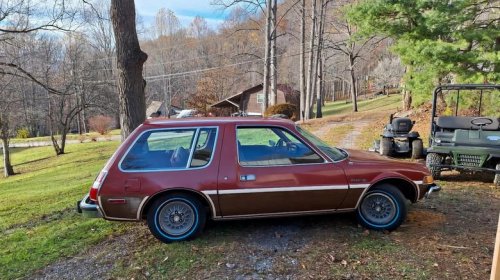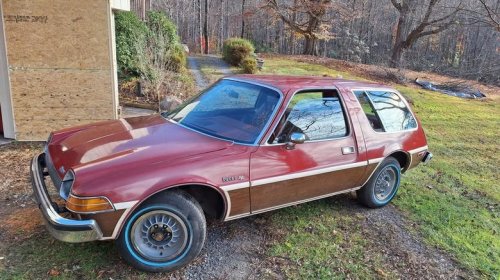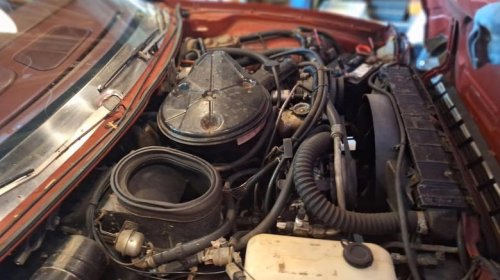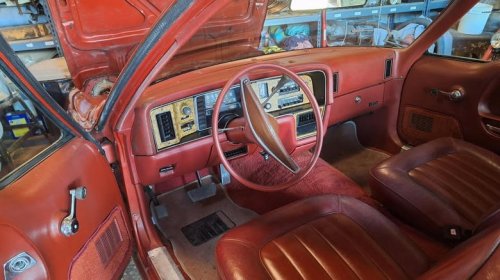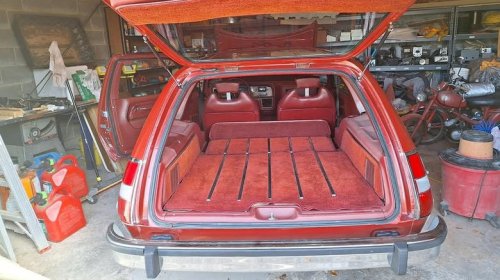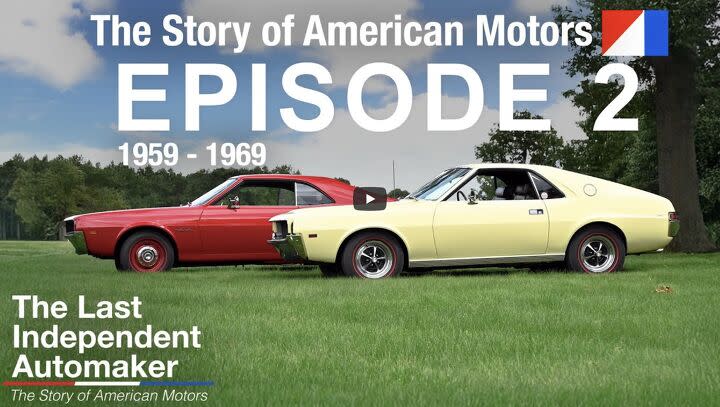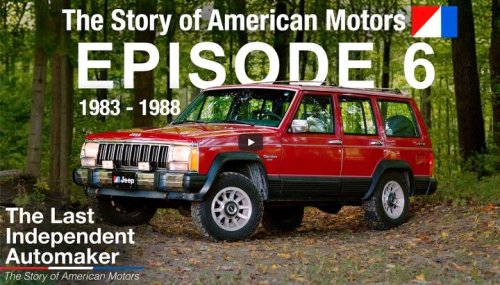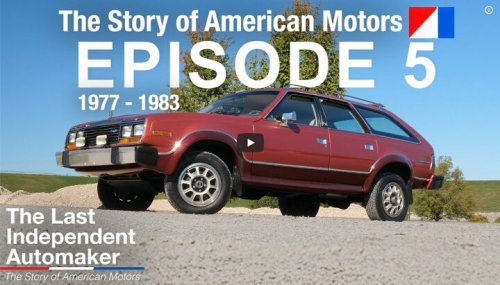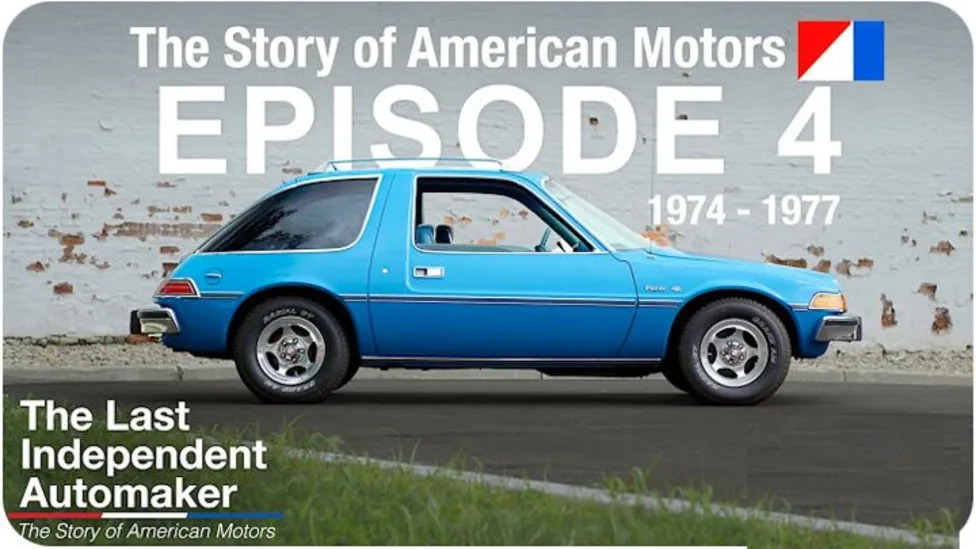


















things go wrong at amc ep 4 the last independent automakerWhen it launched in 1975, the AMC Pacer was the company's most successful new product, ever. But the success quickly unraveled, as the Pacer became a costly flop that may have doomed American Motors. The Last Independent Automaker is a six-part documentary series, produced by Joe Ligo, Jimm Needle, and Patrick Foster. It details the dramatic rise and fall of American Motors Corporation, told through over 35 exclusive interviews, hundreds of rare photographs, and hours of historical and new automobile footage.The TTAC Creators Series tells stories and amplifies creators from all corners of the car world, including culture, dealerships, collections, modified builds and more.AdvertisementAdvertisementAn AI-generated transcript edited by a human staffer is below.[Image: YouTube Screenshot]Become a TTAC insider. Get the latest news, features, TTAC takes, and everything else that gets to the truth about cars first by subscribing to our newsletter.Summary: AMC, the Pacer, and the Struggle to Survive (1971–1978)This transcript from The Last Independent Automaker covers how American Motors Corporation (AMC) developed the innovative AMC Pacer, achieved short-term success, and then faced mounting financial and competitive pressures that threatened its future.The Birth of the PacerIn 1971, AMC executive Gerald Meyers wanted a car unlike anything offered by competitors. With fuel prices rising and larger cars losing popularity, he asked AMC design chief Richard Teague to create a small, fuel-efficient vehicle that still felt spacious.AdvertisementAdvertisementKey ideas included:Designing the interior around passenger comfort and ergonomics first.Huge windows for visibility.A wide body with compact overall length.A futuristic appearance unlike conventional American cars.The project was initially called Amigo.The Rotary Engine GambleAMC planned to power the new car with a Wankel rotary engine, originally conceived by Felix Wankel.Advantages:Compact size.Smooth operation.Light weight.More interior room.AMC expected to purchase rotary engines from General Motors, which was heavily investing in the technology.However:Reliability problems emerged.Emissions regulations became stricter.Fuel consumption proved poor during the oil crisis.AdvertisementAdvertisementBy 1973, GM abandoned its rotary program, leaving AMC without the engine the car had been designed around.Redesign and Launch of the PacerWith little time remaining, AMC squeezed a heavy inline-six engine into a chassis designed for a lightweight rotary.Consequences:Increased weight.Heavier suspension components.Worse fuel economy.Despite these compromises, the car debuted in 1975 as the AMC Pacer.Marketing emphasized:"The first wide small car."Exceptional visibility.Spacious interior.Comfort comparable to larger vehicles.The public loved its uniqueness.Early SuccessThe Pacer became an immediate sensation.Strengths:Excellent visibility.Comfortable ride.Roomy cabin.Distinctive styling.AdvertisementAdvertisementResults:Massive showroom traffic.More than 145,000 units built in its first year.AMC's most successful new product launch ever.Many reviewers praised it as one of the most innovative American cars in years.Industry ChallengesAt the same time, automakers faced growing pressure from:New emissions regulations.Safety requirements.Fuel economy mandates (CAFE standards).These often conflicted:Safety equipment added weight.Emissions controls hurt performance and economy.Fuel-saving technologies increased costs.For a small company like AMC, complying with regulations was far more difficult than for giants such as General Motors or Ford Motor Company.Manufacturing ProblemsTo build the Pacer, AMC introduced robotic welders at its Wisconsin factories.AdvertisementAdvertisementChallenges included:Robot malfunctions caused by humidity.Quality-control issues due to high production rates.Assembly mistakes ranging from loose parts to incomplete installations.Occasional serious defects, including a memorable incident involving a new car catching fire on the assembly line.Although demand was high, quality problems would eventually damage the car's reputation.Why the Pacer DeclinedAfter the initial excitement faded, sales dropped sharply.Major complaints:Poor fuel economy.Heavy weight.Build-quality concerns.Polarizing styling.Customers expected economy-car mileage but often received fuel economy closer to that of larger vehicles.AdvertisementAdvertisementThe car's unique appearance initially attracted buyers but later limited its mainstream appeal.As one executive summarized: everyone who wanted a Pacer had already bought one.AMC's Broader ProblemsAMC attempted to refresh its lineup:New versions of the AMC Gremlin.Updated AMC Matador models.A Pacer wagon.The luxury-oriented AMC Concord.But competitors from Detroit, Germany, and especially Japan, were introducing better-built and often more fuel-efficient vehicles.Sales collapsed, leading to:Layoffs.Financial hardship for workers.Growing pressure on management.Jeep Becomes the LifelineOne bright spot was AMC's ownership of Jeep.The growing popularity of recreational four-wheel-drive vehicles made Jeep highly profitable.AdvertisementAdvertisementAccording to AMC executives:A Jeep could generate roughly three times the profit of a passenger car.Jeep increasingly became the company's financial foundation.Leadership BattleA major internal conflict developed over AMC's future.Two leading candidates emerged:Gerald Meyers.William McNeely.McNeely proposed:Abandoning passenger cars entirely.Focusing exclusively on Jeep.Meyers proposed:Reducing car production.Expanding Jeep production.Partnering with a foreign automaker to develop future vehicles.The board chose Meyers as CEO in 1977.Looking AheadBy 1978:AMC had discontinued slow-selling products like the Matador.The company lacked the money to develop a completely new car on its own.Management concluded that survival required an international partner.AdvertisementAdvertisementThe episode ends with AMC preparing to collaborate with a French automaker and setting the stage for development of the AMC Eagle, one of the company's most influential future products.Main TakeawayThe AMC Pacer was a bold attempt to reinvent the American small car with innovative packaging, ergonomics, and styling. It became a short-lived success but was undermined by the loss of its intended rotary engine, poor fuel economy, quality issues, and increasing competition. While the Pacer faded, AMC's profitable Jeep division ultimately became the key to the company's survival during one of the most challenging periods in its history.