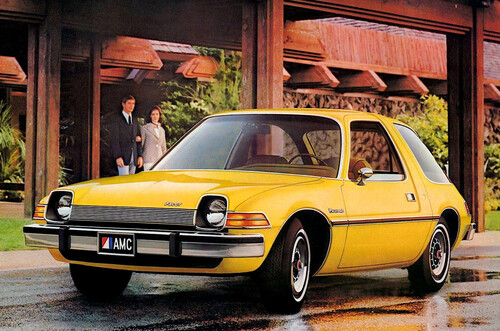
the end of american motors corp ep 6 the last independent automakerWe have reached the sixth and final episode of our series. By 1983, things were looking great for American Motors and its French partner, Renault. But soon it would all unravel ... The Last Independent Automaker is a six-part documentary series, produced by Joe Ligo, Jimm Needle, and Patrick Foster. It details the dramatic rise and fall of American Motors Corporation, told through over 35 exclusive interviews, hundreds of rare photographs, and hours of historical and new automobile footage.The TTAC Creators Series tells stories and amplifies creators from all corners of the car world, including culture, dealerships, collections, modified builds and more.AdvertisementAdvertisementAn AI-generated transcript edited by a human staffer is below.[Image: YouTube Screenshot]Become a TTAC insider. Get the latest news, features, TTAC takes, and everything else that gets to the truth about cars first by subscribing to our newsletter.Summary: The Last Independent Automaker – Episode 6 (Finale)The final episode chronicles the last years of American Motors Corp. (AMC), from the success of the Renault Alliance and Jeep Cherokee through AMC's acquisition by Chrysler, the closure of its historic Kenosha plants, and the company's lasting legacy in the automotive industry. Renault Alliance Brings Early SuccessAdvertisementAdvertisementThe partnership between AMC and Renault produced its first major success with the 1983 Renault Alliance, which was named Motor Trend's Car of the Year. The compact sedan arrived at the perfect time, offering excellent fuel economy, comfort, and affordability during an era of high fuel prices. However, Renault's growing ownership stake also meant AMC increasingly lost its independence and French management began exerting greater control over the company. Labor Tensions ContinueAlthough Alliance production brought thousands of workers back to AMC's Kenosha, Wisconsin plants, labor relations remained strained. A high-profile lawsuit involving union activists and their newsletter, Fighting Times, exposed allegations of racism, sexism, and workplace harassment. The jury ultimately sided with the workers, strengthening the union's influence within the company. Jeep Cherokee Changes the IndustryAdvertisementAdvertisementOne of AMC's greatest achievements arrived in 1984 with the introduction of the Jeep Cherokee (XJ).Key innovations included:A lightweight unibody designDramatically improved fuel economyStrong off-road capabilityThe first compact SUV available with four doorsInterviewees credit the Cherokee with effectively launching the modern SUV boom. The vehicle earned multiple "4x4 of the Year" awards and became a tremendous commercial success, validating AMC's engineering despite skepticism from Renault's European management. Financial Problems ReturnDespite Jeep's success, AMC continued to struggle financially.AdvertisementAdvertisementMajor challenges included:More than $3.4 billion in losses between 1980 and 1983Sale of valuable assets, including its government vehicle division and headquartersFalling gasoline prices, which shifted buyers back toward larger carsWeak sales of the Renault EncoreIncreasing quality issues with Renault-designed vehicles, particularly in harsh American wintersExecutives and workers describe French management as being slow to recognize U.S.-specific quality concerns, contributing to declining customer satisfaction and falling sales. Chrysler Sets Its Sights on JeepBy 1986, Chrysler CEO Lee Iacocca quietly began negotiating with Renault.AdvertisementAdvertisementInitially, Chrysler agreed to have AMC build full-size Chrysler sedans using excess factory capacity. Behind the scenes, however, Iacocca's true objective was acquiring Jeep.Renault chairman Georges Besse resisted selling Jeep separately, insisting Chrysler purchase the entire company if it wanted the brand. AMC executives, including CEO Joe Cappy, were largely kept unaware of the negotiations to avoid affecting AMC's stock price. Assassination of Georges BesseNegotiations were interrupted in November 1986 when Renault chairman Georges Besse was assassinated outside his Paris home by members of the French terrorist group Action Directe, who targeted him as a symbol of capitalism.AdvertisementAdvertisementFollowing his death, Renault became much more willing to divest itself of AMC. Chrysler Buys American MotorsIn March 1987, employees learned that Renault had agreed to sell its controlling interest in AMC to Chrysler.Reaction was mixed:Many workers welcomed becoming part of a larger American automaker.Others feared AMC's culture and independence would disappear.The acquisition was finalized in May 1987 for just over $2 billion, giving Chrysler:The Jeep brandThe highly successful Cherokee lineupAMC's engineering talentOngoing development of the future Jeep Grand Cherokee (ZJ)Industry analysts describe the purchase as one of Lee Iacocca's greatest strategic moves, saving Chrysler years of SUV development and billions in engineering costs. AdvertisementAdvertisementAMC Talent Impresses ChryslerFormer AMC designers rapidly completed four Grand Cherokee prototypes under extremely tight deadlines.When Chrysler executives reviewed the work, they were astonished by what AMC's relatively small, resourceful engineering and design teams had accomplished. Chrysler executives later described AMC employees as "battle-hardened Marines" because of their ability to accomplish so much with limited resources. Approximately 70% of AMC employees were retained after the acquisition. End of AMC and Birth of EagleFollowing the merger:Renault Alliance production ended.The Renault Premier was rebranded as the Eagle Premier, launching Chrysler's new Eagle division.The original AMC Eagle Wagon remained in production for one final year before disappearing.AdvertisementAdvertisementBy the end of 1987, American Motors Corporation officially ceased to exist. Kenosha Plant ClosureAlthough Chrysler initially promised to keep Kenosha operating, slowing sales and economic pressures led to the decision to close both historic assembly plants in 1988.The closures devastated the community:Employment dropped from roughly 15,000 workers to only a few hundred.Workers accused Chrysler of betraying earlier promises.The union negotiated a record $250 million severance package and preferential hiring at other Chrysler facilities.Many employees transferred elsewhere, retired, or found new careers, but the closure marked the end of more than a century of automobile manufacturing in Kenosha. AdvertisementAdvertisementAMC's Lasting LegacyThe documentary concludes by reflecting on AMC's lasting impact despite its disappearance.Key legacies include:Pioneering the modern SUV through the Jeep Cherokee.Developing the Jeep Grand Cherokee, one of Chrysler's most successful future products.Creating iconic vehicles including the Rambler, Javelin, AMX, Gremlin, Hornet, Matador, Eagle, and Jeep lineup.Demonstrating that innovation, creativity, and determination could allow a small independent automaker to compete with Detroit's "Big Three."Former employees describe AMC as more than a car company - it was a close-knit community whose influence continues through Jeep and the millions of vehicles it inspired. The documentary concludes that while American Motors lasted only 33 years, it permanently reshaped the automotive industry and remains a unique chapter in American industrial history.