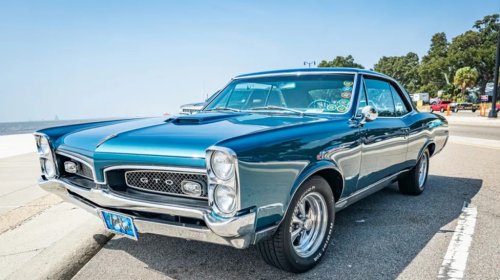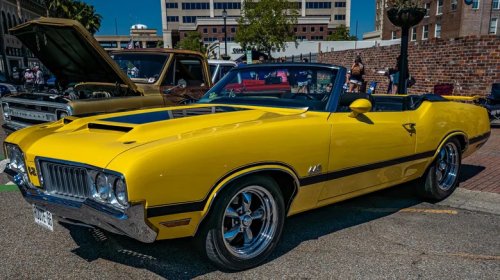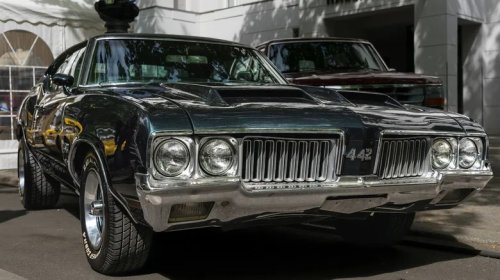
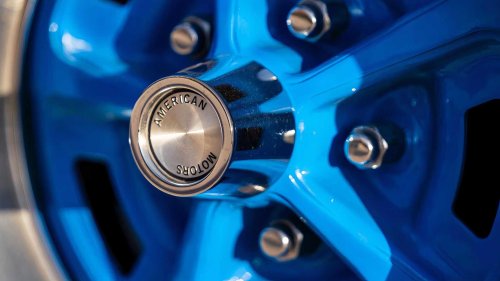
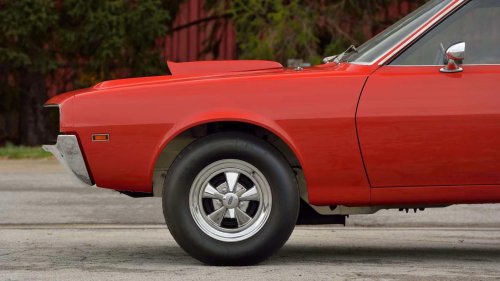
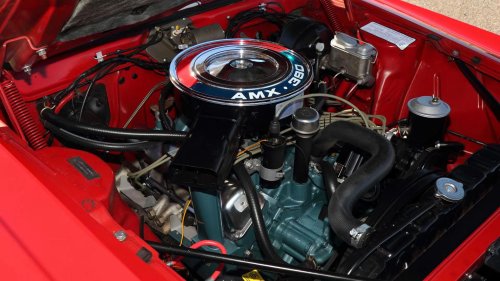
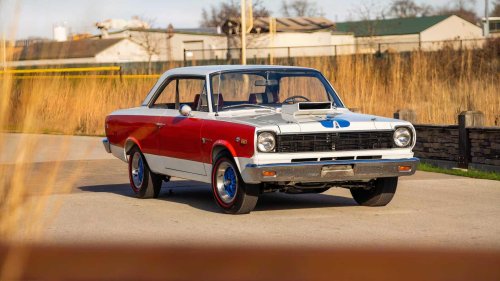
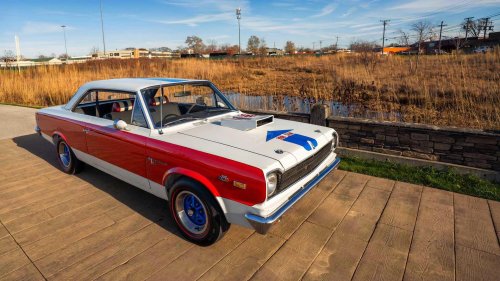
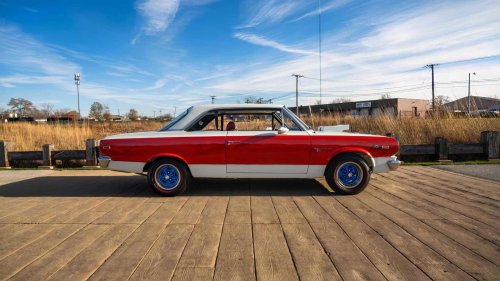
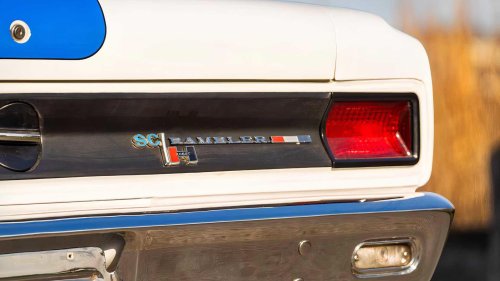
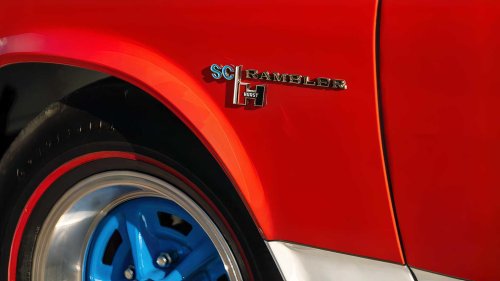
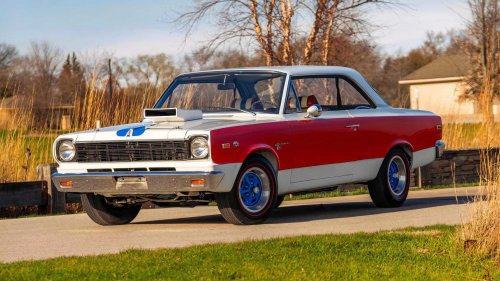
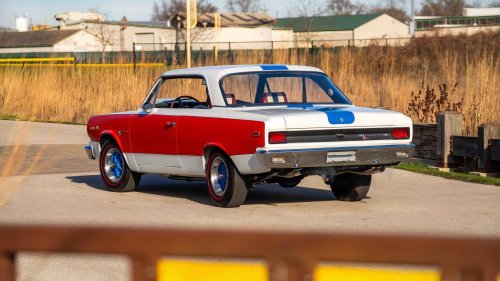
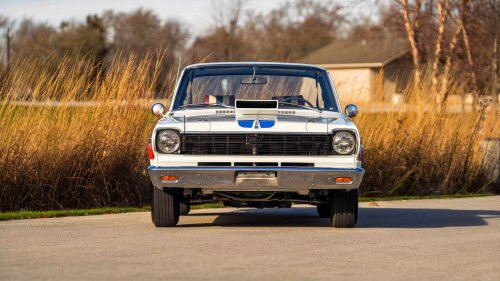
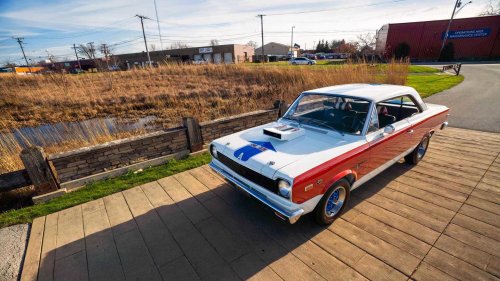


















In 1969, there was a car on the streets of Detroit that could humiliate machines costing twice as much. It came from one of America's smallest carmakers, a company best known for building sensible economy runabouts. Yet its quarter-mile times were flirting with Hemi and Cobra Jet territory, and the sticker price was just $2,998. No leather, no gimmicks, no options worth mentioning. Just a monstrous V8, a Hurst shifter, and a body stripped of anything that didn't help it go faster. This was a rocket aimed straight at General Motors, and nobody saw it coming. Detroit's Big Three Were Spending Millions On The Muscle Car Arms Race Mecum By 1969, the muscle car war had hit fever pitch. General Motors, Ford, and Chrysler were pouring fortunes into engineering programs designed to dominate drag strips and Main Street alike, and none of them was willing to blink first. Every Detroit heavyweight was chasing the same prize: more power, more displacement, more magazine covers.Mecum The Camaro SS 396, Chevelle SS 396, Pontiac GTO Judge, Hemi 'Cuda, Cobra Jet Mustang, and Plymouth Road Runner all emerged from that period. Each one represented a multi-million-dollar investment backed by international ad campaigns, factory racing support, and dealer networks that stretched across the country. They were swinging at each other with unlimited ammunition and unlimited budgets, and nobody inside the Big Three was paying attention to anything beyond their own rivals.Chrysler had the Hemi, Ford had the 429 Cobra Jet, and GM had every nameplate from Chevrolet to Pontiac to Oldsmobile to Buick throwing punches. All three were prepared to spend whatever it cost to stay on top. AMC Was The Smallest Player, And That Was Its Advantage Via Mecum American Motors Corporation, formed from the 1954 merger of Nash-Kelvinator and Hudson, spent most of its life selling fuel-efficient family cars and compacts. By the late 1960s, the brand was taking its first serious swing at performance, and it knew it couldn't outspend the giants. So it didn't try, and instead partnered with Hurst Performance, Inc., the specialists who had already helped engineer the Hurst/Olds.Nobody at Chevrolet or Ford thought the little Wisconsin carmaker was worth worrying about. AMC had no factory race team, no NASCAR presence, and no serious performance pedigree to speak of. The Hurst tie-up was the tell, and Detroit should have been paying closer attention, because AMC was about to out think them. AMC Reverse-Engineered The NHRA Rulebook To Exploit It Mecum While the Big Three obsessed over magazine comparisons and showroom bragging rights, AMC did something radical. It opened the NHRA rule book and read it line by line, identifying the exact class where a specific power-to-weight ratio would dominate. Then it built a car backward from the regulations.AMX 390 V8The strategy was ruthlessly simple. Take the biggest engine on the shelf, drop it into the lightest body in the range, strip out everything that didn't help the car go quicker, and price it so aggressively that nobody could match the value. It was not trial and error, it was homologation homework done better than anyone else was bothering to do it. Every engineering decision served the quarter mile. Chassis stiffness, axle geometry, gear ratios, and weight distribution were all optimized for launching hard off the line, with comfort and refinement a distant second.The NHRA demanded at least 500 homologation examples, and the plan was originally to build exactly that number. The engineering team had built something the buying public genuinely wanted, and the 500-unit target was comprehensively blown apart once the order books opened. This was not a street car that happened to be fast, it was a drag car that happened to be tamed for the road because the rules demanded it. Every choice in the build was aimed at the quarter mile first. Meet The AMC Hurst SC/Rambler Via Mecum The car was the AMC Hurst SC/Rambler, a two-door compact with a 390-cubic-inch V8 crammed under the hood and a Hurst shifter poking out of the tunnel. Chairman Roy Chapin Jr. saw the Rambler American, a nameplate already scheduled for retirement, as the perfect sacrificial chassis. It was light, it was cheap, and it was about to become one of the most outrageous send-offs in American automotive history.Via Mecum The SC/Rambler was producing 315 horsepower and 425 lb-ft of torque. Power went through a Borg-Warner T-10 close-ratio four-speed manual, and no automatic was offered. Heavy-duty shocks, front anti-sway bars, rear traction bars, and a Twin-Grip limited-slip rear axle handled the chassis duties, while the gutted cabin offered nothing but vinyl buckets, a tachometer, and a single-option AM radio.Painted in a shameless red, white, and blue livery with a functional hood scoop, the SC/Rambler had no interest in being subtle. Two paint schemes were offered, with the A-scheme wearing bold blue side stripes and a massive tri-color scoop graphic. The toned-down B-scheme dropped most of the decals after dealers complained the A-scheme was simply too much visual chaos for some buyers to swallow. The Price Tag That Broke The Formula Mecum All of this cost $2,998. For context, a base Camaro started around $3,100 before options, and a GTO crossed $3,500 before anyone ticked a single box. AMC handed you a production drag car and said, that'll be three grand, and if you fancied some music on the way to the strip, you could add the radio. The Numbers That Made Camaro And Chevelle Owners Nervous Mecum Straight from the factory, the SC/Rambler ran the quarter mile in the mid-14-second range, with period tests recording times around 14.3 seconds at roughly 98 mph. On paper, it made less horsepower than most rivals. On the strip, it humiliated them. SC/Rambler vs Every GM Muscle Car On The Market MecumLook at the Chevelle SS 396. It had 10 more hp than the SC/Rambler on paper, but it was nearly 400 lbs heavier and ran the quarter in 15.4 seconds, a full second slower for $200 more. The L78 Camaro packed 60 extra hp under the hood and still couldn't match the AMC's elapsed time, and it cost $400 more doing it. The Pontiac GTO Ram Air III asked for $500 more than the SC/Rambler and gained you two-tenths in return.The Olds 442 W-30 matched the AMC's quarter-mile time exactly, but did it with 440 extra pounds and $800 more on the sticker. The Buick GS 400 was slower, heavier, and pricier. Every one of these machines was engineered by a corporation with twenty times AMC's budget, backed by factory race programs and marketing empires the Wisconsin upstart could never match. Not one of them could consistently beat a $2,998 compact from Kenosha. With Dealer Parts, It Crossed Into Hemi Territory Via Mecum AMC also offered a Group 19 dealer performance parts program, covering headers, revised carburetor jetting, and ignition upgrades, all warranty-backed through the dealer network. Properly set up, an SC/Rambler could dip into the low 13-second range, putting it uncomfortably close to the Hemi 'Cuda, Hemi Road Runner, 428 Cobra Jet Mustang, and Corvette L88.The only machines that could reliably walk away from it were the legendary COPO Camaros. A ZL1 Camaro cost over $7,200 and was built in a run of just 69 examples, sold through a tiny handful of dealers willing to play the Central Office Production Order game. You couldn't walk in off the street and buy one, you had to know someone, and you had to be prepared to spend Corvette money on a Camaro. Why The SC/Rambler Still Matters Today Mecum AMC originally planned to build only 500 SC/Ramblers for homologation, but demand blew the plan apart, and production eventually hit 1,512 examples across two paint schemes. That is a tiny number next to the tens of thousands of Camaros and Chevelles rolling out of GM plants that year, and it is the single biggest reason clean survivors are so rare today. The Survivors That Slipped Through Mecum Most were used exactly as intended: launched, punished, and run into the ground at strips across the country. Survivors are disproportionately the cars whose owners either had the foresight to garage them or couldn't afford to repair them when something grenaded. The ones sitting in barns through the 1980s were saved by neglect rather than reverence.Auction data from Bring a Trailer and Hagerty places solid drivers in the $40,000 to $70,000 band, with concours examples pushing higher. Compared with a correct L78 Camaro SS or a matching-numbers Hemi 'Cuda, both of which comfortably clear six figures, the SC/Rambler remains one of the most undervalued muscle cars on the market. The Smartest Muscle Car Detroit Ever Built Mecum The SC/Rambler wasn't the most powerful muscle car of its era, and it was never meant to be. It was the smartest, built by a little carmaker with no money and nothing to lose, and it proved that clever engineering aimed at the right target beats a bigger budget every single time.AMC didn't need a factory race team, a multi-million-dollar ad budget, or a billion-dollar parent company to embarrass the giants. It just needed to understand the rules better than they did and build the exact car those rules rewarded, which remains the single most underrated lesson the muscle era ever produced.