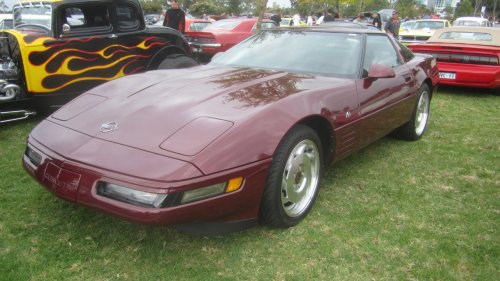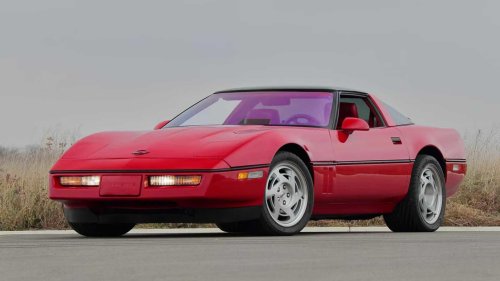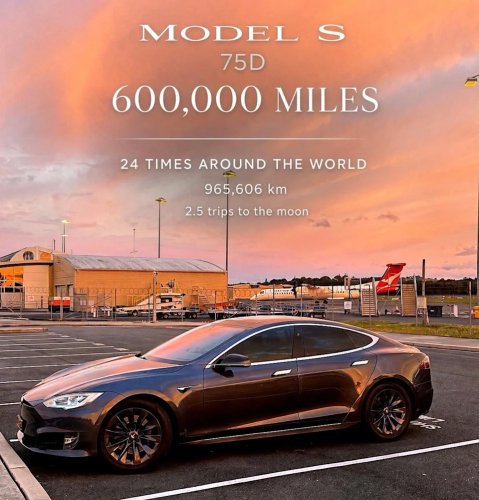
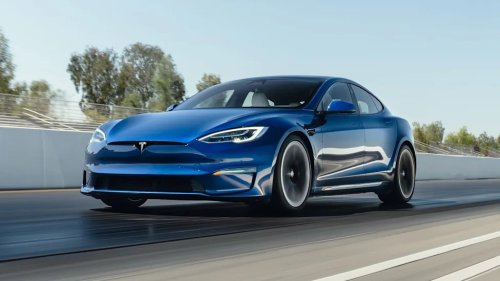
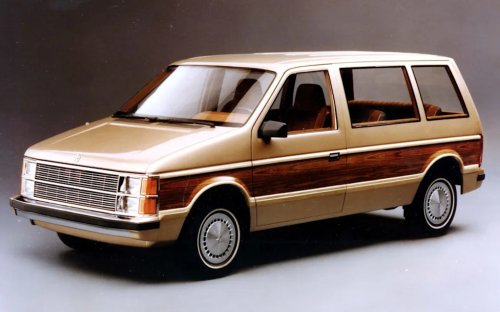
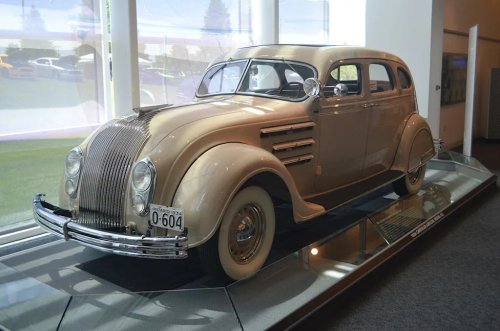
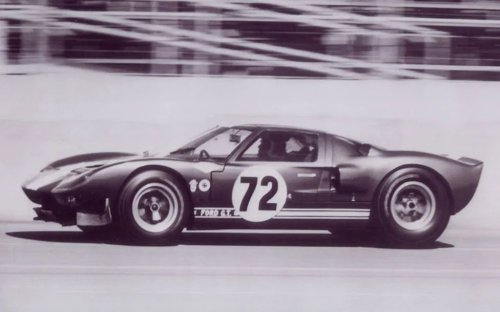
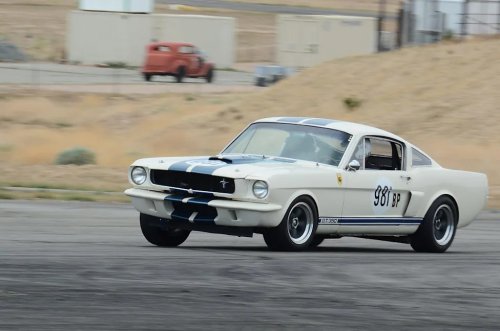
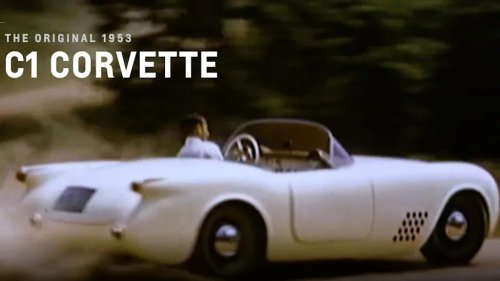
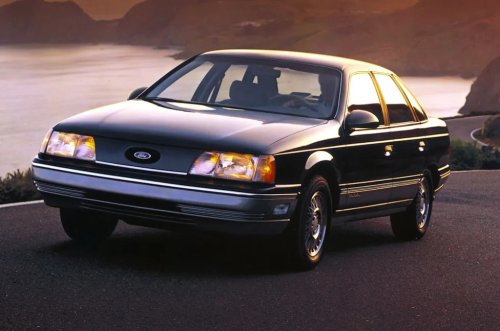
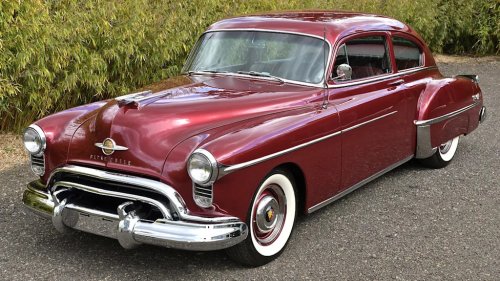



















The Greatest American Cars Ever MadeMotorTrend - MotorTrend (MotorTrend - MotorTrend)While America didn't invent the automobile (German engineer Karl Benz and his Patent Motorwagen of 1886 are most frequently cited), America quickly made the automobile its own. By 1904 the United States led the world in automobile sales and production, and by 1913, some 80 percent of all cars made the world over were produced here in the U.S. American automakers, which numbered 253 in 1908, were pioneering new technologies and developing new vehicles at a dizzying pace.You can define greatness in many ways, but these automobiles were all hugely influential in terms of technology, design, engineering, and impact on society and popular culture—both here at home and around the world. All are machines that fundamentally changed how we move. If you think we've missed an all-time great, let us know.1) Tesla Model SPhoto credit: MotorTrend - MotorTrendThe mere fact the Tesla Model S exists at all is a testament to innovation and entrepreneurship, the very qualities that made the American automobile industry the largest, richest, and most powerful in the world. And it proves we've not yet become a nation of bankers or burger-flippers; America can still make things. Great things. But what marks the Tesla Model S as one of the all-time great American cars is it has single-handedly changed the tenor of the conversation about electric vehicles. The Model S made electric cars cool for auto enthusiasts. How? It's good-looking and quick. Very, very quick. In Plaid guise, we clocked the Model S at just 2.07 seconds to 60 mph. That's monumentally impressive and the quickest production vehicle we'd ever tested, until another American-made electric sedan recently stole that title (the Lucid Air Sapphire).2) Chrysler MinivanPhoto credit: MotorTrend - MotorTrendOthers had toyed with the concept, notably VW's Microbus of the '60s and Lancia's 1978 Megagamma, but it was Lee Iacocca and Hal Sperlich—the same team that made the Mustang happen at Ford 20 years earlier—who at Chrysler in 1983 revealed the perfect combination of size, seating, and drivability that came to define a new segment-busting family vehicle, the minivan. Within a decade, almost every mainstream automaker offered a minivan in the U.S., making traditional station wagons obsolete. The segment has declined in recent years, but the basic formula Chrysler established remains the definitive one: front drive, sliding side doors, and a highly flexible seating package for seven or eight passengers.3) Chrysler AirflowPhoto credit: MotorTrend - MotorTrendThe Chrysler Airflow, built between 1934 and 1937 represents an early apex of American automotive ingenuity. The company’s early engineering brain trust—Breer, Zeder, and Skelton—worked in cooperation with Orville Wright to learn how to optimize aerodynamics. They found that most cars of the day were more aerodynamically efficient going backward. Chrysler built a wind tunnel and tested 50 models before landing on the Airflow’s design. They also sought to even out weight distribution with a unitized body that positioned all occupants within the wheelbase for better ride and handling. A flat V-shaped two-piece windshield cheated the wind on most models, but the CW Airflow Custom Imperial featured the industry’s first curved windshield on a production car. Sadly, the radical design compounded with manufacturing problems associated with the complex welding of the unibody torpedoed sales, but history has vindicated nearly every engineering principle advanced by the Airflow.4) Ford GT40Photo credit: MotorTrend - MotorTrendAdvertisementAdvertisementHenry Ford II thought he had a deal. Nine months of negotiation were over, and on July 4, 1963, he was planning to be in Maranello, Italy, signing a $10 million deal with Enzo Ferrari that would give Ford Motor Company a half share in the storied Italian sports car maker. A Ferrari-Ford sports car was already being planned, with an Italian V-12 engine in an American chassis. But the deal never happened—Enzo pulled out at the last minute. An enraged Henry then authorized the development of the Ford GT40, with the express goal of humiliating Enzo's blood-red racers in the Le Mans 24 Hour race. Which it did, convincingly, in 1966. The icon inspired two generations of successors, including the latest Ford GT powered by a twin-turbocharged V-6.5) Ford MustangPhoto credit: MotorTrend - MotorTrendThe Ford Mustang not only created a new automotive breed—the pony car—but it was also one of the first cars designed for a specific demographic. When Ford's Lee Iacocca realized the first wave of baby boomers were coming of driving age and that they would want to drive something very different from the big, soft land yachts their parents loved, product planner Hal Sperlich proposed wrapping mundane Falcon mechanicals in sporty sheetmetal. The Mustang proved an overnight sensation when it went on sale in April 1964, with more than 1 million sold in the first 18 months of production. But performance that truly matched the style wasn't really unlocked until the Shelby GT350 appeared in 1965, establishing the formula that has kept the Mustang alive for more than 50 years.6) Chevrolet CorvettePhoto credit: MotorTrend - MotorTrendMaking its debut in 1953, the Chevrolet Corvette is 10 years older than the Porsche 911 and every bit as iconic. Like the Rolling Stones, the Corvette has had a patchy track record—the asthmatic 165-hp C3 of the mid ’70s is the equivalent of disco-era Mick and Keith phoning it in. But when it's been good, the Corvette has been breathtaking. The beautiful Bill Mitchell–designed C2 Sting Rays, particularly the fuel-injected 327s with four-speed manual transmissions, were arguably better cars than the contemporary Jaguar E-Type, while today's mid-engine C8 is a true high-performance sports car with leading-edge technology and performance equaling that of rivals costing two or three times the price.7) Ford TaurusPhoto credit: MotorTrend - MotorTrendIntroduced for 1986, it not only sold well, it reset American design by looking like it had arrived from the future (earning our 1986 Car of the Year trophy). It popularized flush aero headlamps as first seen three years earlier on Lincoln’s Continental Mk VII, as well as wrap-around bumper fascias as first widely employed on the W126 Mercedes S-Class for 1980. It also introduced cab-forward proportions seven years ahead of Chrysler’s LH cars. The interior appearance was an entirely fresh and new take on American sedans, boasting modern ergonomics and savvy packaging. The Taurus sent Detroit back to the drawing board in much the same way Virgil Exner’s 1957 finned Forward Look did. And the Taurus was the first American car that was designed and manufactured using the statistical process control theories of W. Edwards Deming. It even saved Ford financially in the late 1980s. The Taurus redefined the American car.8) Oldsmobile 88Photo credit: Bring a TrailerAdvertisementAdvertisementRock 'n' roll began with a song about a car: Elvis Presley was still driving a gravel truck when 19-year-old Ike Turner walked into a tiny studio owned by Sam Phillips in Memphis in 1951 and recorded "Rocket 88," a paean to the fastest American sedan you could buy at the time, the Oldsmobile 88 powered by the 135-hp Rocket V-8 engine. Launched in 1949, the Rocket-powered 88 was America's first muscle car, proving almost unbeatable in stock car racing through 1951. The record Rocket 88 was an unexpected hit, and the royalties enabled Phillips to start Sun Records, the label that served as the launchpad for musicians such as B.B. King, Jerry Lee Lewis, Johnny Cash, and, of course, Elvis.9) The JeepPhoto credit: MotorTrend - MotorTrend"The Jeep, the Dakota airplane, and the landing craft were the three tools that won the war," claimed Dwight D. Eisenhower, Allied Supreme Commander during World War II. More than 700,000 Jeeps had been built by the war's end, giving Allied troops overwhelming superiority of movement on the ground. Postwar, the tough, nimble, go-anywhere Jeep enjoyed a second, more peaceful career as a recreational vehicle, establishing the nexus between capability, style, and function that still underpins 21st-century car buyers' love affair with crossover vehicles. The Jeep is the car that saved democracy. That would be enough to put it on our list, but it was also the seminal SUV.10) Jeep XJPhoto credit: MotorTrend - MotorTrendThe original Jeep may have invented the SUV, but the 1984 Jeep Cherokee XJ created the modern one. At a time when SUVs were still trucklike and used truck-derived body-on-frame construction, the Cherokee introduced lightweight unibody construction to the segment. This dramatically improved ride, handling, packaging, fuel economy, and everyday usability. It delivered genuine off-road capability in a tidy, maneuverable package, with drivability suited to suburban America. As such, it established the blueprint for the modern crossover SUV decades before the term existed. Nearly every contemporary SUV—from the Toyota RAV4 to the Ford Explorer to the Honda CR-V—follows the template established by the Cherokee XJ: four doors, carlike dynamics, commanding visibility, and versatile cargo space. It didn’t merely popularize SUVs, it set a standard that still defines what Americans expect them to be.11) Duesenberg Model SJPhoto credit: MotorTrend - MotorTrendLaunched in 1932, the Duesenberg Model SJ was the antithesis of the cheap Fords and Chevys most Americans drove through the depths of the Depression. The Duesenberg SJ was, simply, a hand-built, money-no-object supercar, the 1930s equivalent of a Bugatti Chiron. With their twin-cam, four-valves-per-cylinder, supercharged straight-eight engines, Duesenberg SJs were said to be capable of 104 mph in second gear and 140 mph in top; in 1934 a lightweight roadster averaged 135 mph for 24 hours on the Bonneville Salt Flats. Just 36 SJs were built between 1932 and 1935. Gary Cooper and Clark Gable owned the only two short-wheelbase SSJ Duesenbergs ever built.12) Ford Model 18Photo credit: MotorTrend - MotorTrendAdvertisementAdvertisementThe Ford Model 18 arrived in 1932 as the first mass-market car in the world with a V-8 engine, and it created a paradigm for American cars that continues to this day. In the 1930s Ford V-8s were prized for their performance—gangster John Dillinger wrote to thank Henry Ford for building "as fast and sturdy a car as you did"—and after World War II they formed the backbone of the nascent hot rod movement, being cheap, plentiful, and easy to modify for extra performance. With '32 Fords—Deuce Coupes—still regarded as the most desirable of all hot rods, this car has remained a pop-culture icon for more than 80 years.13) Ford Model TPhoto credit: MotorTrend - MotorTrendHenry Ford's Model T was produced for 19 years, from 1908 to 1927, and almost 15 million were made, with prices falling from $825 to $260 by 1925 as Ford refined the mass-production process. But the Model T was more than just a car. It put America on wheels and so changed the way Americans worked, the way they lived, and the way they played. Shopping malls, motels, planned suburbs with affordable housing, well-paid manufacturing jobs, and an emerging middle class eager to enjoy the perks of prosperity—this was modern, 20th-century America, and the Model T helped create it all.