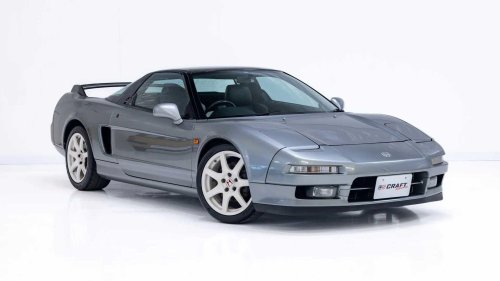
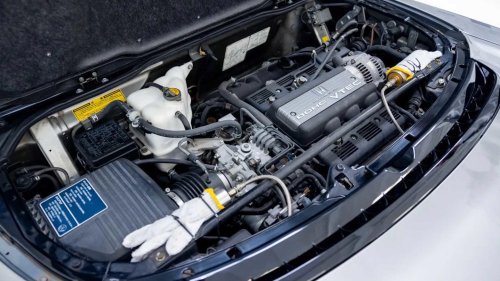
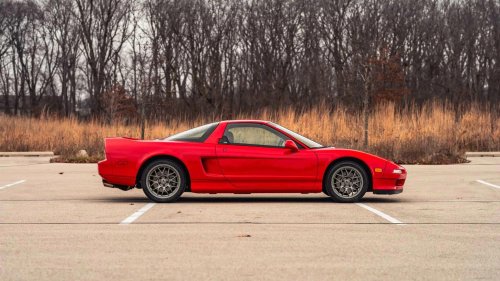
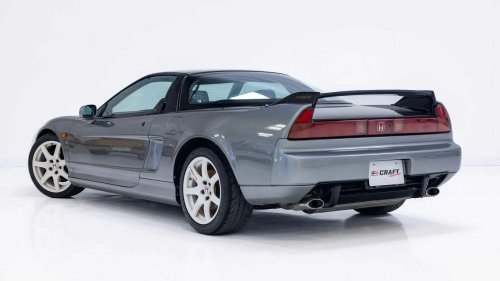
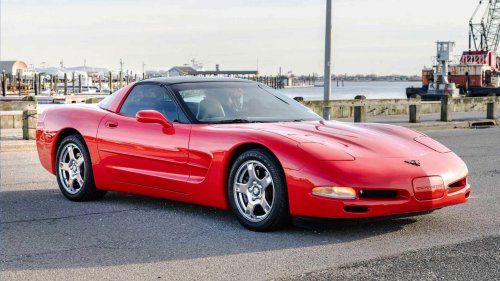
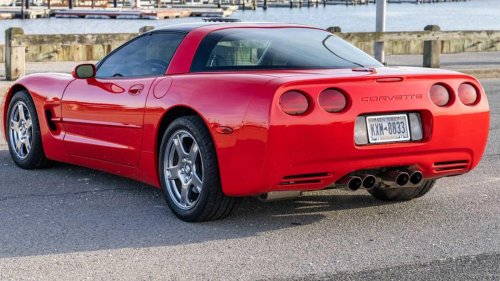
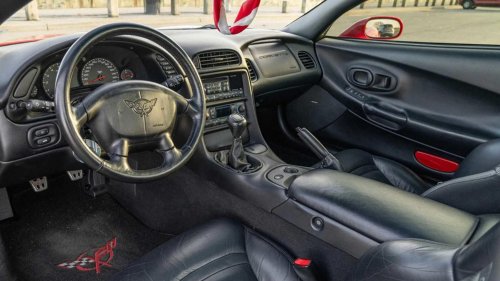
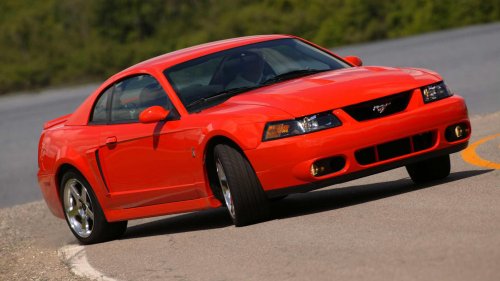
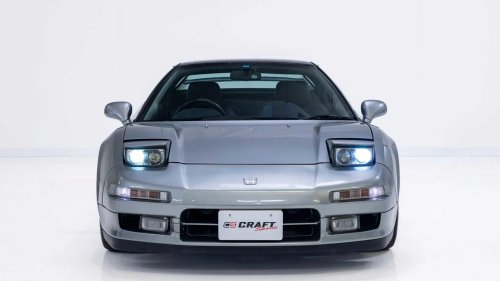
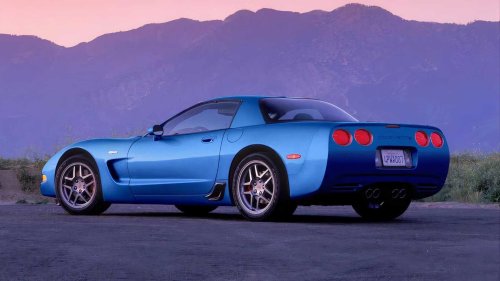



















In the early '90s, American cars like the Chevrolet Corvette had things all their own way. The all-American sports car had cruised through the '80s, the C4 offering sharp, Miami playboy looks and effortless V8 power for not a lot of cash. It's no wonder that the fourth Corvette sold in its hundreds of thousands, offering straightforward sporty motoring, with nothing to stand in its way. But then a new affordable supercar from Japan hit the streets in America and rewrote the rules for the segment. This mid-engined marvel forced American manufacturers to rethink what a sports car could be: precise, reliable, and user-friendly. The Honda NSX Was A Game-Changer From Japan Via: Bring a TrailerBy 1990, the C4 Corvette had been in production for seven years, and it still had another six to go. Despite various updates and facelifts, the C4's chiseled action hero looks were starting to look a bit botox, and the base Corvette was now more of a boulevard cruiser than a true sports car. It came with a 5.7-liter L98 V8 producing 250 horsepower and 345 lb-ft of torque, capable of hitting 60 mph in just over 6 seconds. But it wasn't just the Corvette that had gotten a little complacent; The supercar houses of Italy, as well as a few high-end marques in Britain, had become used to the fact that if anyone, anywhere in the world, wanted a supercar, their phone would ring.There was no need to make cars like the Lamborghini Countach or Lotus Esprit user-friendly, as no one had any better ideas as to how a supercar should function. Then, at a press conference held at the Drake Hotel on February 9, 1989, a better idea turned up. It was called the Acura NSX, and it was to make its debut at the Chicago Auto Show. Neither the Corvette nor the world of supercars would ever be the same again. The NSX Wasn't All About Raw Power Via: Bring a Trailer If the 270-horsepower and 210 lb-ft of torque VTEC V6 didn't sound that powerful, it's because it didn't need to be. The all-aluminum construction meant that the NSX weighed just 3,010 lbs, and the Variable Valve Timing and Lift Electronic Control gave it a rabid split-personality that wouldn't stop barking until over 8,000 rpm. It was as if Honda had taken all the best parts of European supercars and put them in a matter synthesizer with a Civic, and the NSX was the result. The NSX Combined Supercar Dynamics With Civic Usability Bring A Trailer (The_Dude_Abides) This was a car that used Colin Chapman's ethos of light weight, mixed with a dependable Acura Legend V6 (increased to 3.0 liters and fitted with double overhead camshafts, with tougher internals and better breathing), all combined with the looks of a Ferrari — with a twist of hatchback usability.The PGM-FI Programmed Fuel Injection was derived from Formula One, and the NSX was the first car to use titanium connecting rods (the same material used in the F-15 supersonic fighter jet). You could do the shopping in the NSX, take it on a track day (60 mph arrives in 5.2 seconds and top speed is 163 mph), and never have to worry about things going wrong. No wonder Winston 'The Wolf' Wolf in Pulp Fiction, a character who is able to do anything, at any time, chose an NSX as his daily. How The C4 Corvette ZR1 Compared To The Acura NSX Via: Bring a Trailer The base L98 Vette was far tamer and less exciting than an NSX, and the hottest Corvette that Chevrolet had in 1990 was the ZR-1. The fact that Chevy had called in Lotus to help engineer the ZR-1, which featured a powerful 5.7-liter aluminum LT5 V8, was impressive, but it didn't completely cover up the car's aging architecture.The output of 375 horsepower and 370 lb-ft of torque made it quick, with 60 mph arriving in 4.8 seconds, but one magazine group test ended up with the NSX blitzing the ZR-1 and all other competition, even if it was slower in a straight line. While Chevrolet was certainly on the right track with the ZR-1, the arrival of the NSX was a lightbulb moment for many manufacturers, showing what a modern, affordable sports/ supercar could be like. Let's not forget, the NSX was actually cheaper than the ZR-1 too, by a few bucks. The NSX Kept Upping Its Game However, Honda didn't stop at the original NSX either. The Japanese sports car kept getting better and faster in the years to come. In 1995, Honda made the NSX available with a targa roof, and in 1997 it stuffed a larger 3.2-liter V6 under its bonnet, bumping power up to 290 hp and putting the NSX on par with the ZR1 over the quarter-mile (13.4 seconds). That same year, the race-bred NSX-R debuted in Japan, with upgrades such as less weight and an upgraded suspension and chassis, but it was forbidden fruit in America. Still, American manufacturers (namely Chevy with its Corvette) had to do something about it. Chevy Changed The Corvette To Adapt Via: Bring a Trailer Chevy couldn't help but notice the impact of the NSX. Mark Reuss, now president of General Motors, said that Acura’s mid-engine supercar was loved at GM, telling Hagerty: “That car blew us away.” GM reportedly bought one of the first NSXs to reach the US in order to study the car’s engineering, with the Corvette most likely to be the product that would benefit from this study of the competition. “We learned a lot from it,” Ruess said, with some of the design and engineering lessons apparently showing up in the C5 Corvette in 1997. The Corvette C5 Became Chevy's Supercar Via: Mecum Auctions The first thing you will notice about the C5 Corvette is the weight. The launch Corvette, with a 345 horsepower and 350 lb-ft of torque all-aluminum 5.7-liter V8 engine, tips the scales at just 3280 lbs – that's more than 300 lbs lighter than the C4 ZR-1. Even with significantly less power, the C5 can almost keep up with the previous-gen ZR-1, reaching 60 mph in 5.0 seconds and covering the quarter mile in 13.5 seconds. The biggest change over the C4 was the use of a rear transaxle in the C5 — with the gearbox in the rear, as it is in an NSX, the weight distribution almost hit the 50/50 sweet spot. Other Elements Became More Honda-Like Via: Mecum Auctions The fifth-gen Corvette was designed to be as rigid as possible, with the structure proving to be four times stiffer than the C4’s. One review in a respected car mag even noted how Honda-like the instrument binnacle was in the C5, with another noting that the unrestricted view from the cabin was a nod to the NSX. Following the NSX's user-friendly lead, the C5 was easier to get in and out of and more comfortable to drive. In short, the C5 was the turning point for the modern Corvette, turning it into a serious sports car. The momentum would grow and grow, until the C8 finally went mid-engine (just like the NSX), with Reuss himself quoted as saying the C7 was the performance limit of the front-engine, rear-drive layout.Ford The NSX didn’t just change the Corvette; it sent shockwaves through the entire American performance car scene. Engineers and designers at Ford, Dodge, and other high-performance divisions reportedly took notice, rethinking what a sports car could be in terms of balance, usability, and everyday reliability. Suddenly, it wasn’t enough to just have raw power – American cars that followed had to be precise, predictable, and refined, even if they were still built for straight-line speed. The NSX had shown that a Japanese car could set the standard, and suddenly, the rulebook for sports cars in America was being rewritten. Prices And Availability Of The Honda NSX Today Via: Bring a TrailerThe NSX has quickly become a sought-after modern classic, with prices to match. Expect to pay $75,700 for a good-condition base 1994 NSX coupe in 2026, says Hagerty Valuation Tools. A later 1998 Acura NSX with a larger 3.2-liter V6 will cost $84,800, with a 2002 NSX-T costing $97,900. A rare 1999 Acura NSX 3.2L Zanardi Edition costs a whopping $142,000. The C5 Corvette Is Far More Affordable Chevrolet Corvette C4 and C5 prices are a little more subdued. The biggest surprise is the notoriously underpriced Corvette C4 ZR-1, which costs just $21,800 in 2026, despite its Lotus roots and huge punch. A giant-killing 2004 Chevrolet Corvette Z06, with 405 horsepower and a sprint to 60 mph of just 3.9 seconds, will cost just $24,100. In other words, the C5 may have been influenced by the NSX, but the prices certainly haven't been — yet.Sources: Hagerty.com