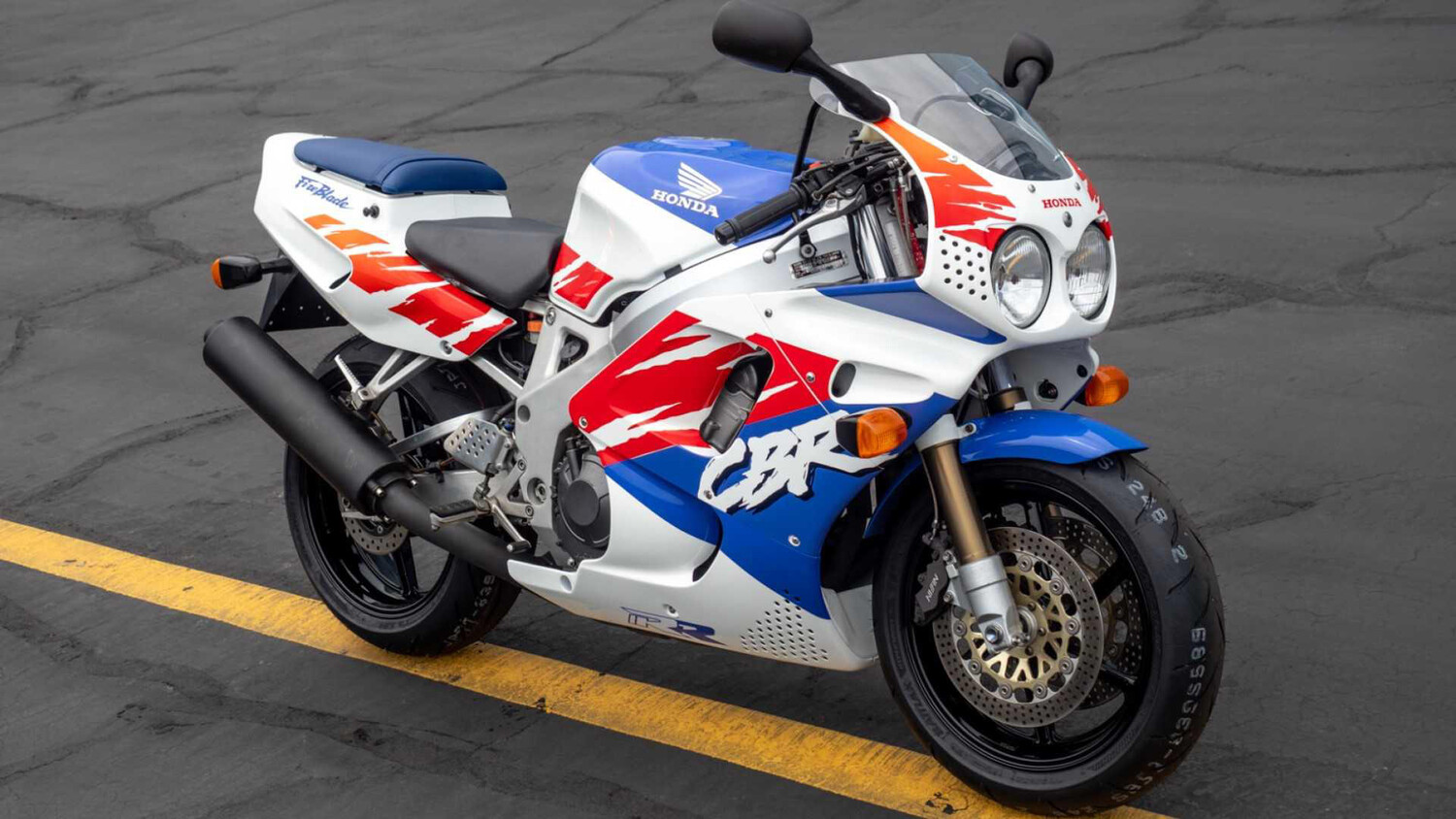
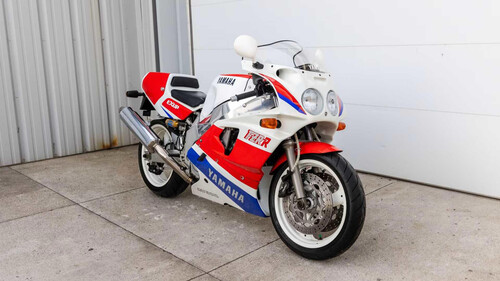
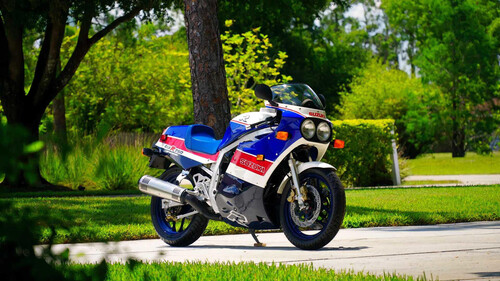
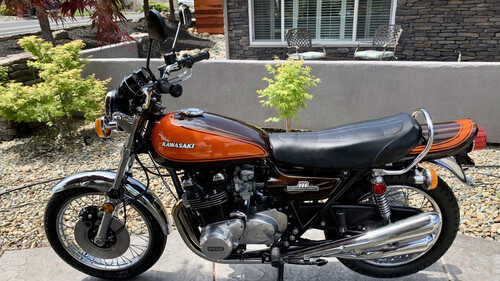
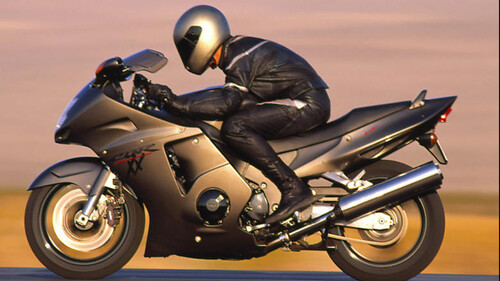
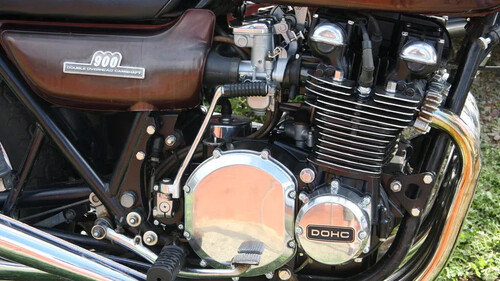
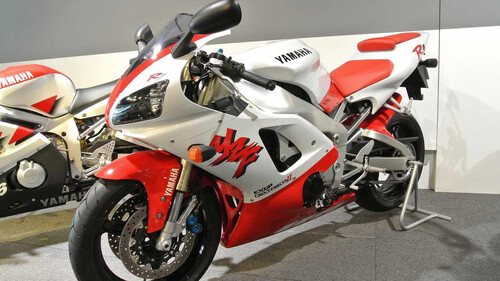
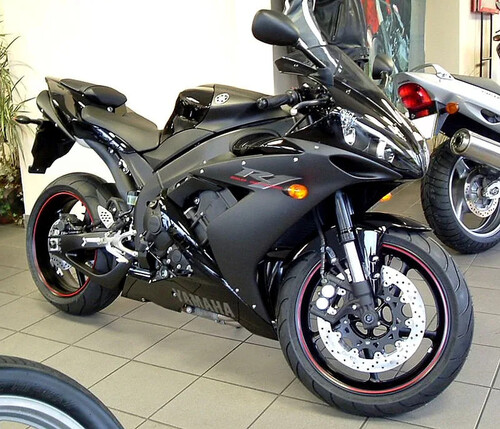
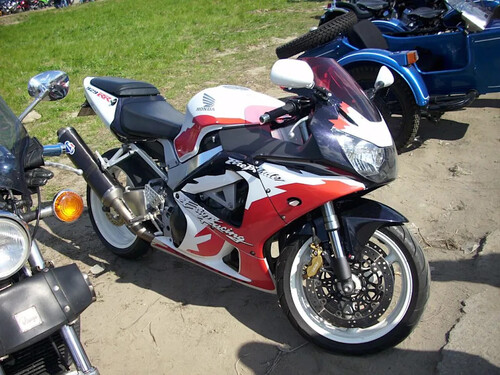
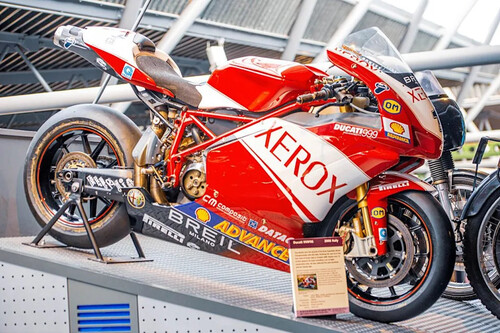
By the late 1980s, sports bikes were getting bloated. The mindset manufacturers took toward sports bikes at the time was that performance came from power, so bikes needed increasingly bigger engines to make top speeds increase. This had the desired effect, in that top speeds did increase, but weight came with it. And weight is antithetical to sport.“Simplify, then add lightness” was the mantra of Lotus designer Colin Chapman, and it was one that took them to seven Formula 1 constructors’ and six drivers’ titles. And with sports bikes only getting more unwieldy, Honda decided to buck the trend in the early 1990s — completely redefining what a sports bike was in the process. The Sports Bike Status Quo Needed Shaking Up MecumSince the Honda CB750 rewrote what a motorcycle was capable of in 1969, manufacturers have been fighting to keep up. The bike, which is widely credited as the first superbike, combined power and reliability, and almost destroyed the entire British motorcycle industry. It kick-started the arms race for more powerful bikes, and its 124-mph top speed set a target for other manufacturers to aim at.Kawasaki was the first to really respond, releasing the 900 cc Z1 in 1972. The bike offered more displacement and a slightly higher top speed at 132-mph, which in turn saw more brands getting involved through the 1970s.Bring A Trailer One relatively easy way to increase performance was to increase displacement. While this did work, it also added a lot of weight — both in terms of engine size and with the parts required to keep the bikes going. Performance was measured in top speed rather than rideability, and sports bikes felt less agile as a result — with frames needing to be made longer to help with cornering.The Suzuki GSX-R1100, released in 1986, had a top speed of 163-mph — fast for the time, for sure — but that came from a 1,074 cc engine and a massive 554 lb wet weight. Yamaha’s 1987 FZR1000 was capable of 167 mph, but the 1,003 cc engine meant that it came in at 520 lb wet. Riders wanting performance had to make a choice. If they wanted top speed, they needed a bigger, heavier bike. If they wanted performance, they were better off going for a smaller 750 cc bike.Yamaha 750 cc machines were helped in the late 1980s, too, as the newly announced World Superbike series required homologation specials to be created in order to compete. This saw bikes like the Honda RC30 and Yamaha FZR750 enter the market and compete with bikes like the Suzuki GSX-R750 — another race-based bike.While these bikes were all very highly thought of, they also faced the same problem — they weren’t bigger. Sure, they didn’t have the weight of the 1,000 cc bikes, but they lacked the performance. There was a gap in the market for a bike with the power of a 1,000 cc but the weight of a 750 cc. So, in 1992, Honda filled it — and it fundamentally rewrote the bike world once again. The Honda Fireblade Sets The Sports Bike World Alight HondaIn the late 1980s, Honda designer Tadao Baba was riding some competitor bikes — the Suzuki GSX-R1100, a Yamaha FZR1000, and the Honda CBR1000F — when he had the realization that these so-called “sports bikes” were all big, heavy, and, in Baba’s eyes, undeserving of the sport name. So he began developing what he called “Total Control” — a concept based around a good bike being fun to ride.To that end, his first thought was to make a CBR750RR, though the pre-existing VFR put paid to that. The CBR1000F took the place of a liter bike, so he took the Goldilocks approach and went somewhere in the middle — taking the dimensions and engine of a 750, but increasing the stroke so it became an 893 cc bike that wouldn’t compete with its own 750s.The result was the CBR900RR Fireblade. And, just like when Honda turned the motorcycle world on its head in 1969 with the CB750, they did so again in 1992 with the Fireblade.Honda The first, and arguably most important, innovation was its weight. At 453 lbs wet, it was remarkably light for the time, coming in only 4 lbs heavier than the lower-capacity CBR600F2, while being 76 lbs lighter than the FZR1000 and 101 lbs lighter than the GSX-R1100.The 750 cc engine being uprated to 893 cc certainly helped keep weight down, but it wasn’t the only tactic Honda used. The smaller engine meant they could use a smaller frame, which was made as lightweight as possible. This meant aluminum parts, lighter forks, and even the headlight wasn’t safe from Honda’s weight-saving focus. Heavier parts were also moved towards the middle of the bike as much as possible, to prioritize handling.Crucially, while it was lacking in terms of displacement, it wasn’t lacking in terms of speed. The smaller engine had much less bike to move, allowing it to keep up with the competitors it was designed to embarrass, and top speeds were all comparable — the FZR1000 had a top speed around 170 mph, the GSX-R1100 was 163 mph, and the Fireblade was 167 mph.Iconic Motorbike AuctionsPeriod testing put the Fireblade fastest for the quarter mile, too, with a 10.48s compared to 10.64s for the FZR and 10.90 for the GSX-R. The reviews at the time were positive, too, with the bike being received as a revelation. The focus on power-to-weight over strict power made it more fun to ride, faster on real roads because its lightness gave greater handling, and it reset the benchmark of both what a sports bike was, and what it needed to be. The New Paths Blazed By The Fireblade Honda The Fireblade wasn’t just a new bike, nor was it just a fast bike, or a fun bike — it was the new standard for sports bikes. Honda changed the game entirely in 1992, and it took manufacturers years before they could catch up.The first real response was Yamaha’s YZF-R1 in 1998, by which time the Fireblade was on its fourth generation and had shed more weight and gained 16 more cc to reach 919. The R1 was another seismic step forward in sports bikes, as it offered riders more power (150 hp vs 122 hp) for slightly less weight (390 lbs dry vs 408 lbs dry).Honda would go on to axe the sub-1,000 cc Fireblade in 2004, replacing it with the CBR1000RR Fireblade which still exists to this day. But while the 900 cc version of the Fireblade may be gone, its legacy isn’t a sad one — it’s one of redefinition, of change, and of making modern sports bikes what they are today.Sources: Visordown, Cycle World, Yamaha