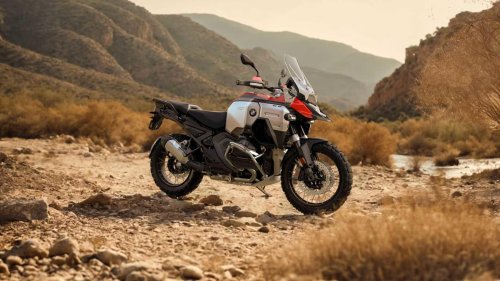
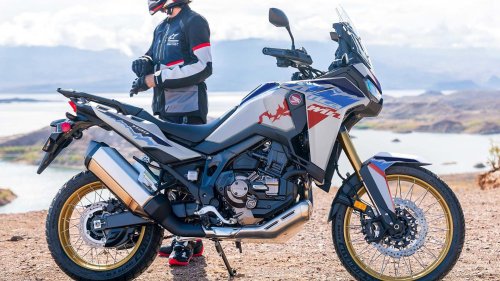
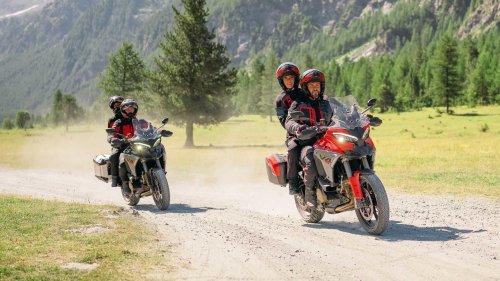
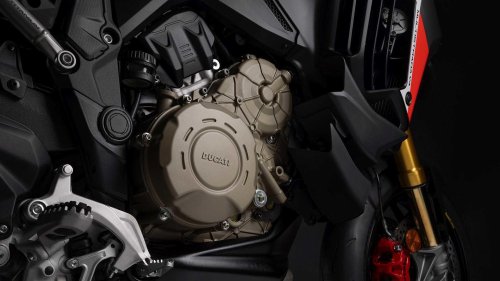
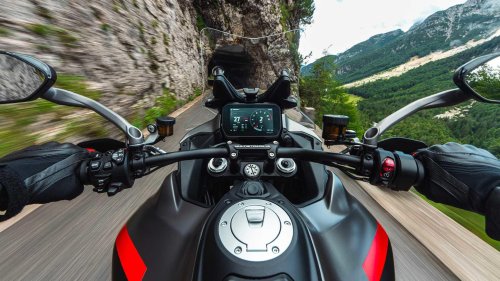
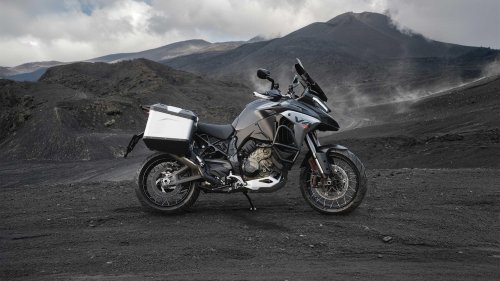
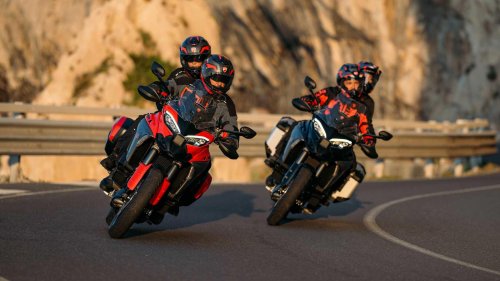
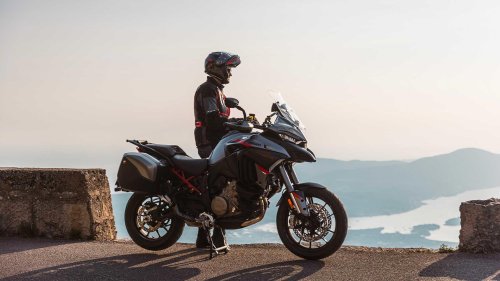
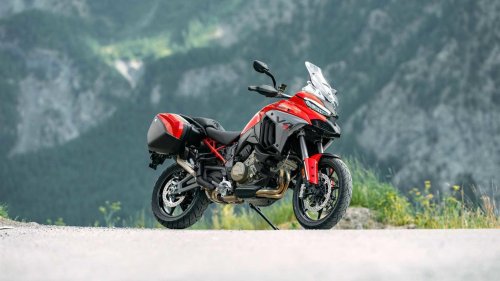
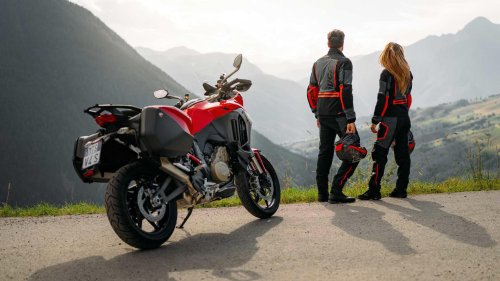



















In the U.S. flagship adventure-bike space, the choices are broad enough now that “the best ADV” is less a fixed answer and more a personal equation. Some riders want off-road credibility first, some want a continent-eating tourer, and some simply want one machine that can do the school run, the long weekend, and a cross-country loop without feeling out of place. That is why big ADVs have become such complete packages: they are no longer niche dirt bikes with luggage bolted on, but premium all-rounders that try to replace a few motorcycles at once. The GS Has Been The Default Choice BMW MotorradFor years, the BMW GS has been the bike that other adventure motorcycles are measured against, especially in the premium end of the market. The current R 1300 GS continues that lineage with a very deliberate “less is more” message from BMW. It uses a 1,300cc boxer engine, claims 145 hp and 110 lb-ft of torque, and pairs that with EVO Telelever front suspension and EVO Paralever at the rear. BMW also positions it as a major step in compactness and reduction, not just a bigger version of what came before.The recent design shift with the R 1300 GS only sharpened that effect. BMW’s own language stresses a lower-complexity, more tightly packaged machine with more standard equipment than before, but the bike’s visual and mechanical personality also changed enough that some longtime GS admirers embraced it immediately, while others had to come around to it. But There Are Worthy Alternatives HondaThere is no rule saying the GS has to be your answer. In fact, once you start narrowing the question to what actually matters — engine character, service intervals, suspension feel, long-distance comfort, and price — other bikes start to look very compelling. A boxer twin is also not for everyone. Some riders love the sideways pulse and the layout’s engineering charm; others would rather have a more conventional engine architecture, a different feel at the bars, and a package that leans harder into sport-touring smoothness than mechanical tradition. The Ducati Multistrada V4 Is The Smart Rider’s Alternative To The BMW GS Base Price: $19,995 DucatiThe Ducati Multistrada V4 is the polished, expensive, high-performance alternative that feels less like a compromise and more like a confident choice. Ducati’s current Multistrada V4 range starts at $19,995 for the base V4, which lands below the BMW R 1300 GS’s starting price of $20,395. And Ducati is not asking you to accept a stripped-down experience to get there.Even the base bike arrives with the same core Multistrada personality and a serious equipment list. In other words, it is not a “budget” option but a smart-money option. The appeal is broader than price alone. The Multistrada V4 is built around a more emotionally expressive engine, a very polished touring chassis, and an ownership proposition that feels intentionally designed for riders who want to cover miles without living on a service schedule. The V4 Granturismo Is Ducati’s Biggest Advantage DucatiThis is where the Ducati really separates itself. The 1,158cc V4 Granturismo makes 170 hp and ~91 lb-ft of torque, which gives the Multistrada V4 a meaningful power advantage over the BMW’s 145 hp boxer. Ducati also highlights the use of a spring-return valve system instead of its traditional desmodromic setup on this engine, specifically to stretch service life and reduce maintenance demands.The biggest talking point is the valve-clearance interval: Ducati says it reaches 37,300 miles, with oil service scheduled every 9,321 miles or two years. For riders who actually put miles on a bike, that is a serious advantage. It is not just about longevity, either. The V4 Granturismo uses rear cylinder deactivation to reduce heat and consumption at low load. Add in the counter-rotating crankshaft, and the engine starts to feel like a very deliberate blend of sports bike thinking and long-distance practicality. Leading The High-Tech Revolution DucatiThe Multistrada V4’s electronics suite is another place where it makes a strong case. The base model uses a 5-inch TFT display, and it gives you access to cruise control, Ducati Quick Shift, cornering ABS, traction control, wheelie control, cornering light, vehicle hold control, and a full LED lighting setup among the bike’s available systems. It is a loaded motorcycle, but the sort of loaded that feels useful rather than gimmicky. V4 S Ups The Premiumness DucatiThe higher-spec V4 S trim is where the Multistrada really leans into luxury. At a listed MSRP of $29,995, Ducati equips it with electronic suspension via Skyhook. This setup can adapt in real time to road conditions and riding style. In Travel & Radar trim, the bike adds radar-based features, including adaptive cruise control and blind spot detection. At the same time, there is a 6.5-inch TFT with Ducati Connect and full-map navigation. Touring Without Compromise DucatiDucati clearly spent time on the kind of details touring riders actually notice after the first hundred miles. The Multistrada V4’s front-end design is shaped to improve aerodynamic protection and cut wind exposure for both rider and passenger. Ducati also says the side bags and topcase supports were repositioned backward to give the passenger more room and freedom of movement, which is exactly the sort of thing that sounds minor until you spend a day on the highway. Class-Leading Aerodynamics DucatiThis is one of the reasons the Multistrada feels more like a true grand-tourer than a tall sports bike with luggage. Ducati describes optimized aerodynamic protection, updated cornering lighting, and improved thermal comfort as part of the package. At the end of the day, a premium adventure bike is not just about having the suspension to survive a bad road; it is about arriving less tired, less buffeted, and less irritated than you were on the bike you used last year. Lightweight Agility And Chassis Feedback DucatiUnderneath the touring polish, the Multistrada V4 still keeps a sporty core. The base bike uses an aluminum monocoque frame, a double-sided aluminum swingarm, 19-inch front and 17-inch rear wheels, and a wet weight of 505 lb without fuel. That is a sensible hardware mix for a big road-focused ADV: stable enough for distance work, but not so lumbering that the bike forgets how to turn.Compared with BMW’s Telelever-led front end, Ducati’s setup is more familiar to riders coming from sport, naked, or sport-touring motorcycles. BMW’s design clearly has merits — especially for stability and comfort — but Ducati’s conventional fork and swingarm arrangement tends to feel more immediate and intuitive to riders who like direct steering feedback. That is one of the reasons the Multistrada V4 makes such a strong alternative. Why Multistrada V4 Is The “Smart” Pick for You DucatiThe Multistrada V4 makes sense for riders who want the premium ADV experience without automatically defaulting to BMW’s formula. It offers stronger straight-line performance, long maintenance intervals, real touring comfort, and enough electronics to satisfy tech-minded buyers without turning the ownership experience into a spreadsheet of options. The V4 S adds a deeper layer of luxury with semi-active suspension and radar-based assistance, while the base bike keeps the core package more accessible and arguably more focused. That combination — Italian performance, genuine long-haul ability, and reduced workshop drama — is what makes the Multistrada V4 feel so smart. It is not trying to be the GS but a better choice for the rider who knows exactly what matters.Source: Ducati