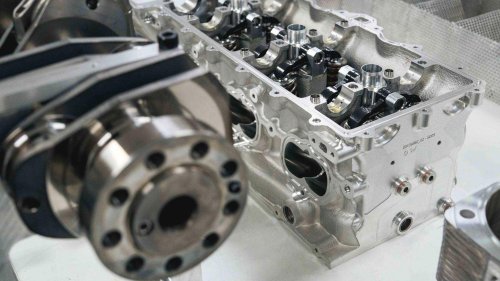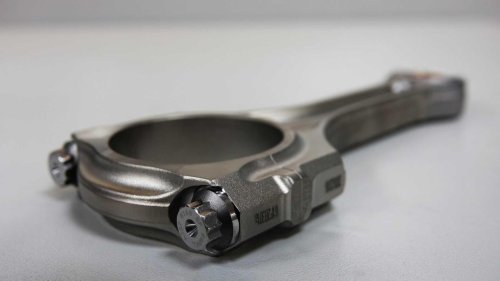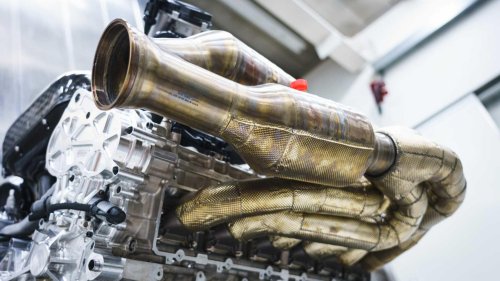
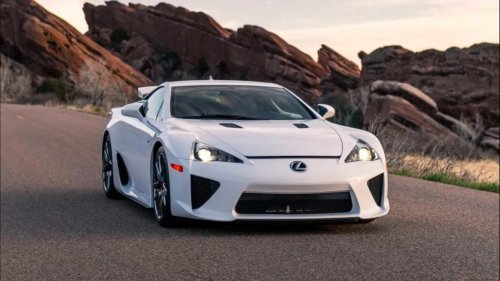
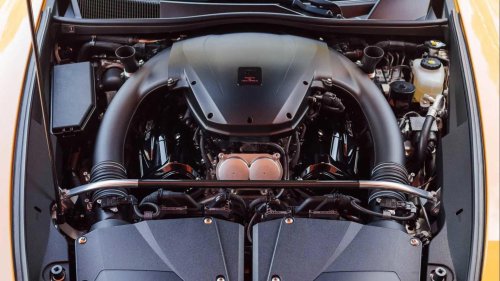
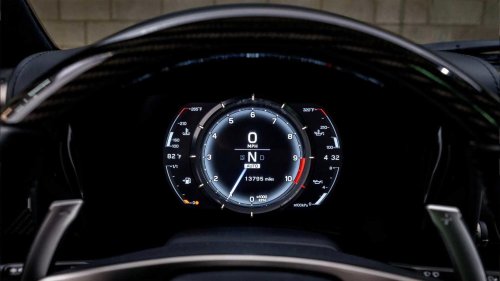
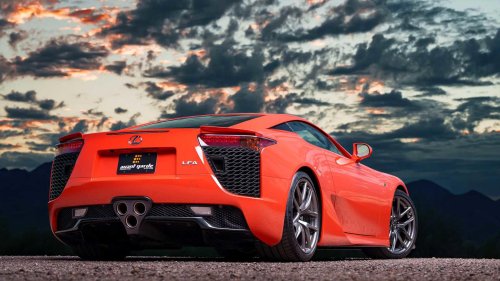



















The scream of a high-revving, naturally aspirated engine is both a sound and a sensation. The rapid rise in rpm and the tap of the throttle are feelings that any other engine can hardly replicate. The high-revving naturally aspirated engine has always been at the top of the hill, and the choice of engine for enthusiasts.A linear torque curve throughout the rev range and the crescendo when the needle hits the redline, with the engine howling at its peak, delivers a visceral feeling that can only be described as glorious. The naturally aspirated engine comes in many configurations. The NA engine, when paired to a dynamic chassis and a three-pedal manual transmission, is the combination any enthusiast can dream of. The Peak Of Naturally Aspirated Engines Robin Adams Via: RM Sotheby's The period from the 2000s to the mid-2010s is generally considered the peak of modern naturally aspirated engines. When engines were free of emission regulations and could run with minimal to no electronic interference. Many manufacturers had an NA engine in their arsenal, with many configurations.The Italians, Ferrari and Lamborghini, are the popular ones with large, growling V12s, whereas Germany has Porsche with its naturally aspirated 911 with a flat-six configuration. These cars had different sensations as the pistons and layouts changed, but most importantly, they were always crowd favorites.But there was one manufacturer in the far east that was creating something special. A naturally aspirated engine so good it can go head-to-head with the Italians and the Germans, and redefine what performance is and how it is achieved. Toyota, in collaboration with Yamaha, was bringing the racetrack to the road. A Clean Sheet Design Via: Bring a TrailerToyota, the parent company of Lexus, did not want a halo car built using off-the-shelf components. Toyota spent around 10 years developing its new flagship supercar. The project was headed by Toyota's chief engineer, Haruhiko Tanahashi. The engine took heavy inspiration from Toyota’s Formula 1 expertise. And that was not the only connection this new magic engine had to the racetrack.Toyota wanted to make the car as light as possible to achieve perfection with the chassis as well. Through the mid-2000s, the car had an aluminum body, but it was too heavy for the razor-sharp handling. Toyota then decided to switch from aluminum to carbon fiber, resulting in a massive 100-kilogram weight savings. The technology to make such frames was not commonplace back in the 2000s. Toyota pioneered the process and made the carbon fiber chassis in-house, a statement of their commitment to building perfection.Yamaha was collaborating with its race division to add inputs into the engine as well, which led to the best naturally aspirated engine produced in the 21st century. The result was a high-revving, naturally aspirated V10 engine that would go from idle to 9,500 rpm in just 0.6 seconds. And it would be in a brand-new flagship chassis called the Lexus LFA. Toyota 1LR-GUE: The Engine That Turned Noise Into Symphony Via: Bring a Trailer This engine, specially designed for the LFA, is engineering at its peak, combined with passion. The 1LR-GUE was a 9,500 rpm redlining V10, but that's not even the mind-blowing part; the engine's composition is something that would not be repeated in modern performance history. And the reason an engine like the 1LR-GUE is a rare breed is that it's produced only once every decade.Toyota used magnesium, titanium, and aluminum alloys; the naturally aspirated engine was built light. Despite being a V10, it was the size of a V8 with the weight of a V6. The engine revved so quickly that Lexus had to put a digital gauge and needle to keep up with the engine's speed. The needle took 0.6 seconds to reach 9,000 rpm from idle. Such was the effect of the minimal friction in the engine internals. These engine specs are unheard of even by today's standards, especially for a car with limited production.Yamaha’s sound division acoustically tuned the engine to give it that distinct high-pitched note. Yamaha shaped the titanium exhaust like a surge tank in a musical instrument. The firewall had holes to let raw induction sound into the cabin, increasing the car's visceral feel. This turned the car into an acoustic theater. The exhaust pulses were carefully tuned to create the iconic high-pitched sound while maintaining the V10's low hum at lower rpm. An F1 Car For The road Via: Bring A Trailer The LFA was designed to be a track monster; its chassis and dynamic tuning were done in the Nürburgring. The LFA set the fifth-fastest time at 7:14:64. Toyota entered the LFA at the 24 Hours of Nürburgring in 2008 and 2011 as a prototype car.In 2010, a pre-production LFA clinched 1st in its class (SP8) and finished 18th overall. To celebrate this victory, Lexus launched a Nürburgring package with just 64 units worldwide. Toyota not only created a supercar but also an icon. And at the heart of it sat the high-revving V10. The same engine that won at the Nürburgring can be had for taking on the back roads and the canyons.The car was built with the lightest materials to achieve maximum performance; titanium was used for the engine valves and connecting rods, and carbon-ceramic brakes were used to reduce unsprung mass and weight for quicker directional changes. The body was made of carbon fiber to stiffen the chassis while reducing weight. Lexus LFA Specs The Naturally Aspirated Legend Lives On Via: Bring A Trailer The LFA went on sale in 2010 for $375,000, and the Nürburgring pack added another $70,000, bringing the total to $445,000. The car was too expensive to make because of the decade-long development. Lexus was losing money on every car they sold. The price of more than a quarter of a million was too much for a Lexus badge and an engine as special as it seemed, which was made by Toyota.Now the market has come around to the car, and what was once overpriced now offers an analog V10 experience like no other. The LFA can command anywhere from $800,000 to $1,000,000 on the used market, according to the Bring a Trailer auction. The Lexus LFA, with its 1LR-GUE engine, can arguably be considered the best-sounding road car ever produced by enthusiasts, a decade-long experiment to achieve sheer perfection, a modern classic of its time, and a sound that will be cherished for generations.