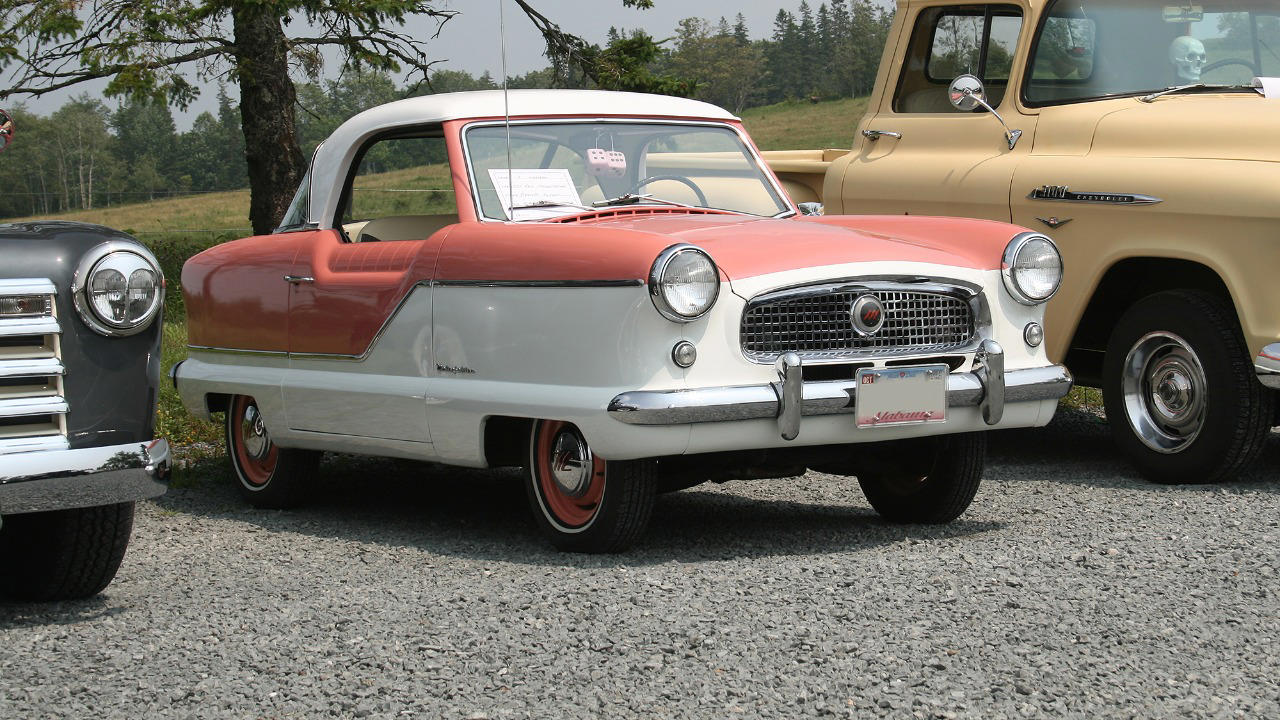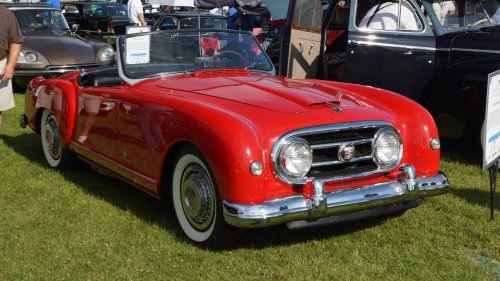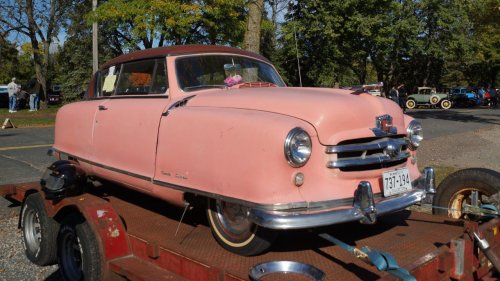
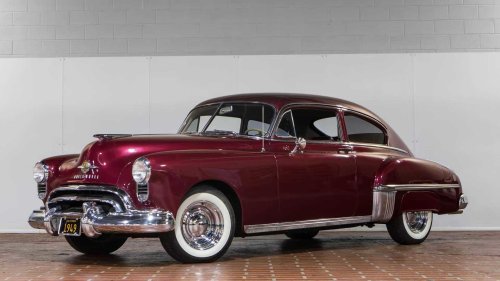
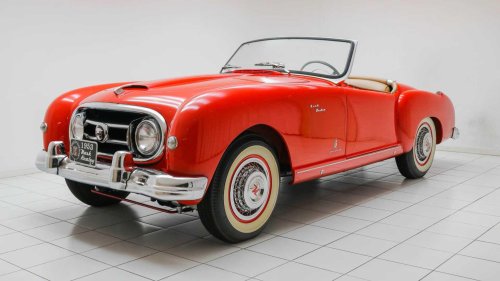
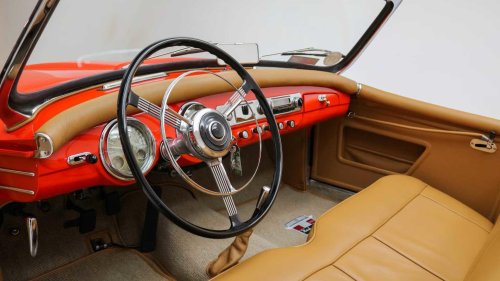
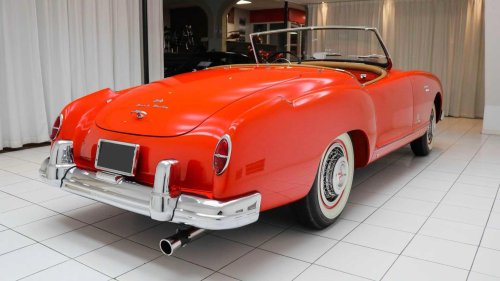
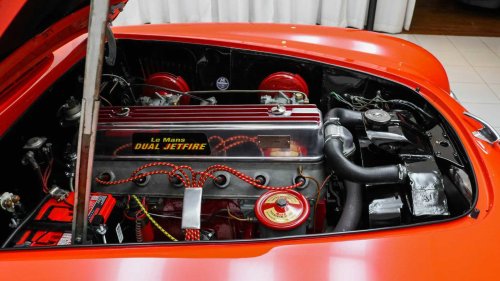
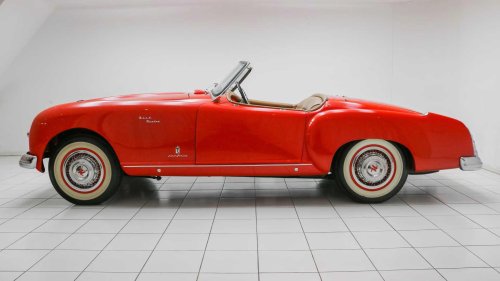
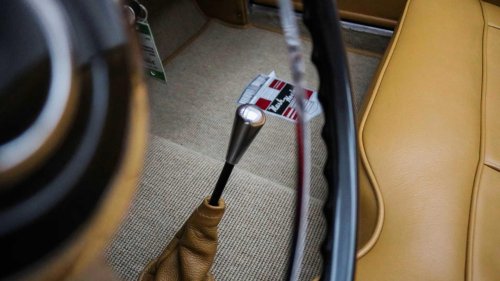

















Despite popular thinking, the Corvette wasn't America's first true postwar sports car. While the C1 set the groundwork for a new direction in American automotive performance, another important model predated the two-seater Chevy by two years. This maverick partnership between Nash, British engineer Donald Healey, and Italian coachbuilder Pininfarina created a transatlantic oddity that actually paved the way for the 'Vette and the AC Cobra. It may be long forgotten these days, but this is one of those Sports Cars that some collectors quietly covet, with prices that make the C1 Corvette look like a bargain. So what the heck is it? Postwar America Had An Appetite For Fast Cars Autotopia LA, YouTube Postwar America had a need for speed. In the late '40s postwar America, GIs were returning from faraway lands, the auto industry was retooling, and there was a pent-up customer demand for exciting products. Carmakers had been focused on building military equipment not cars. When the auto production lines started up, the inspiration was rockets and space, and even everyday models were designed to look like they were going fast while standing still. Returning soldiers were also using the hot rodding scene for kicks, combining powerful V8s with lightweight prewar body shells and chassis. But while Italy and Britain were creating drop tops that looked perfect for leaving all your troubles and accelerating toward the sunset, the US auto market didn't really have much in the way of homegrown sports cars. But that was soon about to change. Europe Didn't Have A Shortage Of Sports Cars Porsche Anyone looking for a fast and exotic European sports car would have been spoiled for choice. In Europe they seemed to be a dime a dozen. Cars like the exotic 1948 Jaguar XK120, with a top speed of 120 mph, showed that four wheels could be astonishingly quick ways to get down the newfangled highways. The gorgeous 1948 Ferrari 166 MM was a race car you could drive on the road, fitted with a 2.0-liter V12 that was good for 140 horsepower. Ferdinand Porsche had created the Porsche brand in a small garage in Austria with 52 Porsche 356s produced in 1949. America Needed Its Very Own Sports Car MecumCars like the sleeper-spec Oldsmobile Rocket 88 were showing that there was potential for fast V8 coupes in America, blazing a trail for the muscle car genre of the '60s. There were a few attempts at drop-top roadsters early on, such as the diminutive Crosley Hot Shot and the quirky Woodill Wildfire, but the truth was that America was better suited to comfort and V8s rather than zippy sports cars. But tastes were changing, and with Roman Holiday playing in theaters, European lifestyles were seeping into US consciousness. It was time for America to enter the sports car game — but it wouldn't be the Corvette that got the ball rolling. The Nash-Healey Was A Transatlantic Collab Mecum 1951 Nash-Healey SpecsSource: Nash-Healey/ Independent TestsThe story of America's first sports car starts in postwar England. Many people will know the name Donald Healey from the famed Austin-Healey, but before that model was even an idea, the former military pilot was trying to get his car company off the ground. Moving from being a bigwig in various car firms to setting up the Donald Healey Motor Company Ltd, Healey did a deal with Riley Motors for drivetrains and other parts for a 1946 roadster and a sedan. Hearing that his new 1949 model, the Silverstone, had been fitted with a Cadillac V8 in America by a client, Healey headed to the car giant's HQ in Detroit to see if he could strike a deal for a similar engine for Stateside production. A Chance Encounter Resulted In The Birth Of America's First Real Sports Car Mecum On the boat to America, Healey met George W. Mason, president of Nash-Kelvinator, who took on the project when the Caddy deal fell through. Nash didn't have a V8, but he did have a 235-cubic-inch Nash Ambassador straight-six that was good for 115 hp, and also agreed to supply everything from the hubcabs to the torque tube for the new 1951 sports car. Battista “Pinin” Farina of Turin, Italy, was called in to take care of the design of the second-gen Nash-Healey, which dropped the British pared-down looks (which were similar to the AC Ace) in favor of a more contemporary and flashy aesthetic. The Nash-Healey Was Ahead Of Its Time Mecum The Nash-Healey handled well, as reviewers noted, and came with a good level of comfort and technology too. Buyers got everything from leather seats and plexiglass side windows, to coil springs and roll bars front and back, and white sidewall tires that came standard. Originally, Healey created hand-built aluminum bodies through Panelcraft of Birmingham, England, although these were later steel and made in Italy. The six-pot Nash Ambassador engine was improved by Healey, with the stock cast iron cylinder head replaced with a high-compression aluminum cylinder head. The power was sent through a 3-speed Borg Warner manual transmission with overdrive. The original 3.8-liter engine used for the 1951 models was quickly replaced the following year (at the time of the Pininfarina redesign) by a 150-hp, 4.1-liter six. The Nash-Healey Was A True Sports Car Mecum The Nash-Healey could reach 60 mph in 10.9 seconds, which was pretty quick for the early 50s. To put that into context, the Jaguar XK120 could only manage this landmark speed in 10 seconds, so the Nash-Healey wouldn't have been far behind. The 1949 Oldsmobile Rocket 88, one of America's fastest coupes, needed 12.2 seconds to reach 60 mph. A Crosely Super Sport needed more like 20 seconds to reach the same speed, although an Allard J2 fitted with a V8 would see off any of the above. The Nash-Healey Quietly Disappeared MecumA Nash-Healey hardtop coupe was added to the line in 1953, but the roadster was canned before the 1954 model year. In truth, the Nash-Healey just wasn't a big seller. At $3767, it was expensive in 1951, and just 104 were made that year, says Hagerty. In total, just 506 Nash-Healeys were produced over four years.Even with a high sticker price, it was estimated that Nash was losing a ton of money on each of the cars too, just unable to recoup the costs. When George Mason died suddenly in the fall of 1954, the project seemed to come to a natural end. Whether or not Carroll Shelby had the Nash-Healey half in his mind when he dreamed up the AC Cobra, we will never know, but there certainly was something to this combination of British body and handling, and American power. The Nash-Healey Costs More Than A C1 Corvette Now Mecum The Nash-Healey's looks are still an acquired taste, not as raw and beautiful as an AC Cobra, or having the movie star glamour of a C1 Corvette. But there is plenty of interest when they reach the market. Who would have thought that a Nash-Healey would be more valuable than an early Corvette, the car that most people think of as being America's first sports car? A 1952 Nash-Healey Series 25 will cost you $80,600 in good condition, says Hagerty, with a 1953 Le Mans hardtop costing $70,300. By comparison, a 1954 Chevrolet Corvette has a value of $61,200 in the same condition. Even if the Corvette stole the Nash-Healey's thunder a little over the years, for collectors there is only one early American superstar sports car.Sources: Hagerty.com