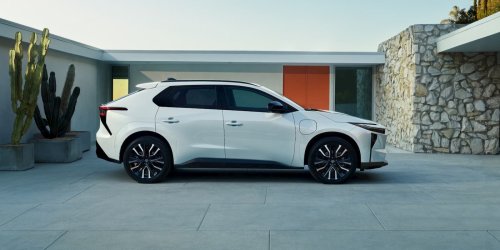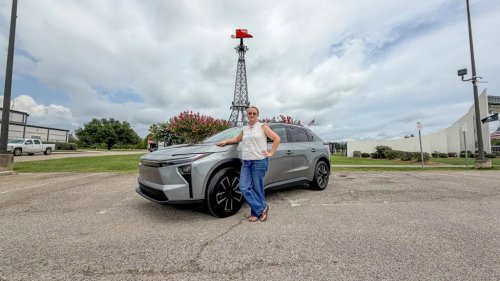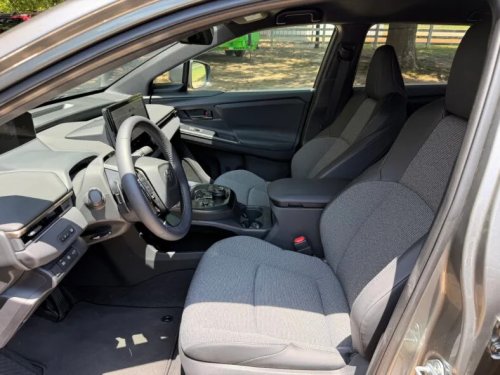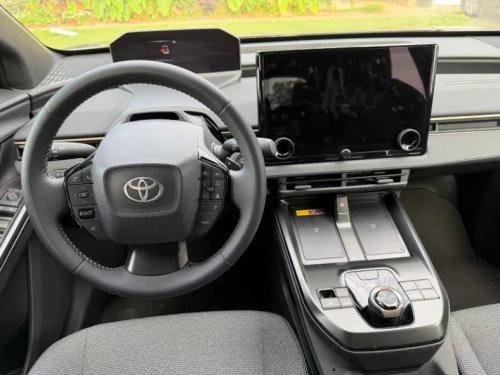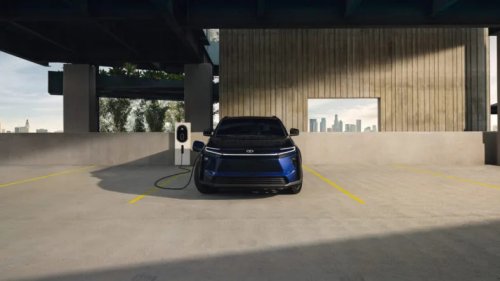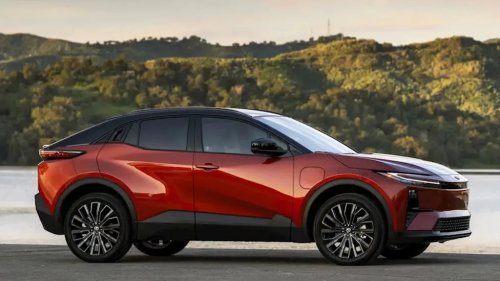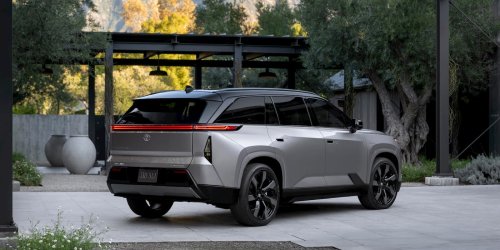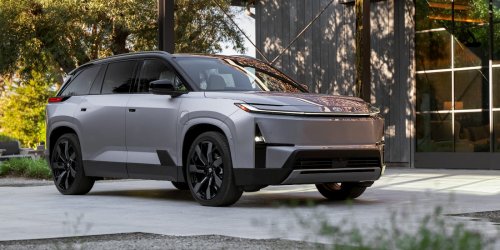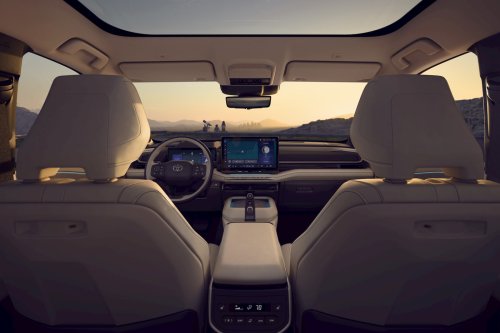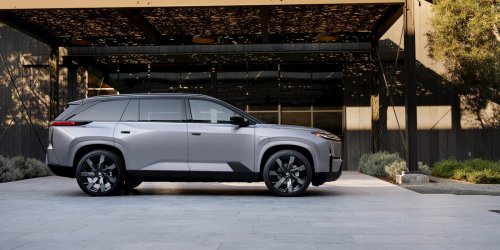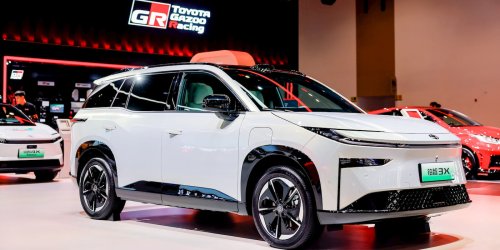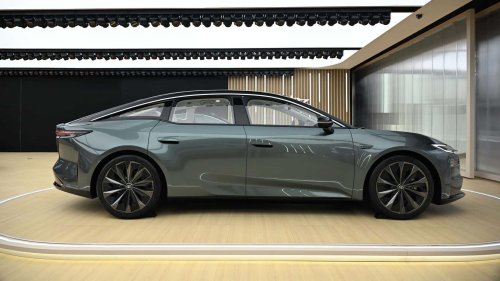
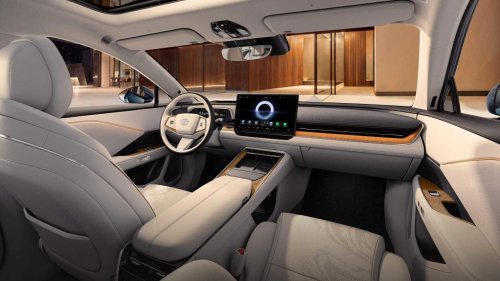
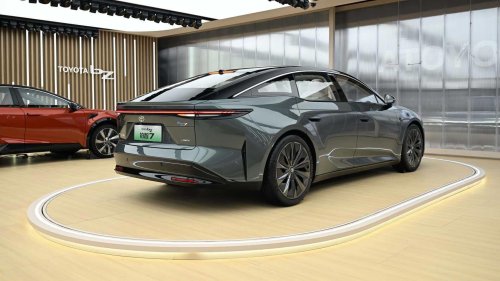
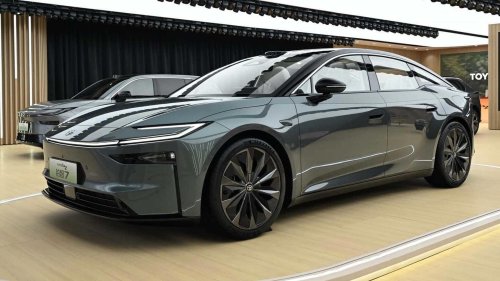
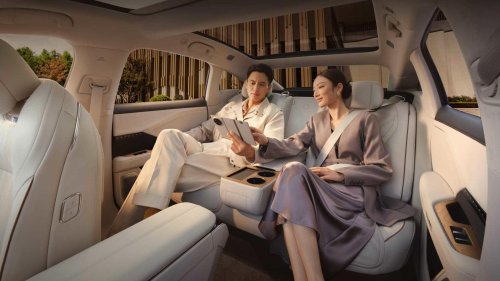
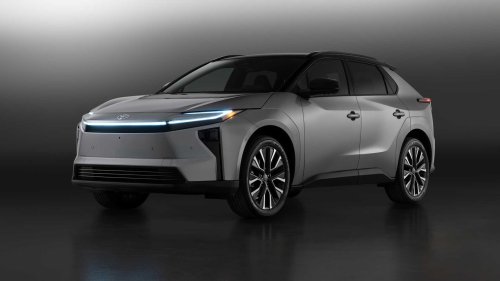
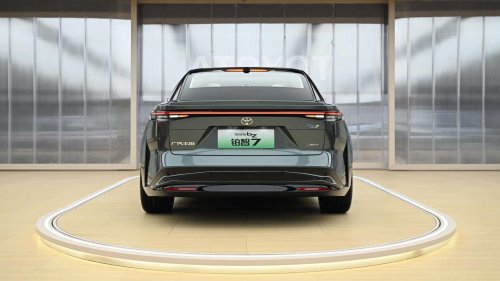
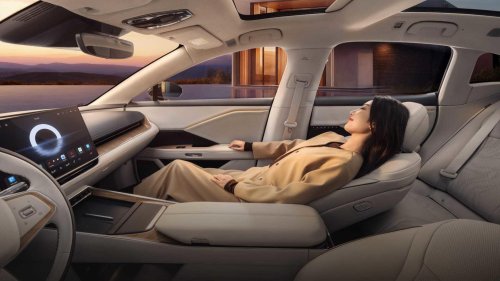
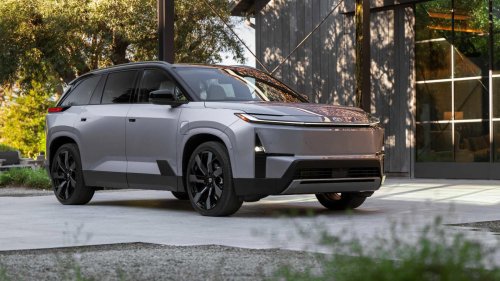
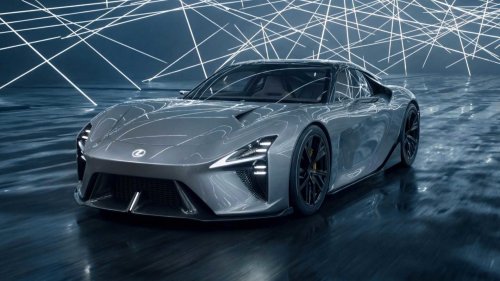
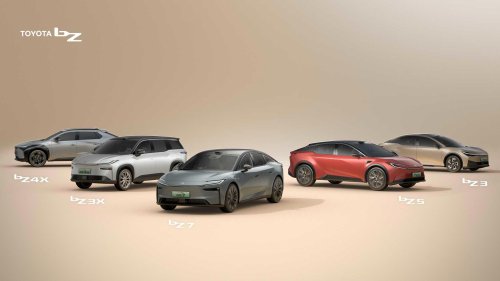



















Toyota’s EV efforts in the US have been underwhelming at best, largely limited to the Toyota bZ4X – now simply called the bZ – and its Lexus RZ sibling. Neither has set the benchmark for performance or range, and depending on who you ask, design and refinement haven’t exactly led the class either. Still, that doesn’t mean Toyota lacks the ability to build a truly competitive EV capable of taking on a Tesla.Proof comes from China, where the new Toyota bZ7 shows what the company can do when it goes all in. The full-size sedan packs high-end features, including the kind you’d only expect in something going up against a Mercedes-Benz S-Class, but it also seriously undercuts expectations on price. Unsurprisingly, it’s off to a strong start, with more than 3,000 orders placed within the first hour of going on sale. S-Class Feel For Corolla Price Tag Toyota Key Facts To Know Developed in partnership with GAC The initial debut was in 2025 Measures 202 inches long Uses Huawei and Xiaomi technology Starting price of approximately $21,600 The bZ7 made its debut at Auto Shanghai 2025 but only went on sale in March of this year. Right now it's only available in China, where its starting price is a mere 147,800 yuan (approximately $21,600). The low price was clearly a huge motivating factor in attracting buyers, and while it's only an introductory figure, the car will still be a screaming deal, at least in comparison to US vehicle pricing standards, when its regular starting price of 169,800 yuan ($24,800) is rolled out.Toyota That's comparable to the $23,125 starting price of the Toyota Corolla in the US, but this is a full-size sedan complete with premium features like leather trim, wood accents, a memory function for the driver's seat, and a panoramic glass roof with electronically dimmable glass. A massage function is also available, though this requires skipping the base 600 Pro trim and upgrading to the 700 Max, which has an introductory price of 165,000 yuan ($24,100) and a regular price of 189,800 yuan ($27,800). We'll add that the bZ7 also features a pleasant design, inside and out.Toyota was able to keep a lid on bZ7 pricing by leveraging technology developed by Chinese firms. For example, it relies on a platform primarily developed by GAC and is built by a joint venture between Toyota and the leading Chinese automaker. It also relies heavily on local Chinese suppliers, including for the batteries, powertrain, interface and connectivity, and automated driving systems, much like Audi did with its AUDI sub-brand for China. This localization dramatically reduces production costs and allows aggressive pricing in China’s highly competitive EV market. Where The bZ7 Goes Well Beyond The Mainstream Toyota The bZ7's size immediately places it at the premium end of the EV segment, rather than where most budget models sit. Measuring 202 inches long with a generous 119-inch wheelbase, it carries true full-size sedan dimensions that prioritize rear-seat comfort and long-distance refinement. Toyota stays true to this ethos with features such as zero-gravity front seats, available massage functions, and extensive use of soft-touch materials and ambient lighting, reinforcing the bZ7’s positioning as a chauffeur-style electric sedan rather than a conventional family EV.Toyota Performance is anchored by a Huawei-supplied DriveONE electric drive system producing 278 horsepower in single-motor rear-wheel-drive guise. The car is equipped with LFP battery options supplied by Chinese battery company CALB, with claimed ranges of up to 373 miles with the standard 71-kilowatt-hour battery and 435 miles with the available 88-kWh battery. Both figures are based on China’s CLTC test cycle and would likely measure lower when using the stricter EPA test cycle. Buyers can also opt for dual-chamber air suspension on some trims, which Toyota says helps improve comfort while also contributing to overall efficiency.Toyota Technology is one of the bZ7’s defining strengths, with a deeply integrated digital ecosystem built around Huawei’s HarmonyOS cockpit. The system supports a 15.6-inch central infotainment screen, an 8.8-inch digital gauge cluster, and head-up display functionality, while also enabling smartphone-level connectivity and app integration. Xiaomi's in-car ecosystem is also included, enabling occupants to control connected smart home devices from the car.A roof-mounted LiDAR is available on some trims and works with Momenta’s advanced driver-assistance system, enabling high-level semi-autonomous driving capabilities in both urban and highway environments. A 12-speaker audio system is included as standard, while a 23-speaker surround-sound setup with headrest speakers is available, along with a chilled compartment in the rear.Toyota Now compare all this with Toyota's cheapest EV sold in the US, the Toyota bZ, which retails for $34,900. The compact crossover was updated for the 2026 model year and in standard guise is only rated at 168 hp and with a range of 236 miles. One advantage the bZ has over the bZ7 is its available all-wheel-drive system, which ups output to 338 hp, though this also pushes the starting price above $40,000 – and even at that higher price, you don't get any of the luxury features of the bZ7. Why The US Misses Out On Cheap EVs Toyota As you may have guessed, there’s next to no chance of the bZ7 reaching the US. Even if it were engineered to meet global regulations, steep tariffs would likely make it uncompetitive, and that’s before considering restrictions on the Chinese-developed technology inside the vehicle. Much of that technology would need to be replaced for the US, and in some cases, substitution may not even be feasible.Attempting to build a comparable version outside of China would also almost certainly destroy the cost advantage that makes the bZ7 so compelling in that market. Higher labor costs, stricter workplace regulations, and more expensive worker benefits would significantly raise production expenses. On top of that, the supplier ecosystem for EV components, particularly batteries, advanced electronics, and integrated smart-cockpit systems in most regions, is both less vertically integrated and generally higher cost than China’s.Toyota This is perhaps best exemplified by the bZ, which, as mentioned above, is priced to start at $34,900 in the US, but in China, where the vehicle is still known by its former bZ4X name, it starts at just 179,800 yuan (approximately $26,300). Toyota Finally Lifting US EV Game Toyota Toyota has dragged its feet on the EV transformation for years, but it’s finally starting to dial things up a notch with a new generation of much-improved electric vehicles. That push will begin later this year with the 2027 Toyota Highlander EV, a three-row midsize SUV that will be built in the US and is expected to deliver up to 320 miles of range. That’s a solid figure for a family-focused SUV with third-row seating. Pricing hasn’t been announced yet, but early expectations suggest it will start in the mid-$50,000 bracket.Toyota is also committed to building another electric SUV in the US, widely thought to be a midsize model that could carry the Land Cruiser nameplate. While details remain limited, it’s expected to lean more toward rugged capability than the Highlander EV, potentially blending off-road credentials with electric performance. A model along these lines was already previewed as a concept at the Japan Mobility Show 2023 in Tokyo, hinting at Toyota’s broader ambitions for electric SUVs with more character and versatility.Lexus Beyond Toyota itself, the next wave will also include several next-generation Lexus EVs. The brand has already revealed an electric successor to the Lexus LFA, signaling a bold move into high-performance EV territory. It has also previewed potential future design directions for other segments with the Lexus LF-ZC, which could evolve into an IS replacement, and the Lexus LF-ZL, widely seen as a potential electric RX equivalent. A Tale Of Two EV Markets Toyota Toyota is clearly capable of delivering impressive, high-tech EVs at remarkably low prices, as the bZ7 proves in China. But a mix of political barriers, supply chain realities, and market economics means that kind of value isn’t coming to the US anytime soon. For local fans, Toyota is slowly starting to step up its EV game here, but it will come at a significantly higher cost.