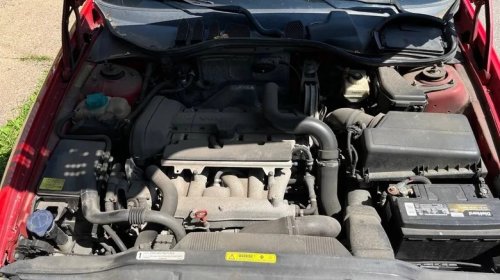
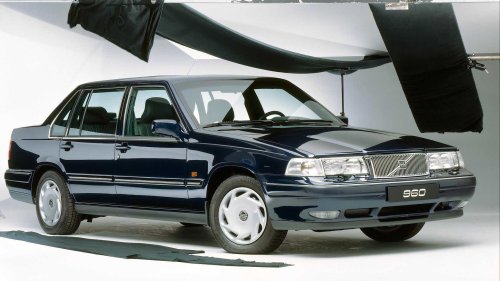
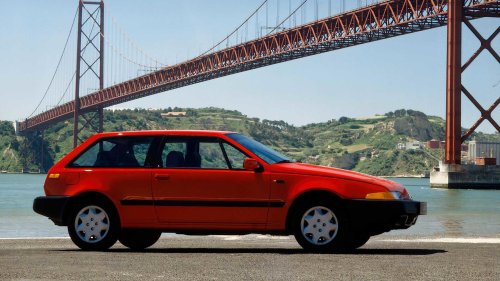
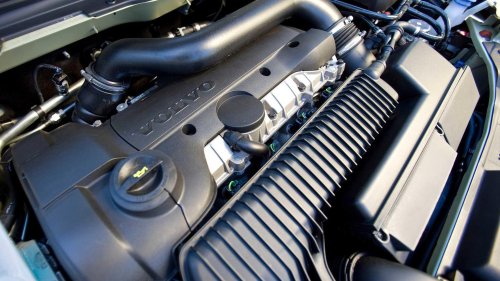
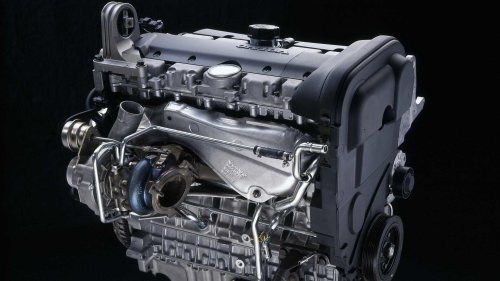
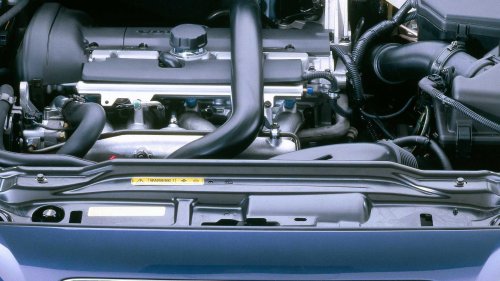
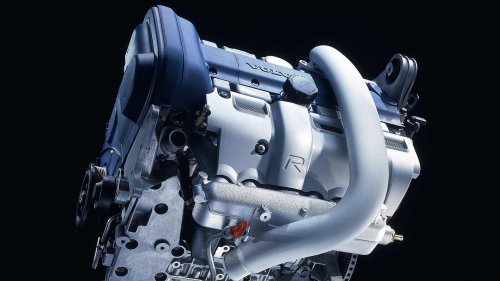
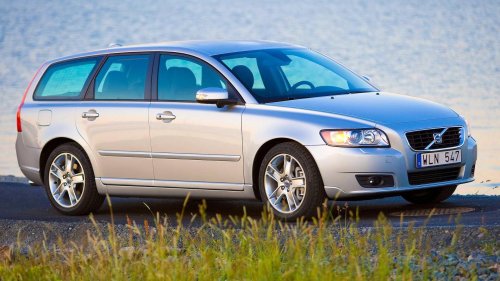
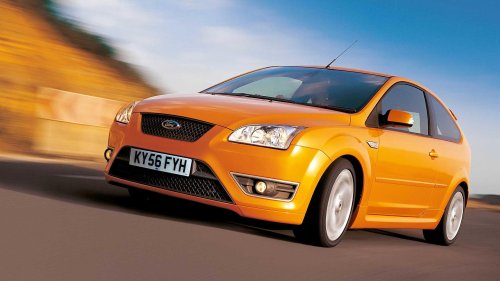
Most mass-market automakers have, at one point in time, produced an engine that helped cement the respective brand into the collective automotive consciousness. Think of motors like the Chevrolet small-block V8 or the Chrysler Hemi V8. Both mills have decades-long tenures under their belts, have been known to be reasonably reliable, and both are loved by tons of enthusiasts. They also helped to catapult both brands to new heights regarding popularity and powerplant-producing authority.However, some engines that may have deserved the famous treatment simply didn't get it, for one reason or another. An example that falls neatly into this category is the Volvo Modular Engine, a large group of motors produced by the Swedish automaker for over 25 years. It was designed to be versatile, easy to produce, and powerful enough in some cases to provide enough oomph for some of Volvo's high-performance models. The problem is, no one has really heard of it. Project Galaxy VolvoVolvo's Modular engine officially entered production at the beginning of the 1990s, but its roots stretch much further back than that. In 1978, Volvo embarked on an all-new project coined "Project Galaxy." Galaxy wasn't just an engine program, it was Volvo's then-new attempt at completely revamping its model lineup. The Swedish brand had noticed that its lineup had grown old, slow, and tired, and was in desperate need of overhaul. Hence, Project Galaxy was implemented.Project Galaxy put quite a lot of emphasis on engine development, too. Many of Volvo's previous engines were showing their age by the late 1970s and early 1980s, and the Swedish automaker was keen to build an engine that was more efficient, powerful, and streamlined in its production that could, potentially, replace multiple motor families all at the same time. The first engine to come from the Galaxy project was coined the "X-100."It was a clean-sheet design, and boasted things like an all-aluminum construction, side-mounted oil filter, and bones related to Volvo's older B21-series "Redblock" inline-four-cylinder engines, which the X-100 was slated to replace. Work on the mill continued throughout the 1980s and was slow-going, as Volvo was involved with other projects occurring at the same time. However, by the mid-80s, Galaxy was ready to begin producing results.Volvo A slew of prototypical models were introduced under the Galaxy project, all of which were front-wheel drive with transverse-mounted engines. In addition, prototypes that were part of Project Galaxy were tasked with sporting new safety features. Reportedly, it was Sweden's most expensive industrial project during its tenure. The first model to come from the Galaxy project was the quirky, pop-up-headlight Volvo 480 ES, which first hit the streets in 1985.It wouldn't be until 1990, though, that the first Project Galaxy-adjacent engine would be introduced into the mass market, marking the first iteration of the Volvo Modular Engine family. This first mill, coined the B6304F, was introduced in the Volvo 960. Modular Subtypes & Nomenclature VolvoIn total, Volvo produced well over 50 versions of its Modular engine family. Four, five, and six-cylinder variants were produced, some of which featured turbocharging. Each mill carried, at minimum, six characters in its codename. The first character constituted which type of fuel was used, with "B" standing for gasoline and "D" for diesel. The second character stood for the number of cylinders. The third and fourth-spot characters denoted its displacement, and the fifth slot showed how many valves per cylinder were used. The sixth spot was for what sort of induction method the mill in question utilized, and the seventh slot–beyond telling which variant the mill was. Here's What Makes The Modular Engine So Reliable VolvoIts penchant for longevity beings in its bowels. Underneath its cast-aluminum skin, the Volvo Modular engine sports forged steel connecting rods, along with a well-sorted closed-deck block design. Closed-deck blocks feature a reinforced top end, where the cylinder heads bolt onto the top of the block. Typically, mass-market engines feature open-deck designs, which are lighter, but more susceptible to warping and, potentially, cracking.Inside its cylinders are cast-iron linings, meant to help isolate combustion chamber heat while also providing a more durable surface for the piston to move within. In addition, Volvo designed the Modular family with diesel applications in mind. Those familiar with diesel engines will know that they typically carry a much higher compression ratio than gasoline engines, necessitating a stronger mill as a whole to withstand the higher amount of compression. This means that gasoline-powered variants of the Modular family are understressed, leading to overall longer service lives.Volvo When the Modular engines underwent testing, Volvo subjected them to rigorous, severe, and even downright abusive trials. For example, each Modular engine subtype was put through a 200,000-kilometer (124,274-mile) stress test. In addition, it also underwent extreme temperature testing, with temps ranging from -40°F to +120°F. The reason behind the extremely harsh treatment was Volvo's desire to build engines that can routinely surpass the 200,000-kilometer mark without needing any major repairs. In the early 1990s, this was a modestly impressive feat for any engine. Key Updates Through The Years VolvoIn its original, 1990 form, the Volvo Modular engine came equipped with a mechanical throttle and distributor-type ignition. In 1991, the first five-cylinder variation was introduced alongside the then-new Volvo 850, coined the "B5254F." Along with the new five-pot came Volvo's Variable Intake System (V-VIS), which allowed for better engine response at lower RPM. In 1995, the Modular engine received its first four-cylinder variants that coincided with the introduction of the Volvo S40.The first major update took place in 1999, which began the mill's psuedo-second generation called the "RN." At this point, Volvo had done away with the distributor ignition in favor of a more modern coil-on-plug arrangement. In addition, it gained a fly-by-wire throttle, removing the need for an actual, physical throttle linkage. Variable valve timing also entered the mix, meaning the engines could now produce more power while also becoming more efficient.Volvo Come 2003, yet another major update was undertaken. The new gen was called the "RNC", with the "C" standing for compact. Volvo worked to reduce the Modular engine's overall footprint, which allowed for use in smaller applications. In total, the engine was roughly 200 millimeters narrower, and 25 millimeters shorter. Intake manifolds were now made from high-test plastic, and its variable valve timing system was now continuous. Topping the changes off was an all-new turbocharger turbine housing, which was now integrated with the exhaust manifold.Because there are more than a few dozen different Modular engines, let's take a look at the most powerful four, five and six-cylinder mills belonging to the family in the table below: Ford Used Volvo's Modular Engine, Too FordIt wasn't just one version, either. Ford was able to leverage the use of a few of Volvo's Modular engines due to the Detroit Giant's ownership of the Swedish marque between 1999 and 2010. The vast majority of Fords using the Volvo Modular engine were for the Euro market, such as the Ford Focus ST and RS, including the super-limited RS 500, plus the family-friendly Ford S-MAX. The famous Ford Mondeo used the mill, too, during its Mark IV generation, and the Ford Kuga also employed the mill's use. Where Is The Volvo Modular Engine Now? VolvoIn 2006, the Modular engine saw its first inkling of inferiority, some 16 years after its launch. That year, Volvo released the SI6 inline-six engine, developed in conjunction with Land Rover. Its purpose was to gradually replace the six-pot iterations of the Volvo Modular Engine. Seven years later, the Volvo VEA engine was introduced. The new mill was meant to replace any and all four-cylinder Modular engines still in production. Sadly, the five-cylinder Modular mills were not replaced, effectively ending Volvo's use of the engine type in 2016, the very same year the Modular engine as a whole was axed entirely.




















 +37 others