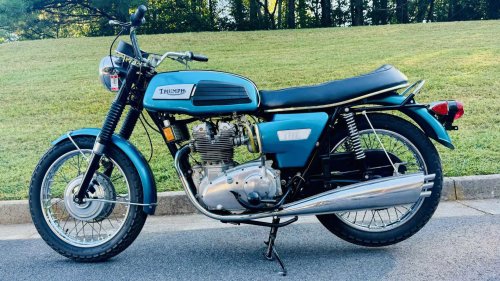
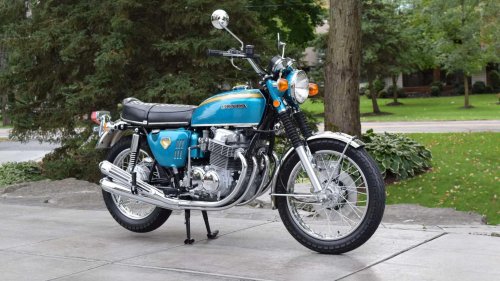
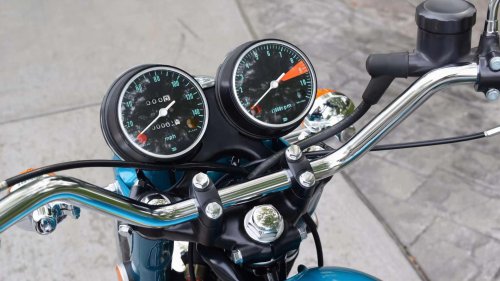
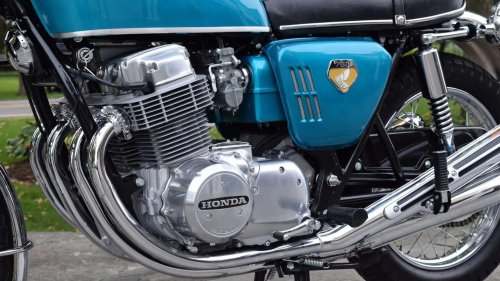
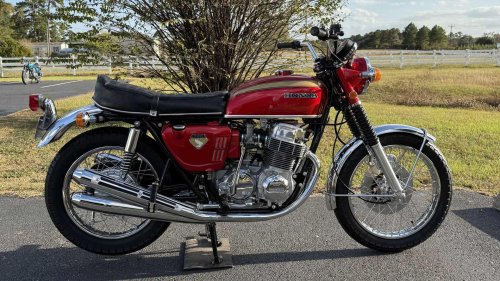
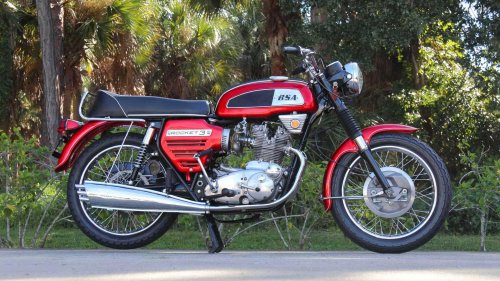
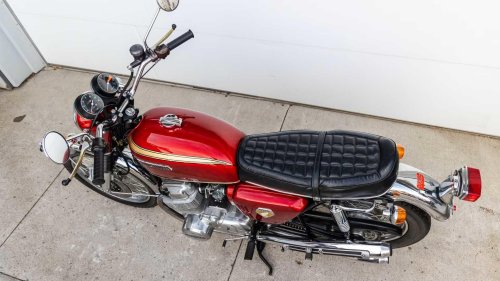
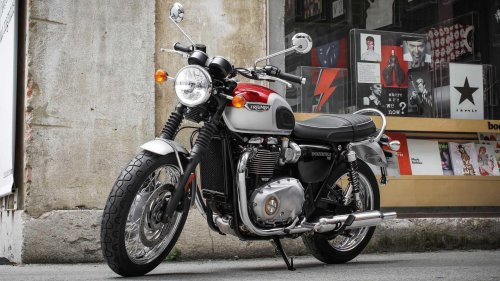
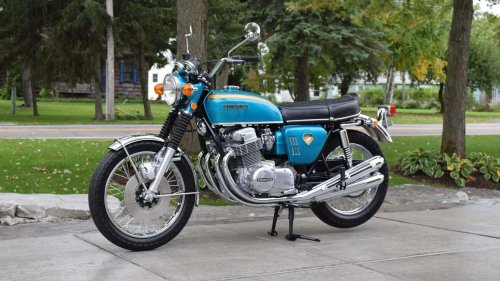
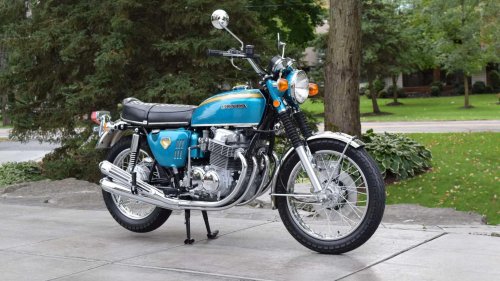
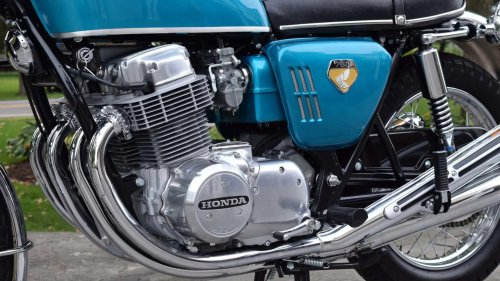
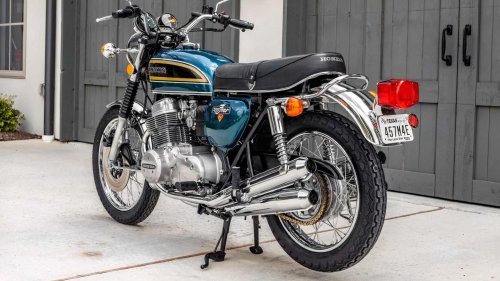
Motorcycling up to the end of the 1960s was a largely British affair. Triumph, BSA, Norton, and Royal Enfield ruled the roost, creating “café racer” style bikes that were more powerful and nimble than competitors. That was until Honda founder Soichiro Honda set out on a quest to build what he called “The King of Motorcycles." In 1969, he released that bike — and almost took down the entire British motorcycle industry with it overnight. Why British Bikes Needed A Shake Up MecumBritish motorcycles were the go-to for many post-war due to their strong performance, stylish design, and a culture that valued individuality. They dominated the Isle of Man TT — arguably the biggest motorcycle race at the time — too, which further pushed their proliferation and image of speed and performance.America was also a significant importer of British bikes and British culture at large. The “British Invasion” in the 1960s saw Americans obsess over bands like The Beatles, The Who, and The Rolling Stones, while other facets of British life, such as fashion and motorcycles, also gained popularity. The bikes themselves were a key part of this, being lighter and more agile than their American counterparts, like Harleys and Indians.British bikes also made appearances in TV and movies, most notably when American icon Steve McQueen’s stunt double Bud Ekins jumped a Triumph TR6 Trophy over a fence in 1963’s The Great Escape, pushing their popularity even further. But as the decade wore on, the bikes started to look and feel increasingly dated. British brands had style and heritage, but that came with baggage like aging factories, stale designs, and reliability issues — particularly oil leaks — that became far more commonplace.Japanese brands had been working on their fleet, though they weren’t widely accepted yet. Honda created its first motorcycle in 1949, with Yamaha joining in 1955 and Kawasaki in 1961, though the reputation for Japanese products as a whole at the time wasn’t a positive one, with this extending to their motorcycles. They were often seen as inferior copies of things made in the West, and while bikes like Honda’s CB450 in 1965 did make some headway into the market, they’d not yet dispelled the lower quality myth. That was until 1969, when Honda released the CB750 – the bike that would single-handedly start the downfall of the British bike empire. The CB750: Japanese Reliability And Performance That Exposed British Flaws Mecum The First Modern Superbike The CB750 was a revolutionary motorcycle that accelerated the decline of British motorcycles in the U.S. and global markets, which had already been struggling with reliability issues, aging designs, and labor problems. Widely considered to be the first modern superbike, and was a considerable upgrade on anything else on the market, the CB750 fundamentally changed motorcycling and marked a significant blow to the British motorcycle industry.Mecum For a start, it had a four-cylinder engine. The British had largely focused on twin engines, which necessitate longer strokes and produce power less readily. Both Triumph and BSA had launched triples — the Trident and Rocket 3, respectively, but it wasn’t enough to rival the unmatched smoothness of the CB’s four-cylinder ride.The smoother ride wasn’t the only thing that the CB750 did differently, though — its disc brakes were another step up on the Brits, who were still using drum brakes on the front at the time. This improved the stopping power of the bike, making its 124mph top speed at a time when the Brits hovered around the 110 mph mark less daunting.MecumHonda’s electric start was yet another innovation over the British bikes, who were still using kickstarts at the time.Better yet was the improvement in reliability. British bikes had a reputation for issues — most commonly the aforementioned oil leaks, but vibrations coming from the two-cylinder engines caused extra strain on parts, electrical systems failed regularly, carburetors wore out, and quality control suffered as brands struggled to compete with the rising number of foreign bikes.The Honda, meanwhile, was conceived with mass production in mind from the start. They already had extensive manufacturing knowledge, having created everything from motorcycles to Formula 1 cars to farm equipment, so they knew how to produce bikes at scale, and with the hottest bike in the world to their name, things looked good for the brand — and bad for the Brits. A Faster Bike For A Better Price MecumThe Honda was clearly a considerable step-up in the world of motorcycling, though the price didn’t necessarily reflect that, which played another big hand in its usurping of the British. Retailing for about $926 in 1969 (that’s $13,628 in today’s money), it was almost comparable to the 1969 Triumph Trident and 1968 BSA Rocket 3, both of which sold for $836 that same year.That extra bump in price wasn’t a huge deterrent for the innovations that the CB750 came with, though, especially as both the Trident and Rocket 3 suffered from the reliability issues that seemed ubiquitous with British bikes. These issues further damaged the reputation of British bikes and made the CB750 seem an even better option. British Industry Faltered In The Face Of Innovation MecumThe CB750 had rewritten what a modern motorcycle was, and showed riders that they didn’t need to put up with the unreliability and issues of British bikes. And while Honda was pressing on, British industry was slow to respond. Having only just started to look at triples (which were still expensive compared to twins at the time), they needed considerable development just to catch up with Honda, which had just shown it had a winning solution.They weren’t helped by the economic state of the UK at the time either; the 1970s saw a period of high inflation and workers' strikes, including one at the Triumph factory in 1973 and the ongoing miners’ strikes. It culminated in the near collapse of the British motorcycle industry, with around 20,000 British bikes being produced per year by the mid 1970s — a mere drop in the ocean compared to Honda, who produced 2,000,000 in 1975 alone.Mecum British manufacturers with long, exciting histories fell. Ariel, which started in 1902 and was sold to BSA in 1944, died in 1970. BSA itself went defunct in 1972. Royal Enfield shuttered a year later, marking the end of a legacy that started in 1893. The CB750, meanwhile, went from strength to strength and was sold until 2008. The Lasting Legacy Of Honda’s CB750 MecumThe release of the Honda CB750 was a watershed moment for the entire motorcycle industry, and effectively a death knell for the British industry. It revolutionized motorcycles to a point beyond which they could not come back from, and its impact is still felt now. While BSA and Royal Enfield closed, they, along with Triumph and Norton, do exist today, but in a much different fashion.Triumph fought on until it was saved from liquidation in 1983 by British businessman John Bloor, and they still have headquarters in the UK, while manufacturing moved to Thailand. The remaining three brands are now all Indian-owned — BSA by Mahindra, Royal Enfield by Eicher Group, and while Norton still builds bikes in the UK, they’re owned by India’s TVS Motor Company.Mecum Honda, meanwhile, continued their dominance in motorcycles. In May 2025, they announced that they’d made over 500 million bikes, having only crossed the 100 million mark in 1997. In racing, they’ve taken 19 riders’ and 10 constructors’ championships in the top flight of motorcycle racing.The Honda CB750 wasn’t just the first superbike. It was the bike that was better than every other bike. It was better than the sum total of decades of British engineering. And it reinvented what the motorcycle was. While other bikes have come and gone, none have had the same impact as the CB750, and it’s almost certain that none ever will again.