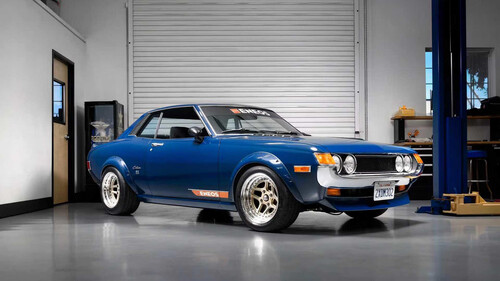
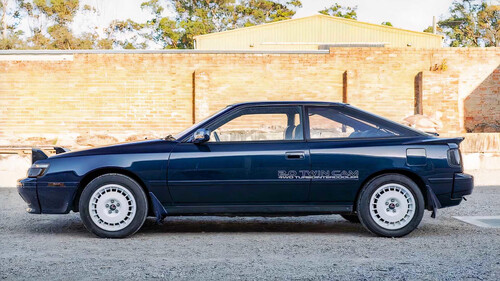
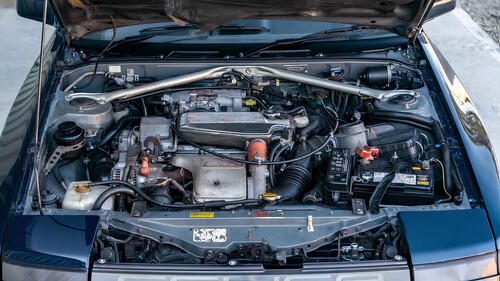
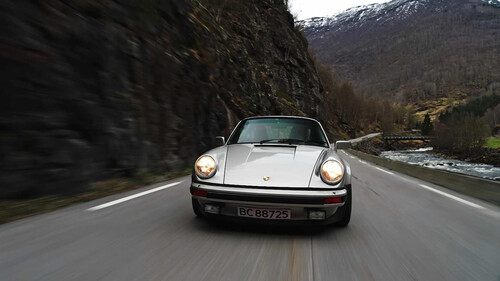
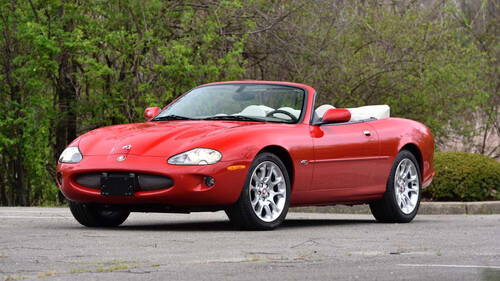
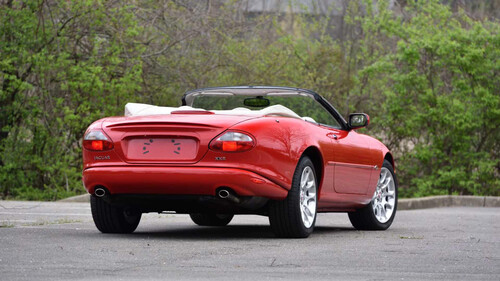
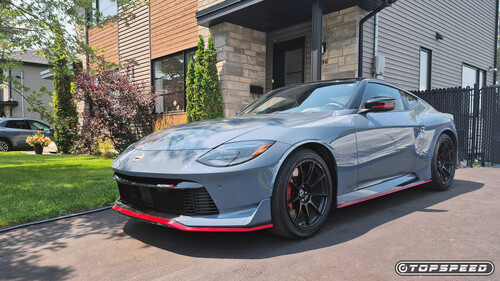
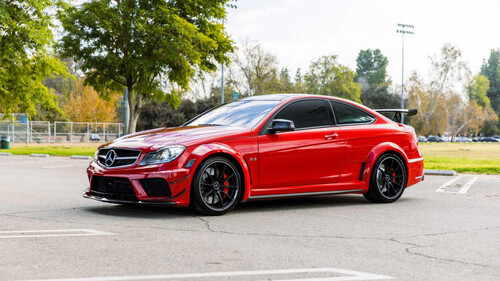
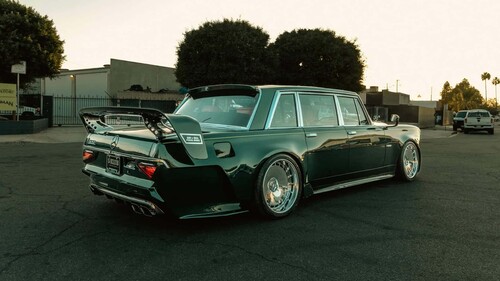
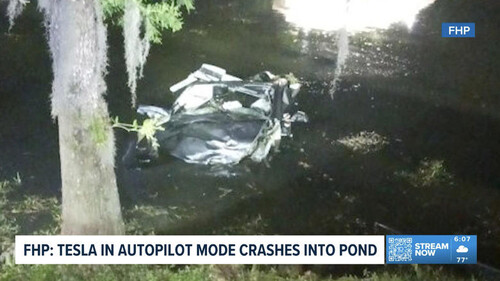
Cars have never been faster, safer, cleaner, smarter, or easier to drive quickly. Modern Performance Cars can make numbers that would've sounded illegal 25 years ago, then cool its seats, park itself, warn you about traffic you haven’t spotted, and stream a podcast to round things off. In simple words, that’s astounding progress. Anyone pretending otherwise probably also thinks carburetors are 'simple' because they haven’t had to tune one in traffic on a hot day.Still, it's hard to shake off the feeling that something's gone missing. Not from every modern car, mind, and not because touchscreens are evil little rectangles sent to ruin apexes. The problem's a touch subtler than that. The best analog cars made driving feel like a back and forth you longed for. The steering had weight because something physical was happening, the shifter had texture because gears, bushings, linkages, and your left leg were all involved. You asked the car for something, and the car answered honestly, even when the answer was, 'Careful, genius.'Welcome to Driver's Car Week. This week we're celebrating the driver's car — the machines built for people who actually love to drive. All week long we're covering the best enthusiast vehicles, the surrounding culture, and everything that makes them worth caring about. Analog Cars Still Get Under Your Skin Via: Hennessey Special VehiclesThe appeal of an analog driver’s car starts with the simple fact that it lets you feel more of what's going on under you. There’s less filtration between your hands, feet, backside, and the road. The steering's more than a round controller, the brake pedal's almost alive and needs to be treated like it's sentient, and the gear lever isn’t just there because someone in accounts thought 'manual transmission' looked good in the brochure. Everything has a job, and it's up to you to extract that potential.Anyone who's worked on a car knows that effort creates unreasonable attachment. More often than not, a car that asks something from you gives you something back. Nail a heel-and-toe downshift in an old sports car and it feels like you earned the corner before you even turned in. Get the balance right through a fast bend and the reward feels almost personal. You didn’t select Track Plus Max Attack Mode and let a committee of control modules tidy up the mess. You made the call, and you trusted the car with the consequences.That’s why older driver’s cars can feel alive at sane speeds. It's nice to have, but you don’t need 700 horsepower to have a good time when the steering talks, the body moves naturally, and the engine responds like it’s bolted to your right foot. A great analog car can make 45 mph on the right road feel like a riotous experience. Conversely, a numb modern car can make 100 mph feel like... nothing. Modern Tech's Made Fast Cars Better In Ways We Shouldn't Ignore JaguarHere’s where the analog crowd has to be honest, and that includes this writer. It'd be irresponsible of anyone to claim that modern tech has ruined cars by default, because that's just plain wrong. In plenty of ways, it's made them better than ever. ABS, stability control, modern tire tech, adaptive dampers, dual-clutch transmissions, advanced crash structures, blind-spot monitoring, and pre-collision systems have all had a huge hand in making performance more accessible and less terrifying when something inevitably goes wrong.Needless to say, that doesn’t exactly sound romantic, but how's that romance playing out when you’re backwards in a ditch? A modern car can give drivers a larger safety net, and that's crucial on public roads filled with rain, potholes, phone-staring drivers (we all know one), and that one guy who merges like he’s being chased by bees. The point is that the best tech works quietly in the background, and protects the drive. Enhances it, even.If you think about it, modern tech's genuinely allowed engineers to stretch what a road car can do. Adaptive dampers can make one car tolerable on a broken city street and extremely composed on a fast back road. Traction systems can help massive power outputs feel usable, and good drive modes can sharpen throttle response, steering weight, exhaust behavior, suspension control, and gearbox logic without forcing you to live with one compromised setup every day. Where Modern Cars Started Overdoing It TeslaAs clichéd as it may be, sometimes a well-weathered quote sums it up best. Mark Twain once stated: "Everything has its limit; iron ore cannot be educated into gold." In this instance, the trouble starts when tech stops supporting the drive and starts controlling it. A driver’s car should make the driver feel essential. Unfortunately, too many modern performance cars make the driver feel like a biological accessory plugged into a very fast appliance. You’re still involved, technically, but the car has already read the room, assigned the risk, selected the torque split, trimmed the slip angle, softened the mistake, and filed a report before you’ve finished saying, “I really am as good as they say.”Electric power steering is one of the biggest examples. It can be brilliant, and some modern systems are genuinely sharp, consistent, and accurate. But accuracy and feel are two very different things here. A steering rack can place the car exactly where you want while telling you almost nothing about what the front tires are doing. That’s useful for lap times, but a driver’s car needs obedience and feedback. Right From The Start Bring a TrailerTouchscreens are another sore spot because they often solve one problem by creating three new ones. A screen can organize a lot of features neatly, and it keeps interiors looking clean in press photos. But burying climate controls, seat heaters, drive settings, and basic audio functions in menus is a lousy trade when the car's moving. Physical controls let muscle memory do the work: a knob can be found without a glance.The same applies to over-layered drive modes. Comfort, Sport, Sport Plus, Track, Wet, Individual, Drift, and whatever “Nurburgring” mode is supposed to do on the school run can turn a simple drive into a setup session. Sometimes the best mode is the one where the car just feels right from the start. This can be open to interpretation, but there's a sense that old cars didn’t always have that because engineers just knew better. The Future Needs To Be A Greatest-Hits Album Autotopia LA YouTubeThe encouraging bit is that some modern cars still get it. They use tech without letting it become the whole personality. This translates to keeping the steering clean, the controls logical, the chassis readable, and the driver at the center of the experience.Truth be told, that’s the real lesson from analog cars. It isn’t that every car needs a cable throttle, manual steering, five-speed gearbox, and the cabin noise level of a washing machine full of sockets. The lesson is clarity. Give the driver direct inputs, make the car’s reactions easy to read, keep the important controls where hands can find them, let the chassis move enough to communicate, let the engine or motor response feel natural instead of polished into mush. Borrowing Shamelessly MecumEven tech-heavy cars can get this right when the tech serves the driver instead of cosplaying as the driver. A well-calibrated stability-control system can let the car breathe before stepping in, or a good automatic or dual-clutch transmission can feel telepathic without feeling sterile. Hybrid assistance is awesome, as long as it's used primarily to sharpen response. Similarly, torque vectoring can make a car feel more agile. Let's be mindful of the fact that none of this is the enemy. The enemy is the deadening layer that turns driving into a request routed through middle management.The ideal driver’s car going forward should borrow shamelessly from both eras. Take the analog car’s steering feel, low weight, honesty, visibility, physical controls, and sense of occasion, and then add the modern car’s crash protection, tire tech, braking performance, lighting, reliability, emissions work, and safety systems that know when to stay quiet. That mix would be brilliant. It'd also stop this argument from sounding like two old guys yelling at a Tesla from a diner parking lot.Contrary to popular belief, the driver’s car isn’t dead. It’s simply buried under too many menus, modes, and sensors. Dig through all that, however, and the formula is still simple: make the car talk, and let the driver answer.