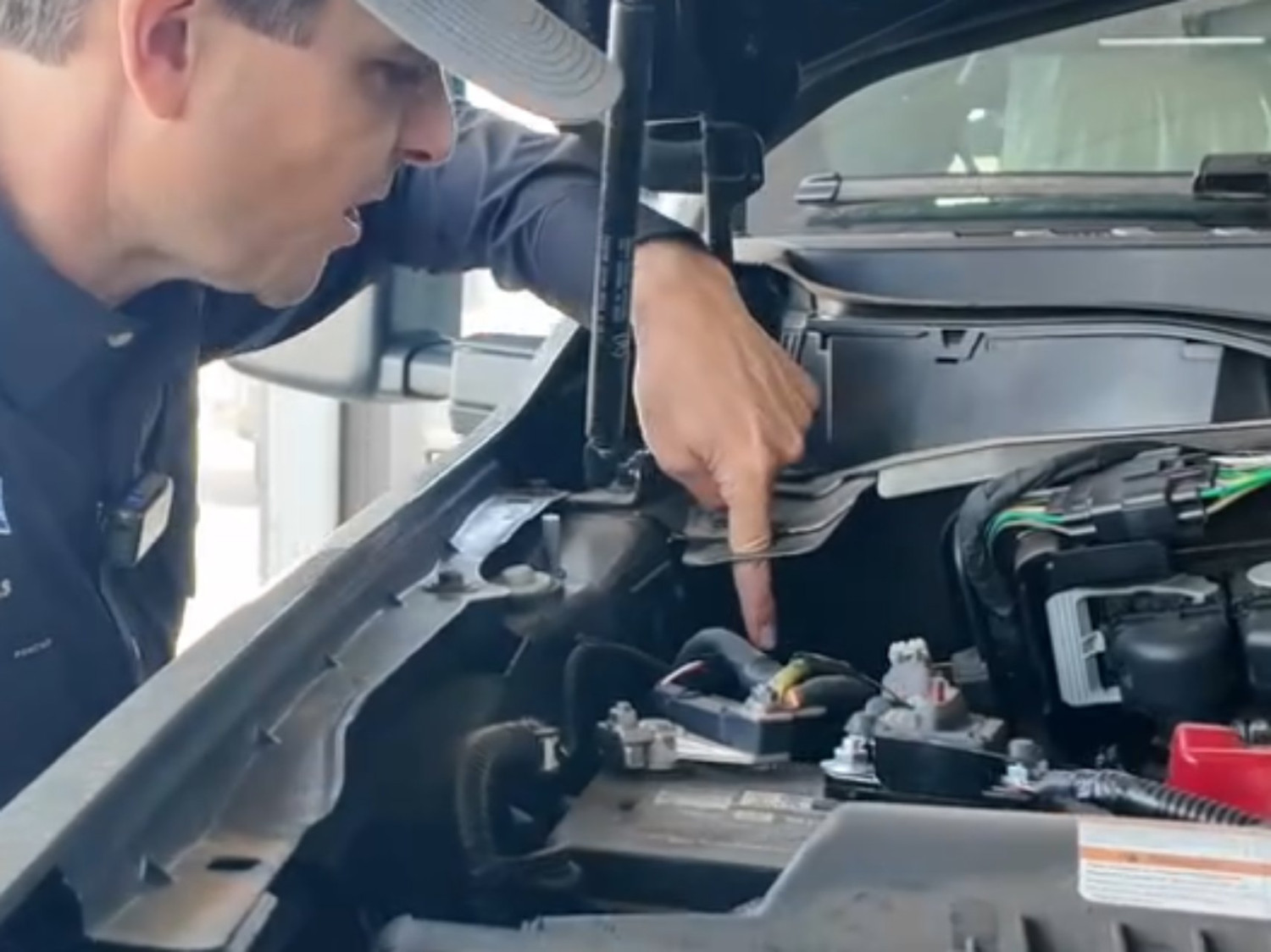
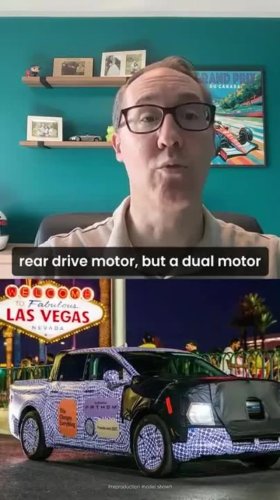
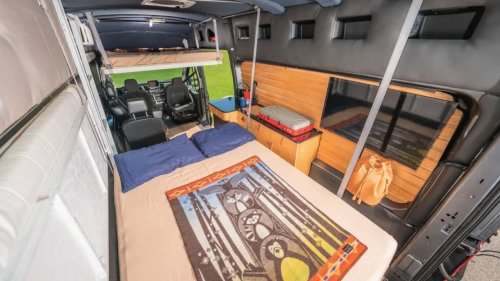
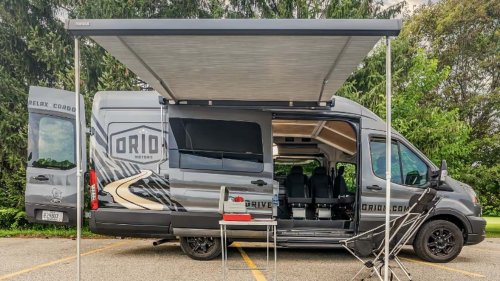
A Ford technician's behind-the-scenes look at recall software updates has revealed why a seemingly simple update might keep your vehicle at the dealership for days. Justin Cole (@fordtechjcole), a master Ford technician and business owner of Bubba's Garage in Fowlerville, Michigan, shared a 4-minute and 5-second reality check that has garnered over 18,600 views since being posted on Oct. 22. The video shows what happens when Ford's proprietary programming software fails mid-update, potentially "bricking" expensive modules and leaving customers without their vehicles for extended periods. Cole filmed himself dealing with a live recall situation, demonstrating exactly why these updates aren't the quick fixes many customers expect them to be. "When you have these recalls that are being populated for your vehicle that are software updates and you call your dealership to get that appointment set, please understand that these are not simple updates for your modules," he explains in the video. "Some of these modules can take all day to do. Some of these modules may fail during programming and they may brick." The Reality of Modern Automotive Software Updates Cole was performing a recall that affects certain 2022-2023 Ford Transit vehicles and requires updates to the Instrument Panel Cluster. The technician's work occurs against the backdrop of Ford's significant recall challenges in 2025, with the automaker having issued over 80 recalls affecting more than four million vehicles so far this year. This represents Ford's highest recall volume in recent history, surpassing even 2024's total. What should be a straightforward process quickly became a nightmare scenario that every technician dreads. "Right now it says update is successful. But when I go over here to my computer and to FDRS, FDRS is completely frozen," he explains while showing his screen. "I'm an hour and a half into this update and I cannot go any farther. It will not let me proceed because the FDRS program failed." FDRS (Ford Diagnostic and Repair System) is Ford's proprietary diagnostic software that technicians must use for all programming work. The cloud-based system was designed as Ford's next-generation diagnostic tool for newer models, providing dealership-level diagnostic coverage. Despite using a brand-new computer with 32 gigabytes of RAM and one terabyte of storage—purchased specifically for programming work—Cole still encountered system failures. Technical forums confirm that FDRS can experience server-side issues that prevent technicians from using the software, particularly when guided diagnostics are required for warranty claim approvals. OWNERSHIP STORIES Viral stories from across the web Our team of experts tracks what owners are saying about car-shopping, repairs, the daily driving experience and more on social media. "The program that we use is FDRS. It's not a good program," he admits candidly. "This is probably going to take me all day. It is 12:30 on a Wednesday. I probably won't have this thing updated until the end of the day if not into tomorrow." Gallery: Ford Transit XL camper from Orion Motors When Modules Get "Bricked" The term "bricked" refers to when an electronic module becomes completely unresponsive during a software update, essentially turning it into a useless brick. This can happen due to various causes, including loss of battery voltage, communication failures, or software errors during the programming process. When this happens during a recall update, the situation becomes significantly more complicated. "When that happens, you have to replace that module. It may take one, two, three days to get that module. It might even take longer because we can't just put the module in the vehicle," Cole explains. "There are some procedures and hoops that us technicians have to jump through with Ford Hotline and other parts of Ford's departments in order to diagnose why that module has failed, why it's bricked." The process isn't as simple as ordering a replacement part. Technicians must get approval from Ford, justify the replacement, and follow specific protocols before a new module can even be ordered. This can extend what customers expect to be a simple software update into a multi-day ordeal. The Scale of the Problem Cole’s experience isn't isolated. The recall he was working on affects 3,506 Transit vehicles previously repaired under a different recall. According to Cole, he has "yet to run into any vehicle that is at the latest calibration," meaning virtually every affected Ford vehicle will need this time-consuming update process. Fellow technicians in the comments confirmed the widespread nature of these issues. User lakeshoremechanic reported, "All of the 25S49S I've done have either taken fully 6 hours or they failed," while user5812462276506 shared they "had like 5 failed 25S49S this week so far." Another technician, AJ, noted that the problem extends beyond Ford: "GM is the same way. Our programming (SPS2 and 3) fails in the middle of programming and bricks modules left and right. Cars get towed in when the OTA updates failed. It's [a] nightmare." Industry sources confirm that GM's programming systems experience similar error codes and communication failures during module programming. Customer Frustration Meets Technical Reality The video sparked heated discussions about customer expectations versus technical realities. Some viewers expressed frustration with the complexity of modern vehicles and lengthy repair times. "I will be waiting, I don't have 3 days for a simple update," commented user9209280566058, though they later added "JK thank you for all you do." Others questioned whether recalls should be avoided entirely. When user sleverett83 asked "So are you better off not doing the recall?" Cole replied firmly: "Has to be done to comply." One particularly contentious exchange involved user Mardee, who stated: "I have 4 recalls between 2 different vehicles and one of them is a software update recall and I won't be doing any of them. I don't want one of you messing with my vehicles." Cole defended his profession: "Maybe you should come do our job and tell me it's easy. Even after being a tech for 16 years, a good one at that, it's no easier than it was 10 years ago, even with more experience." The Supply Chain Challenge The complexity extends beyond just the programming process. When modules need replacement, technicians face additional hurdles in the modern automotive supply chain. User alantroutman460 suggested keeping spare parts on hand, but Cole explained the reality: "You can't order a module for stock these days. Everything needs a VIN and needs approval. Even if I needed an APIM for a customer paid repair, you still have to [...] jump through Ford hoops to get one. It's insane." This VIN-specific ordering system is standard across the automotive industry. Ford's parts ordering systems require VIN numbers to ensure accurate fitment and proper module matching, as modern vehicles are built with varying configurations even within the same model year. While this system prevents fraud and ensures proper parts matching, it adds another layer of complexity and delay to what customers perceive as simple fixes. Setting Proper Expectations Cole's message is clear: patience and understanding are essential when dealing with modern vehicle software updates. "Be mindful, be respectful with your service advisor, service manager, whoever it may be. If they call and tell you, hey, we're having some problems with the module programming. We need your vehicle for another day. We need it for another two days, whatever the case may be. Just understand that this is a real world problem for us technicians." The technician emphasizes that extended repair times aren't due to laziness or incompetence: "We're not just trying to keep your vehicle for as long as possible because we don't want to work on it. This is… it happens every single day we are dealing with this problem." Motor1 reached out to Cole via TikTok direct message. We'll be sure to update this if he responds. We want your opinion! What would you like to see on Motor1.com? Take our 3 minute survey. - The Motor1.com Team






















 +99 others