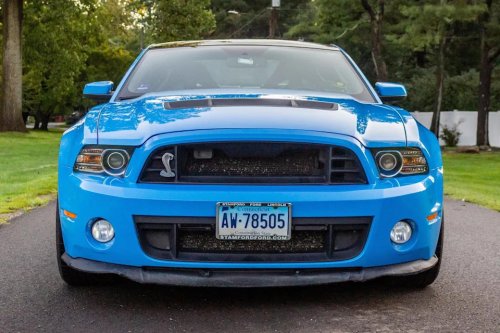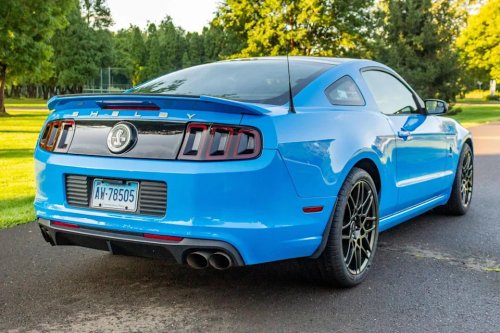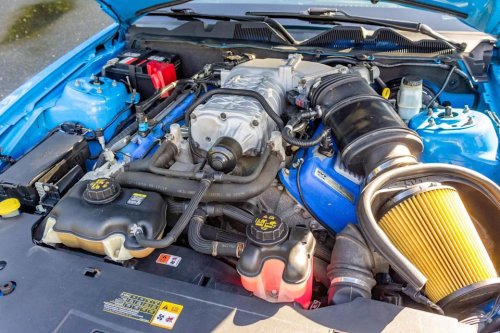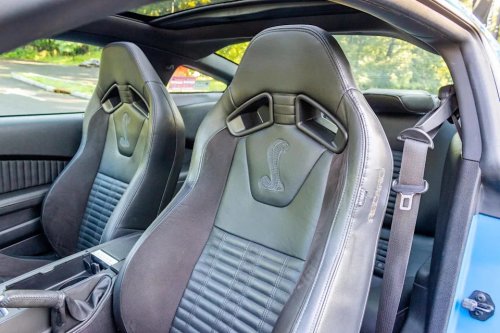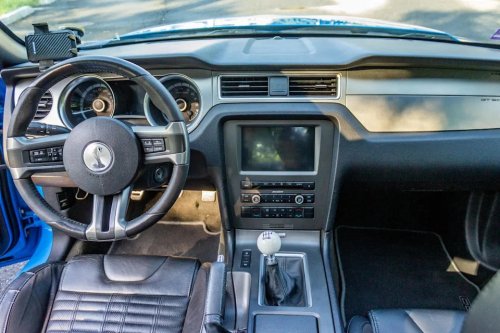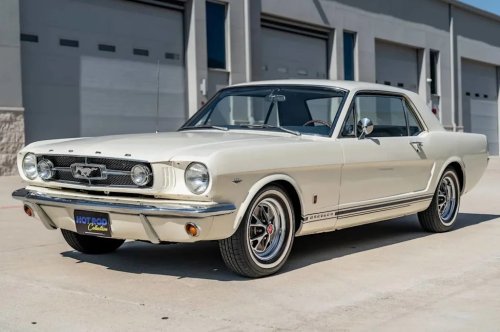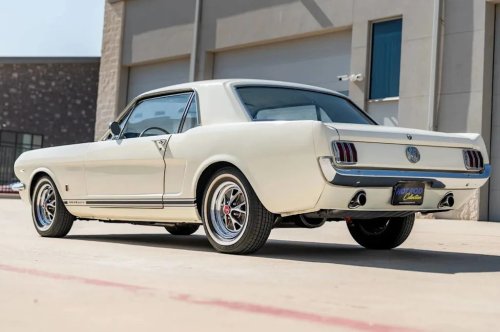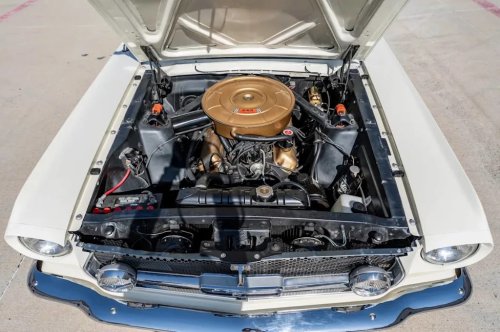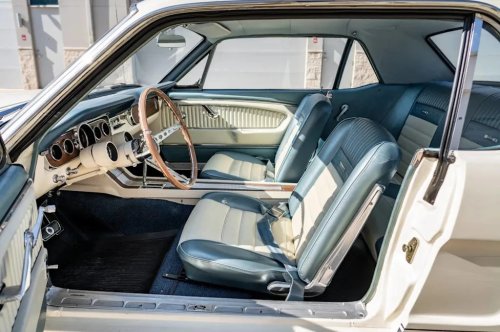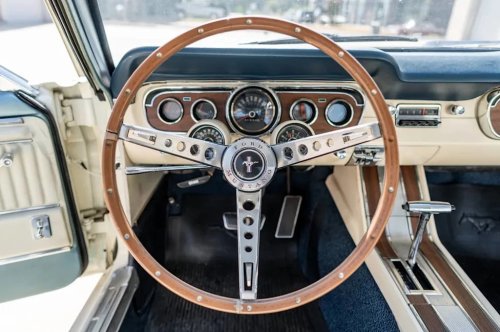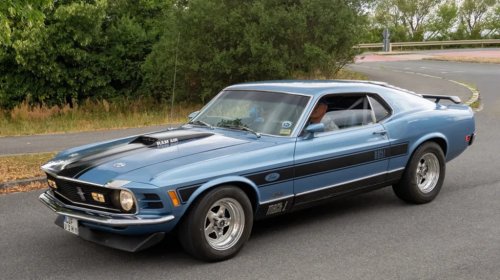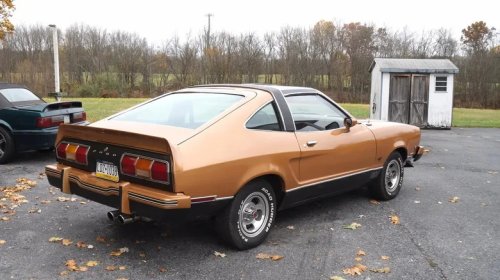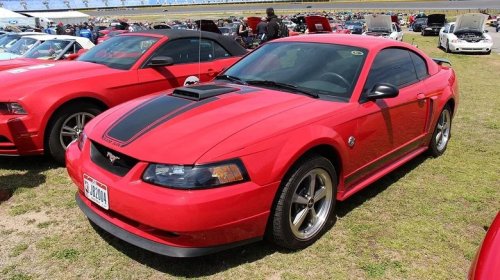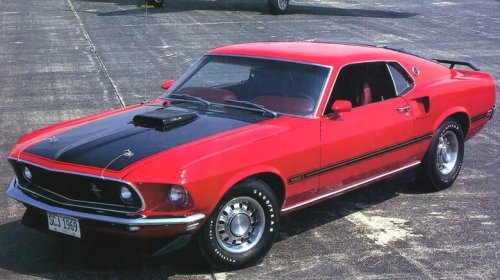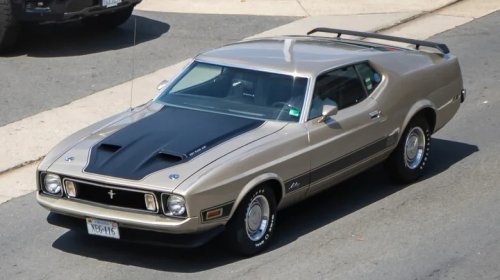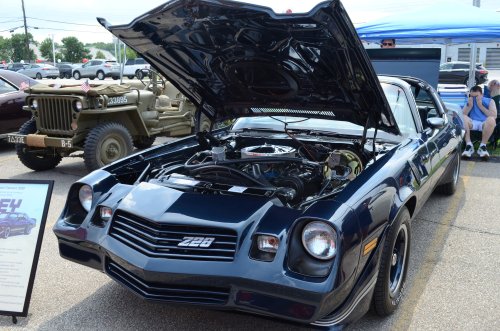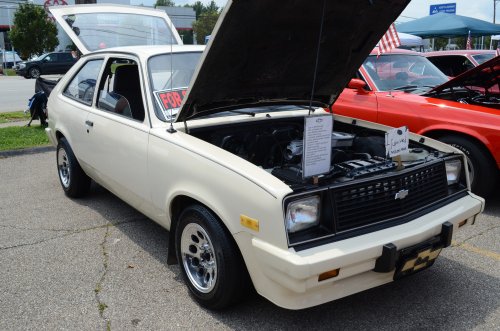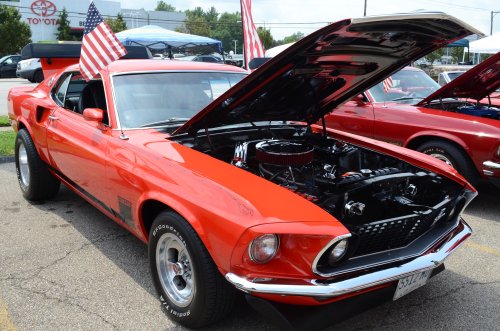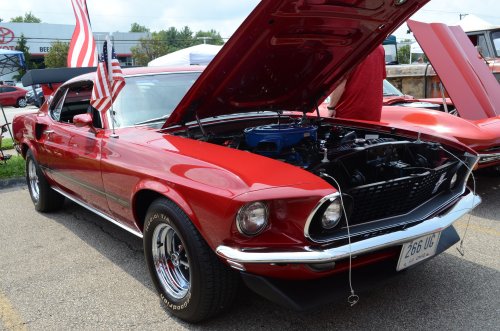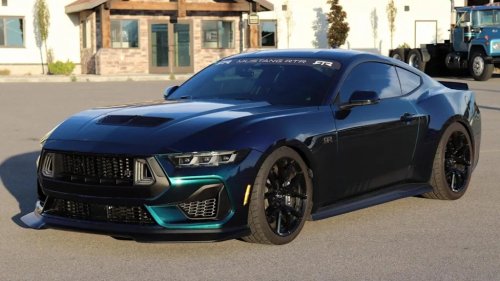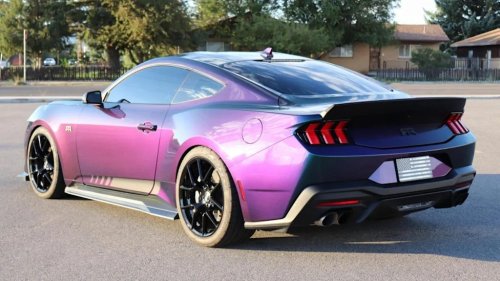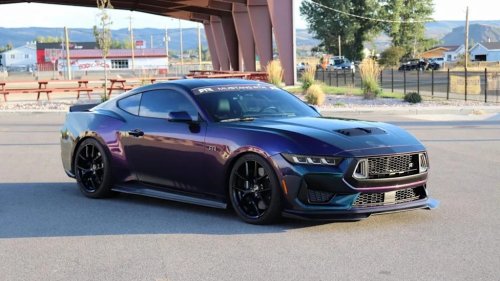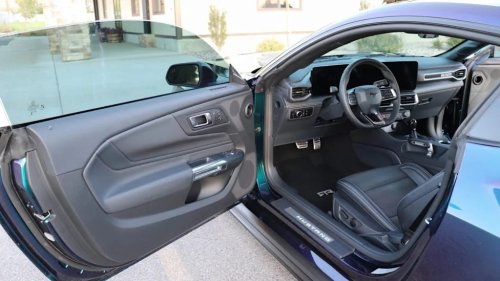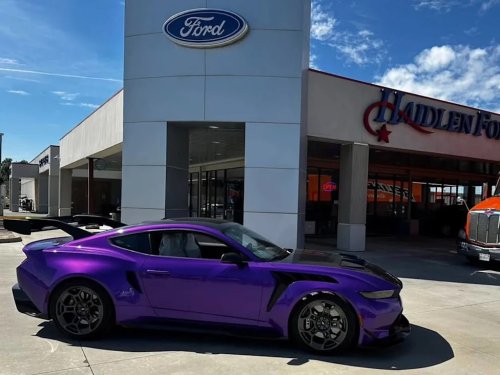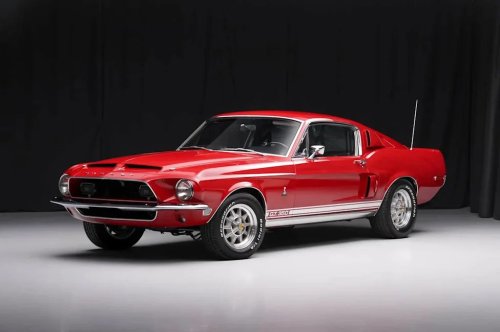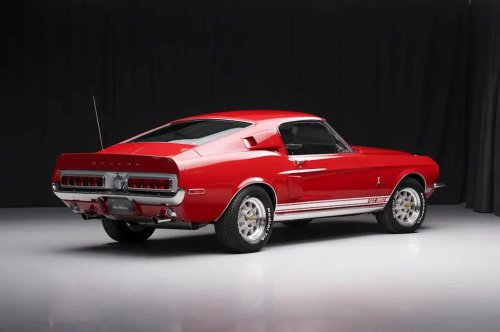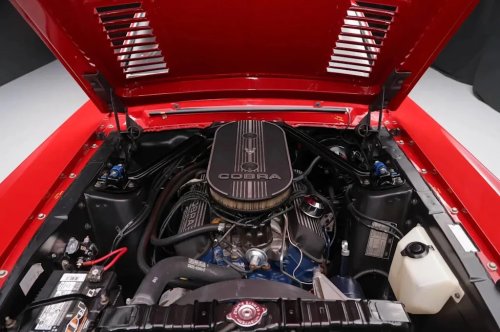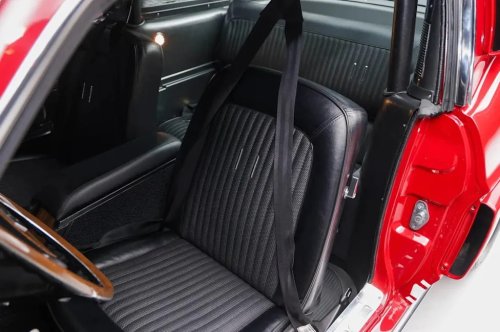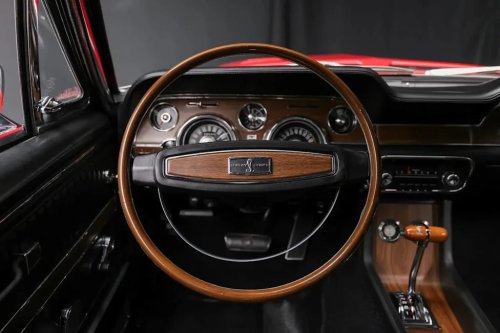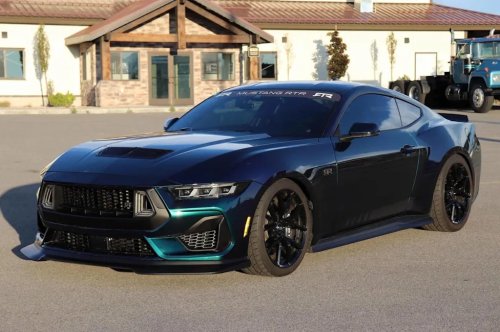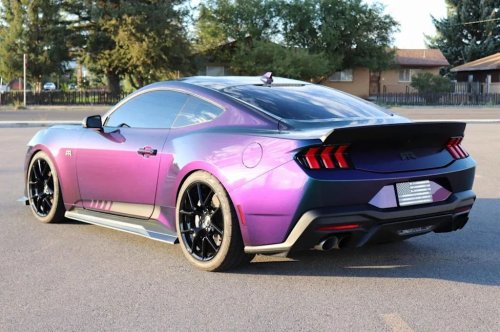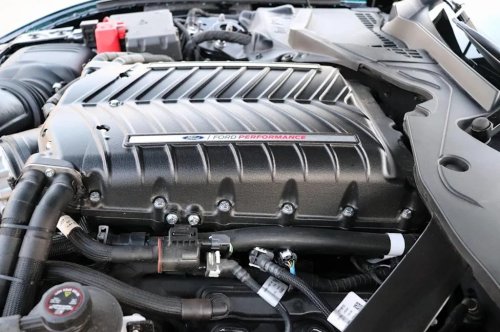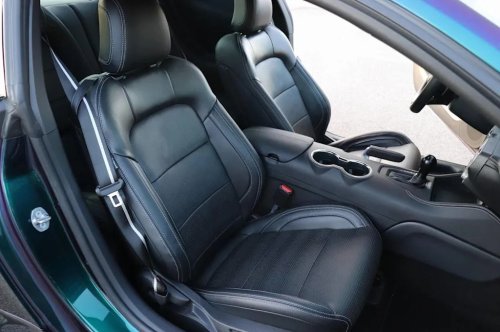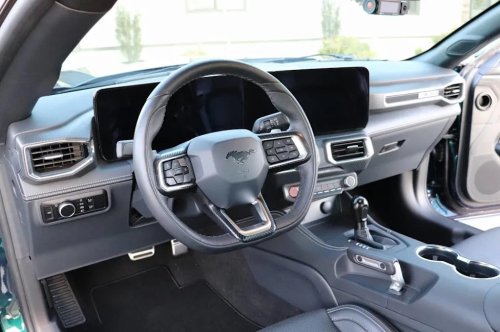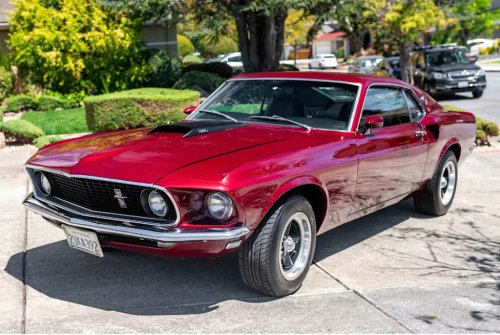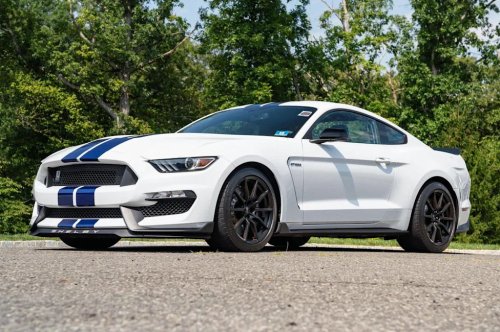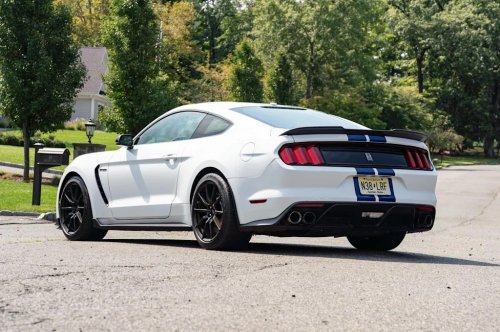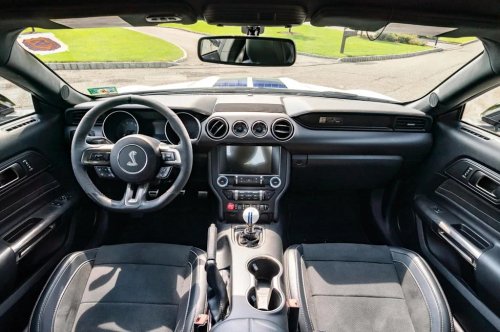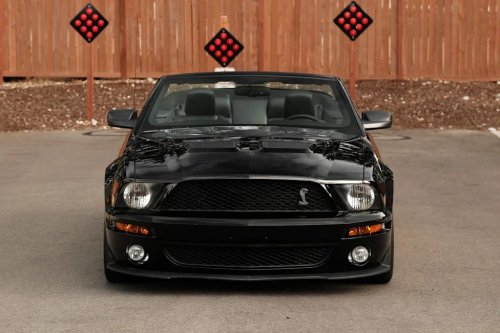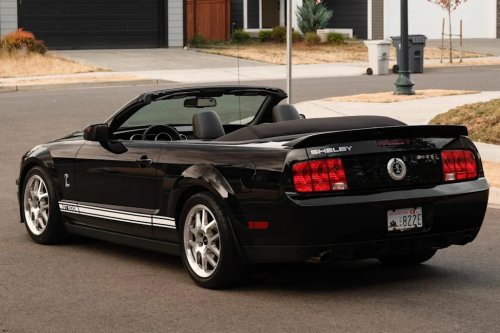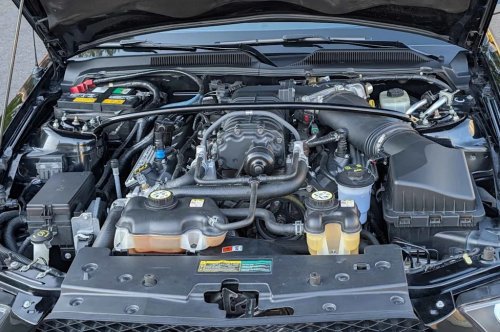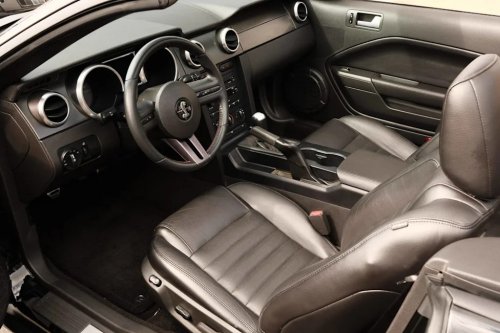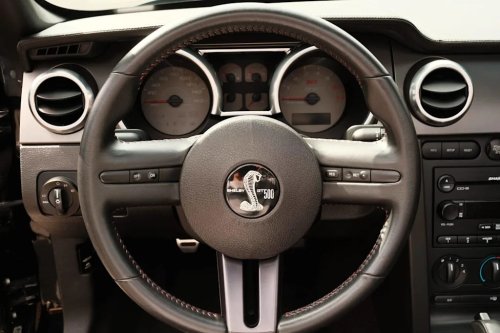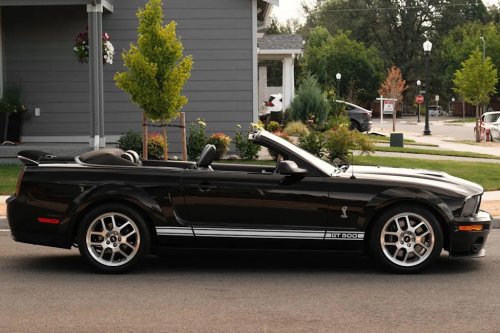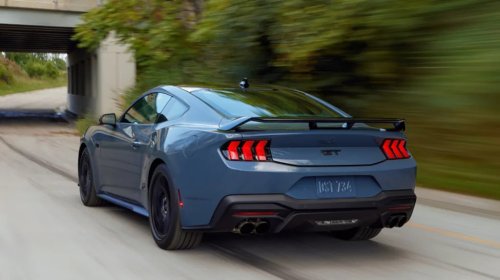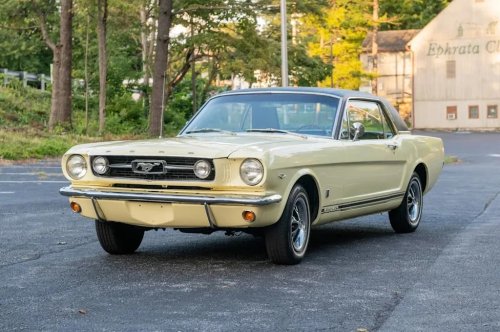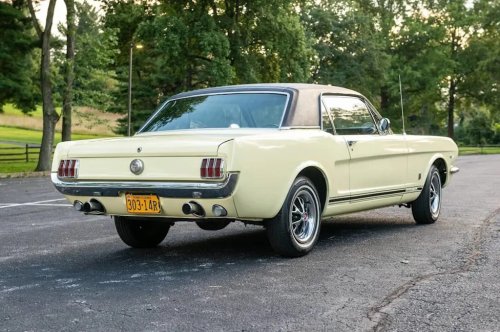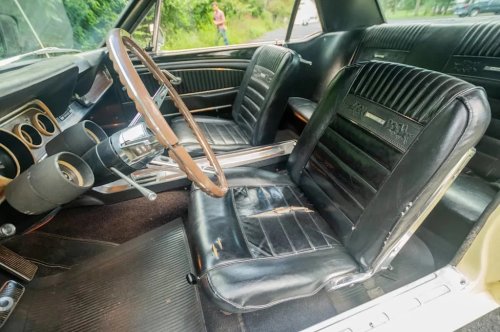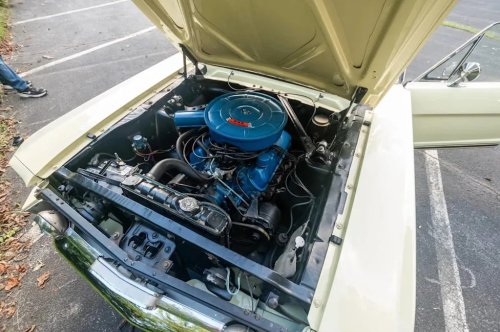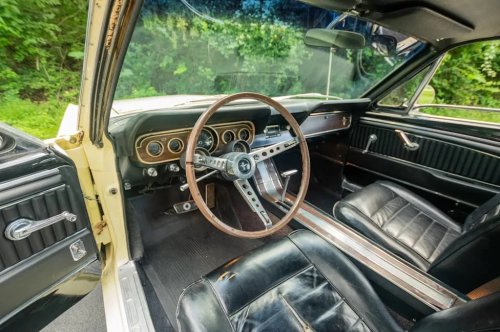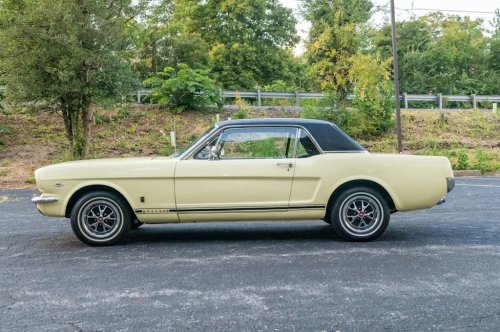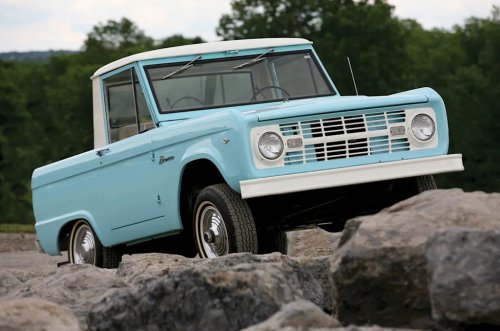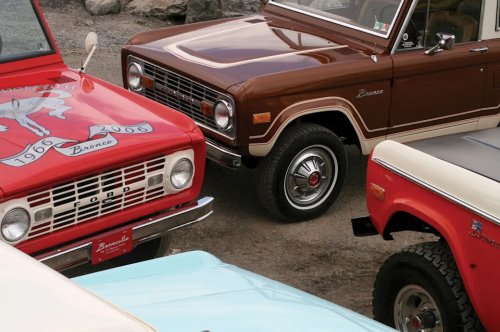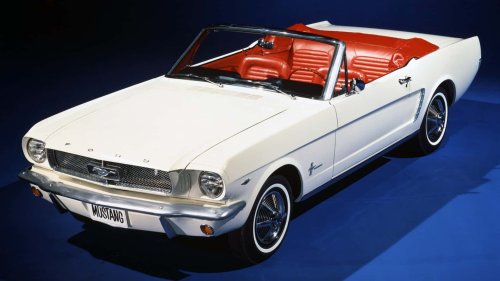
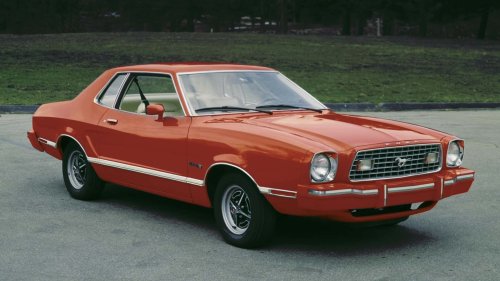
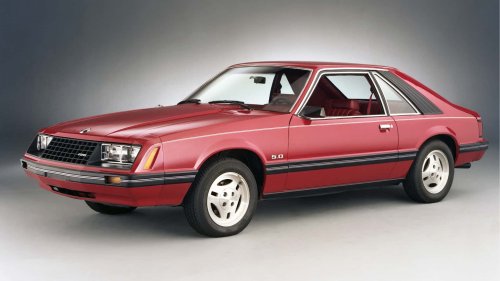
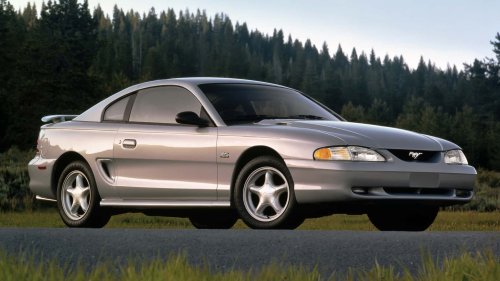
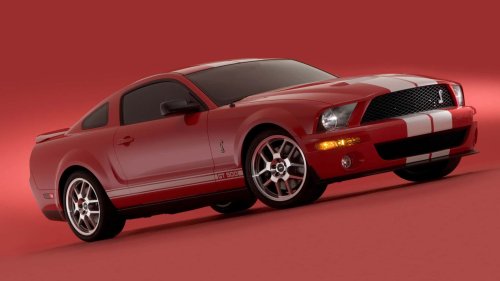
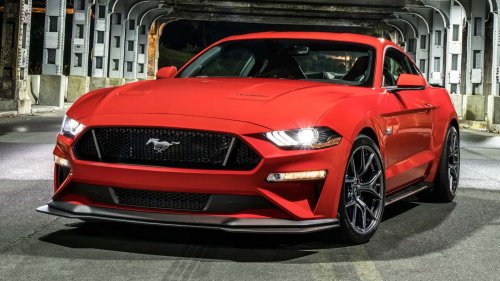
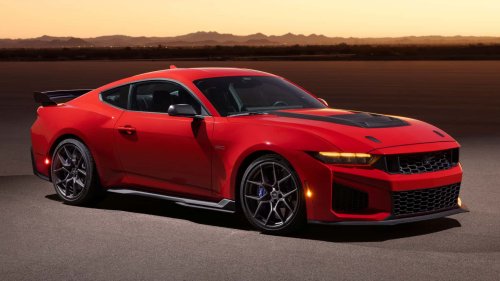
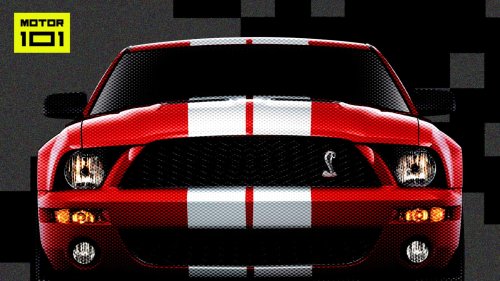




















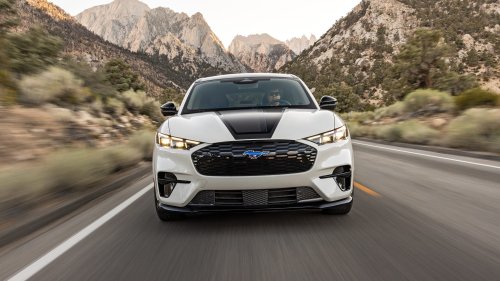




Even if you don’t care about cars, you probably know the Ford Mustang. In continuous production since its debut in the 1960s, it’s remained a symbol of affordable, aspirational, American motoring, creating a new class of long-hooded, rear-drive performance cars. Sixty years is a long time, though, and the Mustang has evolved dramatically over the years. From the optimistic original to '70s Malaise and '80s grunge, all the way to its modern, world-beating aspirations—Ford’s iconic Pony Car has had quite the journey. Here’s every generation of the Ford Mustang, what made each one unique, and what each represented in the original pony car’s story. Jump To: First-Gen | Mustang II | Fox-Body | SN95 | S197 | S550 | S650 The Original Pony Car: 1965-1973 Engine: 2.8L Straight-Six Output: 100-225 Horsepower Officially unveiled on April 17, 1964, at the World’s Fair, the original Ford Mustang was commissioned by Lee Iacocca to sell to Baby Boomers, a cohort that was just starting to make money and drive cars. Compact, affordable, and (this was a big one) customizable, the original Ford Mustang became immensely popular. It was a great way for young Boomers to get to and from their city jobs back to their $20,000 suburban homes via that shiny new Interstate system. Throw in a starring role alongside Steve McQueen in 1968’s Bullitt, and it quickly became That Car. Ford sold more than 400,000 units in the first year. Compact, affordable, and (this was a big one) customizable, the original Ford Mustang became immensely popular. Borrowing parts from the Falcon and Fairlane, the base $2,500-to-start pony car shipped with a 2.8-liter straight-six making about 100 horsepower, but the one you wanted was the GT that unlocked a small block V-8 making 225 hp. Styling tweaks, engineering updates, and more powerful variants came every couple of years, giving us legends like the Mach 1, Boss 302, and Boss 429, truly muscular, aggressive-looking machines that stood apart from the tame, standard original. We’re well past using terms like "secretary’s car," but that first Mustang, despite being "the best thing to come out of Dearborn since the 1932 V-8 Model B roadster" per Car and Driver, did come off a bit… mainstream-friendly compared to what the nameplate would eventually represent. High-performance Shelby GT350 and GT500 models came into the picture with more power, less weight, and modifications by the firm already famous for the AC Cobra. The Shelby partnership would end by the end of the '60s, but it would reappear decades later. Mustang II: 1974-1978 Engine: 2.3L Inline-Four / 2.8L V6 / 5.0L V8 Output: 105-171 Horsepower Out of all the generations of Mustang, the Mustang II is widely recognized as the one fans would rather forget. Launched right on time for the 1973 oil crisis, the smaller, sophomore ‘Stang was based on the Pinto of all things, used a four-cylinder in base form, and despite the downsizing, wasn’t meaningfully lighter than the car it replaced. What’s more, even accounting for hindsight, nostalgia, and modern contrast, the Mustang II wasn’t a good-looking car. More timid than the original, its stubbier hatchback-like shape betrayed the lean, long-legged aura of both its forefathers and Mustangs that would come later. It’s a prime artifact, if not the prime artifact, of what would later be known as the Malaise era of automobiles. Out of all the generations of Mustang, the Mustang II is widely recognized as the one fans would rather forget. History may not be kind to the Mustang II, but it actually sold decently and had its fair share of professional fans when it was new. Ford sold more than 1.1 million copies over four years, and it was even named MotorTrend’s domestic Car of the Year in 1974. Was the Mustang II an appropriate product considering the economic conditions in which it was sold? Yes. Is the Mustang II underwhelming as a performance car and as a general object of desire, even adjusting for tech inflation and nostalgia? Also yes. Unfairly judged or not, the Mustang II remains a low point in the pony car’s history, even after half a century of reflection, perspective, and depreciation. The less said about it, then, the better. Fox-Body: 1979-1993 Engine: 2.3L Inline-Four / 3.3L V6 / 3.8L V6 / 5.0L V8 Output: 105-235 Horsepower At this point, there were frankly few places for the Mustang to go but up, and up it went because 1979 saw the introduction of what would be simply known as the Fox-body. Say just those two words—Fox-body—to any car person, and they’ll know immediately and exactly what you’re talking about. Built on the Fox platform shared with the Fairmont and Mercury Zephyr, the third-gen Mustang debuted a decidedly boxy ‘80s design. You could get it with four cylinders or six, but, of course, the 5.0-liter small block V-8 was the one to have. This generation happened to get a turbo-four version, a Euro-baiting, 2.3-liter SVO featuring four disc brakes and adjustable front struts—an EcoBoost Mustang before EcoBoost was a thing. Say just those two words—Fox-body—to any car person, and they'll know immediately and exactly what you’re talking about. Ford built the Fox-body all the way until 1993 (14 years total; still shy of the modern Challenger’s 15-year run, by the way), selling 2.5 million units. So, unless it’s a rare edition or an especially clean example (arguably even rarer), Fox-body Mustangs haven’t reached anywhere near the collector status of other performance cars from the era. It is, however, unrivalled as an automotive cultural icon staunchly devoid of romanticism—this generation of Mustang was the unofficial-official car of every pizza delivery kid with questionable off-the-clock habits that may or may not have persisted on the clock. An unapologetic, unpretentious symbol of cheap speed when it was new, it remained that way until the very end. SN95: 1994-2004 Engine: 3.8L V6 / 5.0L V8 / 4.6L V8 Output: 145-390 Horsepower For the 1994 model year, ‘80s box gave way to ‘90s swoop with the SN95, fourth-gen Mustang. Underneath the new-age body was a heavily improved and stiffened version of the old Fox chassis called the Fox-4. Admittedly, not a high bar to clear, the SN95 handled better than the old Fox-body and was more refined to drive. A GT model with a 5.0-liter V-8 boasting 215 horsepower and stiffer suspension was crowned MT’s 1994 domestic Car of the Year, the first time a Mustang did so since the II. Admittedly, not a high bar to clear, the SN95 handled better than the old Fox-body and was more refined to drive. For 1999, the "New Edge" facelift sharpened things up literally and figuratively before an SVT Cobra model amped things up to 320 hp and, as a Mustang-first, got independent rear suspension, something that wouldn’t return meaningfully for another decade. This iteration of Mustang started leaning into retro-nostalgia in its later years with special Bullitt and Mach 1 editions, an attitude that would inform how the Mustang carries itself in the next generations that followed. In the context of the Ford Mustang’s story, the fourth-gen exists as a bit of a transitional model. Not good or important enough to stand as a fan favorite, nor cursed enough to deserve true ire, it let Ford improve on the compromised yet culturally important Fox-body while slowly learning an important truth: the only thing that sells cars better than horsepower is nostalgia. S197: 2005-2014 Engine: 4.0L V6 / 3.7L V6 / 4.6L V8 / 5.0L V8 / 5.4L V8 / 5.8L V8 Output: 210-550 Horsepower And learn it did. Ford went full throwback with the fifth-generation, S197 Mustang, and it was an instant hit. C/D declared it "The best Mustang since April 17, 1964," and even Top Gear, with all its biases and snark, came away admiring its specialness and "X factor" despite an "asthmatic" 300-horsepower engine and "plasticky" interior. When this car launched, it’d still be a few years before the Mustang entered the conversation as a serious, world-beating performance car. But the "retro-futurist" styling and V-8 theater did a lot of heavy lifting, which translated to serious sales: Ford sold more than a million S197 ‘Stangs in the U.S. alone over nine years. Ford went full throwback with the fifth-generation, S197 Mustang, and it was an instant hit. A 2010 refresh introduced a more sculpted, angrier, more aerodynamic design, while 2011 saw the introduction of the 5.0-liter Coyote motor, an engine that powers the Mustang to this day. Shelby was also back in the picture with the 2007 GT500 packing a supercharged 5.4-liter V-8 good for a monstrous-at-the-time 500 hp. This gen of Mustang arguably peaked, however, with the reintroduction of the Boss 302, a 444-hp, home-run track star that quietly rewrote expectations as to how a Mustang could handle. This was arguably the start of the Mustang’s charge to defy American pony car stereotypes, something that would carry into the next generation and beyond. For people of a certain age, the S197 Mustang is a bit like Batman Begins. Yes, there were Mustangs before it and indeed other Batman movies. But for an entire generation of people, all those sort of exist as abstract historical objects rather than the radical reset that actively reshaped what the thing could be. S550: 2015-2023 Engine: 2.3L Inline-Four / 3.7L V6 / 5.0L V8 / 5.2L V8 Output: 300-760 Horsepower What do you do with all that newfound cultural relevance and performance legitimacy? You double down and go global, of course, and that’s what Ford did with the sixth-generation, S550 Mustang. Featuring a squintier, decidedly more European design that still retained an unmistakable, retro-positive pony car look, this generation of Mustang made history as the very first to be exported with right-hand drive. Its worldly aspirations went more than skin-deep because the other big engineering headline was, finally, independent rear suspension standard across the board. Modernity also reared its head in the form of a new, 310-horsepower 2.3-liter turbo-four EcoBoost powertrain, while the Coyote-powered GT now made 460 horsepower. A refresh for 2018 brought a softer-looking front end, optional MagneRide dampers, and an active valve exhaust system. An early C/D review of the GT praised its improved handling and livability, while Motor1 editor-in-chief Jeff Perez once called the EcoBoost a "lightweight sports car in muscle car drag" with the High Performance Pack. This generation of Mustang made history as the very first to be exported with right-hand drive. Ford didn’t hold back on the high-performance variants either, ‘cause the Shelbys returned with a 526-hp GT350 featuring a 5.2-liter flat-plane crank Voodoo V-8 plus an even nuttier, stripped-out GT350R with carbon wheels and Cup 2s from the factory. With engines that wailed and a Tremec manual from the gods, the GT350 and GT350R are considered peak Mustang as driver’s cars, routinely mentioned in the same breath—and showing up in the same comparison tests—as stuff like Porsches, BMW M cars, and new Toyota Supras. And winning. Later, the GT500 and its cross-plane crank supercharged V-8 made 760 hp, becoming the most powerful factory Mustang up until that point, while a new Mach 1 paired Shelby running gear with the GT’s Coyote 5.0. The Ford Mustang was now a firmly serious, global player on the performance car stage. But as extreme as this generation’s Shelby variants were, they’d soon be upstaged by a car that takes the nameplate (and its price tag) somewhere no Mustang has gone before. S650: 2024-Present Engine: 2.3L Four-Cylinder / 5.0L V8 / 5.2L V8 Output: 315-815 Horsepower With the S550 Mustang now slowly growing long in the tooth, Ford unveiled the new, more angular S650 at the 2022 Detroit Auto Show. There’s a four-cylinder EcoBoost and a V8 GT, but the one no one saw coming is the track-ready Dark Horse pumping out 500 horsepower through an available Tremec manual. The S650 improves on an already solid base, but the Dark Horse in particular proves itself as a seriously desirable track weapon that, as EIC Perez simply puts it, "rips." Because of ever-constricting efficiency standards, this generation of Mustang is notable for even existing at all—Chevy Camaro production ended in 2023, and the Hemi-powered Dodge Charger and Challenger (as of this writing, at least) are a thing of the past. But having the pony/muscle car segment all to itself apparently wasn’t enough because Ford decided to take the once-humble Mustang and deploy it against the very upper echelon of performance automobiles. The S650 improves on an already solid base, but the Dark Horse in particular proves itself as a seriously desirable track weapon that. Enter the GTD. It’s essentially a road-legal, 815-hp GT3 racer complete with inboard pushrod suspension, carbon galore, a Nürburgring time under seven minutes, and, controversially, a starting price of $327,960. You have to apply to buy it, by the way. Unobtanium or not, the Mustang is now playing in the arena of supercars, if not hypercars, narratively sparring with stuff like the Corvette ZR1X, Porsche 911 GT3 RS, and, transitively, a whole dynasty of European exotics. On the surface, the Mustang GTD might look like it’s chasing lap times. What it's really chasing is legitimacy at the highest possible level. Somewhere, a cherry red convertible from 1965 is quietly wondering how things got this far. Ford Mustang FAQs How much does a Ford Mustang cost? The price of a Ford Mustang varies by trim and model year. Base EcoBoost models typically start in the lower price range for sports cars, while GT (V8) and high-performance editions like Shelby models cost significantly more. Optional packages and features can also increase the price. Is the Ford Mustang a V8? Some Ford Mustangs have a V8 engine — specifically the Mustang GT and performance-focused trims. However, the base Mustang usually comes with a turbocharged 4-cylinder EcoBoost engine. Buyers can choose between power and efficiency depending on the trim. How fast is a Ford Mustang? Performance depends on the model. EcoBoost versions are quick and sporty, while V8-powered GT and Shelby trims can accelerate from 0–60 mph in around 4 seconds or less, with higher top speeds in performance editions. Is the Ford Mustang Reliable? The Mustang is generally considered reliable for a performance car. Reliability can vary by model year and engine type, so checking reviews and maintenance history is important when buying used. Is the Ford Mustang a good daily driver? Yes, many drivers use the Mustang as a daily car. It offers modern tech, safety features, and reasonable comfort. However, rear-seat space and fuel economy (especially in V8 models) may be less practical than a sedan or SUV. We want your opinion! What would you like to see on Motor1.com? Take our 3 minute survey. - The Motor1.com Team