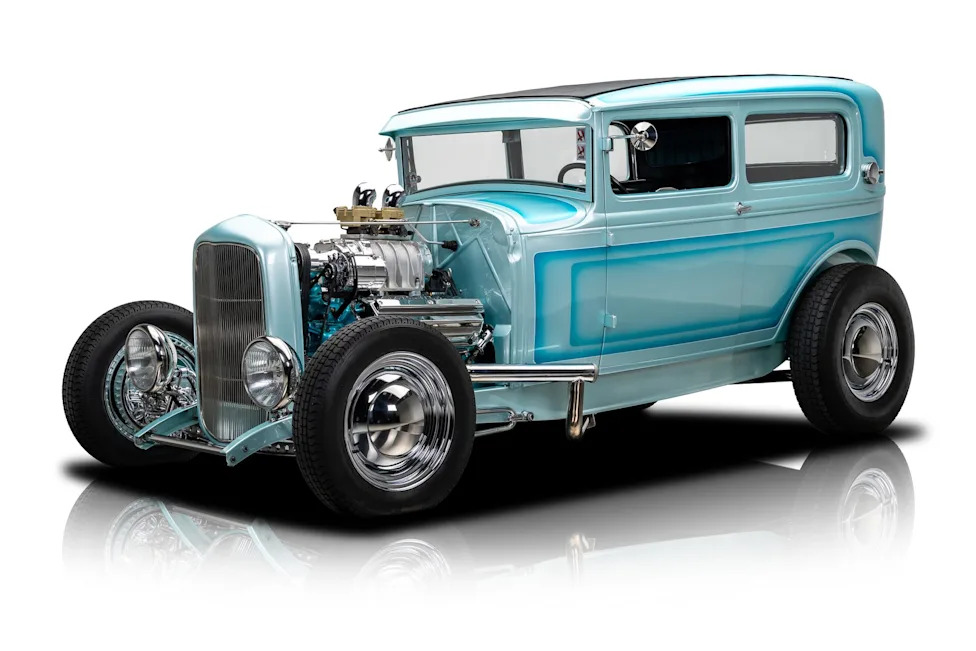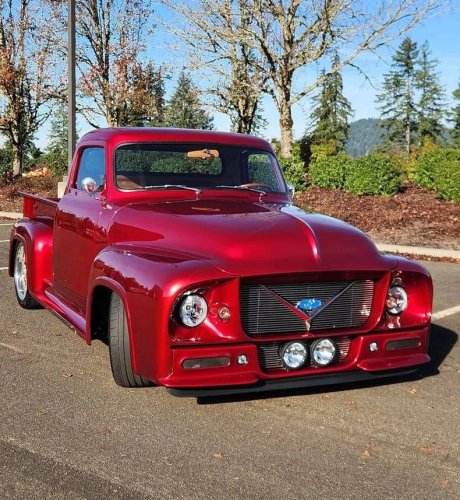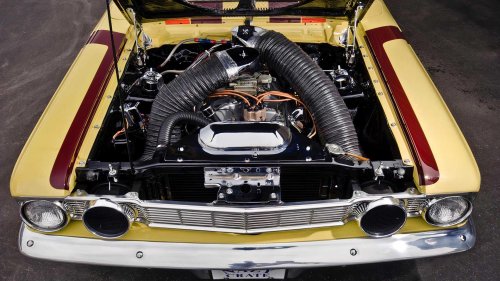
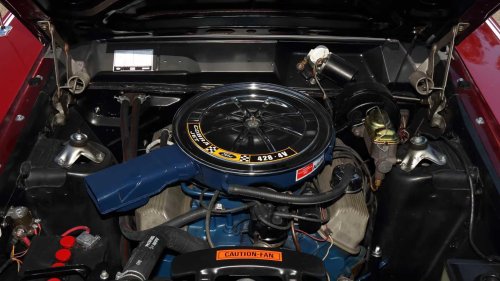
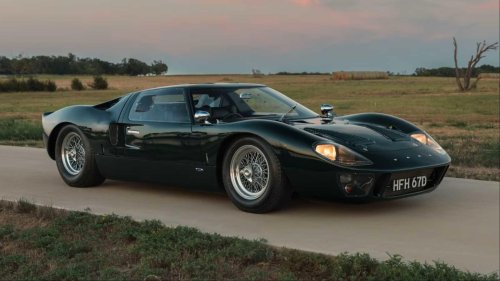
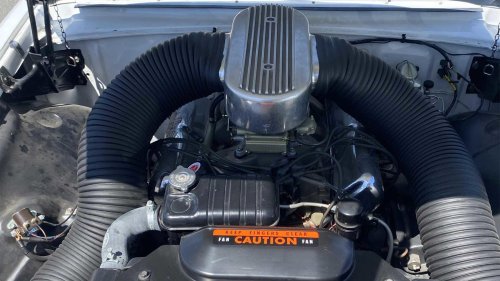
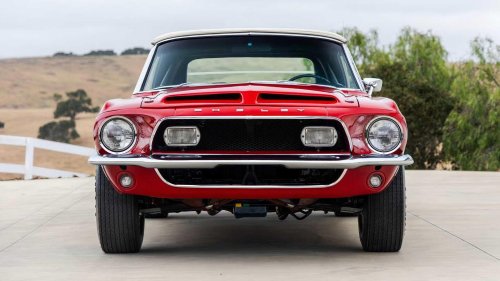
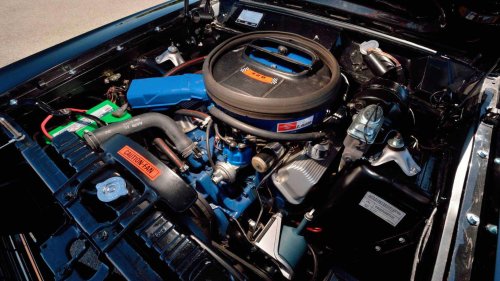



















Ford Motor Company has produced many iconic V8 engines over the years, starting with the revolutionary 1932 Flathead, the first affordable mass-produced V8. Many more V8s followed later on, including legendary small-blocks like the 289/302 Windsor in the overhead-valve (OHV) era, big blocks like the FE series (427, 428, Boss 429) in the golden age of muscle cars, the versatile Windsor that spanned four decades, and the Coyote V8 in the modern era, among other V8 engines.Now, everyone has their favorite Ford V8, depending on personal preferences and ownership experience, but one of the most famous engine families has to be the FE series. Produced in multiple displacements over two generations between 1958 and 1976, the FE, which some say is an abbreviation of ‘Ford-Edsel,’ as the big-block V8 family was introduced for both Ford and the then-new Edsel cars, went on to achieve massive fame.Over the years, Ford’s FE big-block V8s powered many popular models like the Mustang, Fairlane, Galaxie, LTD, Thunderbird, Torino, Mercury Comet, Cyclone, and Cougar, as well as many F-Series trucks (on which they got the FT designation for Ford Trucks). However, the FE became most famous for high-performance applications. What's In A Name? Let's Talk Displacement Mecum The FE family included many engine displacements, with arguably the most famous being the ones at the very top of the food chain, the 427 and 428. While these engines looked nearly identical, they didn’t have too much in common. This is one intriguing pair that seems separated by a single cubic inch (on paper, at least). The reality is more complex and may surprise you.For starters, neither the 427 nor the 428 have 427 and 428 cubic inches, respectively. While both motors are part of the same FE line of engines and share a 4.63-inch bore center spacing, they have slightly different displacements than their names would have you believe.Via: Mecum Auctions With a 4.132-inch bore and a 3.984-inch stroke, the 428 FE actually displaces 427.39 cubic inches, which makes one wonder why Ford didn’t name it the 427. Well, it had an obvious reason for that: the Blue Oval already had an engine called 427 in its stable. So, instead of making things confusing for buyers, the automaker rounded up the displacement to 428.But wait, it gets more confusing. The 427 FE did not displace 427 cubic inches either. With a bore of 4.232 inches and a stroke of 3.784 inches, the 427 FE had an actual capacity of 426.7 cubic inches, which should have been rounded up to 426 in an ideal world. Why didn’t Ford do that?Mecum Well, the automaker rounded it up to 427 to match the limits of the various racing series in which it planned to use the 427 FE V8, including NASCAR and NHRA drag racing. Eventually, the 427 FE became a racing legend, powering iconic cars like the Shelby Cobra, Ford Galaxie and Fairlane NASCAR racers, Mustang drag racers, and the legendary GT40 that brought Ford’s first and second wins at the 24 Hours of Le Mans in 1966 and 1967 – albeit a special race-prepped version of that engine.Now that we’ve cleared up the naming situation of these two iconic Ford FE V8 engines, let’s see what else is different about them. Ford Had One Thing In Mind For The 427: Racing Via: Mecum Auctions As mentioned earlier, the 427 came to market in 1963 with racing in mind, while the 428 had a different design brief, namely to power Ford’s sedans, muscle cars, and trucks on the road.To win races, the 427 was designed to rev high for prolonged periods of time, which is why it featured thick walls, cross-bolted mains, reinforced rods, forged aluminum pistons, and mechanical lifters. These upgrades were needed so that the engine could withstand a lot of punishment.But there was a problem with the 427 early on in its racing career. The motor was a top-oiler, which meant that it lubricated the cam and valvetrain before the crankshaft, leading to crankshaft issues during races as the crank was starved of oil under sustained lateral G-forces.Bring a TrailerThat’s why Ford decided to make the 427 a side-oiler for 1965 by adopting a unique oiling system that directed oil to the crankshaft first, then the valvetrain. This made the 427 incredibly durable for sustained high-rpm racing and brutal lateral G-forces, leading to legendary wins at Le Mans and NASCAR.But the peak of Ford’s 427 development was the 427 SOHC ‘Cammer’ variant, an engine so extreme NASCAR banned it. With more than 650 hp, hemispherical heads, and a timing chain over a meter long, the Cammer ended up in drag racing, where it became a legend. The 428 Was A More Civilized Motor But It Still Ripped Mecum Auctions With the 428 FE V8 that debuted for the 1966 model year, Ford had more peaceful things in mind. It designed it as a road-focused engine with smoothness in operation and the ability to pull from low rpm effortlessly thanks to a generous amount of torque.Make no mistake, the 428 was powerful, delivering 345 hp and 462 lb-ft of torque, but more importantly, it was a strong engine that could motivate Ford’s massive cars like the Galaxie 7-Litre. In Police Interceptor guise, the 428 V8 made over 360 hp and 459 lb-ft of torque. Caroll Shelby went as far as installing the 428 in the 1967 GT500, which boasted 355 hp and 420 lb-ft of torque.But the greatest moment of glory for the 428 FE engine came when Rhode Island dealer Bob Tasca Sr. improved the 428 using 427 parts. He slapped 427 low-riser heads onto a 428, reground the cam, and installed a dual-plane intake made of aluminum.Mecum In doing so, he gave the 428 a necessary breather and inadvertently created the Cobra Jet engine, which was so good that Ford decided to build it and fit it to the legendary GT500KR. In the ‘King of the Road’ Shelby Mustang, the engine was officially rated at 335 hp, a figure believed to be massively underrated by Ford.It’s worth noting that the Cobra Jet also powered Carroll Shelby’s personal 1968 Black Hornet Mustang. That speaks volumes about the 428 Cobra Jet, and as far as endorsements go, it’s difficult to think of one that beats it.Sources: Ford, Shelby, CurbsideClassic