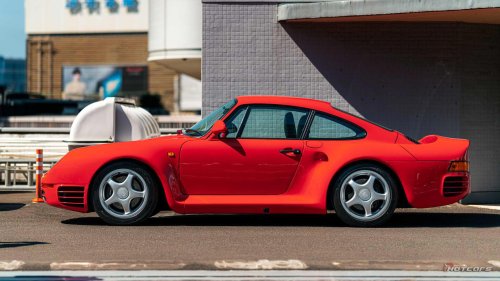
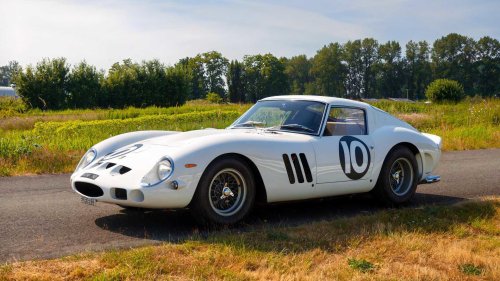
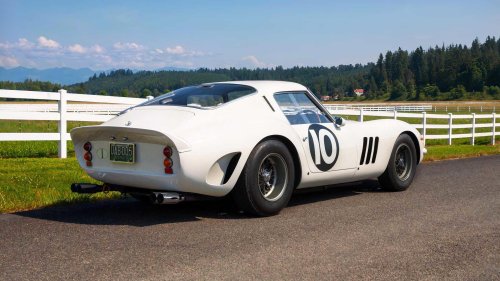
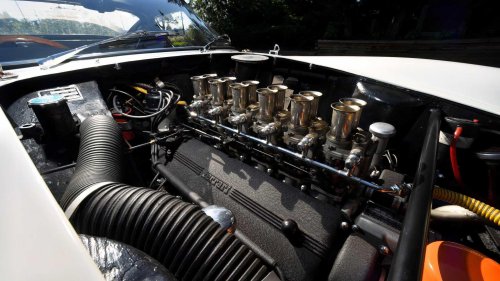
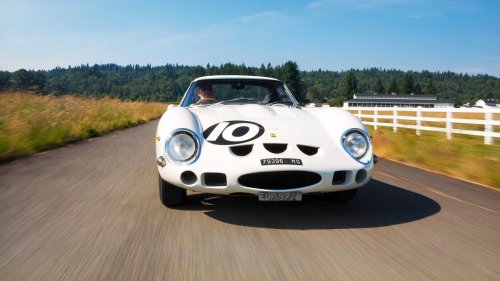
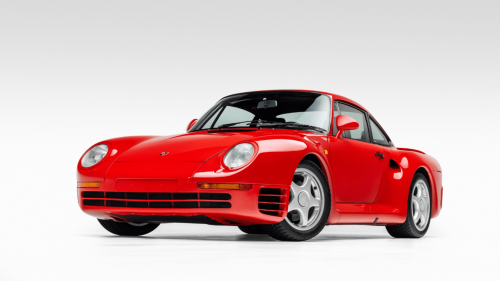
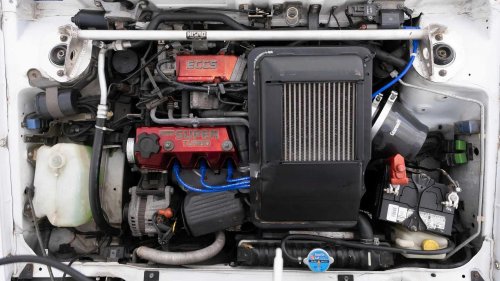






















Today, 100 horsepower per liter barely sounds like a moonshot – a 2026 Honda Civic Type R makes 315 horsepower from 2.0 liters, and Toyota’s GR Corolla pulls 300 from 1.6. Numbers like that have trained enthusiasts to treat triple-digit specific output as normal, maybe even overdue, in anything with a performance badge. But decades ago, that wasn’t the standard. A road-legal machine from a much earlier world was the first to break the 100 horsepower-per-liter barrier, and it later became one of the rarest and most legendary cars in history. 100 Horsepower Per Liter Was The Magic Threshold Ayesh Seneviratne / HotCarsHorsepower per liter sounds cold on paper, but it’s important because it exposes an engine’s attitude. Simply put, it shows how much work an engine squeezes from every cubic inch and every breath. It also tells readers whether an engine makes power through brute size or through clever breathing, high revs, sharp tuning, or all three at once. That is why the number has always mattered.In the early 1960s, that number carried far more weight than it does now. Road cars did not have modern engine management or variable valve timing, clever knock control, or software that could tidy up a rough idea. Most performance engines still leaned on carburetors, simple valvetrains, and old-fashioned trial and error. If an engineer wanted more power, that engineer had to earn it with airflow, compression, cam timing, and nerve.That is also why most people guess the wrong decade. The late 1980s make much more sense on paper – Porsche’s 959 used sequential twin turbos and made 444 horsepower from 2,849 cc. Then Ferrari’s F40 pushed things even harder with 478 horsepower from 2,936 cc, while Honda arrived with the B16A and made 160 hp from 1.6 liters without turbocharging, thanks to VTEC and a wild appetite for rpm. But one car achieved that mission decades before all others. The First To Reach 100 HP Per Liter Was The 1962 Ferrari GTO Mecum The answer is the 1962 Ferrari 250 GTO. Ferrari rated its Colombo V12 at 300 horsepower from 2,953.21 cc, which results in roughly 102 horsepower per liter. Even now, that looks strong, but in 1962, it looked almost rude. Ferrari also described the GTO as the pinnacle of the 250 GT line "in competition form, while still remaining a road car," which is the key to the whole trick. It was not a pure prototype, but a homologated GT car that happened to hit a number many later heroes treated like a trophy.The press first saw the car on February 24, 1962, at Maranello. A month later, it made its race debut at Sebring, won its class, and finished second overall behind a Ferrari Testa Rossa. At Le Mans in 1962, it won the GT class and finished second overall. In total, the 250 GTO delivered three straight world championships from 1962 to 1964.Mecum That combination explains the car’s value. Plenty of old race cars made noise and drama, but fewer made real speed and then proved durable over long-distance events. Fewer still remained usable on the road. The GTO borrowed proven parts from earlier Ferraris, moved the engine lower and farther back, and paired roughly 300 horsepower with a new five-speed transmission and about 175 mph of top speed. No Modern Electronics, No Turbo, No Electric Motors MecumThe GTO’s engine bay looks like a mechanical marvel. The Tipo 168/62 Colombo V12 used a single overhead camshaft per bank, two valves per cylinder, dry-sump lubrication, and six dual-throat Weber carburetors. There was no turbocharger to force in extra air and no motor to patch over weak spots. The engine had to breathe on its own, rev on its own, and sing for its supper.Interestingly, Ferrari’s target was to clear 100 horsepower per liter, and period lore says any engine that failed to bench-test between 296 and 302 horsepower went back for more work. Whether every last engine followed that exact ritual matters less than the mindset behind it – Ferrari wanted race-car breathing in a GT package, and the engineers treated anything short of the target like a missed apex. It was fussy, expensive, and gloriously Italian. Which is a polite way of saying nobody expected it to be cheap.The rest of the car matched the engine’s attitude. The GTO sat on a tubular frame and wore lightweight aluminum bodywork shaped by extensive testing. The V12 sat farther back to help the shape and the balance, and the first prototype was called “Il Mostro,” or “the monster,” before development cleaned up the design. One Of The Most Expensive Cars In History Mecum Today, the 250 GTO lives in two worlds at once. It remains a serious old race car, and it also sits near the top of the collector-car mountain. For example, a 1963 example changed hands privately for $70 million in 2018. On the public side, RM Sotheby’s sold a 1962 330 LM/250 GTO for $51,705,000 in 2023, which Road & Track called the most expensive Ferrari ever sold at public auction. That followed another RM Sotheby’s sale in 2018, when a 1962 GTO brought $48,405,000. Those numbers sound fake until they keep happening.The money starts with scarcity, but scarcity alone never gets a car this far. Production numbers vary between 36 and 39 cars in total when the closely related variants enter the discussion. The GTO world is so rarefied that even the headcount comes with footnotes. Either way, the pool stays tiny. Then the race record enters the room, then the looks enter the room, then the fact that buyers needed Enzo Ferrari’s approval when new enters the room. At that point, the price never had a chance to stay normal.Its record on track matters almost as much as the production number. The model claimed overall victories or class wins in nearly 300 races worldwide, earning it a reputation in public, at speed, against serious rivals. That changes how collectors see the car so many decades later. Because plenty of beautiful Ferraris exist, but fewer can say they looked this good while punching everyone in the mouth on Saturday and driving home on Sunday.The GTO’s value also grew because its owners turned the model into a tiny private universe. French collectors organized the first GTO owners’ gathering in 1982 and kept the event going every five years, with ownership serving as the only ticket in. That kind of social gravity adds fuel to an already blazing market. Ferrari also likes to often remind people that the 250 GTO remains one of the brand’s most celebrated road cars, and an Italian court even recognized it as a work of art. All of this keeps prices in the sky. The Late 1980s Brought A Variety Of 100 HP Per Liter Cars Bring A Trailer By the late 1980s, the 100-horsepower-per-liter club started to feel less like a miracle and more like the new norm for performance cars. Technology had changed the game – turbocharging matured, intercoolers improved charge density, engine management got smarter, and four-valve heads and better materials helped engines breathe at higher rpm and survive the punishment. Porsche’s 959 looked like a rolling cheat code in 1986, and Ferrari’s F40 followed in 1987 with figures that made the old target look almost quaint. The threshold still mattered, but it no longer looked impossible. It looked like the start of an arms race.Those two cars showed how different the new paths could be. Porsche gave the 959 a 2,849-cc flat-six with sequential twin turbos and 450 hp, along with all-wheel drive and active suspension. Ferrari gave the F40 a 2,936.25-cc twin-turbo V8 with 478 horsepower and a factory-rated 163 horsepower per liter. Both cars blasted past the old benchmark, but they did it with a level of forced induction and systems engineering the early 1960s simply did not have. They were masterpieces of the 1980s.Bring A Trailer The best part is that the boom did not stay in six-figure exotica. Nissan's March Super Turbo packed 108 hp from just 930 cc, while Daihatsu’s Charade GTti made around 100 horsepower from 993 cc and earned a reputation as the most powerful 1.0-liter production car of its time. Suddenly, the 100-horsepower-per-liter idea showed up in cars that looked more like terriers than thoroughbreds. Enthusiasts no longer needed a Ferrari poster or a trust fund to care about specific output. A tiny hatchback with a bad attitude could carry the same magic.Then Honda arrived with the naturally aspirated answer that many people still think of first. The B16A made 160 hp from 1.6 liters, or 100 hp per liter, and Honda says it did it without giving up low- and mid-range usefulness thanks to VTEC.Source: Ferrari, Honda, Porsche